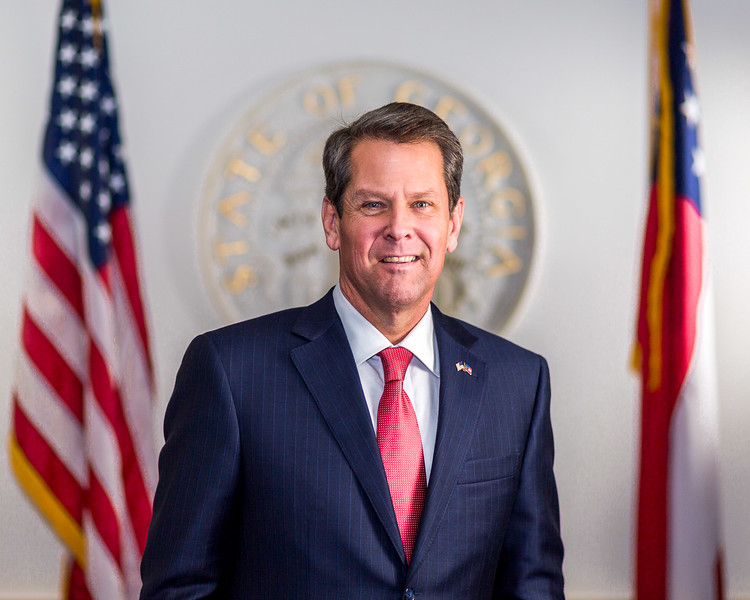
ATLANTA – Gov. Brian Kemp issued four line-item budget vetoes Friday and instructed the General Assembly to ignore the language in 26 other budget line items.
One day after signing the $30.2 billion fiscal 2023 spending plan, the governor axed three technical college projects that were to be financed with bonds, including funds to design a logistics, transportation and manufacturing complex at West Georgia Technical College and an advanced manufacturing center at Columbus Technical College.
In both cases, the projects had been identified as of “lower priority” by the Technical College System of Georgia, Kemp wrote in a memo.
The third vetoed technical college project would have provided $4 million in bonds for land acquisition for a planned technology center at Piedmont Technical College in DeKalb County. That would only have amounted to half of the money needed to buy the land, Kemp wrote.
The governor’s fourth veto would have earmarked $3 million in bonds for improvements to Georgia’s short-line railroads. The money isn’t needed because the state Department of Transportation already has $35 million in prior-year bond authorizations, according to the memo.
Kemp used the same reasoning in instructing lawmakers to disregard another $8 million the General Assembly appropriated for short-line railroad upgrades aimed at reducing truck traffic on highways.
By far the largest budget line item Kemp told the legislature to disregard was a $44.2 million appropriation intended for a new value-based purchasing initiative being undertaken by the Georgia Department of Community Health’s Medicaid program.
Value-based purchasing links health-care provider payments to the provider’s performance.
Kemp explained the initiative isn’t ready to be rolled out during the upcoming fiscal year and instructed the agency to use the funds instead to cover enrollment growth.
In some cases, Kemp issued disregard notices for budgeted items tied to the passage of legislation that failed to get through the General Assembly this year. That included a $1.44 million appropriation that would have funded service-cancelable loans for law enforcement officers interested in pursuing degrees in criminal justice or a related field.
The fiscal 2023 budget takes effect July 1.
This story is available through a news partnership with Capitol Beat News Service, a project of the Georgia Press Educational Foundation.
Gov. Brian Kemp (left) and former U.S. Sen. David Perdue are locked in a battle for the Republican gubernatorial nomination.
ATLANTA – Primary challengers to Georgia’s last two sitting Republican governors’ reelection bids didn’t fare well.
Ray McBerry garnered only 11.6% of the vote against then-Gov. Sonny Perdue in 2006. David Pennington did a little better against then-Gov. Nathan Deal in 2014, collecting 16.7% of the vote.
Former U.S. Sen. David Perdue likely will eclipse those numbers against Gov. Brian Kemp in the May 24 GOP gubernatorial primary.
Perdue entered the race last December at the urging and with the endorsement of former President Donald Trump, who was angered over Kemp’s refusal to help overturn the 2020 election that saw President Joe Biden win Georgia’s 16 electoral votes.
Trump turned to Perdue after the former CEO lost his bid for a second Senate term to Democrat Jon Ossoff early last year.
Although the presidential election took place 18 months ago, Kemp’s inaction following complaints of widespread voter fraud in the election’s aftermath has been Perdue’s main theme on the campaign trail. He has hammered away at that argument despite repeated court rulings that the allegations were unsubstantiated.
“Our governor allowed radical Democrats to steal our election,” Perdue said last month in a contentious one-on-one debate with Kemp. “We have evidence that is compelling. Yet, nothing has been done.”
Kemp said he followed the law and the Constitution, which gave him no wiggle room to intervene in certifying Biden’s victory in Georgia.
The governor pointed instead to the Republican-controlled General Assembly’s passage of an election-reform law last year that added restrictions to absentee voting.
“We passed the strongest election integrity law in the U.S.,” he said. “We’ve tied photo ID to absentee ballots. We’ve secured drop boxes.”
Kemp has been leading in the polls and has drubbed Perdue in fund-raising. The governor is hoping to avoid a June 21 runoff rematch with Perdue.
But amassing the 50%-plus-one vote margin needed to win the Republican nomination outright will be difficult in a field crowded with five GOP candidates.
Besides Kemp and Perdue, the race includes educator Kandiss Taylor, conservative activist Catherine Davis and retired software engineer Tom Williams. All are polling in the single digits.
While Perdue has focused much of his fire at Kemp’s handling of the “rigged” 2020 election, the ex-senator also has criticized the governor’s handling of rising crime and his approach to economic development.
Perdue supports this year’s passage of legislation backed by Kemp to let Georgians carry firearms without a permit to help citizens defend themselves.
But Perdue cites an alarming rise in murder and rape in Atlanta, which are on track this year to beat last year’s record. While much of the responsibility for combating violent crime in Georgia’s capital goes to the city police department, Perdue said the state has 15% fewer troopers than when Kemp took office.
“What we have is a runaway crime situation,” Perdue said. “This governor is not enforcing the law.”
Kemp said the recent graduation of 75 new trooper candidates lifts the force back to where it was when he was elected. He also cited his creation of a multi-agency Crime Suppression Unit that has arrested 7,450 people with outstanding warrants, including 26 wanted for murder.
“We have taken stolen weapons off the street,” he said. “We’re going to continue doing that.”
On economic issues, Perdue argued a $1 billion phased-in state income tax cut championed by Kemp doesn’t go far enough. Perdue is calling for eliminating the tax entirely, as other Southern states that compete with Georgia for jobs have done.
“Florida, Tennessee and Texas are eating our lunch,” he said.
Kemp touted the success of the Georgia Department of Economic Development in landing job-generating projects, particularly in rural Georgia. Last year, 74% of private sector investments in Georgia as well as half of the new jobs went outside the 10-county Atlanta region, he said.
“We’re bringing in 7,500 jobs to rural parts of our state,” Kemp said, referring to plans by electric-vehicle startup Rivian to invest $5 billion in a manufacturing plant east of Atlanta. “[Perdue] has spent his whole business career outsourcing jobs to China.”
Perdue and Kemp are on the same page when it comes to the education issue that is drawing the most attention: efforts to restrict how racism can be taught in Georgia schools.
The General Assembly passed a Kemp-backed bill this year prohibiting the teaching of nine “divisive concepts,” including that the United States and Georgia are systemically racist and that no race is inherently superior or inferior to any other.
“History is proper. We want to teach history,” Perdue said. “[But] we’ve let the liberal school districts supersede the power of our government.”
“I’ve never said we don’t need to teach about race or slavery,” Kemp added. “But it needs to be facts, not somebody’s ideology.”
The highly charged issue of abortion inserted itself late in the primary campaign when a leaked draft of an upcoming U.S. Supreme Court ruling indicated the justices are poised to reverse the 1973 Roe v. Wade ruling that legalized abortion.
Perdue is calling for a special session of the General Assembly to enact a total ban on abortion – with no exceptions – if the court rules as expected and turns the issue back to the states.
Kemp has called the “heartbeat bill” he pushed through the legislature in 2019 banning abortion after a fetal heartbeat is detected – typically about six weeks – the most restrictive anti-abortion statute in the nation. The law is on hold pending the Supreme Court ruling.
This story isavailable through a news partnership with Capitol Beat News Service, a project of the Georgia Press Educational Foundation.
ATLANTA – Gov. Brian Kemp signed a $30.2 billion state budget Thursday that includes pay raises for teachers and state employees.
The fiscal 2023 spending plan, which takes effect July 1, is just shy of the record $30.3 billion fiscal 2022 mid-year budget covering state spending through June 30.
It includes the $2,000 final installment of a $5,000 pay hike for Georgia teachers Kemp promised on the campaign trail four years ago.
Most state workers also will get $5,000 raises, while larger increases will go to correctional officers in the adult and juvenile prison system plagued with high turnover rates.
State retirees will receive their first cost-of-living adjustment in 14 years.
The budget also contains a $180 million increase in mental health spending, the largest in the state’s history, and $28 million to extend Medicaid coverage for new mothers from the current six months to a year.
In the criminal justice arena, the budget funds a new state trooper class of 75 cadets, an expansion of the attorney general’s human trafficking unit and a newly created gang prosecution unit.
“We have prioritized education, public safety and health care, even when we faced truly unprecedented times,” Kemp said during a budget signing ceremony at the University of North Georgia’s Blue Ridge campus.
Kemp said state coffers are flush with enough money to cover the various spending increases because he reopened Georgia’s economy earlier than many other states during the early months of the pandemic.
But Democrats attributed the additional spending to the availability of federal funds from the American Rescue Plan a Democratic-controlled Congress passed shortly after President Joe Biden took office last year.
“After calling Democrats’ American Rescue Plan a ‘slap in the face for hardworking Georgians,’ Brian Kemp is hypocritically trying to take credit because he thinks it will help his chances of reelection,” said Max Flugrath, spokesman for the Democratic Party of Georgia.
While the state pours additional funds into education, public safety and health care, the budget also made room for a one-time $1.1 billion tax refund. A phased-in $1 billion state income tax cut will kick in starting in 2024.
The refunds are starting to go out to taxpayers this week. However, the process isn’t expected to be completed until August due to the volume of refunds.
“This is a good budget, one which invests strategically in … a growing, thriving state while at the same time keeping state government lean and returning every dollar possible to the taxpayer,” said Georgia House Speaker David Ralston, R-Blue Ridge.
Ralston noted the budget also will provide $13 million to expand the Blue Ridge campus that hosted Thursday’s signing ceremony.
The budget also includes $388 million to restore cuts to the state’s K-12 student funding formula imposed during the pandemic.
In higher education, the spending plan does away with special institutional fees the University System of Georgia began charging students during the Great Recession and raises tuition coverage offered by the HOPE Scholarships program to 90% for most qualified students.
This story is available through a news partnership with Capitol Beat News Service, a project of the Georgia Press Educational Foundation.
ATLANTA – State and local elected officials from Houston County dedicated one of the most visible solar energy projects in Georgia Wednesday.
The new 68-megawatt Houston Solar project off Interstate 75 near Perry was built by Green Power EMC, the renewable energy supplier for 38 Georgia electric membership corporations and Silicon Ranch, one of the nation’s largest independent solar power producers.
The seventh utility-scale solar facility brought online by Green Power EMC and Silicon Ranch, the project will provide enough power to serve 11,000 EMC customers.
“The Houston Solar project further demonstrates the commitment of Georgia’s EMCs to providing their consumers with cost-effective renewable energy that strives to meet the needs of a cleaner energy future,” Lt. Gov. Geoff Duncan said during the dedication ceremony.
“This site uses advanced technology to maximize its clean energy production, and the benefits are multiplied by creating jobs, driving economic development and delivering significant tax revenue to the local government and school system for decades to come.”
The project was announced in late 2020. Under the terms of a 30-year agreement with Silicon Ranch, Green Power EMC will purchase all the energy generated at the site on behalf of its member EMCs, while Silicon Ranch owns and operates the facility.
Matt Kisber, Silcon Ranch’s cofounder and chairman, said Silicon Ranch has partnered with Green Power EMC to build about $1.5 billion in solar projects across Georgia, employing more than 5,000 workers.
This story is available through a news partnership with Capitol Beat News Service, a project of the Georgia Press Educational Foundation.
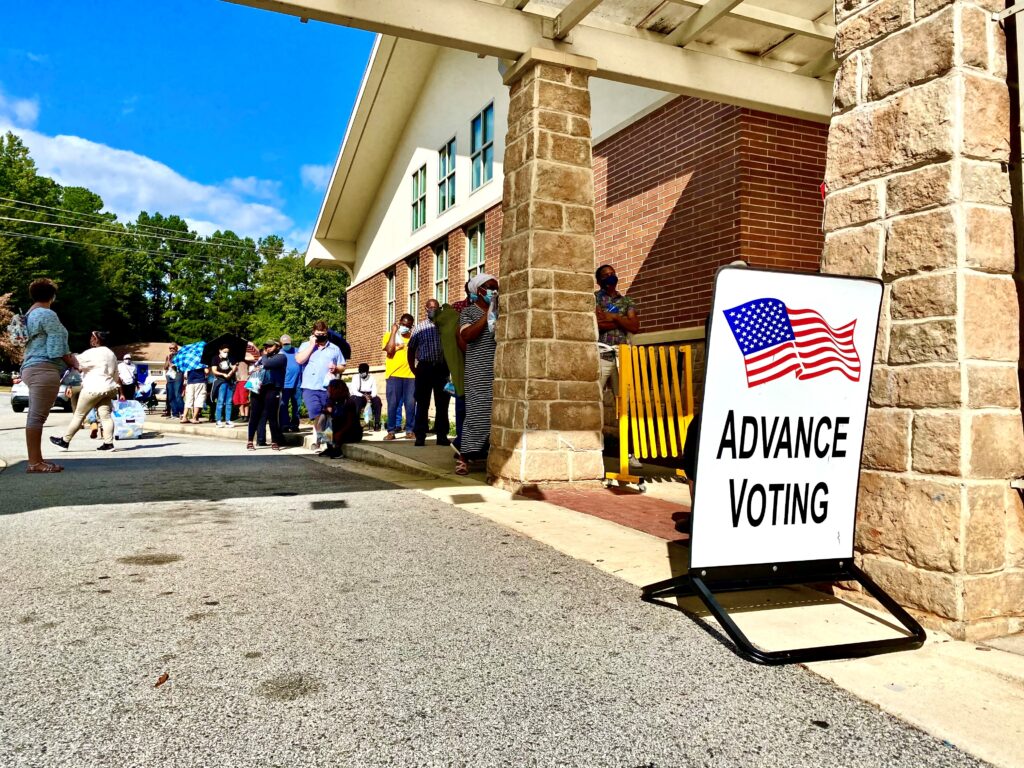
ATLANTA – Early voting in Georgia ahead of the May 24 primaries is breaking records, defying the historical trend of lower turnouts in non-presidential election years.
Through Tuesday, 254,556 Georgians had taken advantage of the early voting period that began May 2 to cast their primary ballots, Secretary of State Brad Raffensperger reported Wednesday. The vast majority – 234,893 – voted in person, while the rest submitted absentee ballots.
Early voting is running 239% ahead of the same point in the early voting period leading up to the 2018 primaries and 160% above the same point prior to the 2020 primaries.
“The record early voting turnout is a testament to the security of the voting system and the hard work of our county election officials,” said Raffensperger, who was the target of unsubstantiated charges of lax ballot security leveled by then-President Donald Trump after Democrat Joe Biden carried Georgia in 2020.
“As secretary of state, I promised to strike a strong balance between access and security in our elections, and these numbers demonstrate that I kept that promise and that voters have confidence in Georgia’s elections.”
Raffensperger supported election law changes the Republican-controlled General Assembly enacted last year that replaced the signature-match verification process for absentee ballots with an ID requirement and restricted the location of ballot drop boxes.
Through Tuesday, 146,425 voters had cast Republican primary ballots, compared to 106,188 cast by Democrats.
The top of the Republican ballot includes a hotly contested race for the GOP gubernatorial nomination between incumbent Gov. Brian Kemp and former U.S. Sen. David Perdue.
University of Georgia football great Herschel Walker is on the GOP ballot for the right to challenge incumbent Democratic Sen. Raphael Warnock, a nomination Walker is a strong favorite to win.
On the Democratic side, Stacey Abrams is unopposed in the gubernatorial primary, while Warnock drew only token opposition for the Democratic nomination to seek reelection to the Senate.
Primary voters have until this Friday to request an absentee ballot. Early voting will continue through Friday, May 20.
This story is available through a news partnership with Capitol Beat News Service, a project of the Georgia Press Educational Foundation.