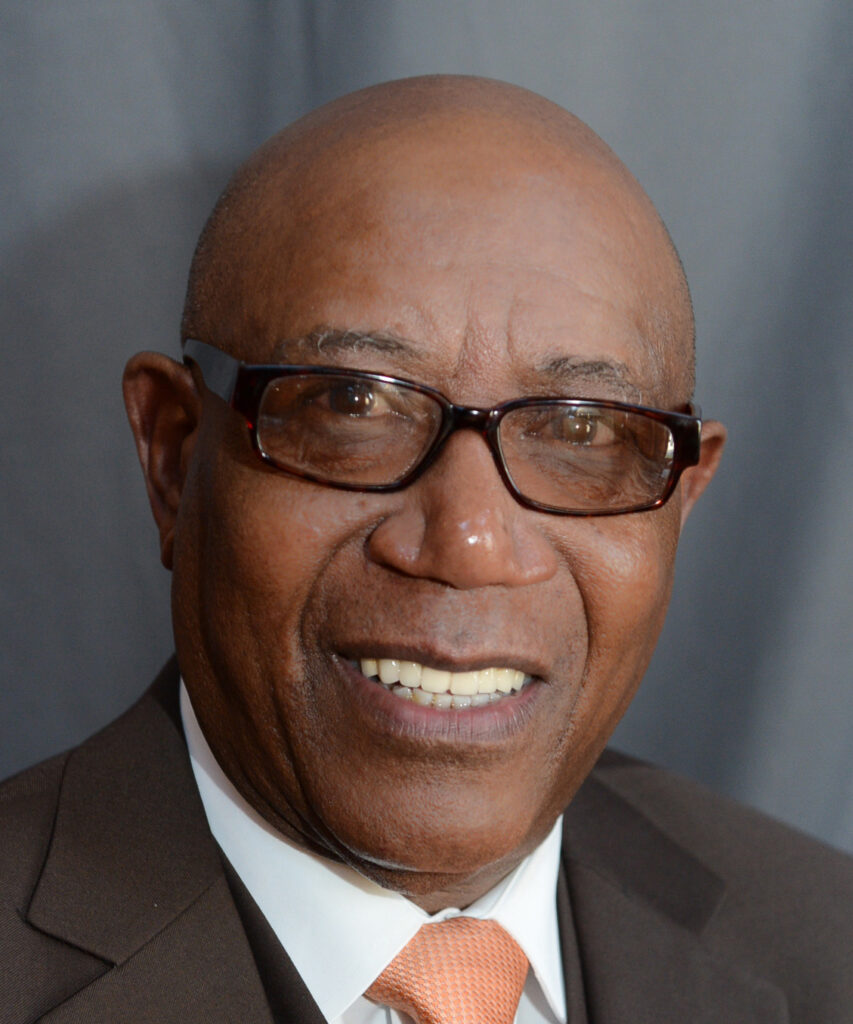
ATLANTA – Georgia Rep. Mickey Stephens, D-Savannah, returned to the chamber of the state House of Representatives Wednesday, more than two years after leaving due to an illness.
Stephens, 76, who was hospitalized for three months with blood clots in a leg he eventually lost to amputation, was accompanied by his wife of more than 50 years, Gloria, who spoke for him near the start of Wednesday’s House session.
“We have come here personally to thank you,” she told the lawmakers from the well of the House. “We are eternally grateful for the opportunity this morning to thank you for your immeasurable support, care and love throughout Mickey’s illness.”
Stephens, who has undergone four surgeries, greeted his colleagues from a wheelchair to a standing ovation.
Gloria Stephens particularly thanked her husband’s Capitol staff and House Speaker David Ralston, R-Blue Ridge, and his office for their support.
“This has been a life-changing experience,” she said.
While Stephens hasn’t been able to come to the Capitol since 2019, he won re-election last November without opposition in Savannah’s House District 165.
Stephens was first elected to the General Assembly in 2002 and served one term. He returned to office in 2014.
ATLANTA – The General Assembly decided Wednesday to leave the standard versus daylight saving time debate up to Congress.
On the final day of this year’s legislative session, the state Senate voted 45-6 to put Georgia on daylight saving time permanently. But under federal law, that change can take place only if Congress makes daylight time permanent nationwide.
The Senate, which passed legislation in February to put Georgia on standard time all year long, voted instead on Wednesday to side with the Georgia House of Representatives, which favored year-round daylight time.
The one point of agreement between the two chambers throughout the 2021 General Assembly session was that Georgia should stop switching back and forth between standard and daylight time twice a year.
Sen. Ben Watson, R-Savannah, and Rep. Wes Cantrell, R-Woodstock, who sponsored two competing versions of the bill, cited a number of studies to their legislative colleagues describing disruptions to sleep patterns and more serious health issues that increase in frequency following time changes, particularly the yearly “swing forward” shift from standard to daylight time.
However, Georgians will continue switching back and forth under the bill that gained final passage Wednesday, unless and until Congress takes action. The legislation now heads to Gov. Brian Kemp for his signature.
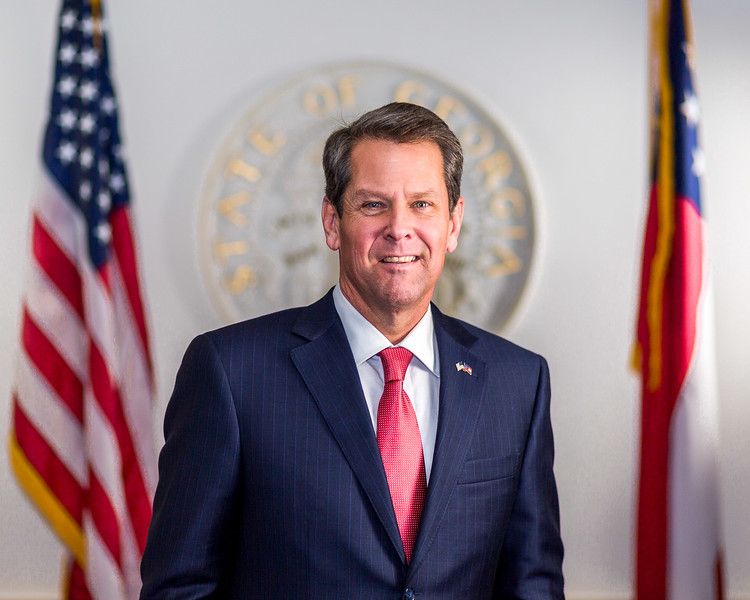
ATLANTA – Georgia Gov. Brian Kemp and Secretary of State Brad Raffensperger pushed back Tuesday against criticism of the elections overhaul the Republican-controlled General Assembly passed last week.
Democrats including President Joe Biden and voting rights advocacy groups have slammed the legislation as part of a bid by GOP state lawmakers across the country at voter suppression following Republican defeats in last year’s elections.
The bill imposes new ID requirements on absentee voting, limits the placement of drop boxes for absentee ballots to inside election offices and early voting locations, and gives state election officials the authority to take over poor-performing local election boards.
But Kemp noted Tuesday the bill also expands early voting to two Saturdays and gives counties the option to hold poll hours on two Sundays. An earlier version of the legislation had proposed shrinking early voting on Sundays.
“How is this suppression when you’re adding opportunities for more weekend voting?” the governor asked.
Kemp also pointed out that the bill codifies drop boxes for absentee ballots for the first time in Georgia. Drop boxes were allowed during the last election cycle as part of the public health emergency he declared because of the coronavirus pandemic.
“The other side is trying to act like something was going to be taken away,” he said. “If we hadn’t addressed [the drop boxes] in this bill, they would have gone away.”
Kemp said the bill does away with the signature match method for processing absentee ballots in favor of a voter ID requirement to ease the burden on local elections officials.
The huge surge of absentee voting in the 2020 election cycle due to the virus was cumbersome on local elections officials forced to match signatures, he said.
“[Going to voter ID] is going to help elections officials speed up the process,” he said.
The governor defended a controversial ban on non-poll workers handing out food and drinks within 150 feet of voters waiting in line outside polling places as a way to prevent illegal electioneering.
“We’ve had rules about electioneering within 150 feet of the polls for a long time,” he said. “The real question ought to be why are they standing in line so long? … People ought to be able to vote in 30 minutes to an hour.”
Raffensperger said the new law will still let groups give “nonpartisan, bipartisan water without campaign stickers” to poll workers who will distribute it.
But the secretary of state stopped short of giving the bill a full endorsement, noting other contentious measures that strip him of voting powers on the State Election Board. Instead, the new law calls for the board to be chaired by an official appointed by either the General Assembly or the governor.
“When you have direct accountability and you have an elected official at the top, then the voters can hold that person accountable,” Raffensperger said. “What you really are creating is a little mini-Washington, D.C., a non-accountable board … [where] no one gets anything done. … I think at some point they’ll regret this decision.”
Meanwhile, Kemp’s signing of the election bill has drawn a trio of lawsuits aimed at blocking the voting measures from taking effect on grounds they suppress voter access, particularly in Black and low-income communities.
Attorneys representing a host of suing groups including the NAACP, the American Civil Liberties Union (ACLU), the Southern Poverty Law Center (SPLC) and the New Georgia Project argue the election changes violate the federal Voting Rights Act and constitutional free-speech rights.
“It’s essentially a storm that the legislature and the governor have unnecessarily created that they’re leaving for others to address,” said Nancy Abudu, the SPLC’s deputy legal director for voting rights. “Our lawsuit is taking this issue directly to the courts in an effort to block this behavior, this suppressive attempt.”
The suing groups dismiss arguments that the law expands voter access by adding more weekend early-voting hours and officially legalizing drop boxes by pointing to the totality of the law.
“Each of these provisions taken together demonstrate very clearly that this law is aimed at suppressing the vote, not expanding it,” said Sophia Lin Lakin, deputy director of the ACLU’s Voting Rights Project. “Picking apart each individual provision … is simply ignoring the fulsome thrust of the really terrible impact of this law.”
Kemp accused the law’s opponents of pushing a narrative aimed at benefiting Democrats politically. He cited as an example Biden’s portrayal of the law as a “Jim Crow in the 21st century” blow at voting rights won during the long civil rights struggle in America.
“We know their playbook,” Kemp said. “They target certain sections of the bill. Then, when it changes, they target something else.”
ATLANTA – A lot of legislative business remains unsettled entering the final day of this year’s General Assembly session.
But lawmakers won’t have to deal with a couple of measures on Wednesday that gained final passage on Monday.
The legislature sent to Gov. Brian Kemp’s desk for his signature two bills related to criminal justice that would let some Georgia offenders gain early release from probation and improve the processing and tracking of sexual-assault kits.
The early-probation bill, which passed the House 169-2 on Monday, is aimed at reducing Georgia’s third-highest-in-the-nation probation population.
It would let first-time felons in Georgia sentenced to prison for 12 months or fewer seek early termination of their probation after they’ve been released, paid court fines and avoided another run-in with the law for two years.
Probationers would be allowed to petition courts for early termination of their supervision terms after three years.
“This bill provides an incentive for those on probation to behave,” said Rep. Tyler Paul Smith, R-Bremen , who carried the bill in the House.
The sexual-assaults test kit bill, which passed both the House and Senate unanimously, is intended to resolve a chronic backlog of incomplete forensic tests in Georgia that only recently started to decline.
The bill, sponsored by Rep. Scott Holcomb, D-Atlanta, would create a statewide tracking system to tally the number, location and processing status of sexual-assault kits. Victims would not need to file criminal charges to complete assault tests and could receive updates anonymously on their kit’s status.
With Holcomb’s bill, the tracking system would be set up with funding from the state Criminal Justice Coordinating Council and see Georgia join 27 other states with similar systems, said Sen. John Albers, R-Roswell, who carried the bill in the Senate.
“The goal is to improve information and ultimately put bad actors away,” Albers said. “Overall, these measures will improve the state’s response to sexual assaults.”
ATLANTA – A debate in the Georgia House and Senate over whether Georgia should observe standard or daylight saving time all year continues to rage entering the last day of this year’s legislative session.
The House voted 111-48 Monday to put Georgia on daylight time year-round, substituting that language for a bill the Senate passed last month calling for permanent standard time.
“Most people prefer daylight saving time over permanent standard time,” Rep. Wes Cantrell, R-Canton, declared shortly before Monday’s vote.
Cantrell backed up that assertion by citing a recent poll in Politico that found Americans prefer permanent daylight time over standard time 5-1.
Even if the Senate abandons its position and agrees with the House on switching to daylight time year round, it can’t do so without congressional approval.
Under federal law, states are permitted to switch to standard time year round if they wish, and Arizona and Hawaii have made the change.
However, states must wait for Congress to act before they can observe daylight time all year.
Cantrell said if Congress approves the switch, the legislatures in Florida, South Carolina, Tennessee , Louisiana and Arkansas have committed to going to daylight time, reason enough for Georgia to act.
“Georgia will be the odd man out,” he said.
Georgia lawmakers have reached a consensus on one key element in the debate: They don’t like switching back and forth twice a year.
Sen. Ben Watson, R-Savannah, chief sponsor of the Senate bill calling for permanent standard time, has cited studies that show switching between standard and daylight time interrupts sleep patterns and, more importantly, increases the risk of illnesses including heart attacks.
Watson and other lawmakers also have expressed concerns that going to daylight time all year would put children getting on school buses at greater risk during the winter, when sunrise would occur as late as 8:30 a.m.
But the Senate appears now to be leaning toward permanent daylight time, despite having passed Watson’s standard time bill.
The Senate is scheduled to take up Cantrell’s House bill on Wednesday, the last day of the 2021 legislative session. A substitute bill approved by the Senate Rules Committee on Monday calls for Georgia to observe daylight saving time year round, if Congress decides to let states make that change.