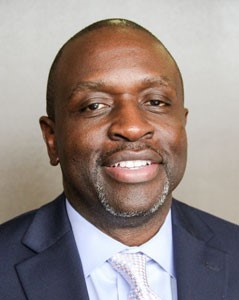
Georgia Chief Turnaround Officer Eric Thomas resigned last month amid completion of an audit into his performance. (Photo credit: Georgia Department of Education)
ATLANTA – After resigning last month, the head of efforts to turnaround struggling schools in Georgia has filed a lawsuit against the state Department of Education to block public release of a damaging audit the agency completed that led to his resignation.
The lawsuit was filed two days after the
education agency notified Chief Turnaround Office Eric Thomas last Friday that
the 64-page audit of his office might soon be released publicly, though that
has not happened yet.
The agency refused to provide Capitol
Beat News Service with a copy of the audit following an open-records request
last week.
The audit probed allegations of
bid-rigging in Thomas’ office, issues with travel expenses and workplace
harassment, according to a letter last month from Georgia Inspector General
Deborah Wallace.
“Overall, it appears that the chief
turnaround office was mismanaged and that policies and procedures in place were
routinely ignored by Dr. Thomas,” the letter says.
But Thomas claims the audit’s findings
were flawed from the start since he was never interviewed as part of an
internal investigation by the agency. The lawsuit calls the audit “a
retaliatory sham,” disclosure of which would violate Georgia’s Whistleblower
Protection Act.
Thomas also claims the audit’s release
would damage his reputation and chances for future employment. The lawsuit
describes his experience as “extremely marketable” after years of work in
public school systems including a stint as the turnaround chief for the
University of Virginia.
“As a result, publication of the
investigative report would result in publication of irreparably damaging
information about Dr. Thomas based on an investigation that was not undertaken
in good faith, and which would invade his privacy by defaming him,” the lawsuit
says.
Thomas gave the agency a 35-page response
to the audit last week, according to the lawsuit. He may address the Board of
Education at a meeting Wednesday.
The dispute centers on control over a
branch of the state education agency tasked with improving the worst-performing
schools in Georgia. Thomas alleges in the lawsuit that state School
Superintendent Richard Woods sabotaged the turnaround office in order to bring
its functions under his administrative control.
A Savannah native, Thomas has headed up the turnaround office since state lawmakers passed legislation creating it in 2017. He tendered his resigned last month amid the audit’s completion and is poised to step down May 30.
Now, the chief turnaround office will be
folded into a different arm of the education department run by Stephanie
Johnson, the deputy superintendent for school improvement. Woods told lawmakers
last month the change should not cause any hiccups for 13 low-performing
schools the office was supporting.
ATLANTA – Georgia lawmakers capped a hiatus week at the state Capitol by pulling back on some of Gov. Brian Kemp’s ordered budget cuts, which have dominated talks so far in the 2020 legislative session.
The governor’s proposed cuts – rounding out to $557 million through the 2021 fiscal year – inspired the General Assembly to set aside bill-wrangling for 10 days and focus almost exclusively on the budget.
Lawmakers held a fresh round of hearings
to dive deeper into the budget. Dozens of state agency heads explained to
members of the House and Senate Appropriations committees how they’ll manage
the cuts.
Changes to the governor’s budget began Thursday, when members of the House Economic Development Appropriations Subcommittee voted to restore funding for nearly half of 13 vacant food-safety inspector positions slated to remain unfilled because of the cuts.
The subcommittee’s chairwoman, Rep. Penny
Houston, previously had said she felt wary of shortchanging food inspectors
amid a proliferation of Dollar General stores opening in Georgia that now sell prepared
food – and thus ought to face more scrutiny.
“It’s not really a glamorous thing when
you go to a convenience store and you see rats everywhere,” said Houston,
R-Nashville. “I mean, it’s tough.”
More budget tweaks likely ahead could set
up head-butting between lawmakers and Kemp, who has veto power over spending
items that the legislature passes.
The House version of the amended
$27.4-billion budget for the current fiscal year is headed for a floor vote
Wednesday that will likely see more cuts rolled back, said House Appropriations
Committee Chairman Terry England, R-Auburn.
“You’ll probably see more restorations,”
England said, declining to elaborate further Thursday. “That’s the way this
process is supposed to work.”
With the cuts, Kemp aims to stave off a budget shortfall amid sluggish tax revenue collections while leaving wiggle room to give public school teachers a $2,000 raise.
Revenues picked up last month but still lag far behind the roughly $800 million boost officials originally projected.
Kemp’s budget director, Kelly Farr, told lawmakers Wednesday the agency belt-tightening was carefully calibrated to minimize impacts on everyday Georgians. He highlighted a total of $140 million in savings achieved by leaving vacant staff positions unfilled, plus millions more by eliminating landline phones and travel.
Many agencies are poised to have their
budgets stay largely the same by trimming proposed increases in spending last
year rather than cuts to existing services, Farr said.
“We tried to be very diligent about
things that we consider to be public-facing [and] service-impacting,” Farr
said. “This was not done haphazardly.”
But some lawmakers argued that kind of
budget-crafting could dampen the rebuilding process those agencies have
undergone since the 2008 economic recession, which spurred deep cuts throughout
state government.
“We’ve tried to make sure over the last
couple of years that we paid attention to those agencies that took
extraordinarily harsh, harsh cuts over the recession,” said Rep. David Knight,
R-Griffin. “All of a sudden we come back down and there’s a drastic change.”
Concerns have continued to mount from
social workers, doctors and others worried the proposed cuts would hit
Georgia’s most vulnerable populations the hardest.
State mental health services face around $80 million in cuts through June 2021 that would largely affect programs meant to prevent crisis situations that could land someone in jail or a psychiatric ward.
Those cuts have unsettled many lawmakers
and mental health advocates who support pumping more money into services for
people with mental and physical disabilities, rather than keeping the budget
flat.
“There are ways we can cut back,” said
Pauline Shaw, executive director for the nonprofit special-needs group
Effingham County Navigator Team. “But it should not come on the backs of people
who are the most vulnerable.”
Critics have also homed in on cuts that could affect some law enforcement and criminal justice reform initiatives like alternative sentencing programs, public defenders and a huge backlog of forensic lab tests needed for rape investigations.
Elsewhere in the budget, Kemp has taken
especially fierce heat for proposed cuts to county health boards and physician
training programs in rural areas – a key voter base for the governor and many
lawmakers from both parties.
“We do not want to see a greater burden
placed on our rural hospitals because of budget cuts,” said Damien Scott, CEO
of Emanuel Medical Center in Swainsboro. “When you’re barely making ends meet,
even $15,000 to $20,000 can be significant.”
Rep. Clay Pirkle agreed, noting many underserved
health boards in rural counties might be in a serious bind without full state
funding.
“If we are cutting in an area, the
unintended consequence is we are cramming down to the local level,” said
Pirkle, R-Ashburn. “And a lot of them can’t afford it.”
Some officials pointed out the full
extent of the cuts can be deceptive since state funds are often paired with
federal dollars.
For instance, the state medical director
for the Georgia Poison Center, Robert Geller, said an estimated $50,000 cut to
his office could swell to more than $150,000 with the loss of matching federal
funds.
Rep. Butch Parrish, who chairs the House
Health Appropriations Subcommittee, said he wants to steer clear of small cuts
that could lead to inadvertently larger costs down the road.
“Let’s continue to talk about the
consequences of some of these cuts,” Parrish, R-Swainsboro, said at a hearing
Wednesday. “And maybe if we look at it in a different light, we can come up
with a better solution that we can all be happy about.”
DPS Commissioner Col. Mark McDonough talks about the firing of 30 troopers on Jan. 29, 2020. (Photo by Beau Evans)
ATLANTA – Georgia’s public safety chief offered up his resignation Thursday in the wake of a cheating scandal in which 30 new state patrol officers were fired last month.
Col. Mark McDonough, commissioner of the Georgia Department
of Public Safety, is poised to step down after the agency’s board accepted his
resignation at a meeting Thursday morning.
McDonough was asked to resign by Gov. Brian Kemp, according to the governor’s office. His resignation comes in the wake of the trainee cheating scandal as well as a crippling cyberattack in July and a break-in at the State Capitol in late September.
“My family and I thank Col. McDonough for his dedicated
service, leadership and sacrifice,” Kemp said in a statement. “We wish him the
very best in the years ahead.”
The governor’s office did not have details Thursday morning
on who would replace McDonough.
The public safety department houses the Georgia State
Patrol, the Motor Carrier Compliance Division and the Capitol Police Division.
A veteran U.S. Marine, McDonough was a state trooper in Blue
Ridge before being tapped as the commanding officer of the state patrol. He was
picked for the commissioner post by then-Gov. Nathan Deal in 2011.
The public safety department was peppered with problems in
recent months.
In July, a ransomware attack downed the agency’s main
computer server, forcing troopers to log citations and reports manually.
In September, a vandal smashed through a glass door,
shattered several light fixtures and tore a gash in the framed portrait of
former Gov. Samuel Marvin Griffin.
Last month, McDonough announced an entire State Patrol cadet
class was canned for collectively cheating on an online exam required to use
the agency’s radar speed detectors. The trainees circulated test questions
among themselves in their dorm rooms to pass what they feared was unduly
difficult exam, according to an internal investigation report.
Third-party companies with a large say in setting prescription drug prices would face tighter regulations in Georgia under a bill state lawmakers mulled over this week.
Companies called pharmacy benefits managers (PBMs) act as go-betweens for prescribers and insurance companies that contract with health insurers to negotiate lower drug prices for patients.
But critics accuse them of muddling up the process, prompting increases in drug prices and unnecessary delays in filling prescriptions.
Senate Bill 313 would require pharmacy benefits-manager companies to adhere close to national average drug prices set by the federal government when reimbursing local pharmacies. The state Department of Insurance would monitor those reimbursement amounts.
The bill would also prohibit PBMs from charging extra fees
or causing delays when requests are made for lower-priced drugs. Benefits
managers would also have to distribute all rebates from drug makers to
patients, rather than keeping a portion for themselves.
The bill follows legislation the General Assembly passed last year that prevents benefits-manager companies from steering patients to associated pharmacies with potentially higher costs.
Sen. Dean Burke, Senate Bill 313’s sponsor, said it aims to
boost transparency over how drug prices are established between health plans,
hospitals, pharmaceutical companies and pharmacy benefits managers.
“When it gets to [patients], there’s been so many convolutions it’s really hard to understand the process,” said Burke, R-Bainbridge. “What we’re trying to do is shine a little light on that.”
Sen. Dean Burke (R-Bainbridge).
Hospital and pharmacy groups have praised the bill,
describing it as a means to peel back a layer of the already complicated
prescription drug marketplace. They say scaling down the role of third-party
companies could also keep smaller pharmacies in Georgia from going out of
business amid increasing drug costs.
“What we’re seeing is self-dealing on the grandest of scales
in health care by the pharmacy benefits managers,” said Greg Reybold, vice
president of public policy for the Georgia Pharmacy Association.
Jennifer Shannon, a pharmacist from Johns Creek, said she
deals every day with paperwork hurdles and denials from benefits-manager
companies that she claimed steer her customers to costlier drugs to receive rebates.
The rigmarole risks harming people who end up not receiving medications they
were prescribed, she said.
“Our patients that we care for are being stripped out of our
hands and put into harm’s way,” Shannon said. “It is not right. It is wrong.
And at my core, it hurts.”
Benefits-manager companies largely argue the bill would
hamstring them when negotiating with big pharmaceutical companies for lower
prices. That could drive up costs overall by giving drug makers free rein to
set prices as they please, said Scott Turner, vice president of public affairs
for the national trade group Pharmaceutical Care Management Association.
The bill also ignores the influences of other players like
manufacturers and wholesalers in the complex series of transactions that lead
to final drug costs, said Jesse Weathington, a consultant representing the
insurer group Georgia Association of Health Plans.
“Our contention is that if transparency is a good thing,
then it would be good to have transparency across the entire spectrum of actors
in this ecosystem and not just the pharmacy benefits managers,” Weathington
said Wednesday.
Some lawmakers on the full Senate Insurance and Labor
Committee also cast doubt on the measure earlier this week. Sen. Larry Walker
III, R-Perry, said he wondered if the proposed rules would hurt any
benefits-manager companies that have helped lower prices.
“It seems like they wouldn’t exist if they didn’t add value
somewhere along the line besides themselves,” Walker said Monday.
The Senate subcommittee considering the bill did not take any action after a three-hour hearing Wednesday.
Burke’s legislation is part of a slate of health-care measures filed in the 2020 legislative session that started last month. Other efforts include twin measures to end so-called “surprise billing” that hits Georgians with unexpectedly large hospital bills.
ATLANTA – Plastic grocery bags would be banned in Georgia under a Senate bill filed in the 2020 legislative session.
Sponsored by Sen. Donzella James, Senate Bill 280 would prohibit retailers from handing out plastic carryout bags starting next year.
The legislation would exempt several bag
styles including plastic wrappers, newspaper sleeves, take-out bags and trash
bags.
James, D-Atlanta, said she aims to curb
plastic pollution after trying unsuccessfully two decades ago to push
legislation calling for Georgia to be a “zero waste” state by this year.
Sen. Donzella James.
“We want to make an effort to one day, if
we can’t have zero waste by 2020, maybe 2030,” James said at a Senate Economic
Development and Tourism Committee hearing Wednesday.
James said she is open to changing the
start date for the ban to 2024. She also said her bill takes aim specifically
at grocery bags.
“We didn’t want to just ban all bags. We
wanted to start there,” James said. “If we have great success, then maybe the
state could consider more.”
Single-use plastic bags that do not
biodegrade tend to wind up in environmentally sensitive areas like rivers and
streams, endangering wildlife and polluting natural settings. Environmental
group representatives said Wednesday that Georgians discard more than 1 million
tons of plastic annually, of which less than 10% is recycled.
Plastic-bag bans have passed recently in
states like California, New York and Connecticut, and cities including San
Francisco and Austin, Texas. Some large companies like Kroger and Starbucks
have also announced policies to phase out plastic bag use in the coming years.
Food retailers in the state support
curbing plastic use but are wary of an outright ban that could spur more
reliance on other non-recyclable products like garbage bags, said Kathy Kuzava,
president of the Georgia Food Industry Association.
She said a better approach might be to
encourage more voluntary plastic-reduction policies to help stores transform
their customers’ habits on bag use.
“It’s really trying to get the customers
used to a change in mentality,” Kuzava said Wednesday. “And I think that’s
happening.”
The bill has backing from several
environmental groups in Georgia as well as the Millennial Civil Rights
Campaign, a social advocacy group led by young adults. Its founder and
president, Toas Wynn, said a bag ban would be the next logical step with many
stores already phasing out plastics.
“We’re not looking to do something that
is completely out of the norm nor has any indications of a trend that is not
already taking place,” Taos said.
But Senate Economic Development and
Tourism Committee Chairman Frank Ginn said he thinks the bill needs some
revising before it could move forward.
Ginn, R-Danielsville, singled out the
need to clarify whether reused plastic bags could be exempt, such as for
cleaning up dog waste.
“Who knows that they’re used for?” Ginn
said. “I reuse mine in a lot of different ways.”
ATLANTA – Twin measures moving through the state legislature would ban the practice of “surprise billing” in Georgia, in which patients wind up with unexpectedly big bills months after hospital visits.
Republican lawmakers in the Georgia House
and Senate have filed identical legislation that would remove Georgia hospital
patients from the billing equation, leaving it to medical providers and
insurance companies to work out their cost differences.
The legislation still faces pushback on
how costs would be worked out between insurers and medical providers, but
representatives from both sides agreed at a Senate Health and Human Services
Committee hearing Tuesday that the finish line is close after years of debate
over the issue.
“We really think it’s time to put this to
bed and protect Georgians,” said Laura Colbert, executive director of the
nonprofit Georgians for a Healthy Future.
Dubbed “surprise” or “balance” billing, the extra hospital charges result from specialty procedures like anesthesiology or emergency-room surgery completed by out-of-network specialists. They can add hundreds or thousands of dollars to a patient’s final bill without their knowing in advance.
State lawmakers have tried for the past
five years to tamp down surprise billing, said Rep. Lee Hawkins, sponsor of the
House legislation.
He and others traced hold-ups to
disagreements over how insurers and medical specialists should settle
out-of-network costs, particularly if disputes arise that need formal
arbitration.
Medical specialists argue they are
underpaid for performing complex technical procedures under in-network
insurance arrangements, while insurers claim those specialists charge too much,
Hawkins said.
Hawkins, R-Gainesville, said he just
wants legislation to pass that will leave patients out of the haggling involved
with hospital costs.
“The No.-1 thing is to make sure that
there’s no more surprise billing,” Hawkins said. “Everything else is making
sure it works with the providers and the insurers.”
Gov. Brian Kemp has thrown his support
behind the bills, calling them “compromise legislation” worthy of passage.
“While there is more work to do,” Kemp
said in a statement, “I am committed to working with the General Assembly,
patients, providers and insurance carriers to pass this legislation and put
patients first.”
Hawkins’ House Bill 888 and counterpart Senate Bill 359, by Sen. Chuck Hufstetler, would require that insurers pay out-of-network physicians either a “contracted amount” set in 2017 for various procedures, or a higher charge that the insurer proposes.
Disagreements between the two sides would
prompt an arbitration process overseen by the state Department of Insurance,
which would contract with outside private arbitration companies to decide the
final bill.
All arbitration decisions and final
payments would be logged in a database kept by the insurance department. That
data would factor into annual rate adjustments for the contracted amounts that
serve as a baseline for what insurers reimburse for out-of-network procedures,
Hawkins said.
Those aspects of the bill – arbitration and the database – are critical because they would shed light on how much insurance companies actually pay providers for specialty services, Hawkins said.
“We never see exactly what the insurance
company was paying the physician,” he said.
Some representatives for medical
providers and insurance groups still want tweaks to the legislation,
particularly on the finer points for how the contracted amounts would be set.
They aired their suggestions at a committee hearing on Hufstetler’s bill
Tuesday.
Victor Moldovan, an attorney representing
the Independent Doctors Association of Georgia, said the 2017 baseline
reimbursement rates may be too low for specialty providers to stay in business.
He also called for distinguishing more between payments for emergency services
and non-emergency services.
“At the end of the day, this is not a
free cost,” Moldovan said. “There has to be a way to manage these issues … in a
way that’s fair to not just the patient, but the providers as well.”
Some physician groups also want tighter
rules on what kind of information would be logged into the new all-payer
database, the details of which may end up being worked out in separate
legislation.
No action was taken at Tuesday’s
committee hearing.
Hawkins’ and Hufstetler’s bills are part of a slate of health-care measures filed in the 2020 legislative session that started last month. Other efforts include a bill by Sen. Dean Burke, R-Bainbridge, aimed at restricting how third-party companies can influence prescription drug prices in Georgia.
The surprise-billing legislation will
likely see some changes as it winds through the Georgia General Assembly,
Hawkins said. But state officials and lawmakers are determined to follow
through on the issue this year, having framed surprise billing as a top
priority in the session.
“If we do not get this solved, I think it
would be a failure of the session,” said Senate Health and Human Services
Committee Chairman Ben Watson, R-Savannah.