ATLANTA – The Georgia Senate passed legislation Monday that would bring additional scrutiny to the state’s lucrative tax credit and exemption programs.
Senate Bill 302, sponsored by Sen. John Albers, would let the governor’s budget office contract with outside auditors to examine up to five tax-incentive programs each year, upon request from certain committee heads.
The measure passed unanimously and heads
to the Georgia House.
Gov. Brian Kemp vetoed a similar bill
brought last year by Albers, R-Roswell, that did not give the budget office the
ability to contract with independent auditors to complete the audits.
Under this year’s bill, auditors would
dive into the economic pros and cons of the state’s many tax credits,
exemptions, rebates, deferrals and other business incentives that can fly under
state lawmakers’ radar during busy legislative sessions.
Only the chairs of the Senate Finance
Committee and the House Ways and Means Committee could order the audits.
“I believe this is great fiscal policy
for us,” Albers said from the Senate floor Monday.
Albers’ bill followed a Senate study committee
report done in 2017 that found shortcomings in how the state monitors whether a
given tax incentive is spurring business and job creation as it was intended to
do.
It also came amid back-to-back reports
from the state Department of Audits and Accounts that found Georgia’s film tax
credit has been poorly managed while being touted as having more economic
impact on the state than it actually does.
Some local economists have pushed back on the findings of those two audits, noting they ignored the huge impacts the state’s film industry has even if the tax credit’s metrics and rules may be looser than they should be.
Even so, the film-credit audits spurred
calls from state lawmaker to keep closer watch over tax breaks and credits in
Georgia.
ATLANTA – Legislation aimed at ending surprise bills for emergency hospital visits in Georgia under certain insurance plans passed unanimously out of the Georgia Senate on Monday.
Senate Bill 359, sponsored by Sen. Chuck Hufstetler, would prohibit hospitals from handing patients unexpectedly large bills for emergency procedures done by specialists who are outside that hospital’s coverage network.
If passed, the measure by Hufstetler,
R-Rome, could save patients thousands of dollars in surprise costs for
specialty procedures like anesthesiology. It would require medical providers
and insurers to work out how to pay for costly out-of-network procedures
performed at a patient’s in-network hospital.
It would not, however, include
employer-based private insurance plans or costs associated with specialty
procedures done in out-of-network hospitals.
Hufstetler said the federal Employee
Retirement Income Security Act prohibits state lawmakers from tampering with
private-sector health plans.
“We simply have no method of doing so,”
Hufstetler said from the Senate floor.
Despite the limitations, supporters have
hailed Hufstetler’s bill and an identical measure winding its way through the
Georgia House as a means to protect many Georgia patients from crippling
surprise hospital charges.
Rather than dropping the full cost for
specialty procedures on a patient, the two measures would force insurers and
doctors to work out how to pay the extra costs for out-of-network procedures
done at in-network hospitals.
Disputes over the final payment would be
settled by an arbitration process overseen by the state Department of
Insurance. In that scenario, the insurance company would propose one payment
amount for a procedure and the doctor would propose another. A contracted
arbitrator would pick one of those amounts.
That process would apply for emergency
hospital visits and non-emergency procedures that are “medically necessary,”
Hufstetler said. Patients could still choose to pay extra for non-elective
emergency procedures that are out of a hospital’s coverage network.
The identical measure to Hufstetler’s, House Bill 888, was scheduled for a second committee hearing Monday afternoon. It was sent back to the House Special Committee on Access to Quality Health Care after barely passing out of that committee by a 5-4 vote last week.
The two bills’ progress through the
General Assembly comes with high hopes from state lawmakers, doctors, insurers
and consumer advocates after years of legislative false starts.
Medical specialists have argued they are
underpaid for performing complex technical procedures under in-network
insurance arrangements, while insurers claim those specialists charge too much.
Some disagreement remains on both sides
over proposed baseline billing rates for specialty procedures and the details
of a new all-claims database where arbitration decisions would be logged. The
baseline rates and database would influence how the prices of medical
procedures would change over time.
But several representatives for insurance
groups and doctors said in committee meetings earlier this month that they
largely feel satisfied with the House and Senate bills.
ATLANTA – Georgia lawmakers stepped closer to increasing the per-ton fee to store toxic coal ash at landfills Monday by passing legislation out of the state Senate.
Landfills in Georgia have recently been
charging less to receive and store shipments of coal ash, which is the
byproduct of burning coal at power plants to generate electricity. The ash can
contain compounds causing cancer after long exposure.
Based on a bill the General Assembly
passed in 2018, the fee for coal ash has stood at $1 per ton since July while
the fee for all other landfill garbage is $2.50.
Senate Bill 123 would raise the fee for coal ash disposal to $2.50. Any contracts effective on July 1, 2020, between landfills and local governments where the dumps are located would not have to adopt the lower fee for coal ash unless a contract was renewed, amended or otherwise changed.
The bill’s sponsor, Sen. William Ligon,
R-Brunswick, likened the lower fee to a subsidy for private power utilities.
“The hope is this will help Georgia stop
being a depository for coal ash,” Ligon said from the Senate floor Monday.
The bill passed out of the Senate by a
52-2 vote. Voting against the bill were Sen. Steve Gooch, R-Dahlonega, and Sen.
Jeff Mullis, R-Chickamauga.
Georgia environmentalists have worried
the lower fee for coal ash could spark an influx of out-of-state coal ash to
Georgia landfills.
Five landfills in Georgia have taken in
millions of tons of coal ash since 2017, with much of it originating from power
plants in Florida and North Carolina, according to state Environmental
Protection Division records.
Environmentalists’ concerns come as the state’s top energy producer, Georgia Power, is moving away from storing coal ash in liquid ponds and instead disposing it in dry landfills. The company has previously touted the economic benefits of recycling coal ash into materials like concrete.
Coal ash disposal has surfaced as a leading environmental issue in this year’s legislative session at the Capitol.
Several Democratic lawmakers are keen to force Georgia Power to install impervious liners under every closed ash pond that will not be excavated.
Many residents of Juliette were scheduled
to arrive at the Capitol Monday to tell lawmakers their concerns about an
unlined ash pond at a Georgia Power coal-fired plant in their backyard that
they fear has contaminated the water in their drinking wells.
Two bills in the House and Senate would
require liners to be installed under that pond and several others. Georgia
Power has said their plans for sealing 10 of the total 29 ponds in place will
be safe.
ATLANTA – Legislation has been filed to bolster regulations for assisted senior-living facilities, personal care homes and memory centers in Georgia.
Introduced on Friday, House Bill 987 aims
to improve the quality of care for thousands of elderly persons in Georgia who
are no longer able to live on their own.
Sponsored by Rep. Sharon Cooper,
R-Marietta, the bill would require at least one direct-care staff member for
every 15 senior residents during waking hours, and one for every 20 residents
at night.
It would also require a licensed or
registered professional nurse to be on-site at assisted living facilities for a
certain amount of time each week and require all staff to undergo training in
elderly and disabled-adult care.
For facilities in financial strife, the
bill would require a 60-day advance written notice of impending bankruptcy
proceedings or property evictions, and a 14-day notice prior to ownership
changes that could disrupt living arrangements.
Facility administrators would need to be
newly licensed by a state board under the bill. Fines against facilities would
be set at a minimum of $5,000 if a resident dies or is seriously injured.
The bill also includes a slate of rules
to tighten staffing standards and training for memory care centers, which
provide services for people diagnosed with Alzheimer’s or other cognitive
conditions.
The proposed rules aim to prevent neglect
and maltreatment like what happened to DeKalb County retired teacher Peggy
Lavender and her husband, Jim, who was diagnosed in 2014 with Alzheimer’s.
At a news conference Thursday, Lavender
recounted how an assisted living facility unnecessarily sent her husband to a
psychiatric ward without her knowledge, leading to “brief and horrific”
treatment involving potent medications that left him “no longer able to walk,
talk or even stand up on his own.”
“Georgians living with dementia need and
deserve memory care that is high quality, safe and dementia-capable,” Lavender
said.
Cooper, a registered nurse who chairs the
House Health and Human Services Committee, framed the bill as a compromise
measure between senior advocates and facility managers that balances client
safety with concerns about overly stiff regulations.
“There are good homes and assisted living
facilities across the state,” she said. “Unfortunately, the bad ones put everyone
in a bad situation where we need to make corrections.”
Cooper’s legislation has already garnered
some backing from assisted-living facility operators including Rep. John
LaHood, who owns several facilities and is a co-sponsor of the bill.
LaHood, R-Valdosta, said Thursday that he
expects “vigorous” debate over the bill as it moves through the General
Assembly but agreed it should help improve senior facilities.
“We want to raise the minimum standards
to help ensure that families’ expectations are met, that residents are getting
the care they need and have a choice to age in place understanding what the
risks are,” LaHood said. “I think this bill goes a long way to accomplishing
that.”
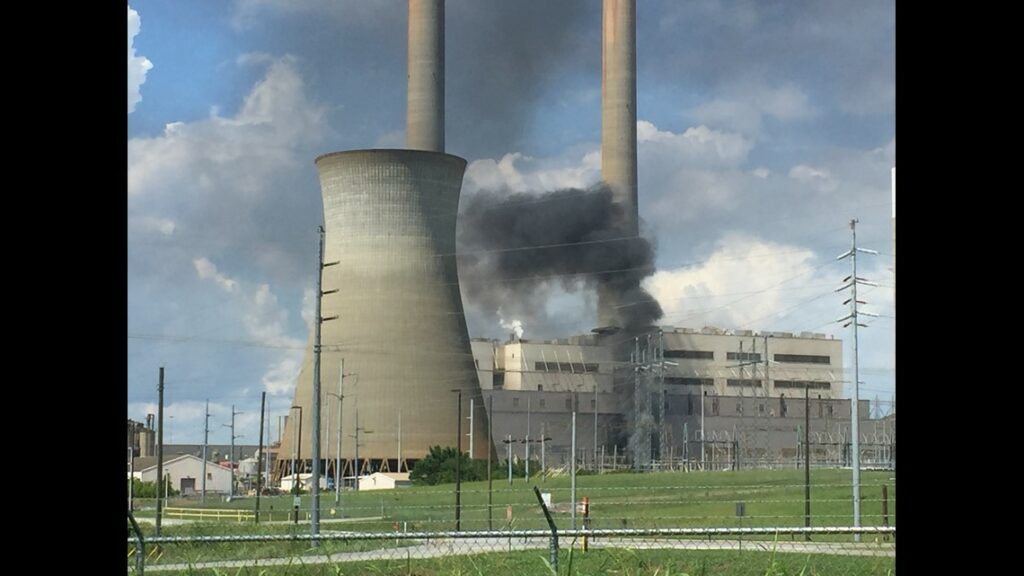
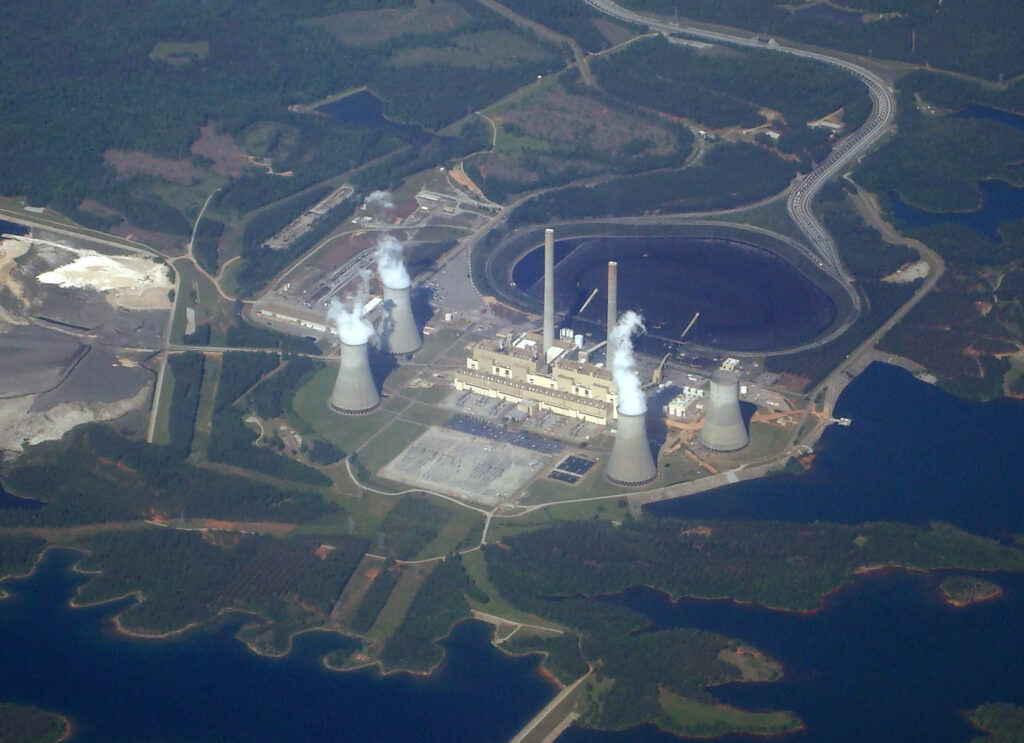
Aerial view of Plant Scherer in Juliette. (File photo)
ATLANTA – The new test results that rolled in Wednesday night were about what Fletcher Sams expected: Out of 36 drinking wells in Juliette, all but six showed troubling levels of a cancer-causing substance that has riled residents of the small Middle Georgia town.
The next day, also as expected, was spent
breaking the bad news to families living near the coal-fired Plant Scherer,
where environmentalists say the toxic ash byproduct of burning coal suspected
to be affecting their well water has long been improperly stored.
“It’s emotionally draining,” said Sams,
executive director of the nonprofit Altamaha Riverkeeper. “People have been
dealing with this issue for a long time.”
As more test results arrive, local
environmentalists like Sams are watching legislation in both chambers of the
General Assembly aimed at curbing the health and environmental dangers of coal
ash.
The issue became an environmental
priority for many Georgia lawmakers as state regulators received control over
permitting and monitoring sites where coal ash is stored.
Lawmakers and environmentalists are
especially worried about the potential effects of coal ash kept in liquid ponds
at several Georgia Power Co. plants, many of which environmentalists say lack
protective liners to prevent groundwater contamination.
Some bills before the state House and
Senate call for installing liners on all Georgia Power ash ponds and requiring
the company to give advance notice when the ponds being closed will be
dewatered.
Other bills seek to make the collection
fee for coal ash at Georgia landfills the same as for other kinds of garbage,
which supporters say would discourage out-of-state power companies from sending
their ash to Georgia.
A bill toughening rules requiring Georgia
Power to give advance notice that it will dewater ash ponds cleared a House
committee on Thursday – though environmentalists note dewatering has already
begun at some power plants.
Another bill that would raise the fee for landfills to receive coal ash from $1 to $2.50 passed is scheduled for a Senate floor vote on Monday.
But the big piece of legislation environmentalists are eying would force Georgia Power to install impervious lining around every site where coal ash is stored to keep contaminated water from leaching into drinking wells and underground aquifers.
“This is the year to require liners,”
said Jennette Gayer, director of the advocacy group Environment Georgia. “We’ve
been behind the eight ball on coal ash for a long time.”
Identical measures on liners are being
carried in the House by Minority Leader Bob Trammell, D-Luthersville, and in
the Senate by Sen. Jen Jordan, D-Atlanta.
A review of Georgia Power permits by the
state Environmental Protection Division shows coal ash in many of the ponds –
including at Plant Scherer – may be dipping 25 feet or more into the
surrounding groundwater table.
Coal ash could be sitting roughly 76 feet
below the water table at Plant Wansley south of Carrollton, according to an EPD
spreadsheet created last April.
In August, a review of Georgia Power
permits by the nonprofit Southern Environmental Law Center found several ash
ponds at power plants like Scherer and Wansley do not have sufficient lining.
Avner Vengosh, a Duke University
environmental professor who has studied coal ash contamination in North
Carolina, said contaminants could be constantly leaching into the groundwater
if liquid coal ash sits several feet deep in the water table without any
lining.
“It would be the worst-case scenario if
it goes straight into the water,” Vengosh said.
Georgia Power is in the middle of closing
its 29 storage ponds and depositing all its future coal ash in dry landfills.
Most of the ponds will be excavated, but 10 are slated to be sealed in place
“using proven engineering methods and closure technologies,” said Georgia Power
spokesman John Kraft.
Excavating all 29 ponds could be
expensive, given Georgia Power has already gained approval from the state
Public Service Commission to raise customer rates partly to cover about $550
million in ash clean-up costs.
The company assures its close-in-place plans for the 10 ponds will be sturdy enough to safeguard against groundwater contamination. Its closure plans also call for semiannual groundwater monitoring around the sites.
“Regardless of the methods used, excavation or closure in place, we’re going to be sure that our closure plans are protective of the environment and the communities we serve,” Kraft said.
Kraft also said testing by third-party geologists of 57 monitoring wells around Plant Scherer have not found harmful levels of hexavalent chromium in Juliette.
“To reiterate, there is absolutely no evidence that our operations at Plant Scherer are causing impacts to our neighbors’ drinking water in Juliette, the Monroe County area or elsewhere in the state,” Kraft said. “Furthermore, if our operations were causing harm to residents, we would take every action necessary to resolve the situation.”
The assurances don’t sway Sams. He said
tests so far on more than 80% of 72 drinking wells in Juliette have shown
levels of harmful hexavalent chromium higher than a safety threshold used in
California.
For a couple of wells, Sams said testing
has found 10.4 parts per billion of hexavalent chromium, far higher than
California’s 0.02-ppb non-mandatory public health goal. The maximum amount of
hexavalent chromium that water can contain in California under state law there
is 10 ppb.
The state EPD does not plan to test wells
in Juliette since the responsibility for water-quality testing of private wells
falls to local health departments, EPD spokesman Kevin Chambers said.
Sams said he and many Juliette residents
have taken the lack of water testing by state regulators as motivation to push
for the House and Senate bills requiring pond liners.
To make their point, Sams said Juliette
residents plan to pack several tour buses on Monday and head up to the state
Capitol to raise support among lawmakers.
“We will have conversations with every
legislator we can find,” Sams said.
Sen. Kay Kirkpatrick (R-Marietta) sponsored legislation allowing nonprofits to continue running summer food donation programs. (Official Georgia Senate photo)
ATLANTA – Legislation allowing nonprofit groups to make sandwiches for needy children during summer cleared the Georgia Senate on Thursday.
Senate Bill 345, dubbed the “Save Our
Sandwiches Bill,” came after state health inspectors halted a Marietta-based
summer food program after nearly 24 years of serving free homemade sandwiches
to thousands of school children.
A technicality in state law barred the
nonprofit MUST Ministries from receiving and distributing donated sandwiches,
forcing the group to raise nearly $250,000 to keep the program afloat last
summer.
The bill’s sponsor, Sen. Kay Kirkpatrick,
R-Marietta, said it would fix the issue by allowing nonprofits like MUST
Ministries to secure permits to operate free food programs for 12 weeks over
summer and four weeks during the regular school year.
Nonprofit food programs could also
receive donations of food made in church kitchens and businesses under the
bill, provided volunteers in those kitchens follow basic food-safety rules like
wearing gloves and keeping preparation areas clean. Food prepared in homes
could not be donated.
Squaring the MUST Ministries food program
with state law would make sure kids in food-scarce areas will still receive
sandwiches when school is not in session.
“This bipartisan bill … strikes a balance
between public safety and the needs of hungry kids in our community,”
Kirkpatrick said from the Senate floor Thursday.
The bill passed unanimously out of the
Senate and heads to the House for a vote.
Georgia officials including Lt. Gov.
Geoff Duncan praised the measure as necessary to keep the doors open for
critical food programs catering to underserved youth.
“The Save Our Sandwiches Bill provides a
path forward for the important work done by community organizations that
provide vital assistance to fellow Georgians across the state,” Duncan said in
a statement.