ATLANTA – A major obstacle to the era of online instruction the coronavirus pandemic has forced on Georgia schools is that some students, particularly in rural communities, don’t have access to the internet at home.
The state Department of Community Affairs is stepping up to that challenge by providing information on public WiFi locations across the state.
Many of the public WiFi locations are around the outsides of public buildings including libraries. While the buildings are closed because of the virus, their WiFi signal carries outside their doors.
Students must bring their own devices such as laptops, tablets and cellphones. Also, students are cautioned to follow the social distancing guidelines in place to prevent the spread of COVID-19.
Expanding broadband connectivity in rural Georgia has been a goal of the General Assembly during recent legislative sessions. The state House of Representatives passed a broadband bill last month shortly before suspending the session indefinitely because of coronavirus.
The measure, which the Senate is expected to consider when lawmakers return to the Capitol, would reduce the fees Georgia’s electric membership corporations (EMCs) charge to let telecom providers use their utility poles to extend broadband service into unserved or underserved areas of the state. Telecom executives have complained current pole attachment rates are so high that running broadband into rural communities isn’t worth the investment.
University System of Georgia Chancellor Steve Wrigley
ATLANTA – University System of Georgia (USG) students being forced to take classes online this semester because of the coronavirus pandemic got some welcome news Thursday.
The system’s Board of Regents is expected to vote next week to hold the line on tuition during the coming school year, based on the recommendation of Chancellor Steve Wrigley.
“One of the University System of Georgia’s top priorities is affordability, and that has never been more important than now for our students and their families,” Wrigley said Thursday. “It is more critical than ever for our institutions to provide a quality education while maintaining the affordability and accessibility that helps more Georgians attain a college degree and find success in the workforce.”
Tuition at the system’s 26 colleges and universities went up 2.5% last August for the current school year. But if the regents approve Wrigley’s recommendation next week, it will mark the third time in the last five years there has been no tuition increase.
Overall, tuition during the last five years would have risen just 0.9%.
University system officials frequently tout Georgia’s public colleges and universities as one of the best financial deals in the South. Among the 16 states that make up the Southern Regional Education Board, Georgia charges the fourth lowest in-state tuition and fees for undergraduates at four-year institutions.
“USG continues to do all we can to ensure the cost of our colleges and universities remains among the lowest of our peers,” said Regent Sachin Shailendra, the board’s chairman. “I support the recommendation of Chancellor Wrigley and know that the board will support and approve it at our meeting on Tuesday.”
Wrigley is proposing a small number of fee increases for the coming school year. Those will be limited to debt payments or contractual obligations, according to a news release.
ATLANTA – Nearly 400,000 Georgians filed unemployment claims last week, more than three times the claims filed the week before and more than were filed during all of last year, the state Department of Labor reported Thursday.
The 390,132 claims the state agency processed during the week of March 29 through April 4 were part of the 6.6 million claims filed nationwide as job losses resulting from the coronavirus pandemic continued to climb. The national number remained about the same as the previous week.
Most of the new unemployment claims filed with the state were from the workers in the food service industry and other areas of the service sector.
The labor department paid out nearly $41.8 million in unemployment benefits to 168,319 Georgians last week.
“Thanks to [Gov. Brian Kemp] and his support of this agency, we have been able to automate much of this process by requiring employers to file on behalf of their employees, making this process much easier for Georgians to receive benefits,” Georgia Commissioner of Labor Mark Butler said. “We are working daily to increase the efficiency of our systems and update our resources on our website to assist applicants with the process.”
Last week, the labor department processed 201,844 employer-filed claims, which are filed on behalf of employees who are temporarily laid off or have had their hours reduced. Employer-filed claims eliminate the labor-intensive employer verification needed for individually filed claims.
If filed with no errors, an employer-filed claim should take less than a week to pay the employee. An individual claim, with no errors, can take up to 21 days to process and pay the claimant.
Butler encouraged Georgians to visit the agency’s website at www.dol.georgia.gov to access applications, step-by-step instructions and video tutorials on applying for unemployment. He emphasized that with the huge volume of claims the agency is receiving, people need to use the online tools when possible.
For those individuals currently receiving state unemployment benefits, the labor department anticipates being able to start delivering the additional $600 supplement from the federal stimulus bill Congress passed last month beginning next week. The federal supplement will be an additional payment to regular weekly state unemployment benefits.
ATLANTA – The University System of Georgia is poised to add a new advanced degree in cybersecurity.
The Board of Regents’ Academic Affairs Committee voted Thursday to establish a master’s degree program in cybersecurity and privacy at the University of Georgia. If approved by the full board next week, the program would take effect April 14.
The UGA program would focus on the privacy concerns that have accompanied the growth of the cybersecurity industry, Martha Venn, the university system’s deputy vice chancellor for academic affairs, told members of the committee during a meeting conducted by telephone.
Concerns over online privacy have been heightened during the coronavirus pandemic, as businesses and government agencies have become more reliant on communicating via the internet. For example, Google this week banned its employees from using the teleconferencing platform Zoom due to security concerns.
“We consider this a growing, emerging field,” Venn said. “We believe it will be a program that will attract a lot of students.”
UGA created its Institute for Cybersecurity and Privacy in 2017 in large part to meet the needs of the new U.S. Army Cyber Command headquarters at Fort Gordon near Augusta, the National Security Agency, Georgia’s rapidly growing financial transaction processing industry and the electronic medical records industry.
The new masters program will help provide a workforce to meet the cybersecurity needs of Georgia businesses, military installations and government agencies.
The program will require 30 credit hours for completion and require full-time enrollment.
While the new UGA program would offer the university system’s first masters degree in cybersecurity with an emphasis on privacy, Georgia Tech and Columbus State University currently feature cybersecurity programs with a master of science option.
In other business Thursday, the committee approved the creation of a Parkinson’s research professorship in honor of former U.S. Sen. Johnny Isakson, R-Ga. Isakson retired at the end of last year after 20 years in Congress due to complications from Parkinson’s disease.
The University of Georgia Foundation is funding the position with a donation of nearly $1 million.
The committee also voted to dedicate $2 million provided by the Georgia Tech Foundation to establish the John W. Young Chair to honor the late summa cum laude aerospace engineering graduate who became the ninth man to walk on the moon as the commander of Apollo 16.
Young flew six missions over four decades with NASA’s Gemini, Apollo and Space Shuttle programs. He died in 2018 at the age of 87.
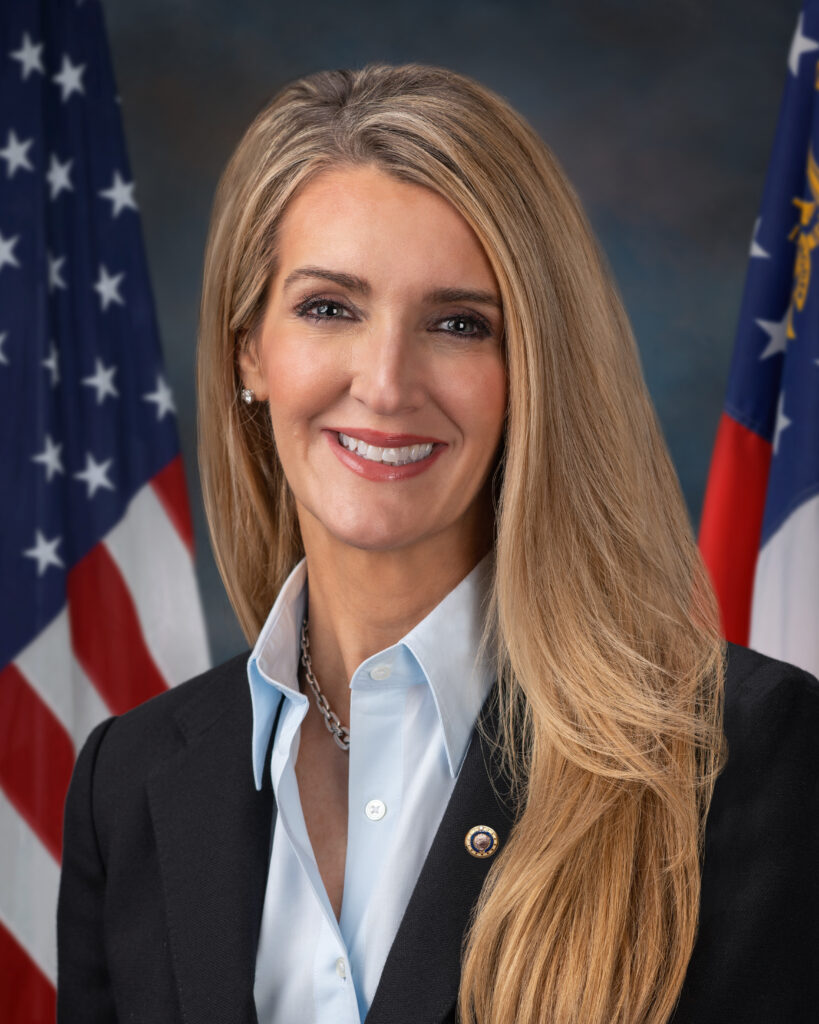
ATLANTA – U.S. Sen. Kelly Loeffler, R-Ga., said Wednesday she is liquidating her family’s holdings in stocks in individual companies and moving those investments into exchange-traded funds and mutual funds.
Loeffler’s announcement came in an op-ed published in the Wall Street Journal Wednesday in which she also defended herself against allegations that she bought and sold millions of dollars in stocks shortly after a Jan. 24 closed-door briefing she and other senators attended on the emerging coronavirus pandemic.
Similar insider trading accusations have dogged Georgia’s other Republican U.S. senator, David Perdue, although he did not attend the briefing. Both have denied wrongdoing and stated their investments are handled by third-party advisors without their input.
Loeffler is married to Jeff Sprecher, CEO of InterContinental Exchange Inc.
In the op-ed, Loeffler wrote that she made the decision to liquidate her stock portfolio to put an end to the distractions resulting from “improper accusations” leveled by the news media and political opponents.
“I’m not doing this because I have to,” she wrote. “I’ve done everything the right way and in compliance with Securities and Exchange Commission regulations, Senate ethics rules and U.S. law. I’m doing it because the issue isn’t worth the distraction.”
Appointed to the Senate by Gov. Brian Kemp in December to succeed retiring Sen. Johnny Isakson, Loeffler is running for election to the remainder of Isakson’s full term in a crowded “free-for-all” race. Rather than the usual party primaries that winnow candidates from the field, all 21 candidates who signed up during the qualifying period last month will be on the ballot in November.
Besides Loeffler, the other prominent Republican candidate in the race is U.S. Rep. Doug Collins of Gainesville. Democrats in the contest include the Rev. Raphael Warnock, senior pastor at Atlanta’s Ebenezer Baptist Church; Ed Tarver, a former U.S. attorney and state senator from Augusta; and Matt Lieberman, son of former U.S. senator and 2000 Democratic vice presidential nominee Joe Lieberman.
Democrats fired back at Loeffler on Wednesday, arguing her decision to stop investing in stocks in individual companies doesn’t go far enough.
Alex Floyd, spokesman for the Democratic Party of Georgia, called on Loeffler instead to move her assets into a blind trust.
“This latest attempt by unelected Senator Loeffler to distract from her stock trading scandal still leaves many questions unanswered,” Floyd said. “Rather than doing damage control, Senator Loeffler should commit to a full Senate Ethics Committee Investigation and start being honest with Georgians”