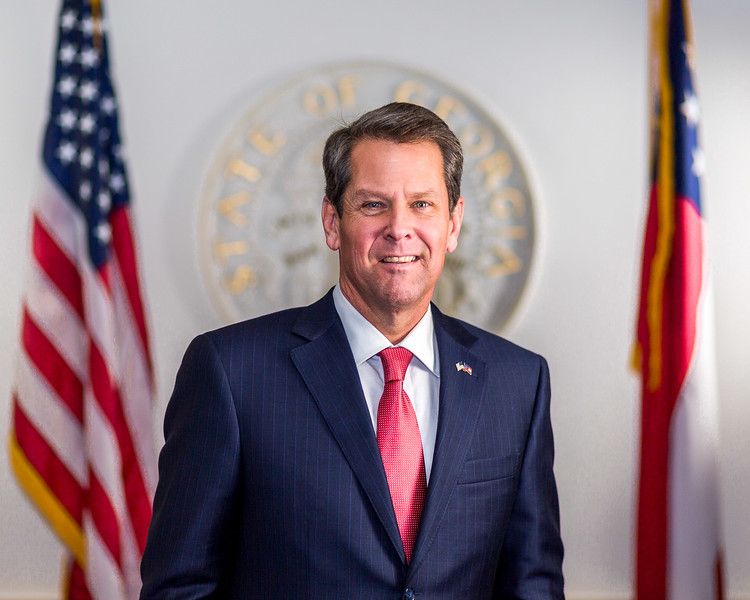
ATLANTA – Gov. Brian Kemp declared a state of emergency in Georgia Monday after a severe storm system ripped through the state Sunday night and early Monday, generating high winds, heavy rain and tornadoes.
At least seven people were killed in Georgia, including five at two mobile home parks near Chatsworth.
As of Monday afternoon, 59,000 Georgians still were without electricity.
“It is devastating,” Kemp said Monday afternoon after touring storm damage in Murray County. “It looked like a bomb went off in two neighborhoods I visited.”
The governor said the new state of emergency will coexist with the statewide public health emergency he first declared last month and renewed last week related to the coronavirus pandemic.
“The responses by the state to this state of emergency for storm damage and the public health state of emergency should both proceed simultaneously, without one impeding the other,” an executive order the governor issued Monday stated.
Monday’s executive order will remain in effect for 10 days, until April 23. The order authorizes the Georgia Emergency Management and Homeland Security Agency to bring “all “resources” of the state to bear to respond to the affected areas and help with recovery.
The order also suspended the federal rules limiting the hours commercial truck drivers can be on the roads in order to prevent disruptions in supplies of gasoline and diesel fuel, emergency supplies, food and other agricultural products and the removal of storm debris.
It also allows trucks to exceed the usual legal weight, height and length restrictions, subject to oversize permits issued by the Georgia Department of Public Safety.
“We are praying for those who lost loved ones overnight and the families dealing with severe storm damage.” Kemp said. “In coordination with private-sector partners, multiple state agencies – including the Georgia Emergency Management and Homeland Security Agency, Department of Public Safety, Department of Natural Resources, Department of Transportation, and Georgia Forestry Commission – are working hard to restore power, clear debris, and provide necessary assistance to families across the state.”
Kemp said Pete Gaynor, administrator of the Federal Emergency Management Agency, has offered the federal government’s assistance in the recovery.
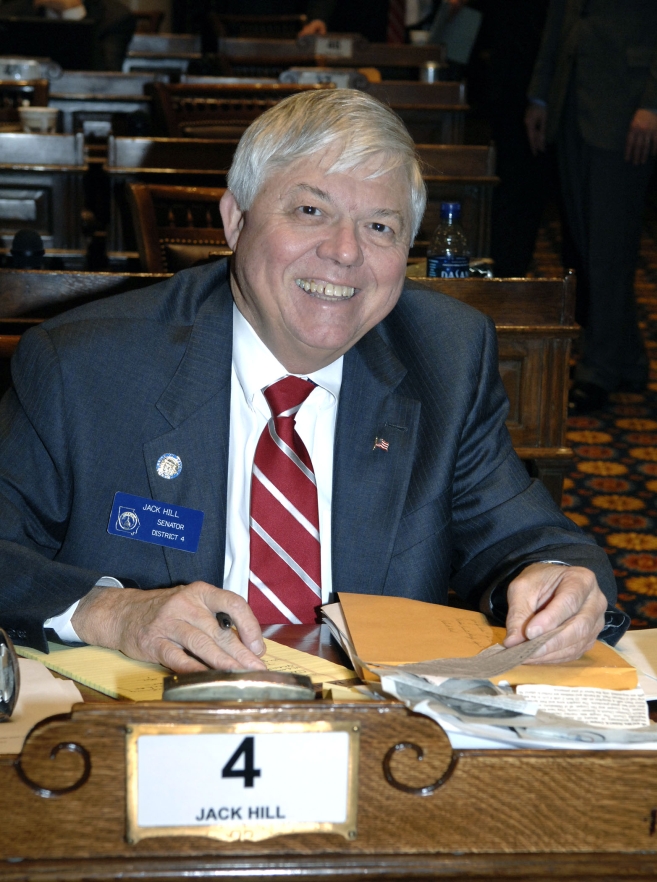
ATLANTA – Voters in Georgia Senate District 4 will choose a successor to the late Sen. Jack Hill on June 9, Secretary of State Brad Raffensperger announced Monday.
Hill, R-Reidsville, died suddenly last Monday at the age of 75. He was elected to the Senate in 1990 as a Democrat but switched to the Republican Party following the 2002 elections.
Hill has served since 2003 as chairman of the Senate Appropriations Committee, which oversees the annual drafting of the state budget.
Qualifying for the Senate seat began Monday and will continue until 1 p.m. Wednesday at the secretary of state’s office on the eighth floor of the James. H. “Sloppy” Floyd Building, 2 Martin Luther King Jr. Drive, in downtown Atlanta. The qualifying fee is $400.
If no candidate receives a majority of the vote during the June 9 special election, a runoff would take place on Aug. 11.
The voter registration deadline for the special election is May 11.
The sprawling Senate District 4 includes portions of Bulloch, Candler, Effingham, Evans and Tattnall counties.
ATLANTA – The state officials overseeing Georgia’s COVID-19 response are preparing to convert a portion of the Georgia World Congress Center (GWCC) into a hospital.
Gov. Brian Kemp announced Sunday that the state has entered into a contract with PAE, a Virginia-based defense and government services contractor, to build a 200-bed alternative care at the GWCC to house hospitalized coronavirus patients if needed. The facility will be ready within one week, in time to meet the projected peak for COVID-19 in Georgia of April 26.
“Across Georgia, we have partnered with existing health-care infrastructure to greatly expand our surge capacity,” Kemp said Sunday in a prepared statement. “Now, we have a dedicated team building out a temporary facility at the Georgia World Congress Center for potential COVID-19 patient surge. We are working around the clock to prepare for future needs and ensure the health and well-being of our state.”
State agencies involved in the project include the state Department of Public Health, Georgia Emergency Management and Homeland Security Agency, the Department of Community Health and the Georgia National Guard. Nearby Grady Memorial Hospital will be assisting in the effort.
The GWCC facility will be for those with mild to moderate symptoms of COVID-19, non-ICU patients without the need for a ventilator.
The governor’s announcement came as the number of Georgians who have tested positive for coronavirus rose to 12,452. As of noon Sunday, 433 patients had died from the virus.
ATLANTA – With ridership down significantly due to the coronavirus pandemic, the Xpress commuter bus system will be reducing service from metro Atlanta’s outer counties into and out of the city effective Monday.
The good news is that rides will be free throughout the system. Officials at the State Road and Tollway Authority (SRTA), which operates Xpress buses, are looking to avoid potential crowding at fareboxes that would violate social distancing guidelines.
“As more of our customers shelter in place and work remotely, we are further reducing routes with diminished ridership,” SRTA Executive Director Chris Tomlinson said. “We will continue to provide services at no cost to our customers who still rely on public transit, as well as implement the required preventative measures outlined by Governor Kemp, the [federal] Centers for Disease Control and Prevention and [Georgia] Department of Public Health to facilitate their safe commute.”
Routes affected by reduced service will include connections between Cumming, downtown Atlanta and the Perimeter Center and various routes within Gwinnett County – including links to the Mall of Georgia and Sugarloaf- and to from Gwinnett to points outside of the county, including the Chamblee and Lindbergh Center MARTA stations and downtown and Midtown Atlanta.
Service also will be reduced on Xpress routes connecting Conyers with downtown and Midtown Atlanta, and with the Perimeter Center. South of the city, service reductions will occur on the Stockbridge-to-Midtown and McDonough-to-downtown routes.
ATLANTA – The sacrifices America’s doctors, nurses and other first responders are making to care for coronavirus patients are receiving an outpouring of praise and thanks.
But another group of workers risking their health to perform their duties during the COVID-19 pandemic isn’t getting nearly as much attention: the nation’s garbage collectors.
“We handle a lot of items that, if not handled properly, could cause injury or illness,” said Jason Zepp, head of the Georgia chapter of the National Waste & Recycling Association. “[But] we have a low rate of illness and injury because we do a good job issuing the proper protective equipment.”
Sanitation is considered an essential public health service. Thus, garbage collection is among the industries that has not been sidelined by COVID-19.
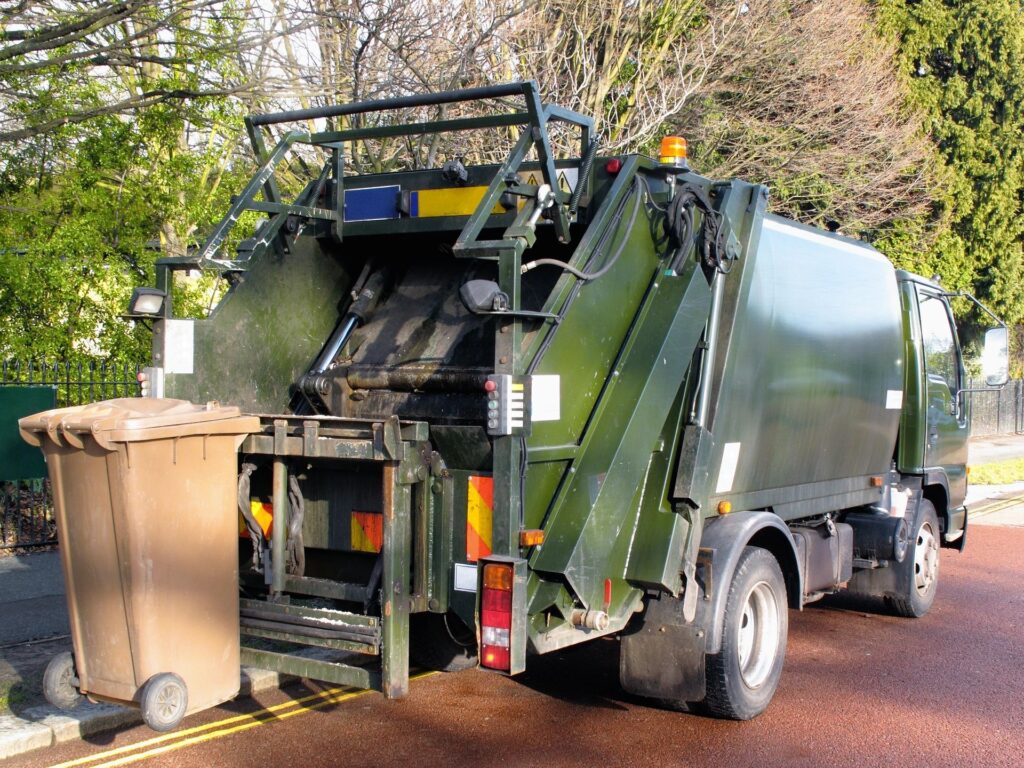
Although garbage and recyclables collection trucks have continued to ply the streets during the coronavirus crisis, workers have been taking extra precautions.
“We’re sensitive to adding more PPE [personal protective equipment], making sure we have plenty of sanitizers and gloves and sanitizing the truck at the end of the day,” Zepp said.
Zepp said there also are extra precautions customers can take to help sanitation workers keep the streets clean during the pandemic.
He suggested customers take note of flyers, emails and other types of notifications from sanitation companies of changes in service that might be necessitated by the pandemic. Some companies, for example, are not accepting yard waste to save more room for the additional household garbage people are generating while sheltering in place and to keep workers safe.
Even in normal times, collecting garbage is considered hazardous duty. It’s the fifth-most dangerous job in America, behind only logging, commercial fishing, flying aircraft and installing roofs, according to the U.S. Bureau of Labor Statistics.
“We tell customers to try to keep everything inside the cart so our men and women don’t have to pick up loose trash or debris that might have fallen,” Zepp said.