ATLANTA – The Federal Aviation Administration (FAA) is awarding $410.8 million in economic stimulus funding to 97 airports across Georgia to help offset the impacts of the coronavirus pandemic.
Hartsfield-Jackson Atlanta International Airport will get by far the largest share of the money. At $338.5 million, it’s the largest single allocation in the nation from the $10 billion airport package.
Airports and airlines across the country have been hit with huge financial losses by the virtual shutdown of the U.S. economy to prevent the spread of COVID-19. Atlanta-based Delta Air Lines Inc., one of Georgia’s largest employers, reported last month that March revenues would decline by almost $2 billion compared to the same month last year.
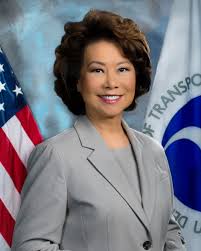
“This $10 billion in emergency resources will help fund the continued operations of our nation’s airports during this crisis and save workers’ jobs,” U.S. Secretary of Transportation Elaine Chao said Tuesday.
The federal money will be used to support continuing airport operations and replace lost revenue from the sharp decline in passenger traffic and other airport business resulting from the pandemic. Eligible expenses will include payroll and utility costs, capital expenditures and airport debt payments.
After Hartsfield-Jackson, the next-largest allocation of federal airport stimulus money in Georgia – $26.8 million – will go to Savannah-Hilton Head International Airport. Augusta Regional Airport at Bush Field will receive $19.4 million, and Southwest Georgia Regional Airport in Albany will get $18 million.
Much smaller allocations of just more than $1 million will go to several other regional airports around the state. The Columbus airport will receive $1.2 million, Valdosta Regional will get $1.18 million, slightly more than the $1.17 million headed to the Brunswick-Golden Isles Airport. Middle Georgia Regional Airport in Macon will receive $1.06 million.
Four other airports – Briscoe Field in Lawrenceville, McCollum Field in Marietta, Peachtree-DeKalb Airport and Fulton County Airport at Brown Field – each will receive $157,000 from the feds.
The FAA is encouraging airports to spend the money immediately to help offset the economic impact of the COVID-19 outbreak while those losses are occurring.
University System of Georgia Chancellor Steve Wrigley
ATLANTA – The coronavirus pandemic has cost the University System of Georgia about $200 million, losses that could add up to $350 million by the end of the summer, system Chancellor Steve Wrigley said Tuesday.
The state’s 26 public colleges and universities have done some belt tightening to help offset income lost when the system was forced to switch to all-online instruction and refund student payments for housing and other services they’re no longer receiving, Wrigley told members of the system’s Board of Regents.
The schools have canceled both camp and study abroad programs this summer, as the system will continue to be limited to online classes during the summer semester, Wrigley said.
Also, the university expects to receive about $125 million from the U.S. Department of Education through the federal economic stimulus package Congress passed late last month, he said.
“Hopefully, that can help us address the revenue losses we’ve seen,” he said. “[But] there will be challenges.”
Wrigley noted the university system also faces financial constraints that predate the outbreak of COVID-19.
State funding of students per capita has declined about 35% since the Great Recession a decade ago, the chancellor said. More recently, slower-than-expected growth in state tax revenues has prompted Gov. Brian Kemp to order budget cuts throughout state government.
Despite the system’s tight finances, the regents voted unanimously Tuesday not to raise student tuition during the coming school year. Wrigley announced last week he would seek to hold the line on tuition across the university system for the third time in the last five years.
“We felt it was important to be sensitive to the economic situation in our state,” he said.
In other business, the chancellor announced the university system will delay a planned overhaul of its undergraduate core curriculum, probably until this fall. He said the coronavirus outbreak prevented a series of town hall meetings that had been planned across Georgia to gather feedback on the proposals.
ATLANTA – Bowing to the realities of the coronavirus pandemic, the Georgia Republican Party has canceled both its state convention and a series of congressional district meetings across the state.
This year’s state convention was to be held May 29-30 in Cobb County. The congressional district meetings were supposed to take place this Saturday.
A letter Georgia GOP Chairman David Shafer sent to members of the state Republican Committee last week cited the stay-at-home executive order Gov. Brian Kemp issued late last month and extended last week as making it “legally and practically impossible to physically stage” the conventions.
Shafer pledged the party would come up with other options for choosing delegates to the Republican National Convention set for August in Charlotte, N.C.
“Your state Executive Committee is absolutely committed to preserving our ability to be fully represented at the Republican National Convention,” Shafer wrote.
The national convention still is scheduled to take place Aug. 24-27, despite the pandemic. The Democrats were to have convened in Milwaukee in mid-July but have moved the date back to mid-August.
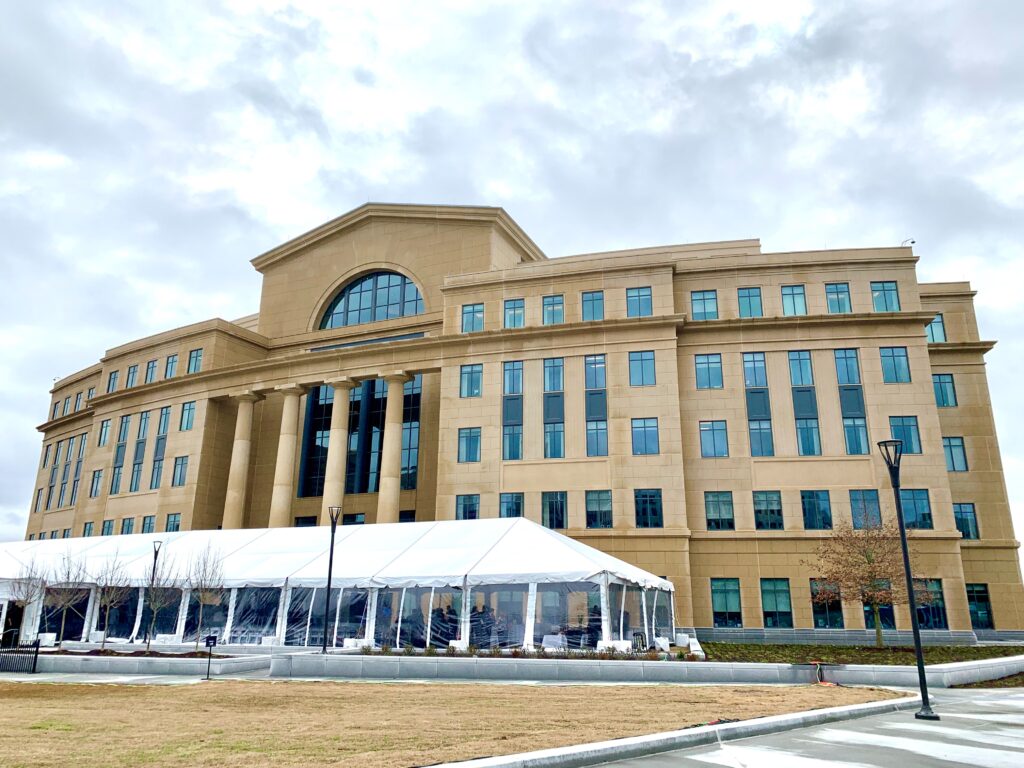
The Georgia Supreme Court meets in the new Nathan Deal Judicial Center in downtown Atlanta (Photo by Beau Evans)
ATLANTA – With the June 9 primary elections looming, former U.S. Rep. John Barrow is urging the Georgia Supreme Court to decide whether voters will get to choose a successor to retiring Justice Keith Blackwell.
Barrow and former state Rep. Beth Beskin signed up during the March qualifying period for the run for the seat.
But Secretary of State Brad Raffensperger canceled the election at the request of Gov. Brian Kemp and declared the governor gets to appoint Blackwell’s successor.
Barrow and Beskin sued the secretary of state late last month. A Fulton County court ruled against the plaintiffs two weeks ago, declaring Blackwell’s seat essentially is vacant now, giving Kemp the right to make the appointment. The decision has been appealed to the state Supreme Court.
Barrow is accusing the three Supreme Court justices who have declined to recuse themselves from the case of “slow-walking” a ruling that needs to made quickly in order to get the race on the June primary ballot. The justices who did recuse themselves are being replaced by substitute justices.
“I’m calling on the Supreme Court to announce its decision in this case now,” Barrow said. “We’ve done what the court has ordered us to do. It’s time for the court to do its job.”
Barrow has filed three motions since the Supreme Court agreed to take up the appeal, two to dismiss from the case Justice David Nahmias, one of the three justices refusing to recuse himself. The other motion was to expedite the case. All three motions were rejected.
“I’m concerned that Justice Nahmias may be trying to manipulate the substitute justices for the same reason Justice Blackwell and the governor have manipulated the timing of Justice Blackwell’s ‘retirement’ — to control the Georgia Supreme Court,” Barrow said.
Barrow, a Democrat, represented Georgia’s 12th Congressional District from 2005 through 2015. He ran for secretary of state two years ago, losing to Republican Raffensperger.
Responding to Barrow’s claims, Supreme Court spokeswoman Jane Hansen wrote in an email that the court’s quick, unanimous rulings against his three motions speak for themselves.
ATLANTA – Public transit systems across Georgia will receive $522.2 million from the federal economic stimulus package Congress passed late last month, Gov. Brian Kemp announced Monday.
The money is being made available by the Federal Transit Administration (FTA) out of the $150 billion in the stimulus package dedicated to helping state and local governments offset financial losses from the coronavirus pandemic.
“This funding will make a profound impact on our economy in our fight against COVID-19,” Kemp said.
Most of the funding – $370.9 million – is earmarked for transit agencies in metro Atlanta, including $298.6 million headed for MARTA.
“The [stimulus] funding is critical to keeping the Atlanta region’s transit network moving,” said Chris Tomlinson, executive director of The ATL, the Atlanta area’s regional transit planning and governance agency. “These funds come at a much needed time and will help support those transit employees who continue to serve this region on the front lines of the COVID-19 response.”
The rest of the money is being split between transit systems in Georgia’s other larger cities, smaller urban transit systems and rural transit agencies.
Transit systems in the larger cities – including Augusta, Columbus and Savannah – will receive $26.6 million, while smaller urban systems will get $49.7 million. The rural systems will receive $75 million.
The FTA’s priorities for the stimulus funding will be supporting operating costs transit agencies are absorbing from the impacts of COVID-19, including maintaining service during a period of low ridership, purchasing the personal protective equipment employees need to prevent the spread of the virus and covering administrative leave granted to operations personnel.
The small urban and rural transit system operators will be working with the Georgia Department of Transportation to obtain their share of the money. Those funds will be enough to support the full cost of their operations retroactive to Jan. 20 and running through June 30 of next year.
Here is a breakdown of the federal funding headed to transit systems in metro Atlanta: