ATLANTA – Small businesses in Georgia and across the country were left in limbo Thursday when the U.S. Senate adjourned without approving a new round of economic stimulus funding to help offset losses from the coronavirus pandemic.
Almost $350 billion in Small Business Administration (SBA) loans Congress passed last month as part of a $2.2 trillion package has run out, as has a $10 billion SBA program meant to get fast cash to affected businesses.
The SBA has approved loans to more than 30,000 Georgia businesses worth more than $7 billion, Chris Clark, president and CEO of the Georgia Chamber of Commerce, said Thursday. But many other companies have been left high and dry, Clark said.
“If you’re already in the system, you’ve got a spot in line,” he said. “But if you haven’t applied yet, you can’t.”
Clark said the SBA’s Paycheck Protection Program (PPP) has been hampered not only by a shortage of funds. During the program’s first week, some types of small businesses – including sole proprietorships – could not apply for loans because the rules governing those businesses were not in place.
Clark said Georgia farmers got lumped into that business category and couldn’t get relief.
“By the time the rules got promulgated, the funds were gone,” he said.
While President Donald Trump and congressional leaders have pledged to pour more money into the PPP, the funding is being delayed by partisan politics. Republicans are pushing for a $250 billion stand-alone package aimed only at small business, while Democrats want to double the package to include more money to help state governments and hospitals.
Clark said the final outcome likely will be determined by the White House and majority Democrats in the House of Representatives, which was also the case during the negotiations that led up to last month’s bailout.
With Congress set to return on Monday, Clark said business groups will engage in intensive lobbying efforts during the weekend to try to get an agreement.
ATLANTA – Georgia’s two U.S. senators are among more than 50 members of Congress named by President Donald Trump Thursday to a bipartisan task force that will advise him on when and how to reopen the U.S. economy.
Trump already has two advisory groups working to help shape America’s recovery from the coronavirus pandemic: the original COVID-19 task force headed by Vice President Mike Pence and a large group of business leaders the president assembled earlier this week.
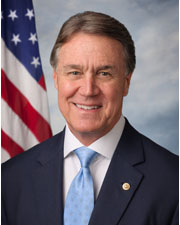
Republican Sens. David Perdue and Kelly Loeffler and 18 other GOP senators will join the new congressional task force, which also will include 12 Senate Democrats and Sen. Angus King of Maine, an independent who caucuses with the Democrats.
Both Perdue, a former CEO of Dollar General, and Loeffler, who headed a Bitcoin-focused subsidiary of InterContinental Exchange Inc. before joining the Senate in January, said their business expertise should help in their new roles.
“The COVID-19 crisis and the resulting shutdown of much of our country has taken a serious toll on our economy,” Perdue said. “Even while we are fighting this virus, we need to begin thinking about how to reopen our economy. … Our objective should be to find a balance between keeping people healthy while protecting jobs and the economy long term.”
“With over 22 million Americans already filing for unemployment, it’s critical that we turn to the work we need to do to safely restore the American economy to its full strength,” Loeffler added. “I’m confident that under the leadership of President Trump, and with counsel from this task force, we will be able to safety reengage in a vibrant society that supports our lives and livelihoods.”
The original coronavirus task force Trump appointed in late January has been dominated by public health officials who have at times clashed with the president over whether it’s safe to reopen the U.S. to schools and businesses while the number of Americans contracting COVID-19 and dying from the virus continues to rise, especially when testing still is not widely available.
The new advisory group of business leaders is expected to be more sympathetic toward ending the economic shutdown as soon as possible, at least in parts of the country where the virus has been less widespread.
The congressional task force, featuring both Republicans and Democrats, can be expected to deliver a mixed message to the president.
ATLANTA – The coronavirus pandemic is saddling Georgia with historic levels of unemployment.
Initial unemployment claims increased by a record 290,068 last month compared to February as the economic impacts of the COVID-19 outbreak took hold. The total for March was higher than the total for all of last year.
The Georgia Department of Labor processed 319,581 claims just during the week of March 29 through April 4. Counting the previous week’s claims, the state has handled more than 700,000 claimants in two weeks.
The state’s unemployment rate went up by 1.1% last month – also setting a record for such a short period – to reach 4.2%. Unemployment stood at 3.7% in March of last year.
“We are reaching unprecedented claim levels of almost 1 million Georgians filing for unemployment,” state Commissioner of Labor Mark Butler said Thursday. “That is one in every 10 people who are turning to the [labor department] for unemployment assistance.”
March showed a decrease of 77,876 employed Georgians, the largest monthly drop since February 2010. The state’s labor force fell by 22,434, the largest monthly decrease since March 2010.
The sector showing the largest increase in unemployment claims were accommodation and food services, with 132,564 initial claims filed in March. The health care and social assistance sector was next with 37,621 new claims, followed by trade with 23,074.
Despite all the negative numbers, some businesses are hiring. The labor department posted more than 99,632 job listings last month. To view the latest listings, click on employgeorgia.com.
Also on the positive side, the labor department reported it has paid out more than $509 million in state and federal unemployment benefits since the middle of last month, with more than 290,000 Georgians receiving benefits last week alone. That’s almost twice the 149,725 who collected unemployment benefits during all of 2019.
ATLANTA – Eight top executives of Georgia-based companies are among dozens of CEOs, economists and scholars President Donald Trump has appointed to look for ways to smoothly reopen a U.S. economy devastated by the coronavirus pandemic.
Members of the advisory group represent a variety of industries from agriculture and banking to transportation and sports.
Georgia appointees include Southern Co. CEO Tom Fanning to represent the energy sector and David Abney, CEO of UPS Inc., to represent the transportation sector.
From the food and beverage industries, Trump tapped James Quincey, Dan Cathy and Walt Ehmer, CEOs of Coca-Cola, Chick-fil-A and Waffle House, respectively.
Three current or former executives at The Home Depot Inc. – CEO Craig Menear, co-founder Ken Langone and co-founder and former CEO Bernie Marcus – will represent the retail sector.
When and how to reopen America for business has been a major point of debate in recent weeks. Public health leaders – including members of the president’s coronavirus task force – have cautioned Trump and the nation’s governors that dropping shelter-in-place orders and social distancing guidelines prematurely could cause a new spike in COVID-19 cases and deaths.
At the same time, conservative and business groups have been pushing to at least start the process of reopening the economy and getting laid off and furloughed workers back on the job.
“It is time to start how we will safely get Americans back to work,” said U.S. Sen. Kelly Loeffler, R-Ga. “Georgia is home to many businesses that are known worldwide as industry leaders. President Trump is absolutely right to take advantage of that expertise as his administration plans how to reopen our economy.”
While some states, notably New York, appear to have hit a peak in COVID-19 cases and deaths, Georgia is not expected to reach its peak until late this month or early in May. As of noon Wednesday, 14,987 Georgians had tested positive for coronavirus, and 552 had died from the virus.
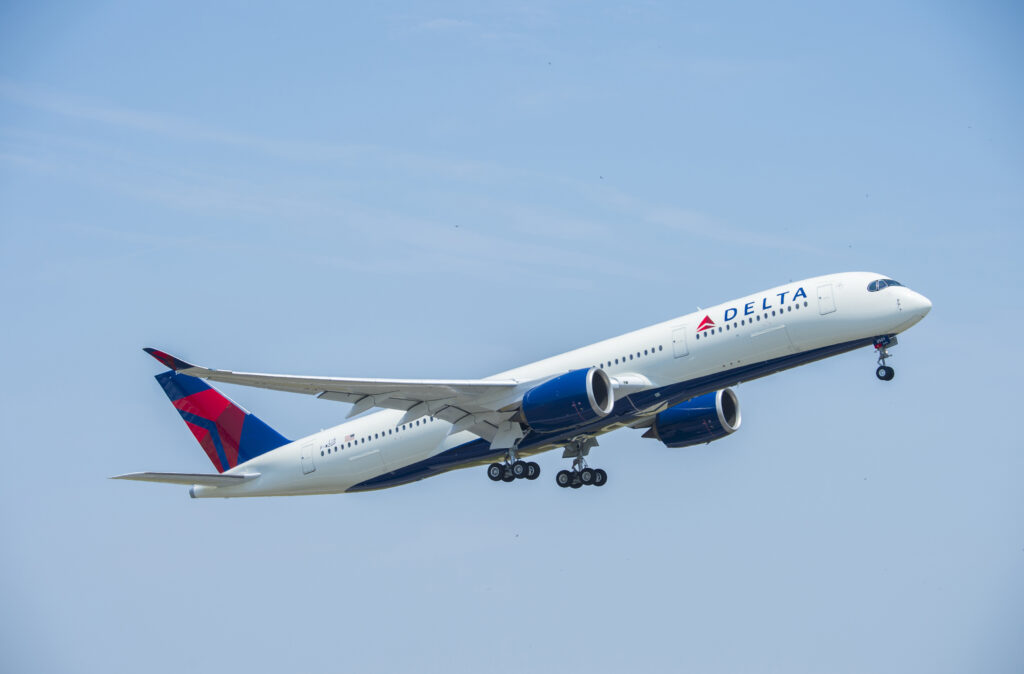
ATLANTA – Atlanta-based Delta Air Lines Inc. will receive $5.4 billion in federal economic stimulus funding to help offset huge losses stemming from the coronavirus pandemic.
The money is part of $25 billion in grants for U.S. passenger airlines, $4 billion for cargo airlines and $3 billion for airline contractors.
With few people flying due to the virus-driven shutdown of the economy, Delta has been forced to cut back its schedule by 80%, consolidate airport facilities and cut pay for officers and director-level employees, Delta CEO Ed Bastian wrote Tuesday in a memo to employees.
“The funding, along with self-help measures we have taken, will prevent furloughs and pay rate reductions through the end of September, despite the 95% drop we’ve seen in passenger traffic,” Bastian wrote.
Under an agreement with the U.S. Treasury Department, the $5.4 billion bailout includes an unsecured low-interest loan of $1.6 billion, and the federal government will buy about 1% of Delta stock at $24.39 per share over five years.
Other airlines sharing in the $25 billion aid package include American Airlines, United Airlines and Southwest Airlines.
The agreement prohibits airlines receiving the federal funds from furloughing or laying off workers through the end of September. Airlines also will be allowed to buy back stock or pay dividends to shareholders until Sept. 30.
The bailout of the airlines coincided with the release of $10 billion from the economic stimulus package Congress passed last month earmarked for U.S. airports. Georgia’s share of the funding – $410.8 million – will go to 97 airports, with by far the largest allocation of $338.5 million headed to Hartsfield-Jackson Atlanta International Airport.