ATLANTA – Commuters to downtown and Midtown Atlanta from Bartow, Cherokee and North Cobb counties will have a new way to get to work starting Monday.
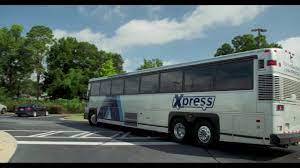
Officials from The ATL, metro Atlanta’s regional transit planning and governance agency, cut the ribbon Friday on a park-and-ride lot that will service two new Xpress bus routes. The ATL oversees the commuter bus system.
The routes will use the Northwest Corridor managed lanes on Interstate 75, allowing passengers the advantage of less traffic without having to pay tolls.
“We want to provide area residents a new commuter option,” Chris Tomlinson, The ATL’s executive director, said shortly before cutting the ribbon at the new park-and-ride lot on Hickory Grove Road in Acworth.
Xpress ridership has declined during the coronavirus pandemic with so many workers staying home. But more than a year into the COVID-19 outbreak, the traffic load on the Atlanta region’s interstate highways is nearly back to pre-pandemic levels.
“We are seeing the roads open back up,” The ATL board Chairman Charlie Sutlive said. “The timing of [the new routes] really works well.”
The Hickory Grove Park & Ride Lot features 522 general parking spaces and 11 handicapped parking spaces. Four spaces have been set aside as future electric-vehicle charging stations.
The facility also has three bus shelters, four seating benches and six leaning benches.
The Xpress buses feature WiFi and a ventilation system designed to neutralize viruses.
Tomlinson said the two new bus routes will be free of charge during the first four months of operation.
With the addition of the routes, the Xpress system will operate 29 commuter routes in 12 metro-Atlanta counties connecting suburban and exurban commuters with major job centers in downtown Atlanta, Midtown Atlanta and the Perimeter Center.
ATLANTA – First-time unemployment claims in Georgia fell last week, mirroring a nationwide trend as more Americans thrown out of work by the coronavirus pandemic get back on the job.
Jobless Georgians filed 28,764 initial unemployment claims last week, down 3,617 from the week before, the state Department of Labor reported Thursday.
Meanwhile, the labor department announced that 99.4% of all eligible claimants whose benefit year began in March of last year and who have requested payment have received a payment.
“We are getting almost 80% of all eligible payments paid in 21 days or less during a pandemic,” Georgia Commissioner of Labor Mark Butler said Thursday. “ That has been no small feat.”
By another measure, the agency paid 63% of eligible claims within seven days last month, well above the national average of 43% for March.
Claimants still waiting on a payment may include those who need to prove their identity or are involved in a fraud investigation. Other unpaid claimants may be providing additional information for employer or wage verification or waiting on an eligibility review.
The labor department has paid out more than $21 billion in state and federal unemployment benefits since COVID-19 struck Georgia in March of last year. The agency has processed more than 4.7 million first-time jobless claims during that time, more than during the last nine years combined prior to the pandemic.
The job sector accounting for the most initial unemployment claims in Georgia last week was accommodation and food services with 7,597 claims. The administrative and support services sector was a distant second with 2,483 claims, following by retail trade with 2,165.
More than 241,000 jobs are listed on EmployGeorgia for Georgians to access. The labor department offers online resources for finding a job, building a resume, and assisting with other reemployment needs.
ATLANTA – The Georgians most likely to benefit from Medicaid expansion are the same low-income workers who have done the most to prop up the state’s economy during the coronavirus pandemic.
That’s the conclusion of a new report from the Georgetown University Center for Children and Families.
Georgia is one of 12 states that has not expanded Medicaid coverage during the decade since a Democrat-controlled Congress passed the Affordable Care Act.
Expanding the joint state-federal health insurance program to Georgians with incomes up to 138% of the federal poverty level would add about 452,600 uninsured adults to the Medicaid rolls, according to the report.
Those newly enrolled would include the cashiers, cooks, maids, waiters and construction workers who have been forced to go to work every day during the pandemic while those in other professions have been able to work from home.
“Expanding Medicaid to Georgia workers is a powerful way to thank them for the work they did to keep our state’s economy moving over the last year,” said Laura Colbert, executive director of the nonprofit Georgians for a Healthy Future.
While Colbert’s group and others have pushed for Medicaid expansion in Georgia for years, supporters say the $1.9 trillion American Rescue Plan President Joe Biden signed into law last month includes new incentives for states that have not expanded Medicaid.
According to the Georgetown report, Georgia would gain an estimated $710 million in federal funds beyond the costs of the expansion, a net savings that could be used for other purposes including education, public safety and/or workforce development.
“Covering low-income, uninsured Georgians through Medicaid was already a good idea for our state,” Colbert said. “The new incentive makes it a deal too good to pass up, especially for struggling rural communities.
Indeed, earlier research conducted by Georgetown concluded Medicaid expansion would particularly benefit Georgia’s rural counties. The nine counties with the highest uninsured rates for workers are rural, led by Atkinson and Wheeler counties with uninsured rates of 35.1%.
Both Republican Gov. Brian Kemp and GOP predecessor Nathan Deal have opposed expanding Medicaid in Georgia through the Affordable Care Act. Kemp and other opponents have warned there’s no guarantee the federal funding would continue to flow after the first two years of Medicaid expansion.
Kyle Wingfield, president and CEO of the Georgia Public Policy Foundation, said the total price tag of the American Rescue Plan and other COVID-19 relief legislation Congress has passed during the last year will add up to an astounding $6 trillion during the next 10 years.
“At some point, the federal government is not going to keep up with its obligations,” he said. “We can reasonably expect the state’s portion of that [Medicaid expansion] burden will be even higher than advertised.”
Kemp applied last year for a federal waiver providing a partial expansion of the program covering adults earning up to 100% of the federal poverty level.
The federal Centers for Medicare and Medicaid Services approved the waiver last October. But after Biden took office, the new administration withdrew the approval, citing work requirements included in the waiver.
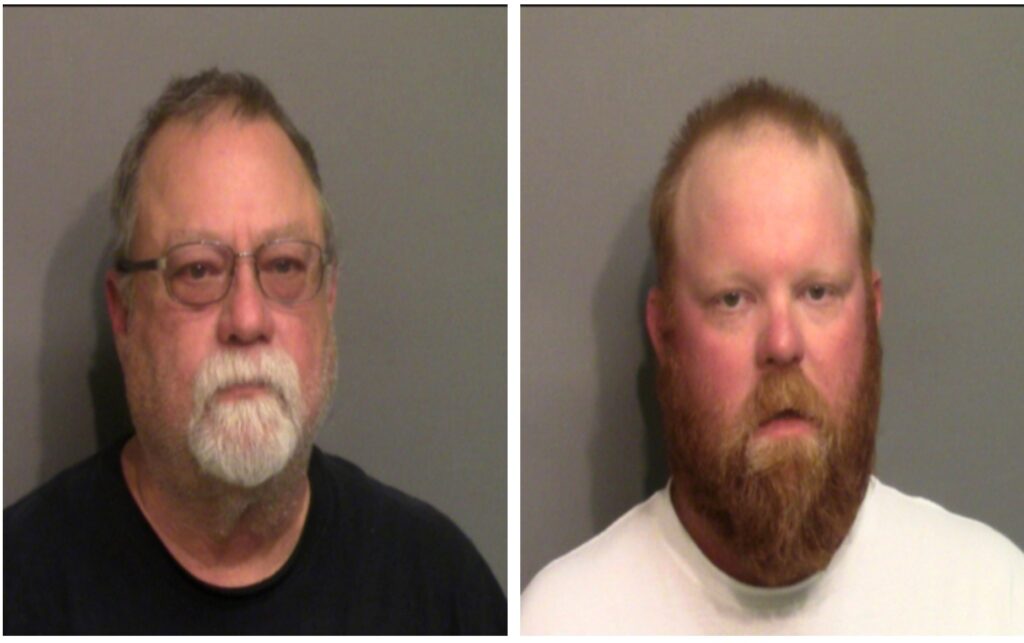
Gregory McMichael (left) and Travis McMichael (right) face new federal charges in the shooting death of Ahmaud Arbery. (Glynn County Sheriff’s Office)
ATLANTA – The three white men accused of murdering Black jogger Ahmaud Arbery near Brunswick now face new federal charges as well.
Father and son Gregory and Travis McMichael and William “Roddie” Bryan were indicted by a federal grand jury in the Southern District of Georgia Wednesday for hate crimes and the attempted kidnapping of Arbery, who was gunned down in February of last year.
The indictment also charges two of the men with separate counts of using firearms during the crime.
Two counts of the indictment accuse the men of using force and threats of force to intimidate and interfere with Arbery’s right to use a public street because of his race.
The two McMichaels are also charged with one count each of using, carrying, brandishing and – in Travis McMichael’s case – discharging a firearm in the commission of a violent crime.
Arbery, 25, was jogging in the Satilla Shores neighborhood when the McMichaels armed themselves, got into a pickup truck and chased Arbery, according to the indictment. They were able to use their truck to cut off his route.
Bryan is accused of joining the chase and using a second truck to further cut off Arbery.
The men told police they suspected Arbery of committing burglaries in the area, and they chased him down to question him.
All three defendants also are facing state charges of malice murder, felony murder, aggravated assault, false imprisonment and criminal attempt to commit a felony. No trial date has been set in the state case.
The publicity surrounding Arbery’s killing set the stage for the long-awaited passage of a hate crimes law by the General Assembly last June. Georgia lawmakers followed up this year with a repeal of the state’s citizen’s arrest law.
The defendants in the Arbery case cited the citizen’s arrest statute in pleading not guilty to the state murder charges.
ATLANTA – A former deputy with the Wilkinson County Sheriff’s Office has pleaded guilty to possessing unregistered firearms following an FBI-led investigation into a violent extremist group.
Cody Richard Griggers, 28, of Montrose pleaded guilty to one count of possession of an unregistered firearm Monday in U.S. District Court in Macon. Griggers faces a maximum of 10 years in prison followed by three years of supervised release and a maximum fine of $250,000.
“This former law enforcement officer knew that he was breaking the law when he chose to possess a cache of unregistered weapons,” Acting U.S. Attorney Peter Leary said. “Coupled with his violent racially motivated extreme statements, the defendant has lost the privilege permanently of wearing the blue.”
As part of a California investigation into a man making violent political statements on social media, FBI agents discovered a group text with Griggers. In the text, he indicated that he was manufacturing and acquiring illegal firearms, explosives and suppressors.
Griggers also expressed viewpoints consistent with racially motivated violent extremism, including the use of racial slurs, slurs against homosexuals and making frequent positive references to the Nazi holocaust.
Agents executed a search warrant at Griggers’ home last November and searched his duty vehicle. They found multiple firearms inside the vehicle, including a machine gun with an obliterated serial number.
The machine gun had not been issued to Griggers, and he was not allowed to have the weapon in his law enforcement car.
An unregistered short-barrel shotgun was found in Griggers’ home. In all, between his residence and duty vehicle, officers found 11 illegal firearms.
“All law enforcement officers swear an oath to uphold the law and protect each and every citizen they serve,” said Chris Hacker, special agent in Charge of the FBI’s Atlanta office. “Griggers clearly violated his oath with his egregious actions and has no place in law enforcement.”
The FBI worked with the federal Bureau of Alcohol, Tobacco, Firearms and Explosives, and with the Wilkinson County Sheriff’s Office in investigating the case.
Griggers is scheduled to be sentenced on July 6. He was detained at his pretrial hearing and remains in custody.