Georgia Commissioner of Transportation Russell McMurry
ATLANTA – With the number of new cases of COVID-19 in Georgia steadily declining, more and more Georgians are driving and traveling.
That encouraging trend is showing up in monthly tax collections reported by the state Department of Transportation.
The DOT collected $174 million in motor fuels tax revenue last month, state Commissioner of Transportation Russell McMurry told members of the State Transportation Board Thursday. That represents a 9.1% increase over September of last year.
During the first quarter of the current fiscal year, the agency collected $558.4 million in motor fuel taxes, a 9.4% increase over July, August and September 2020.
Revenues from the state tax on gasoline and other motor fuels plummeted when the coronavirus pandemic first struck Georgia in March of last year but were starting to recover by August 2020.
Today, tax collections are not only up over last year at this time but are even exceeding pre-pandemic levels, McMurry said Thursday. In fact, the last three months saw an increase in motor fuel revenue of $39.4 million over July, August and September 2019, well before the pandemic.
“People are out and about,” McMurry said. “These are positive signs.”
The numbers on the state’s hotel-motel tax are even more dramatic, evidence that people cooped up during the pandemic have resumed taking trips.
The DOT saw an increase of 37.5% in hotel tax revenue last month compared to September of last year and a whopping 50.3% rise in tax collections during the July, August and September quarter over those same months during the last fiscal year.
This story is available through a news partnership with Capitol Beat News Service, a project of the Georgia Press Educational Foundation.
ATLANTA – A solar farm to be built in Southwest Georgia will provide clean energy to electric membership cooperatives (EMCs) across the state.
Ground was broken Wednesday on the 250-megawatt DeSoto Solar Farm in Lee County. Nashville, Tenn.-based solar developer Silicon Ranch Corp. will invest more than $220 million in the project.
“Since day one of my administration, one of my top priorities has been bringing good-paying jobs, investment, and greater opportunity to rural Georgia,” said Gov. Brian Kemp, who attended Wednesday’s ceremony.
“[It] further demonstrates the key role that our electric cooperatives and private sector partners are playing as economic development engines for rural communities across the Peach State.”
The project will be delivered in three phases over the next two to three years, with construction of the first phase due to start soon.
Silicon Ranch plans to hire more than 400 craft workers to build the first phase over the next 12 months.
The first phase will provide power to Walton EMC to provide renewable energy to Facebook’s $1 billion data center expansion in Newton County. Green Power EMC, a renewable energy provider owned by 38 Georgia EMCs, also will purchase a portion of the facility’s power output to provide to participating electric cooperatives in the state.
The DeSoto Solar Farm will use Silicon Ranch’s trademark Regenerative Energy land management model, which co-locates solar energy production with regenerative agricultural practices.
When the solar farm is operational, Silicon Ranch will restore the land to a functioning grassland ecosystem while keeping the project in agricultural production through managed sheep grazing.
“Silicon Ranch recognizes our responsibility to be good stewards of the land we occupy by taking a holistic approach to the work we do, from conception to completion and beyond,” said Matt Kisber, co-founder and chairman of Silicon Ranch.
“Green Power EMC is excited about this large-scale solar energy project,” said Wendy Sellers, board chairman at Green Power EMC. “Among the principles that rural electric cooperatives share is concern for community, and we are pleased that we can support economic development in Lee County.”
This story is available through a news partnership with Capitol Beat News Service, a project of the Georgia Press Educational Foundation.
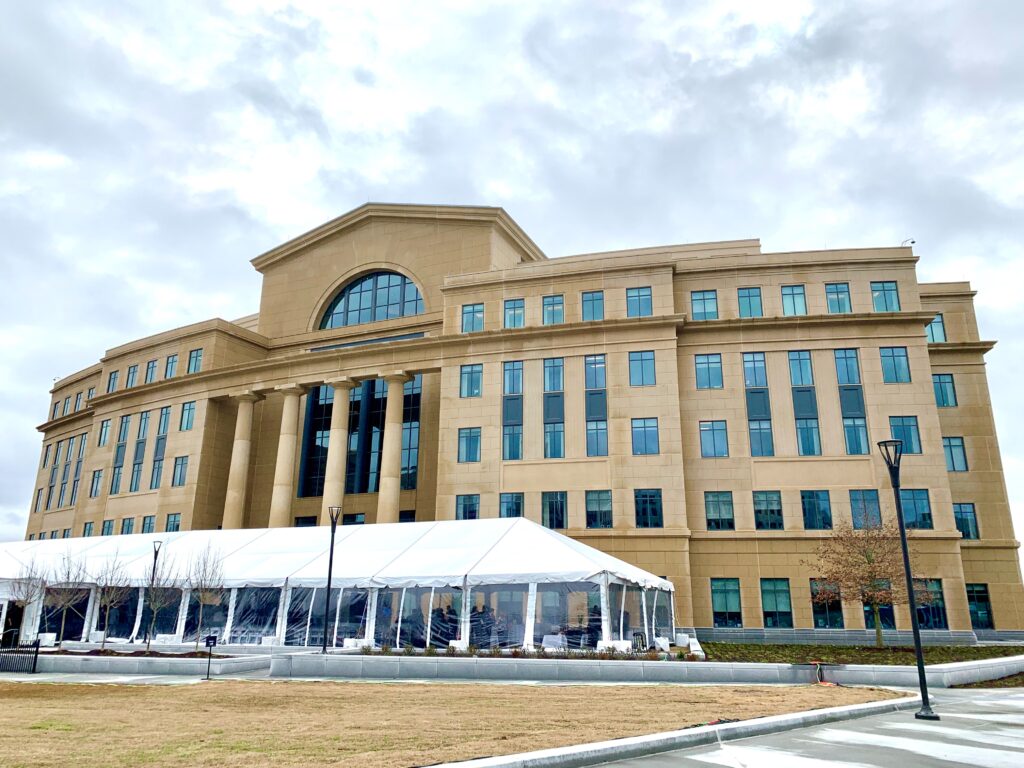
The Nathan Deal Judicial Center in downtown Atlanta (Photo by Beau Evans)
ATLANTA – A lawsuit alleging a now-deceased Catholic priest sexually abused an altar boy in the 1970s should go forward because the Archdiocese of Atlanta didn’t admit the crime until 2018, a lawyer for the unnamed plaintiff argued Tuesday.
But a lawyer representing Saint Joseph’s Catholic Church in Marietta asked the Georgia Supreme Court to uphold lower-court rulings that dismissed the suit because it was filed long after the statute of limitations had expired.
The lawsuit was brought after then-Archbishop of Atlanta Wilton Gregory issued a public apology for sexual abuse of children by Catholic clergy.
“They said, ‘It’s necessary for us to come clean. There cannot be a healing process until we admit what happened,’ ” Michael Terry, the plaintiff’s lawyer, said Tuesday.
While the abuse occurred decades ago, the plaintiff had no way of knowing sexual abuse by members of the clergy was widespread, Terry said. The church didn’t fulfill its fiduciary duty to the plaintiff to tell that truth until three years ago, he said.
“If you have no reason to suspect your fiduciary has lied to you, you don’t have a duty to go behind your fiduciary and start checking,” he said.
But Edward Wasmuth Jr., the church’s lawyer, said the statute of limitations law is on the books to make sure legal claims are litigated when evidence is available and memories are fresh.
“This case involves events that took place 40 years ago with a defendant who is long dead,” he said.
For that reason, Wasmuth argued the clock on the statute of limitations began running when the abuse occurred.
“From the moment [the plaintiff] is allegedly abused, he knows something is wrong,” he said. “That starts the clock on his duty to do something.”
The case drew a “friend of the court” brief from the Wilbanks Child Endangerment and Sexual Exploitation Clinic, a legal clinic at the University of Georgia that represents survivors of child sexual abuse and exploitation in civil lawsuits free of charge.
This story is available through a news partnership with Capitol Beat News Service, a project of the Georgia Press Educational Foundation.
ATLANTA – More Georgia families will be getting help from the state paying for child care under an initiative Gov. Brian Kemp announced Monday.
Starting Nov. 1, Georgia will expand its Childcare and Parent Services (CAPS) program by 10,000 children. The program currently serves 50,000 children from indigent and low-income families.
“Since the start of the COVID-19 pandemic in March 2020, we have made child care a top priority in Georgia for assisting first responders, essential workers, and other hardworking families who could not stop their important work or work from home during this challenging time,” Kemp said.
“CAPS is a great example of a public initiative that helps families, their children, and providers alike. This expansion will allow us to serve more Georgians.”
To make covering more children possible, the expansion will raise the program’s eligibility criteria. New guidelines will increase the entry income threshold from 50% of the State Median Income (SMI) to 85% of SMI.
Child-care providers also will receive additional help in the form of bonus payments aimed at helping more providers become Quality Rated.
The poorest Georgia families will get extra help in qualifying for the CAPS program. Those in the lowest-income category will see an income eligibility increase from 50% of the Federal Poverty Level (FPL) to 150% of FPL.
The expansion, funded through the American Rescue Plan Congress passed earlier this year, will run through Oct. 1, 2024.
This story is available through a news partnership with Capitol Beat News Service, a project of the Georgia Press Educational Foundation.
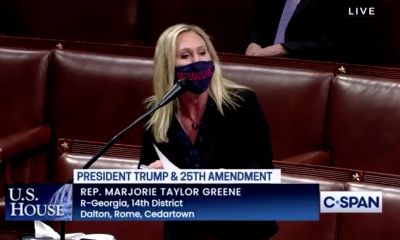
ATLANTA – Four Democrats and two Republicans want U.S. Rep. Marjorie Taylor Greene’s job.
But only one has raised even half the campaign cash the controversial Greene, R-Rome, amassed during the first nine months of the 2022 election cycle.
Greene, who was stripped of her committee assignments by majority Democrats last February during her first weeks in office for inflammatory remarks and social media postings, raised $6.3 million toward her reelection bid through the end of last month, according to a report filed with the Federal Election Commission.
Only U.S. Army combat veteran Marcus Flowers, a Democrat challenging Greene, is even in the same ballpark when it comes to fundraising. His campaign brought in more than $3.3 million during the first nine months of this year and reported nearly $1.1 million cash on hand as of Sept. 30.
None of the other Democrats vying for a chance to challenge Greene has raised $1 million. Holly McCormack, an insurance agent, came closest with just less than $700,000.
Rome City Commissioner Wendy Davis’ campaign brought in just more than $250,000 during the first nine months of the election cycle. Businesswoman Lateefah Conner has brought in about $110,000.
The two Republican hopefuls looking to unseat Greene in next May’s GOP primary fared even worse. Small business owner Jennifer Strahan had raised about $56,000 through the end of last month, while Mark Clay raised just $6,000.
While Greene is dominating her potential challengers in fundraising, she hardly needs the cash in light of the free publicity she has been attracting.
She and fellow conservative Republican Rep. Matt Gaetz of Florida have been crisscrossing the country hosting “America First” rallies, continuing to cast doubts on the results from the 2020 presidential election and criticizing the various COVID-19 vaccines.
Greene cruised to victory last November in Georgia’s heavily Republican 14th Congressional District, winning almost 75% of the vote after the Democratic candidate moved out of state and dropped out of the race before Election Day.
The district includes all of 11 counties in Northwest Georgia and part of a 12th, stretching from Haralson and Paulding counties on the south to the Tennessee line.
This story is available through a news partnership with Capitol Beat News Service, a project of the Georgia Press Educational Foundation.