ATLANTA – Georgia House budget writers Thursday approved Gov. Brian Kemp’s record $30.2 billion fiscal 2023 state budget, including the long-awaited second and final installment of a $5,000 teacher pay raise.
The spending plan, which takes effect July 1, would increase teacher salaries by $2,000. Teachers got the other $3,000 in 2019 in keeping with a promise Kemp made on the campaign trail the year before.
The full pay raise was held up for a couple of years by the financial uncertainty surrounding the coronavirus pandemic. But Georgia tax revenues have fared much better than expected, so much so that the governor and lawmakers can afford to be generous in this election year.
“This is an incredible budget for what we’ve been able to do for the least of these among us,” said House Appropriations Committee Chairman Terry England, R-Auburn.
The House budget puts significant funding toward the chamber’s priorities, including increased spending to support an overhaul of Georgia’s mental health-care delivery system sponsored by House Speaker David Ralston, R-Blue Ridge.
Correctional officers in the adult and juvenile prison systems would get an additional raise of $2,000 above the $5,000 increase earmarked in the fiscal 2022 mid-year budget for employees throughout state government.
The extra raises also would go to guards in four private prisons scattered across rural Georgia, even though they are not state employees.
“These facilities are often the largest employers in their communities,” England said.
The Georgia Bureau of Investigation would add 67 positions, including four new employees dedicated to investigating election complaints.
The House budget also would eliminate special institutional fees the University System of Georgia began charging students after the Great Recession more than a decade ago left the system strapped for cash.
“That’s less money coming out of the student’s pocket, which we all know is the parent’s pocket,” England said.
The state Department of Veterans Services would receive funding to hire a suicide prevention counselor. Veterans in Georgia and across the country suffer from a higher suicide rate than non-veterans.
“These are folks who have defended our freedom,” England said. “We need to make sure they receive the support services they need when they get home.”
The budget now moves to the full House.
This story is available through a news partnership with Capitol Beat News Service, a project of the Georgia Press Educational Foundation.
ATLANTA – Legislation making major changes to regulations governing Georgia’s coin-operated amusement machines (COAM) industry is back on the table in the General Assembly.
But committees in the state House and Senate adopted significantly different versions of COAM reform this week.
Both chambers’ Regulated Industries committees approved raising the prize limit on the so-called “kiddie” machines typically found at businesses including Dave & Buster’s and Chuck E. Cheese from redeemable merchandise valued at $5 to $50.
Both versions of the legislation also would exempt fraternal and veterans organizations from a requirement that locations hosting adult COAM machines derive at least 50% of their income from the machines.
But the Senate committee removed from its version of the bill a provision allowing the awarding of gift cards to winners. The Senate legislation also would increase the share of revenue from the machines going to the Georgia Lottery from 10% to 30%.
Companies that own the machines and the convenience stores, restaurants and other businesses that install them would each receive 35% of the proceeds, down from the current 45%.
COAM income has soared since the Georgia Lottery began managing the machines in 2014.
An industry that brought in more than $2 billion in 2016 more than doubled its revenue to $4.5 billion last year. Proceeds going to Georgia’s HOPE Scholarships and pre-kindergarten programs rose from $33.5 million in 2016 to $145 million last year.
Much of that growth has come during the coronavirus pandemic, Lottery President and CEO Gretchen Corbin told members of the Senate committee Tuesday.
“We provided a very good form of entertainment during that time period,” she said.
But the COAM industry has been plagued by retailers awarding cash payouts to winners. The gift card provision in the House bill is aimed at discouraging that illegal activity, said state Rep. Alan Powell, R-Hartwell, chairman of the House committee and the House bill’s chief sponsor.
“This would take away any rationale for these folks to pass out cash money,” he said.
But Georgia Sen. Bill Cowsert, R-Athens, the Senate committee’s chairman, said the Senate leadership does not support awarding gift cards.
Another provision Senate leaders insist on is increasing the lottery’s share of COAM proceeds from 10% to 30%, he said.
Cowsert said the higher take is more in line with what other states are collecting from their COAM machines.
He also noted that the Georgia Lottery Corp. gets 27% of the proceeds from lottery sales.
Emily Dunn, CEO of Tom’s Amusement Co., a COAM machine installer from Blue Ridge, said awarding gift cards would attract more players and, thus, increase sales.
“We need more transparency,” she said. “That card gives it to us.”
As is the case with efforts in the General Assembly to legalize casinos in Georgia, the COAM legislation is drawing opposition from faith-based groups warning of increased rates of bankruptcy, suicides and family violence associated with addicted gamblers.
“It’s a dangerous industry,” said Mike Griffin, public affairs director for the Georgia Baptist Mission Board. “The social cost typically outweighs whatever benefit you get.”
A lack of consensus on how to reform the COAM business doomed legislation in the General Assembly last year, and the differences between the House and Senate bills could spell trouble again this year.
Crossover Day falls on Tuesday. Bills must pass at least one legislative chamber to remain alive for the year.
This story isavailable through a news partnership with Capitol Beat News Service, a project of the Georgia Press Educational Foundation.
ATLANTA – Georgia’s unemployment rate fell for the 21st consecutive month in January to 3.2%, down slightly from the 3.3% jobless rate posted in December.
At the same time, the number of jobs in the Peach State climbed to an all-time high of almost 4.7 million, while the number of employed Georgians rose to more than 5 million.
“I am not surprised that our unemployment rate dropped again in January,” state Commissioner of Labor Mark Butler said Thursday. “However, with the number of jobs at an all-time high, we must be careful to not lose focus on supporting our workforce and getting qualified workers into the right careers.”
On the negative side, initial unemployment claims in January were up 11,335 from December to 28,257. However, compared to January of last year, jobless claims declined by 102,169, or 78%.
More than 240,000 job opportunities are listed online at EmployGeorgia.com, resulting in a minimum of more than 325,000 unfilled positions.
The health-care industry posted the most openings with 41,000, followed by retail trade with 23,000, manufacturing with 20,000 and accommodation and food services with 19,000.
This story is available through a news partnership with Capitol Beat News Service, a project of the Georgia Press Educational Foundation.
ATLANTA – The Georgia House and Senate reached agreement Wednesday on a mid-year budget that provides pay raises and bonuses to state and University System of Georgia employees as well as school workers.
Budget negotiators added nearly $450 million to the spending plan at the 11th hour, bringing the mid-year budget to $30.3 billion, thanks to new projections that allowed Gov. Brian Kemp to increase his revenue estimate for the fiscal year ending June 30.
House lawmakers approved the mid-year budget 162-2 on Wednesday. The Senate is expected to follow suit on Friday.
Most state and university system employees would receive $5,000 raises, with an additional $2,000 going to correctional officers in the juvenile and adult prison system in an effort to reduce high turnover.
School employees, including cafeteria and custodial workers and school bus drivers, would receive $2,000 bonuses, up from $1,000 in Kemp’s original mid-year budget plan.
Georgia teachers are slated to get $2,000 raises in the fiscal 2023 budget the House Appropriations Committee is expected to approve on Thursday. The increase would combine with $3,000 raises teachers received in 2019 to fulfill the governor’s campaign pledge to increase teacher salaries by $5,000.
The mid-year budget also includes $950 million to fully fund the state’s K-12 student funding formula, which was cut amid the financial uncertainty of the coronavirus pandemic’s early stages.
Lawmakers added spending in other areas of the mid-year budget, including $17.5 million in rural downtown development grants, $18.5 million in airport aid and $30 million in maintenance and upgrades to state parks, which saw increased use – and the resulting wear and tear – during the pandemic.
This story is available through a news partnership with Capitol Beat News Service, a project of the Georgia Press Educational Foundation.
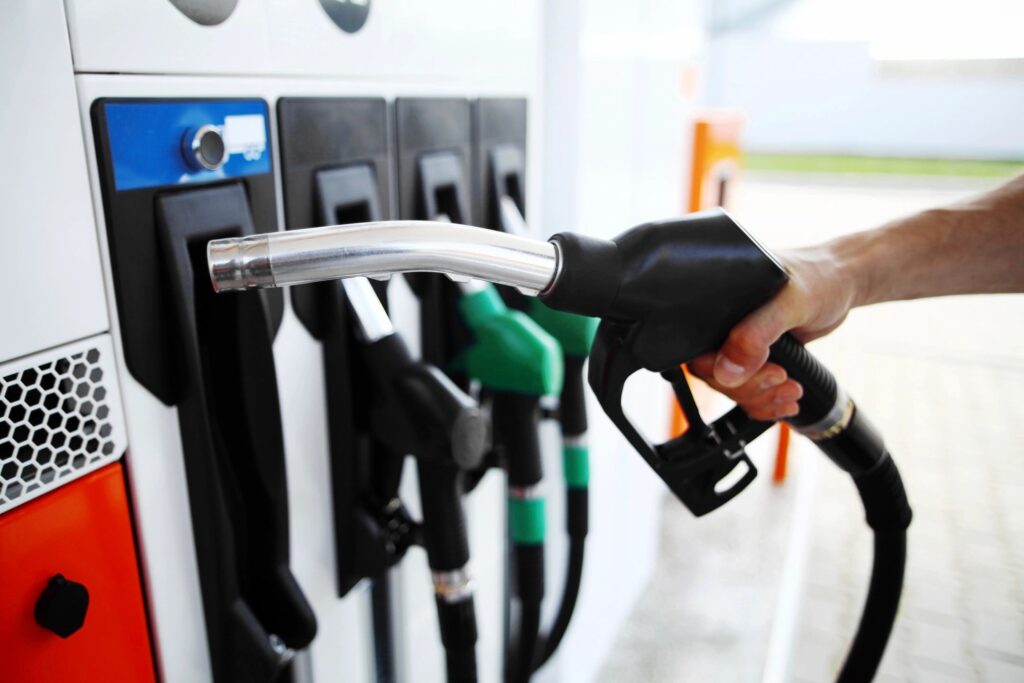
ATLANTA – Gov. Brian Kemp and legislative leaders moved Wednesday to temporarily suspend the state sales tax on gasoline amid record-high prices at the pump.
Fuel prices that already had increased significantly in recent weeks with inflation have soared since the Russian invasion of Ukraine and the subsequent sanctions imposed against Russia. On Tuesday, President Joe Biden announced a ban on oil imports from Russia into the U.S.
The average price of a gallon of gas in Georgia rose from $2.59 in March of last year to $4.06 through the end of last month, a figure that is continuing to increase rapidly.
“We know that Georgia families and businesses are hurting from outrageously high gas prices,” said Georgia House Speaker David Ralston, R-Blue Ridge. “In these extraordinary times, every little bit helps.”
The state has temporarily suspended the gasoline tax on a number of previous occasions.
Most recently, Kemp issued an emergency order last May halting collection of the tax after the shutdown of the Colonial Pipeline disrupted fuel supplies. The General Assembly was not in session at the time.
This time, the suspension is being included in a bill making its way through the legislature on a fast track.
The revenue the state loses by not collecting the gas tax would be replaced either with undesignated surplus money left over from fiscal 2021 or with the state’s “rainy-day” reserves, state Rep. Jodi Lott, R-Evans, one of Kemp’s floor leaders in the House, told a legislative subcommittee Wednesday.
The temporary suspension would take effect when the governor signs the bill and expire May 31.
ATLANTA – Gov. Brian Kemp and legislative leaders moved Wednesday to temporarily suspend the state sales tax on gasoline amid record-high prices at the pump.
Fuel prices that already had increased significantly in recent weeks with inflation have soared since the Russian invasion of Ukraine and the subsequent sanctions imposed against Russia. On Tuesday, President Joe Biden announced a ban on oil imports from Russia into the U.S.
The average price of a gallon of gas in Georgia rose from $2.59 in March of last year to $4.06 through the end of last month, a figure that is continuing to increase rapidly.
“We know that Georgia families and businesses are hurting from outrageously high gas prices,” said Georgia House Speaker David Ralston, R-Blue Ridge. “In these extraordinary times, every little bit helps.”
The state has temporarily suspended the gasoline tax on a number of previous occasions.
Most recently, Kemp issued an emergency order last May halting collection of the tax after the shutdown of the Colonial Pipeline disrupted fuel supplies. The General Assembly was not in session at the time.
This time, the suspension is being included in a bill making its way through the legislature on a fast track.
The revenue the state loses by not collecting the gas tax would be replaced either with undesignated surplus money left over from fiscal 2021 or with the state’s “rainy-day” reserves, state Rep. Jodi Lott, R-Evans, one of Kemp’s floor leaders in the House, told a legislative subcommittee Wednesday.
The temporary suspension would take effect when the governor signs the bill and expire May 31.
This story is available through a news partnership with Capitol Beat News Service, a project of the Georgia Press Educational Foundation.