ATLANTA – The General Assembly weighed in Wednesday on the Russian invasion of Ukraine with condemnation and a determination not to do business with the government that brought on the war.
The Georgia Senate unanimously passed legislation prohibiting companies owned or operated by the Russian government from bidding on state contracts.
“The killing of innocent women, children and men has to stop,” said Sen. Jeff Mullis, R-Chickamauga, the bill’s chief sponsor. “If we can send a message, this is one we need to send.”
Senators amended the bill to add the government of Belarus to the ban on state contracts.
“Belarus is allowing its territory to be used as a staging ground for attacks on Ukraine,” said Sen. Marty Harbin, R-Tyrone, the amendment’s sponsor.
Separately, the state House of Representatives unanimously approved a resolution condemning the invasion and calling on President Joe Biden and Congress to work toward bringing the conflict to a peaceful end.
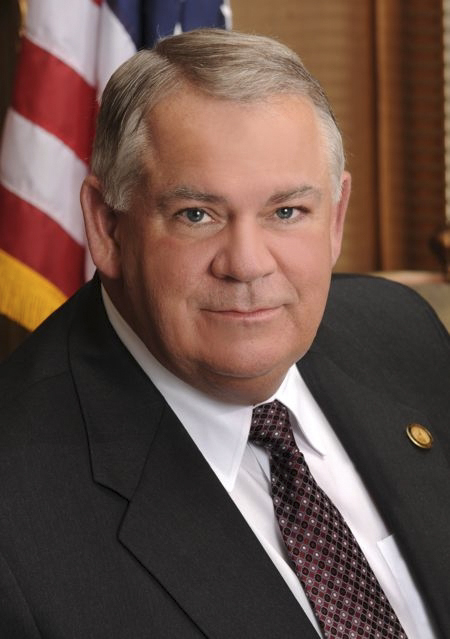
“It is important to say what should be obvious – to stand with good against evil,” said House Speaker David Ralston, R-Blue Ridge, the resolution’s chief sponsor.
Ralston noted that both the House Republican and Democratic leaders cosponsored the resolution.
“This is not a Democrat or Republican issue,” he said. “On this point, politics stops at the water’s edge.”
This story is available through a news partnership with Capitol Beat News Service, a project of the Georgia Press Educational Foundation.
ATLANTA – The Republican-controlled Georgia House of Representatives passed a $1 billion state income tax cut Wednesday over objections from Democrats that most benefits would go to upper-income taxpayers while some Georgians would pay more.
The bill, which passed 115-52 and now moves to the state Senate, would reduce Georgia’s income tax rate from 5.75% to 5.25%.
While doing away with the standard deduction, the legislation would increase the standard exemption from the current $2,700 to $12,000 for single filers and from $7,400 to $24,000 for married couples filing jointly.
“A family of four will not pay one penny of state income tax on their first $30,000 of income,” House Ways and Means Committee Chairman Shaw Blackmon, the bill’s chief sponsor, told House lawmakers during a brief debate.
Blackmon, R-Bonaire, said that same family of four with an annual income of $50,000 would receive a tax cut of more than $400.
“[This] will make us more competitive for wage earners at every income level,” he said.
But Rep. Matthew Wilson, D-Brookhaven, cited an analysis by the Georgia Budget and Policy Institute that the bill would raise taxes on about 10% of taxpayers, while $620 million of the $1 billion tax cut would benefit only the top 20% of taxpayers.
“We are effectively raising taxes on the working poor,” he said.
Rep. Jasmine Clark, D-Lilburn, said the legislation’s sponsors haven’t explained what state services would have to be cut for the state to afford doing away with $1 billion in tax revenue.
“We’re going to have to cut from education, health care … mental health,” she said.
Wilson accused Republican leaders of playing politics with the issue by shoving the bill through the House just one week after introducing it.
“This bill has been rushed through in an election year because it looks good on a [campaign] mailer,” he said. “But it’s not good policy.”
The legislation would take effect during the 2024 tax year.
This story is available through a news partnership with Capitol Beat News Service, a project of the Georgia Press Educational Foundation.
ATLANTA – The Georgia House of Representatives Tuesday overwhelmingly passed a comprehensive overhaul of a mental health-care system rated among the worst in the nation.
“Mental health touches almost every family in Georgia,” House Speaker David Ralston, R-Blue Ridge, who has made the bill his top priority this year, told lawmakers before the 169-3 vote. “These are Georgians who are hurting because the mental health-care system has failed them and hopelessness is winning the battle for their future.”
House Bill 1013 would require health insurance companies to treat mental illness the same way they treat physical illness. The parity provision also would apply to Georgia’s Medicaid and PeachCare for Kids programs and to the State Health Benefit Plan for teachers, university system employees and state workers.
The bill also would require care management organizations (CMOs) participating in Georgia Medicaid to dedicate at least 85% of their revenues to patient care and create a service-cancelable loan program to address a shortage of mental health-care workers.
Ralston said the legislation is being supported by $29 million in the fiscal 2022 mid-year budget and the fiscal 2023 spending plan on top of $58 million the General Assembly appropriated for mental health services last year.
The bill stems from two years of work by a state commission formed to find solutions to the funding, workforce development, access and insurance issues that hamper mental health and substance abuse services in Georgia.
The coronavirus pandemic has added a sense of urgency to the issue, with suicides, opioid abuse and Fentanyl overdose deaths on the rise in Georgia.
“There is no holy grail of how do you solve this,” said Rep. Todd Jones, R-South Forsyth, who worked with Rep. Mary Margaret Oliver, D-Decatur, to shepherd the bipartisan bill through the House Health and Human Services Committee. “[But] we have the ability to at least make a material change. … This is the first step that must be taken.”
Rep. Philip Singleton, R-Sharpsburg, echoed concerns that came up during committee hearings about a provision in the bill that would make it easier to commit mentally ill Georgians to a mental-health facility against their will. But the vast majority of House lawmakers agreed the overall thrust of the measure was well worth supporting.
“This bill is a game-changer,” said Rep. Calvin Smyre, D-Columbus, the House’s longest serving member. “It’s transformational.”
Ralston dropped a strong hint on the state Senate, where the bill now is headed, that he considers the issue too important for the typical give-and-take that occurs between the two legislative chambers.
“Lives are at stake with this bill,” he said. “I hope they will think twice before nitpicking or trying to take apart the work that has been done by this commission.”
This story isavailable through a news partnership with Capitol Beat News Service, a project of the Georgia Press Educational Foundation.
ATLANTA – A bill prohibiting giant social media platforms from censoring content based on the author’s viewpoint passed the Republican-controlled Georgia Senate Tuesday along party lines.
Reining in social media platforms including Facebook and Twitter has become a national issue since the companies suspended former President Donald Trump’s accounts a year ago.
The Senate bill, which passed 33-21 and now moves to the state House of Representatives, would prohibit social media platforms with more than 20 million followers from discriminating against an author posting content based not only on the person’s viewpoint but his or her race, color ethnicity, religion. religious or political beliefs, national origin, sex, gender or sexual orientation.
Social media companies still would be allowed not to publish obscene material, said Sen. Greg Dolezal, R-Cumming, the bill’s chief sponsor. The Georgia Public Service Commission would enforce the legislation’s provisions, he said.
Senate Democrats didn’t argue with the need to regulate giant social media platforms. But they questioned doing so at the state level.
A federal judge blocked a similar bill Florida lawmakers passed earlier this year after lawyers for Big Tech companies argued it violated their free-speech rights under the First Amendment.
“Social media needs to be regulated,” said Sen. Jen Jordan, D-Atlanta. “[But] I think this needs to be dealt with at the federal level.”
This story is available through a news partnership with Capitol Beat News Service, a project of the Georgia Press Educational Foundation.
ATLANTA – Metro Atlanta is about to get another new area code.
The Georgia Public Service Commission voted Tuesday to approve the implementation of area code 943 to overlay a region that already includes four other area codes: 404, 770, 678 and 470.
Starting March 15, customers receiving the 943 area code will be required to dial the area code and phone number for all local calls, just as customers with the other metro area codes must do today.
Customers may be assigned a number with the new area code when they request new service or an additional phone line.
Customers can still dial just three digits to reach 911, as well as 211, 311, 411, 511, 611, 711 or 811 if those are currently available in their community.
This story isavailable through a news partnership with Capitol Beat News Service, a project of the Georgia Press Educational Foundation.