ATLANTA – U.S. Sen. Raphael Warnock and the Republican frontrunner challenging the incumbent Democrat were among the first candidates Monday to qualify officially for this year’s elections, as the weeklong qualifying period began.
Warnock is not expected the face opposition in the May 24 Democratic primary. On the Republican side, both University of Georgia football icon Herschel Walker and Georgia Commissioner of Agriculture Gary Black signed qualifying papers on Monday.
Walker vowed to tie Warnock to what the GOP frontrunner called the “disastrous agenda” of President Joe Biden.
“Washington Democrats plan to spend millions of dollars to protect Senator Warnock and his 95% Biden voting record,” Walker said. “We will spend every day between now and November reminding Georgians that soaring gas prices, skyrocketing inflation and record levels of crime fall squarely on the shoulders of Joe Biden and Raphael Warnock.”
Other federal candidates to qualify on Monday included U.S. Reps. Carolyn Bourdeaux, D-Lawrenceville, and Lucy McBath, D-Marietta in Georgia’s 7th Congressional District.
McBath currently represents the 6th District but decided to run in the 7th after Republicans in the General Assembly redrew the 6th to lean heavily toward the GOP.
“At this critical moment in our nation’s history, when voting rights, women’s health care, and our democracy are under attack, it’s more important than ever to have leaders who are focused on defeating the extremist Republicans in Congress, not fellow Democrats,” Bourdeaux said Monday in a message to constituents.
“I have taken them on over and over again and I’ll continue fighting for common sense, Georgia values as long as I am your representative in Congress.”
Republican Rich McCormick, who lost to Bourdeaux in 2020, signed up Monday to seek the Republican nomination in the 6th District.
“In Washington, I’ll be a bold and unapologetic advocate for the completion of President Trump’s wall, policies that lock down the border, and aggressive interior enforcement to keep cartels and traffickers out of our country,” McCormick said.
Candidates for the top state offices stayed on the sidelines Monday.
However, a couple of candidates signed up for the lieutenant governor’s race. Savannah activist Jeanne Seaver vowed to push to eliminate the state income tax, while former Atlanta City Councilman Kwanza Hall announced his candidacy for the Democratic nomination and signed qualifying papers on the same day.
Another newly emerged candidate, former Georgia Rep. Mike Coan, announced he will run for Georgia commissioner of labor. Incumbent Republican Mark Butler announced last week he would not seek a fourth term as labor commissioner.
Coan, who currently serves as the agency’s deputy commissioner, will take on state Sen. Bruce Thompson in the GOP primary.
“At this critical time in our history, we need an experienced conservative leader who understands how to run one of Georgia’s biggest agencies,” Coan said.
Meanwhile, a veteran of the state Senate announced Monday he will not seek reelection this year. Senate Rules Committee Chairman Jeff Mullis, R-Chickamauga, will be leaving the General Assembly after serving for 22 years.
“I will be spending more time with family and friends and looking for ways to serve my community in other capacities,” Mullis wrote in a prepared statement.
Qualifying week will continue until noon Friday.
This story is available through a news partnership with Capitol Beat News Service, a project of the Georgia Press Educational Foundation.
ATLANTA – A national organization representing university professors has voted to censure the University System of Georgia (USG) over changes in post-tenure policies.
The system’s Board of Regents voted last October to replace a system that permitted tenured professors to be fired only for a specific cause following a peer review with a system that allows dismissal if they fail to take corrective steps following two consecutive subpar reviews.
The century-old American Association of University Professors released a report in December calling the new policy an attack on academic freedom for allowing tenured professors to be fired without a dismissal hearing.
“The removal of protections for academic freedom will have a devastating effect on the quality of education in the USG system, and on recruitment and retention of faculty and students,” association President Irene Mulvey said. “We call upon the USG regents to rescind the changes to the post-tenure review policy so that academic freedom, so essential for higher education, is restored.”
After the October vote, the regents explained the goal of the changes was to ensure faculty members continue to do their jobs well after they have received tenure.
“While we’re disappointed the American Association of University Professors chose to ignore USG’s long- standing commitment to academic freedom and due process, we remain dedicated to working with faculty at our public colleges and universities to make sure post-tenure review strengthens accountability and rewards the work faculty already do to empower student success in the 21st century,” system officials wrote in a prepared statement after Saturday’s censure vote.
The new policy will apply to all 26 of the system’s colleges and universities except Georgia Gwinnett College. The changes emerged from the recommendations of a working group formed in September of 2020.
The new policy will be fully implemented by this summer, according to the system’s website, with standards that will include “appropriate due process mechanisms.”
This story is available through a news partnership with Capitol Beat News Service, a project of the Georgia Press Educational Foundation.
ATLANTA – Legislation allowing Georgia Power to finance the Plant Vogtle nuclear expansion and other large projects through bonds cleared a state Senate committee Monday over the objections of the chairman of the Georgia Public Service Commission (PSC).
Senate Bill 421 would authorize Georgia Power to pursue securitized bond financing to recover some of the costs of the Vogtle project as well as what the Atlanta-based utility is spending to retire its fleet of coal-burning power plants and clean up the ash ponds surrounding those plants.
Twenty-six states have passed similar legislation, including nine that use bonds to finance non-emergencies such as coal-plant retirements, Sen. Chuck Hufstetler, R-Rome, told members of the Senate Regulated Industries & Utilities Committee Monday.
Using securitized bonds saved electric customers in Michigan $135 million and those in West Virginia $130 million, Hufstetler said.
The Georgia bill Includes a provision prohibiting the PSC from approving bond financing if it wouldn’t provide “quantifiable and verifiable” savings to customers, he said.
Going with securitized bonds would be voluntary on Georgia Power’s part, Hufstetler said.
“If you don’t need it, don’t use it,” he said. “The goal is to save the ratepayers money … by getting lower financing costs.”
The commission hasn’t taken a formal position on the bill.
But PSC Chairman Tricia Pridemore told committee members practical considerations would make it impossible for the commission to use securitized bond financing. For one thing, the PSC staff lacks expertise in securitization, she said.
Pridemore said securitization has been used to force some states to adopt a “renewable portfolio standard” requiring that a certain percentage of electricity come from renewable sources.
Although the Georgia PSC has never imposed such a mandate, the Peach State is expected to rank fourth in the nation in solar energy by 2024, up from ninth today, she said
“Our market-based approach has helped the costs come down,” she said.
Energy lawyer Bobby Baker. a former member of the PSC, said the bill also would rob the commission of flexibility to make adjustments as conditions change.
“It’s a one-and-done,” Baker said. “Once the commission approves bond financing, that’s it.”
Baker also called the bill unnecessary because Georgia Power is due to recover the costs of both the Plant Vogtle expansion and coal ash cleanup from customers.
Hufstetler’s bill also drew opposition from a Georgia Power executive at a committee hearing two weeks ago.
The legislation now moves to the Senate Rules Committee to schedule a floor vote.
This story is available through a news partnership with Capitol Beat News Service, a project of the Georgia Press Educational Foundation.
ATLANTA – Shortcomings in the Georgia Department of Labor’s unemployment claims management and customer service systems contributed to significant delays in processing claims during the coronavirus pandemic, according to a state audit.
At the height of the pandemic, only 4% of calls to the agency were being answered due to limited phone system capacity, the Georgia Department of Audits and Accounts found in an audit released last week.
As a result, 37,400 initial payments of unemployment claims were made more than 120 days after initial eligibility.
“While the unprecedented volume of claims made some delays inevitable, the Georgia Department of Labor’s claims management and customer service systems were also factors,” the audit concluded.
Unemployment in Georgia skyrocketed from 3.5% to 12.5% in April 2020, when COVID-19 first took hold. Unemployment claims spiked at the same time to 716,000.
Delays in processing claims spurred a deluge of complaints from jobless Georgians to their representatives in the General Assembly, who turned up the heat on the labor department.
Commissioner of Labor Mark Butler responded that the agency wasn’t being given the resources to accommodate the unprecedented volume of claims.
The audit concluded the department’s claims processing requires substantial staff involvement, with limited automation.
The lack of familiarity with the process among the many first-time filers of unemployment claims also contributed to the delays. New federal programs, system controls to prevent fraud, and untimely certification of unemployment by some employers worsened the situation, according to the audit.
However, the department was partly to blame because so many claimants could not reach the agency for assistance, the audit found.
The department responded to the deluge of claims by diverting more of its staff into claims processing, encouraging overtime and hiring contractors and retirees.
The [department] quickly implemented several innovative strategies during the pandemic … including waiving in-person visits, automating ID verification, mandating employer filed-claims, deploying virtual agents and chat bots, and reassigning staff,” agency spokeswoman Kersha Cartwright wrote in a prepared statement.
The agency also expanded its dedicated customer service unit to 16 last April but did not hire contractors for customer service.
The audit recommends the labor department continue “planned improvements” and create a formal plan for dealing with unemployment claims during future recessions.
It suggested improvements should include increasing the use of automation in claims processing and finding ways to make the application process clearer.
No other state or the federal government had a plan in place when the pandemic struck for dealing with such a large influx of unemployment claims, Cartwright wrote.
“The auditors could not point out what additional processes should have been automated,” she added. “In fact, the [audit] did not have recommendations for improvements for five of the 12 findings presented in its report.
The [U.S. Department of Labor Office of Insepctor General] recently had professional IT auditors review [the department’s] systems and rated it well in preparedness.”
This story isavailable through a news partnership with Capitol Beat News Service, a project of the Georgia Press Educational Foundation.
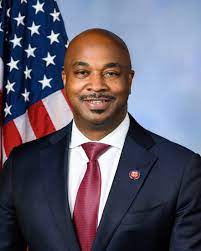
ATLANTA – Former Atlanta City Councilman Kwanza Hall, who also served in Congress for about a month, is running for lieutenant governor.
Hall entered the Democratic race for the state’s No.-2 post on Monday, the opening day of the weeklong candidate qualifying period.
Hall was elected to the city council in 2005 and served three terms before launching an unsuccessful bid for mayor of Atlanta in 2017.
Hall was elected to Congress late in 2020 to complete the unexpired term of the late U.S. Rep. and civil rights leader John Lewis, D-Atlanta. However, he served in the position only one month before giving way to current Rep. Nikema Williams, D-Atlanta, who won a full two-year term that began in January of last year.
His brief term ended four days before the Jan. 6 attack on the U.S. Capitol by supporters of then-President Donald Trump.
“We have to move on from the 2020 election and focus on what Georgians need – better jobs throughout the state, academic freedom for our teachers and university staff, transportation and infrastructure improvements, and to give every Georgian, no matter where they live in the state, the ability to earn a living wage and access to a hospital,” Hall said Monday in a prepared statement.
The lieutenant governor’s seat is open this year because Republican Geoff Duncan decided not to seek reelection.
GOP candidates in the race include Georgia Senate Pro Tempore Butch Miller of Gainesville, state Sen. Burt Jones of Jackson and Savannah activist Jeanne Seaver.
Joining Hall in the Democratic field are state Reps. Erick Allen of Smyrna, Derrick Jackson of Tyrone and Renitta Shannon of Decatur.
This story isavailable through a news partnership with Capitol Beat News Service, a project of the Georgia Press Educational Foundation.