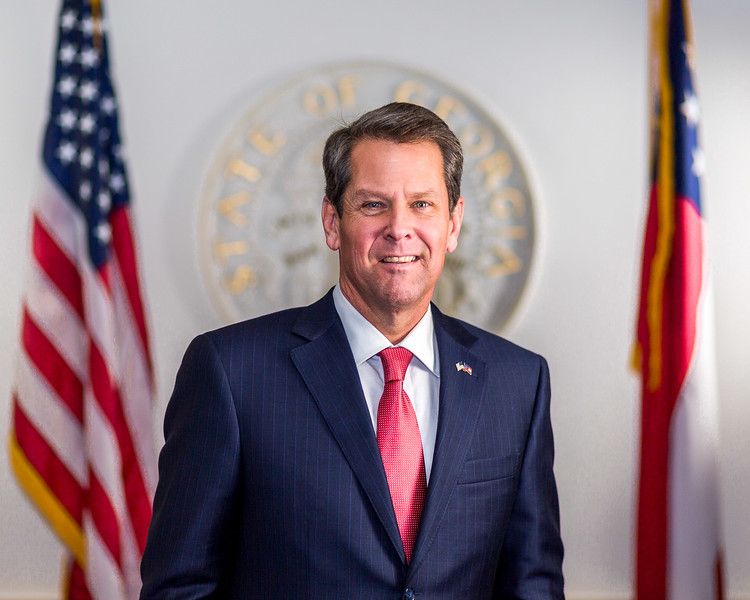
ATLANTA – Georgia House Republicans put their stamp of approval Friday to much of GOP Gov. Brian Kemp’s education agenda.
Voting along party lines, the Republican majority passed bills guaranteeing parents’ involvement in their children’s education, protecting free-speech rights on Georgia’s public university campuses and prohibiting the teaching of “divisive concepts” in the state’s public schools.
The Parents’ Bill of Rights would give parents the right to review curriculum and other instructional material during the first two weeks of every nine-week grading period.
Principals or superintendents who receive a request for information from a parent would have three working days to provide it. Parents not satisfied with a local school’s decision on a request could appeal to the school district and, beyond that, to the state.
“This bill is not meant to be punitive in any way,” Rep. Josh Bonner, R-Fayetteville, one of Kemp’s floors leaders in the House, told his legislative colleagues Friday. “This will make it easier for [school] districts and parents to understand their roles.”
But Rep. Stacey Evans, D-Atlanta, argued the bill would put the relationship between parents and teachers at risk by subjecting teachers to cumbersome open-records requests.
“All this does is set up a fight and logistical nightmares for teachers,” she said.
After passing that bill 98-68, the House moved on to legislation clarifying that First Amendment free-speech rights exist at all locations on college campuses, doing away with the concept of “free-speech zones” that limit free expression to specific locations.
Supporters cited instances where representatives of conservative organizations have been denied the right to address campus rallies by liberal college administrators.
“Free expression of thought is not faring so well on college campuses these days,” said Rep. Ginny Ehrhart, R-Marietta.
Opponents took particular exception to a provision in the bill that allows not just students and faculty to exercise their free-speech rights but their “invited guests.”
Rep. David Dreyer, D-Atlanta, said such a loose policy could open college campuses to anti-Semitism, other forms of hate speech, and even violence.
“It will increase harassment and hate,” he said.
After House members passed that bill 93-62, the chamber took up the “divisive concepts” bill. Among other things, the measure would ban Georgia schools from teaching that any race is inherently superior or inferior to any other, or that the United States is a systemically racist country.
“This is happening rarely in Georgia, but it is happening,” said Rep. Will Wade, R-Dawsonville, the bill’s chief sponsor. “I believe we must do something proactive to prevent it.”
Before passing the bill 92-63, supporters said teaching such racist concepts could make students uncomfortable and lead to feelings of guilt.
But the bill’s opponents said students should feel uncomfortable about portions of U.S. history, including slavery and the taking of Native American lands.
“When you’re uncomfortable, you start to grow,” said Rep. Erica Thomas, D-Austell. “It is uncomfortable. But it is American history.”
Democrats complained all three bills are part of a politically motivated effort by the governor and Republican legislative leaders to pass legislation that will appeal to GOP voters in a pivotal election year.
The bills now head to the Senate, which has already passed its own version of the Parents’ Bill of Rights. However, the Senate’s divisive concepts bill is still before the Senate Education Committee.
This story is available through a news partnership with Capitol Beat News Service, a project of the Georgia Press Educational Foundation.
ATLANTA – Virtually every year, Georgia lawmakers take up legislation providing monetary compensation to people who have been exonerated of a crime after being wrongfully convicted and spending years in state prison.
Three such resolutions are currently before the House Appropriations Committee.
But putting decisions on compensating wrongfully convicted Georgians in the hands of the legislature soon may be a thing of the past. A bipartisan bill before the House Judiciary Committee would scrap that system in favor of a five-member panel that would review cases and make recommendations.
“We really need to update the process from what we have today, which is largely ad hoc,” state Rep. Scott Holcomb, D-Atlanta, the bill’s chief sponsor, told members of a Judiciary subcommittee late last month. “This bill represents an important step forward for these cases.”
Hayden Davis, a policy specialist with the Georgia Innocence Project, said the current system is cumbersome and ill-suited to the needs of exonerated Georgians.
It involves submitting a case for compensation to a Claims Review Board, which was created to take up claims from Georgians who believe an act of a state agency has caused them harm, Davis said.
Examples include a person who has been struck by a state vehicle or slipped on the sidewalk of a state building, he said.
“These cases are different,” Davis said. “They’ve been shoehorned into a process that’s not designed for them.”
Only after a case is pursued through the Claims Advisory Board can an exonerated person seek a legislative sponsor to go to bat for them, Davis said.
“You go through all these stages just to get to Step One where a lawmaker is able to introduce a resolution,” he said.
Then, once a resolution gets before the General Assembly, it’s taken up during a rushed 40-day session by lawmakers who often lack expertise in the criminal justice system, Davis said.
The proposed review panel would consist of a criminal court judge appointed by the chief justice of the Georgia Supreme Court, a prosecutor and criminal defense lawyer appointed by the governor, and two attorneys, forensic specialists or law school professors appointed by the speaker of the House and the president of the Senate.
“It would be done by a neutral panel with real expertise,” Davis said. “There’s less chance of any of these being politicized.”
Davis said the average compensation awarded under the current system is $39,000 for every year a wrongfully convicted person subsequently exonerated has been incarcerated.
Holcomb’s bill calls for a range of compensation from $50,000 a year to $100,000. The amount of compensation also would be indexed to keep pace with inflation.
Holcomb said that would avoid having to go back to the General Assembly for new legislation every time the cost of living goes up.
“Building it in gives some flexibility for it to be increased over time without having a political fight,” he said.
The bill has the support of both the Prosecuting Attorneys’ Council of Georgia and the Georgia Association of Criminal Defense Lawyers.
“This has been a longstanding issue,” said Jill Travis, executive director of the defense lawyers’ group. “It would be really great for Georgia to have something in place citizens could count on in these circumstances.”
This story is available through a news partnership with Capitol Beat News Service, a project of the Georgia Press Educational Foundation.
ATLANTA – State tax collections rose 1% last month over February of last year, keeping alive a string of consecutive increases in revenues that goes back eight months.
The Georgia Department of Revenue brought in more than $1.95 billion in taxes in February, up $19.8 million over the same month a year ago.
The various components that make up the state’s tax picture were volatile last month. While individual income taxes were down 6.8%, net sales taxes offset that by increasing 12.8%.
Corporate income taxes rose by 29.2% last month compared to February of last year.
Tax collections on gasoline and other motor fuels were up 2.3% for the month.
Tax revenues through the first eight months of the current fiscal year increased by a healthy 16% over the first eight months of fiscal 2021, as Georgia’s economy continues bouncing back from the coronavirus pandemic.
Gov. Brian Kemp and the General Assembly are taking advantage of the strong fiscal numbers by increasing state spending, including election-year raises for teachers, state workers and employees of the University System of Georgia.
This story is available through a news partnership with Capitol Beat News Service, a project of the Georgia Press Educational Foundation.
ATLANTA – The Republican-controlled Georgia House of Representatives gave final passage Friday to new district boundaries for the state Public Service Commission (PSC) over objections from Democrats that the map discriminates against minority voters.
The bill, which originated in the Georgia Senate, cleared the House 97-68 along party lines and now goes to GOP Gov. Brian Kemp’s desk for his signature.
The new map makes significant changes to the five PSC districts, moving 44 of the state’s 159 counties into a different district than the current map.
The changes were necessary to bring the population deviation between the districts to plus-or-minus 1%, said Rep. Bonnie Rich, R-Suwanee, chairman of the House Legislative & Congressional Reapportionment Committee.
House Democrats argued the bill perpetuates the current system requiring commissioners to run statewide even though they must live inside their districts.
A federal lawsuit currently pending claims electing commissioners statewide violates the federal Voting Rights Act because it dilutes minority voting strength.
“It makes no sense for us … to perpetuate statewide election of members of the PSC,” said Rep. Sam Park, D-Lawrenceville. “It could be seen as thumbing our noses at the court.”
House Minority Leader James Beverly, D-Macon, said the new map is politically motivated, a bid by majority Republicans to avoid creating a majority-minority PSC district centered around Gwinnett County, which has seen huge growth in its minority population since the current map was drawn a decade ago. The new map moves Gwinnett into a district dominated by heavily white communities in Northeast Georgia
“Intentional racial discrimination is wrong,” Beverly said.
But Rep. Houston Gaines, R-Athens, said it’s too late to change the method of electing PSC members when the candidate qualifying period is set for next week. Such a change from the current system of statewide elections would require a constitutional amendment, he said.
Qualifying for congressional, statewide and legislative offices begins on Monday and runs through noon next Friday.
This story is available through a news partnership with Capitol Beat News Service, a project of the Georgia Press Educational Foundation.
ATLANTA – Bipartisan legislation to ban mining near the Okefenokee Swamp has fallen by the wayside, despite the backing of some of the most powerful members of the Georgia House of Representatives.
The bill, cosponsored by several committee chairs in the House, was on track last week for a hearing before the House Natural Resources & Environment Committee. But the hearing didn’t happen, and supporters were told the committee will not take it up this year.
“The enthusiasm that appeared on the part of the legislature … led us to believe we had a real good chance to get it through the House,” said Neill Herring, a lobbyist for the Georgia chapter of the Sierra Club. “There’s plenty of strong sentiment for protecting the Okefenokee Swamp from any kind of threats.”
Alabama-based Twin Pines Minerals is seeking permits from the Georgia Environmental Protection Division (EPD) to mine titanium dioxide at a site in Charlton County three miles from the Okefenokee National Wildlife Refuge, the largest black water swamp in North America.
The project’s opponents say the mine could damage adjacent wetlands and permanently affect the hydrology of the entire 438,000-acre swamp by lowering the water level.
“The swamp will continue to face future mining threats unless we solve this issue legislatively,” said Josh Marks, a lawyer with a long history working to protect the Okefenokee. He was involved during the 1990s in stopping DuPont’s plans for a titanium mine near the swamp.
“It’s time to permanently prohibit mining next to the Okefenokee once and for all,” Marks said.
But Rep. Lynn Smith, chairman of the Natural Resources & Environment Committee, said the bill is premature when the EPD is still reviewing the permit applications and has yet to open a 60-day public comment period.
“That really has to happen first,” said Smith, R-Newnan.
Smith suggested nonprofit conservation groups interested in protecting the Okefenokee Swamp should consider applying to preserve the land.
The Chemours Company, an American chemical company spun off of DuPont, announced last month it will not buy the
proposed mine or acquire Twin Pines Minerals.
While Twin Pines officials said the Chemours commitment to protect the Okefenokee will not affect its plans for the mine, Marks called it an important development.
“[It] shows that there’s no business case for Twin Pines’ project,” he said. “Hopefully Twin Pines will get the message and abandon its risky scheme once and for all.”
This story is available through a news partnership with Capitol Beat News Service, a project of the Georgia Press Educational Foundation.