ATLANTA – Emergency room physician Dr. Rich McCormick has raised more money than any other candidate in a crowded Republican primary field in Georgia’s 6th Congressional District.
But Jake Evans, former chairman of the Georgia Government Transparency & Campaign Finance Commission, has a little more cash on hand than McCormick for the final weeks heading into the May 24 GOP primary.
McCormick raised $605,054 during the first quarter of this year, according to a report filed with the Federal Election Commission. But he had already raised a lot more earlier in the 2022 election cycle, which brought his total campaign fundraising to about $3 million through the end of last month.
Evans raised $411,163 during January, February and March, bringing his total to more than $1.5 million. But since Evans has held onto most of his money to be spent in the campaign’s final stages, he still had $1.24 million cash on hand as of March 31, compared to $1.16 million for McCormick.
Both men have relied on loans to help bolster their bottom lines. Evans has loaned his campaign $700,000, while McCormick has put up $680,200 of his money in the form of a loan.
After the General Assembly’s Republican majority redrew the 6th Congressional District map to heavily favor the GOP, the race drew a lot of interest from Republicans. Besides McCormick and Evans, six other Republicans are on the primary ballot.
Business owner Mallory Staples raised $726,372 through the first quarter, including a $250,000 personal loan. Former state Rep. Meagan Hanson raised $531,186 through March 31, including a personal loan of $50,000.
Blake Harbin raised $260,263 through the first quarter. However, $250,000 of that came in the form of a loan Harbin made to his campaign.
Suzi Voyles raised $124,277 through the end of last month, slightly ahead of Byron Gatewood’s $105,376. Eugene Wu’s campaign brought in $74,145, including a personal loan of $50,000.
The only Democrat running in the 6th District, Bob Christian, is self-financing nearly all of this campaign. Of the $106,540 he has raised, $105,220 came through a personal loan.
The 6th District, currently served by U.S. Rep. Lucy McBath, D-Marietta, was substantially reshaped during the special redistricting session of the General Assembly last November to extend north through Republican-friendly Forsyth and Dawson counties, and eastern Cherokee County.
As a result, McBath is now running in the 7th Congressional District against fellow Democratic Rep. Carolyn Bourdeaux, who defeated McCormick two years ago to win her seat in Congress.
This story is available through a news partnership with Capitol Beat News Service, a project of the Georgia Press Educational Foundation.
U.S. Rep. Carolyn Bourdeaux (left) and U.S. Rep. Lucy McBath are opposing each other in the May 24 Democratic primary in Georgia’s 7th Congressional District
ATLANTA – The two Democratic congresswomen running against each other in Atlanta’s northern suburbs have plenty of money to wage their campaigns heading into the final stretch.
U.S. Rep. Lucy McBath raised $790,640 during the first quarter of this year, bringing her total for the campaign to more than $3.9 million, according to a report filed with the Federal Election Commission.
Her opponent in the May 24 Democratic primary in Georgia’s 7th Congressional District, Carolyn Bourdeaux, raised $591,541 in January, February, and March, giving her a total for the campaign of just more than $3 million.
Bourdeaux has represented the Gwinnett County-based 7th Congressional District for the past two years. McBath was elected in the 6th District in 2018 but decided to run in the 7th District this year after Republicans in the General Assembly redrew the 6th District map to heavily favor the GOP.
Both candidates are stressing the grassroots nature of their campaigns. McBath received 94% of her campaign contributions during the first quarter from individual donors who gave $250 or less, while 78% of Bourdeaux’s individual contributions were for less than $200.
Neither has accepted contributions from corporate political action committees.
McBath still had more than $2.85 million remaining in her campaign war chest at the end of last month, compared to about $2.1 million for Bourdeaux.
While five Republicans are running in the heavily Democratic district, none had raised $100,000 through March 31. The leading GOP candidate in fundraising, Mark Gonsalves, had brought in $74,983 through the first quarter.
Other Republicans in the race include Mary West, YG Nyghtstorm, Lisa McCoy and Michael Corbin.
The 7th Congressional District includes most of Gwinnett County and the Johns Creek area of Fulton County.
This story is available through a news partnership with Capitol Beat News Service, a project of the Georgia Press Educational Foundation.
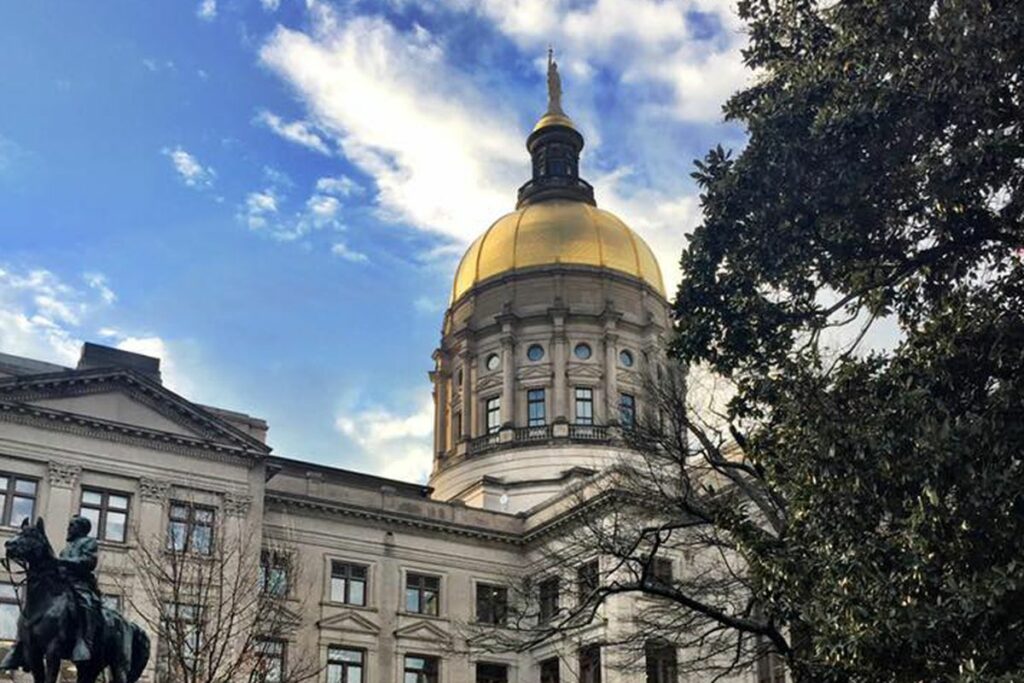
ATLANTA – There will be a lot of new faces in the General Assembly come next January.
But the breakdown between majority Republicans and minority Democrats may not change much.
Twelve of the 56 Georgia senators are not seeking reelection this fall, while 54 of the 180 members of the state House of Representatives aren’t running for another two-year term under the Gold Dome.
That’s an unusually large amount of turnover, driven in part by the ambitions of lawmakers leaving their seats to seek statewide office in positions including lieutenant governor, attorney general and secretary of state. But many others simply have had their fill of the job.
“It was a combination of having been there awhile and the demands of the job, the sacrifices of being away from homes and businesses,” said House Speaker David Ralston, R-Blue Ridge.
At the same time, high turnover in the General Assembly is being accompanied by a larger than usual number of contested races for legislative seats.
In the House, contests for 87 of the 180 seats feature at least one Republican and one Democrat. The ratio is nearly the same in the Senate, where at least one candidate from each of the two major parties is on the ballot in 27 of 56 races.
Charles Bullock, a political science professor at the University of Georgia, attributes the large number of contested races to the once-per-decade redrawing of legislative maps to accommodate changes in population reflected in the U.S. Census.
The legislature’s Republican majority made major changes to many House and Senate districts, forcing incumbents to court lots of new constituents on the campaign trail while encouraging newcomers to jump into the fray.
“Especially in a district that has swapped some population in and out, parts of the district would be like an open seat,” Bullock said.
In the immediate aftermath of the General Assembly’s redistricting special session last November, the consensus among Georgia political observers was that the new maps put Democrats in a position to gain up to six seats in the House and pick up at least one seat in the Senate. While Republicans were in control of drawing the new districts, growing minority populations in suburban Atlanta were expected to help Democrats gain ground.
“The changing population is spreading further out of Atlanta, putting some districts in Gwinnett [County] and North Fulton up for grabs,” Bullock said. “Democrats came close to winning them in 2018 and 2020.”
“We are optimistic about potential gains in the Senate,” Monica Fambrough, spokeswoman for the Georgia Senate Democratic Caucus, added in an e-mail. “We do expect to pick up at least two seats, and we are going to be competing in several districts where we see a path for gains in the future.”
Fambrough pointed to Senate Districts 6, 7, 14 and 48 in Atlanta’s northern suburbs as competitive districts where the Democrats have fielded strong candidates.
Even if those gains are realized, Republicans still would remain in control of the General Assembly. The GOP now holds 34 Senate seats to 22 for the Democrats, while the House includes 103 Republican members and 77 Democrats.
On the House side, Ralston said he’s not buying that Democrats will gain six seats.
“We’re a competitive state now because of the changing demographics. We get that as Republicans,” he said. “[But] I think [a six-seat pickup] is a real reach for them. I expect we’ll end up pretty close to where we are now. We may pick up one or two [seats].”
Ralston said Republicans will be able to talk on the campaign trail about a strong list of accomplishments during the recently concluded General Assembly session, including an overhaul of Georgia’s mental health system, a tax cut and an economy that has remained strong despite the pandemic, outperforming other states.
“We were the last to close and the first to reopen,” he said. “That put us in a good position economically.”
Democrats supported the mental health bill, but most voted against the Republicans’ other priorities. Democratic candidates will tell voters Republicans have made Georgia less safe by allowing the carrying of concealed firearms without a permit and are threatening their voting rights by empowering the Georgia Bureau of Investigation to look into complaints of election fraud on its own.
This story is available through a news partnership with Capitol Beat News Service, a project of the Georgia Press Educational Foundation.
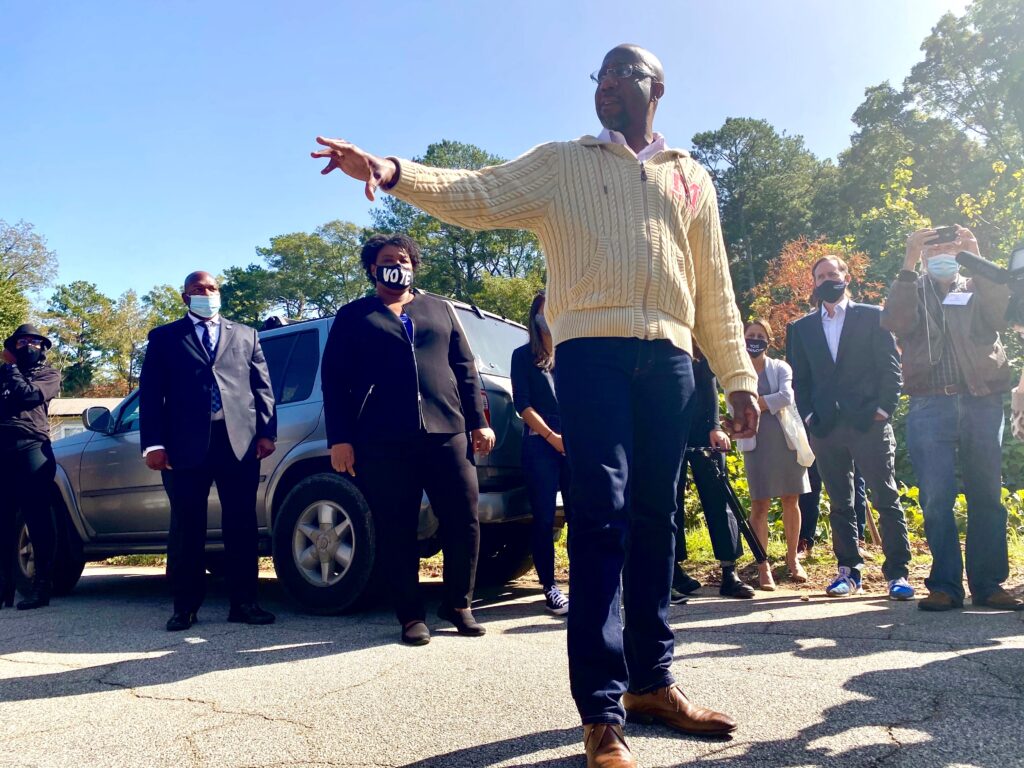
Rev. Raphael Warnock (front) campaigns on Election Day, Nov. 3, 2020. (Photo by Beau Evans)
ATLANTA – U.S. Sen. Raphael Warnock, D-Ga., raised more than $13.6 million during the first quarter of this year, the senator’s campaign announced Thursday.
Combined with the $9.8 million Warnock brought in during the fourth quarter of last year, the campaign now boasts $25.6 million cash on hand. Warnock’s fundraising in January, February and March set a record for money raised by a U.S. Senate candidate in the first quarter of an election year.
“Georgians see Reverend Warnock fighting to lower costs for hardworking families, and they’re ready to send him back to the Senate,” campaign manager Quentin Fulks said. “From fighting to cap the cost of insulin and lower prices at the gas pump to pushing for student loan debt relief, Reverend Warnock’s commitment to serving the people of Georgia continues to drive the biggest grassroots fundraising effort in any Senate race this cycle.”
Warnock received contributions from 183,000 individual donors during the first quarter, with an average donation of $40.
Meanwhile, Republican frontrunner Herschel Walker’s campaign raised $5.5 million during the first quarter, one of the largest totals among GOP Senate candidates during the quarter, Walker’s campaign reported Friday.
The University of Georgia football legend raised $5.4 million during the fourth quarter of last year.
“Our team has traveled to every corner of Georgia shaking hands with voters and hearing about how they are fed up with Joe Biden and Raphael Warnock,” Walker said. “We can’t do this by ourselves, and Georgians are coming out in record numbers to join our team.”
Walker received more than 50,000 donations during the first quarter from all 50 states.
Fundraising by the other candidates in the race falls well below that of Warnock and Walker. Republican Latham Saddler, an Atlanta banking executive and former Navy SEAL officer, raised $651,000 during the first quarter, bringing his total for the campaign to nearly $4 million.
“When it comes to the serious, non-celebrity candidates in this race, our campaign has far outpaced the others and is the only one able to afford significant voter contact,” Saddler said Friday. “We are strongly positioned to emerge as the campaign that will take on Herschel Walker in the runoff.”
First-quarter reports from the campaigns of Republicans Gary Black, Kelvin King, Josh Clark, and Democrat Tamara Johnson-Shealey were not posted on the Federal Election Commission website as of Friday.
This story is available through a news partnership with Capitol Beat News Service, a project of the Georgia Press Educational Foundation.
ATLANTA – Georgia has joined 19 other mostly Republican-led states in suing the Biden administration over the upcoming termination of a policy that allows border officials to turn away immigrants due to COVID-19.
The suit, filed in U.S. District Court in Louisiana, challenges a decision by the Centers for Disease Control and Prevention to end enforcement of the Title 42 public health policy effective May 23. The CDC instituted the policy in March 2020 as the coronavirus pandemic began spreading across the country.
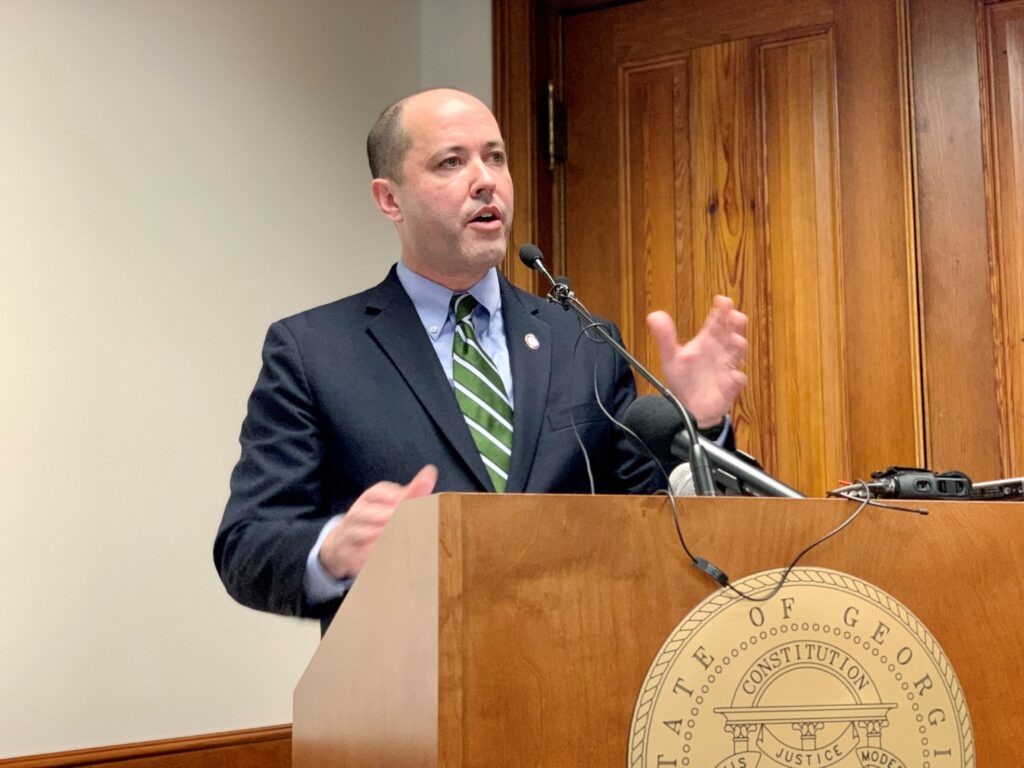
“In a move as hypocritical as it is dangerous, the Biden administration has declared the public health emergency over for migrants intent on entering our country illegally but not for Americans still forced to wear a mask on airplanes,” Georgia Attorney General Chris Carr said Thursday.
“Revoking Title 42 while in the midst of an unprecedented border crisis poses an immediate threat to our national security, endangers our communities and places immense burden on our law enforcement officers.”
President Joe Biden announced the termination of the policy recently following pressure from immigrant advocacy groups and some Democrats.
But other Democrats have joined Republicans in criticizing the administration for rescinding Title 42 without a plan for how to handle the influx of immigrants expected to result.
The lawsuit seeks to block the administration from repealing the policy. Specifically, it asserts doing away with Title 42 is arbitrary and capricious and illegally bypassed notice and comment requirements.
Besides Georgia, states joining the suit include Alabama, Alaska, Arizona, Arkansas, Florida, Idaho, Kansas, Kentucky, Louisiana, Mississippi, Missouri, Montana, Nebraska, Oklahoma, Ohio, South Carolina, Tennessee, West Virginia and Utah.
This story is available through a news partnership with Capitol Beat News Service, a project of the Georgia Press Educational Foundation.