ATLANTA — Several Georgia lawmakers saw their careers end Tuesday night while others got a chance to climb the ladder to higher office after all the unofficial votes were tallied in the primary election.
Some secured a majority of the vote in their respective races and can look ahead to the general election in November.
Others, including political newcomers, met with some success but not enough to avoid the runoff election on June 16.
Some voters may feel fatigued by the repeat trips to the polls, but Valaria Kee saw it as an opportunity to do more homework and pick the right candidates.
She preferred former football coach Derek Dooley as the Republican nominee to take on Democratic incumbent Jon Ossoff for his U.S. Senate seat. But Dooley captured only about 30% of the Republican vote and must face off against U.S. Rep. Mike Collins, who got nearly 41%.
It takes winning a majority of ballots cast to avoid a runoff, which did not happen often in Tuesday’s crowded fields.
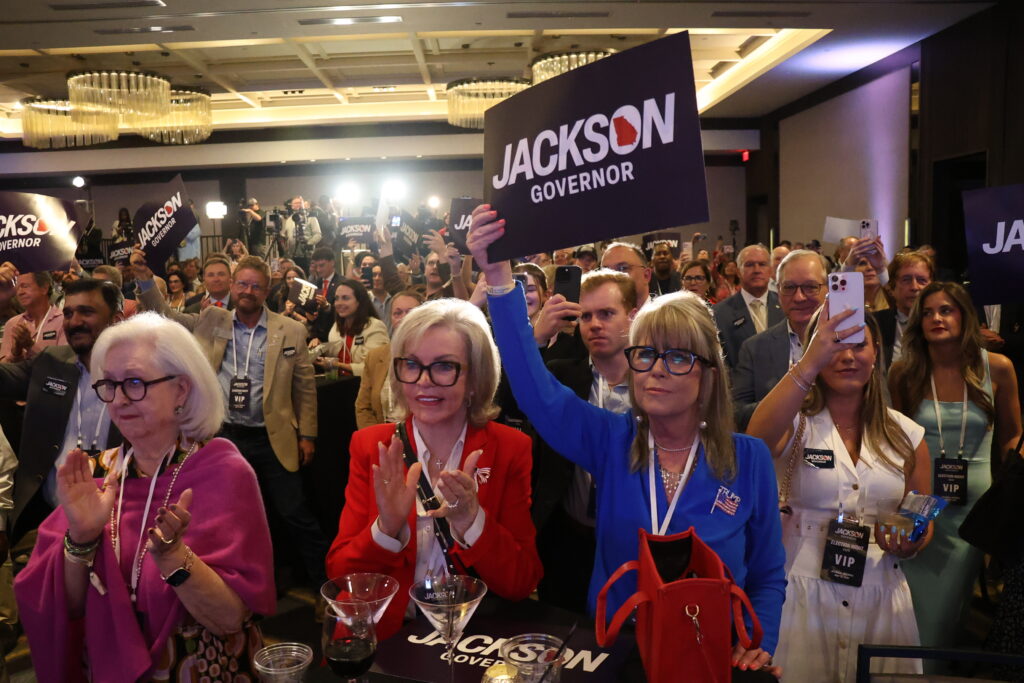
Kee wanted Secretary of State Brad Raffensperger for governor, but he was eliminated as Lt. Gov. Burt Jones and billionaire Rick Jackson advanced to the runoff in their GOP primary with about 38% and 33% of the vote respectively.
Kee moved to Paulding County from California, a state that does not hold runoff elections. So Georgia’s peculiar routine has been a learning experience for her.
“I’m not upset at all,” she said of the extra legwork required. “That gives me a second chance to do my research on the people I did choose, and on the people I didn’t.”
Dooley must fight to keep her vote in June while Jones and Jackson scramble to secure it.
Keisha Lance Bottoms, who won the Democratic primary outright with 56% in a field of seven, likely has no chance with Kee.
But nearly 150,000 more Democrats than Republicans cast a ballot for governor on Tuesday.
Some races felt like the movie Groundhog Day, as familiar names reappeared on ballots.
U.S. Rep. Clay Fuller, a Republican former district attorney, had just won a special election last month to succeed Republican Marjorie Taylor Greene in Congress. He had to beat back many of the same contestants again in this primary for a full two-year term, leading a field of eight with 81% of the vote.
But in November, Fuller will again have to fight Democrat Shawn Harris, after sparring with him in the special election. Harris ran uncontested Tuesday.
Likewise, the Public Service Commission, a statewide office, will feature two familiar names in November, after Republican Fitz Johnson squeaked an outright victory for the District 3 nomination with 50.2% of the vote. In November, he will go up against recently seated Democrat Peter Hubbard, who had no challengers.
The tables were turned last November, when Johnson was the incumbent and Hubbard unseated him in a special election.
In PSC District 5, Shelia Edwards won the Democratic nomination. But engineer Josh Tolbert and Bobby Mehan, a partner at a private equity firm, must face each other in the GOP runoff on June 16 before one of them can battle her in November.
There were more than half a dozen other statewide races down the ballot, with so many candidates that several voters interviewed Tuesday could not remember whom they had selected.
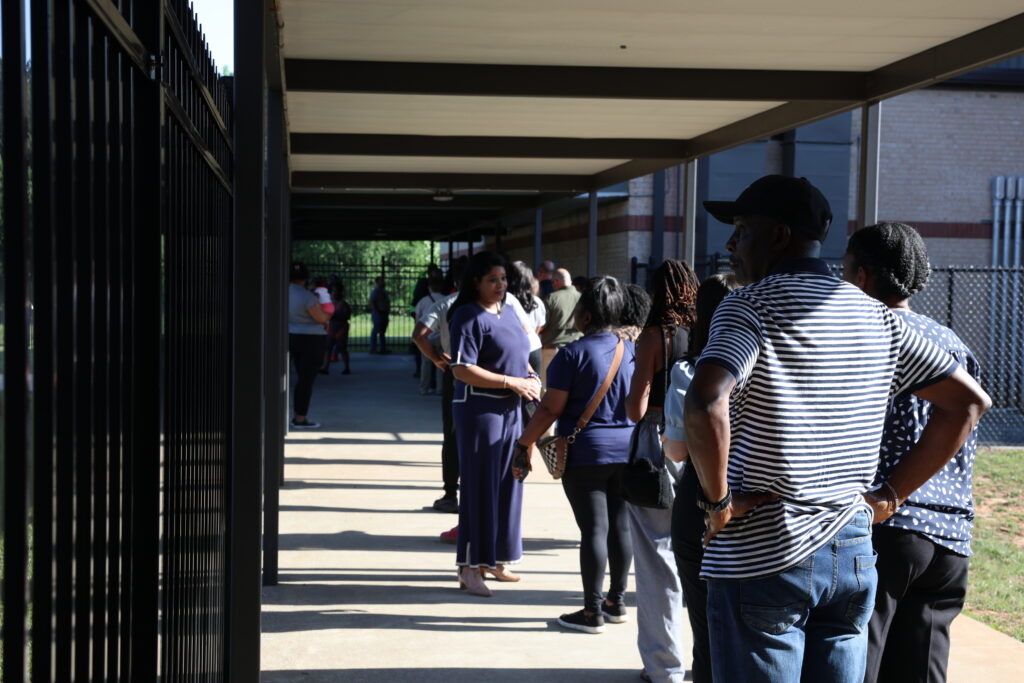
“Most of them I didn’t know,” said Josh Harris after voting at J.A. Dobbins Middle School in Powder Springs. He said he scanned his ballot for familiar names. “I don’t follow politics that much,” he said. “I just try to put my little two cents in there for a Democrat.”
In the race to succeed Jones in the lieutenant governor’s office, former state Sen. John F. Kennedy, R-Macon, who resigned in December to focus on his campaign, will contest the runoff against Sen. Greg Dolezal, R-Cumming. Each got about a quarter of the Republican vote.
Sen. Josh McLaurin, D-Sandy Springs, will continue sparring with former state Sen. Nabilah Parkes, D-Duluth, in round two of their contest after each taking about 40% of the vote and knocking a third contender out of their race for lieutenant governor.
In the election to succeed Raffensperger for secretary of state, Rep. Tim Fleming, R-Covington, will go to the runoff against Vernon Jones, who was a Democrat when he was CEO of DeKalb County but switched to the Republican Party. Fleming captured 39% of the GOP vote while Jones won 27%.
Voters will get a break in the attorney general’s race. There were only two candidates for each major party, and the outcomes were decisive.
Sen. Brian Strickland, R-McDonough, bested Sen. Bill Cowsert, R-Athens, for the GOP nomination, with nearly 72% of the vote. And Rep. Tanya Miller, D-Atlanta, walked away with 85% of the vote in her contest against former state lawmaker Bob Trammell.
Strickland and Miller can now focus on their general election in November.
The same goes for the candidates for state agriculture commissioner, after Democrat Katherine E. Juhan-Arnold defeated a contender and will meet the unchallenged GOP incumbent Tyler Harper in November.
But voters still have more work to do in three other statewide races.
In the insurance commissioner’s race, it will be Democrats who must choose their contender, as former Atlanta City Councilwoman Keisha Sean Waites faces off against DeAndre Mathis in the runoff. Incumbent John King, a Republican, had no challengers.
But in the state school superintendent’s race, it is Republicans who must study up after three-term incumbent Richard Woods missed an outright win by a whisker, taking 49.89% of the vote. He will face off against second-place finisher Bubba Longgrear. The former superintendent for the Candler County School District won 29% of the vote in their five-way race. On the Democratic side, Lydia Powell squeaked a win in a three-person contest with 50.5% of the vote.
Finally, Democrats will have to decide between Nikki Porcher and Michelle Michi Sanchez for labor commissioner, while GOP incumbent Barbara Rivera Holmes, who had no challengers, watches to see who she will go up against in November.
That long statewide ballot for voters will be longer still when adding local races and unresolved primary contests for Congress.
There were a few open U.S. House seats, due to several events: the decisions by Collins and U.S. Rep. Buddy Carter to run for the GOP nomination for Senate, the retirement of Republican U.S. Rep. Barry Loudermilk, and the death last month of Democratic U.S. Rep. David Scott.
Democrats must choose their candidate to succeed Carter in U.S. House District 1, after Joyce Marie Griggs and Amanda Hollowell emerged from a field of eight without taking a majority of the votes. But the Republican race for Carter’s seat was decided when Jim Kingston, son of longtime former Congressman Jack Kingston, secured more than 52% of the vote against five other Republicans.
In Loudermilk’s District 11, Republicans John Cowan and Rob Adkerson will face off June 16 before campaigning against Democrat Chris Harden, who beat one other candidate with 75% of the vote.
But the primary to succeed Collins in District 10 is over, after state Rep. Houston Gaines, R-Athens, and Democrat Pam Delancy won their primaries outright.
And the contest to succeed Scott in District 13 is settled until November, after Rep. Jasmine Clark, D-Lilburn, bested five other Democrats with 56% of the vote. She will face the lone GOP candidate, Jonathan Chavez, in the metro Atlanta district next November.