ATLANTA – Advocates for Georgia’s dead-in-the-water medical marijuana program hope a new initiative will finally start providing cannabis oil to patients more than three years after the General Assembly legalized the industry.
Gov. Brian Kemp announced last Tuesday that he was appointing Sid Johnson, a former commissioner at the Georgia Department of Administrative Services (DOAS), board chairman of the state commission that oversees the program. In addition, Kemp directed $150,000 from the Governor’s Emergency Fund to expedite the hearing of legal protests filed by companies whose applications for licenses to produce cannabis oil were rejected.
Kemp’s initiative came after the state Senate tabled a House bill aimed at restarting the cannabis oil program on the final night of this year’s legislative session.
“I think this is a start,” said Georgia Sen. Ben Watson, R-Savannah, who carried the measure in the Senate. “He’s heading in the right direction.”
Efforts to legalize the production of cannabis oil in Georgia for patients suffering from a range of diseases go back seven years.
Lawmakers passed a bill in 2015 legalizing possession of low-THC cannabis oil. But the law didn’t provide a legal means of obtaining the drug, forcing adult patients and parents of children with seizure disorders and other maladies to go out of state for the product or buy it illegally in Georgia.
The General Assembly sought to resolve that issue in 2019, passing a bill that legalized growing marijuana in Georgia under close supervision and converting the leafy crop into low-THC cannabis oil. The law put in place a licensing process for companies interested in taking part in the program and created the Georgia Access to Medical Cannabis Commission to oversee it.
The commission issued a request for proposals a year later and received 69 applications for the six licenses the legislation authorized.
Following a lengthy review, the commission issued tentative licenses to six winning companies last summer. That’s when a program already plagued by fits and starts bogged down completely.
Sixteen of the companies denied licenses filed legal protests alleging the selection process was unfair and arbitrary. Some legislators who followed the scoring of applicants agreed with that assessment.
“It was terrible,” said Rep. Alan Powell, R-Hartwell, chairman of the House Regulated Industries Committee, who has played a leading role in trying to straighten out the program. “Some of the [winning] companies shouldn’t have been eligible.”
Powell introduced legislation in February aimed at heading off the potential for lengthy litigation by the 16 protesting companies by increasing the number of licenses to be awarded from six to 22.
“If you compare Georgia to every other state that has medical cannabis, Georgia should have 22 licenses,” he said. “That circumvents any lawsuit.”
But opening the program to that many licenses wouldn’t fly with leadership in either the House or Senate. After the two chambers passed their own separate bills, a legislative conference committee negotiated a final version calling for the awarding of three additional licenses.
The legislation also provided for a do-over on the original six licenses, with the Department of Administrative Services doing the evaluating rather than the commission. Any ensuing legal protests of the DOAS awards would be heard by the Office of State Administrative Hearings, with appeals to be heard by the Georgia Statewide Business Court.
The House passed the conference committee report on the last night of the session. But when it got over to the Senate, it was tabled by a single vote.
House Speaker David Ralston said he was disappointed with the outcome.
“I thought we had a product in the House that would meet with the approval of the Senate,” said Ralston, R-Blue Ridge. “It’s a real tragedy that we’re three years down the road from passing this bill and will still don’t have this oil for these families.”
Kemp is trying to pick up the pieces with his plan to appoint a new board chairman for the commission and put up $150,000 to expedite hearings of legal protests.
“It’s very similar to some of the legislation we had been considering,” Watson said. “It’s his way of saying, ‘Let’s get these hearings done, get the seeds in the ground and the oil to the kids.’ “
In Johnson, Kemp has picked a board chairman with experience in government procurement, the issue at the heart of what’s troubling the medical cannabis program. The original board chairman was a physician without that kind of expertise.
“Mr. Johnson brings a certain skill set,” Kemp spokeswoman Katie Byrd said. “He’s going to be a good asset.”
Chuck Clay, a lawyer representing Pure Peach Therapeutics, one of the companies protesting the earlier licensing process, called the governor’s plan a step forward. But he said Kemp’s plan will only keep the protesting parties out of court if it’s done the right way.
“We want to see all the scores regraded,” Clay said. “That’s the quickest way to get to an outcome. … I’m a wait-and-see guy. We’ll see how that occurs.”
This story is available through a news partnership with Capitol Beat News Service, a project of the Georgia Press Educational Foundation.
ATLANTA – Gov. Brian Kemp issued an executive order Thursday creating a task force to look for ways to grow the ranks of Georgia’s health-care workforce.
The 15-member Healthcare Workforce Commission will focus on shortages plaguing a wide range of health-care professions including physicians, nurses, respiratory therapists and emergency medical personnel.
Kemp’s executive order cites the pandemic as a contributor to a health-care workforce shortage that existed before COVID-19 struck two years ago.
“Our health-care heroes have been through it all during the pandemic, and we thank them immensely for the sacrifices made and dedication shown,” the governor said. “To ensure the future health of Georgians and Georgia’s health-care system, it is imperative for the public and private sector to come together and examine current needs and identify strategies for workforce recruitment and retention.”
Shortages among Georgia’s health-care workforce have long been on the radar screens of state policy makers. Most recently, the mental health system overhaul the General Assembly passed unanimously late last month includes a service-cancelable loan program offering loan forgiveness to several types of mental-health specialists.
The new commission will work to develop strategies for retaining the state’s current health-care workforce as well as expanding education initiatives – including scholarship and loan forgiveness programs – to build up the pipeline that feeds new workers into the system.
The panel will be chaired by the commissioner of the Georgia Department of Community Health and include representatives of doctors, nurses, emergency medical responders, mental health-care workers, long-term care workers, health-care educators and the hospital industry.
The executive order calls for the commission to issue recommendations by the end of December.
This story is available through a news partnership with Capitol Beat News Service, a project of the Georgia Press Educational Foundation.
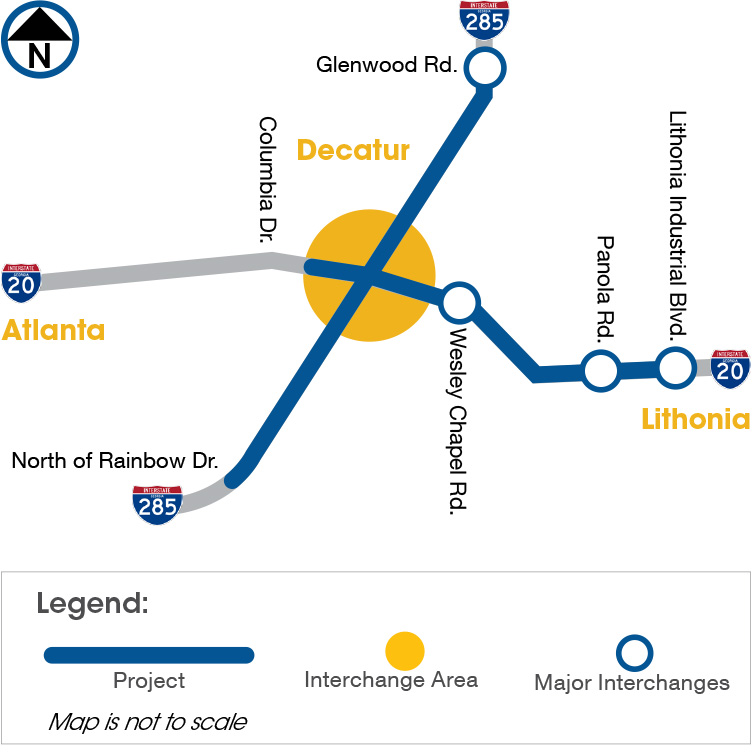
ATLANTA – The State Transportation Board signed off Thursday on a $685.5 million plan to redesign the interchange of interstates 285 and 20 east of Atlanta.
The board voted to begin negotiations with one of three roadbuilding consortiums selected from a shortlist of competitors to build the project. Construction is due to begin in the middle of next year and be completed by late 2026.
The consortium East Interchange Builders scored tops in the competition, both for the technical and financial aspects of its proposal, Meg Pirkle, chief engineer for the Georgia Department of Transportation (DOT), told board members. The lead partners are Archer Western Construction and E.R. Snell, two of Georgia’s leading highway contractors.
The frequently congested interchange on the east side of metro Atlanta’s Perimeter Highway in DeKalb County was ranked as the nation’s 25th worst bottleneck last year.
The overhaul will include reconstructing ramps to create more direct alignments, adding new collector-distributor and auxiliary lanes, replacing several bridges and erecting new noise barriers.
The work will be done through a design-build-finance contract, the same model that was used to build the Northwest Corridor toll lanes along I-75 and I-575 in Cobb and Cherokee counties and in the redesign of the I-285/Georgia 400 interchange, which is still under construction.
“We got three tremendous responses,” said board member Kevin Abel, chairman of the steering committee that oversaw the competition. “This is a great procurement we hope will repeat for the upcoming even more massive procurements [the DOT] is going to be taking on in the next couple of years.”
Under the design-build-finance contract model, the State Road and Tollway Authority will finance the project, while the DOT will manage the work.
This story isavailable through a news partnership with Capitol Beat News Service, a project of the Georgia Press Educational Foundation.
ATLANTA – Highway projects across Georgia are being squeezed by the increasing cost of construction materials brought on by the war in Ukraine and other inflationary pressures, a state Department of Transportation engineer said Wednesday.
The war has destroyed the Ukrainian city of Mariupol’s ability to continue functioning as a major steel center, Mark Mastronardi, a deputy chief engineer with the DOT, told members of the State Transportation Board. The U.S. imports 66% of its pig iron from Ukraine and Russia, which is now under economic sanctions imposed by the West as punishment for its attack on Ukraine, Mastronardi said.
“Ukraine is offline immediately,” he said. “With the sanctions, Russia is also offline.”
With strong state tax collections coming out of the pandemic, Georgia’s budget has been good to state agencies, including the DOT.
The fiscal 2023 budget that takes effect July 1 earmarks $2.2 billion for the DOT, up from $1.7 billion in the original fiscal 2022 spending plan. About 48% of the agency’s budget – just over $1 billion – will go toward capital projects in the coming year.
Rising construction costs, however, are a growing concern, and not just for steel.
Mastronardi said the costs of other construction materials including asphalt and concrete also are soaring, which is driving up highway contractors’ bids for road resurfacing and other projects.
“That’s having a real impact on us as an agency,” he said.
Georgia Commissioner of Transportation Russell McMurry said while it’s important to keep needed transportation projects moving forward, the DOT has a responsibility to taxpayers.
“Safety we can’t delay,” he said. “[But] we have shifted some of the resurfacing from this summer to the fall, hoping … we’ll have more favorable prices.”
Mastronardi said the agency also is considering extending the length of contracts on existing projects to spread out the costs and in some cases may be forced to reject some project proposals altogether as unaffordable.
“We do have things we think we can adjust,” he said.
This story is available through a news partnership with Capitol Beat News Service, a project of the Georgia Press Educational Foundation.
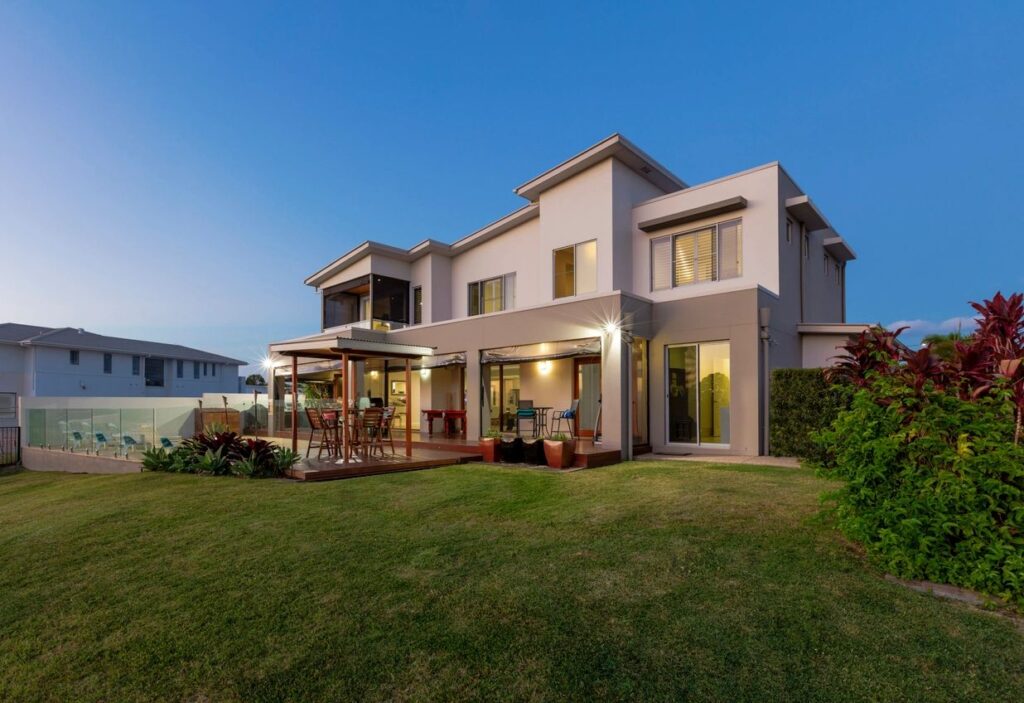
ATLANTA – The three healthiest housing markets in Georgia are in the Augusta region, according to a new study.
The report, compiled by New York City-based financial technology company SmartAsset, analyzed criteria including how long residents stay in the same home, the percentage of homes with negative equity and decreasing in value, how long houses stay on the market, and how affordable homes are to people in that market.
The city of Martinez in Columbia County scored tops in the company’s healthiest housing markets index with a score of 99.66.
The Martinez market is the state’s most stable, with owners living in the same home an average of 13.3 years. Martinez also is the third-most affordable housing market in Georgia, with home costs eating up only 17.8% of the owner’s income on average.
Evans, another Columbia County suburb of Augusta, ranked second on SmartAsset’s healthiest housing markets index with a score of 96.10. Homes in Evans are even more affordable than those in Martinez, with home costs on average accounting for 17.3% of the owner’s income.
Nearby Thomson, located west of Augusta in McDuffie County, ranked third on the housing markets index with a score of 79.37. Thomson was second to Martinez in market stability, with owners living in same home an average of 12.9 years. However, Thomson rated worst in affordability among the top-10 housing markets, with housing costs on average requiring 22.2% of the owner’s income.
All three housing markets sold fastest among the top-10 markets, with houses on the market prior to being sold an average of 65.2 days in all three cities.
Here is a list of the remaining housing markets in the top 10, all located in the Atlanta region:
City Index
Roswell 74.76
Cumming 74.58
Dunwoody 73.84
Peachtree City 73.37
Tucker 72.44
Johns Creek 71.64
Sugar Hill 71.26
Source: SmartAsset
This story is available through a news partnership with Capitol Beat News Service, a project of the Georgia Press Educational Foundation.