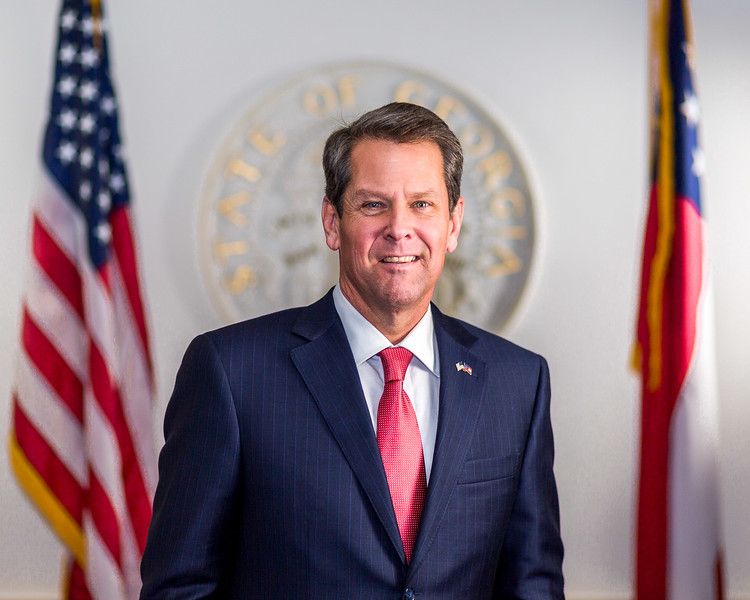
ATLANTA – Gov. Brian Kemp signed the largest tax cut in Georgia history Tuesday, legislation he said when fully implemented will save a family of four with an annual household income of $60,000 more than $600 a year.
The bill, which the Republican-controlled General Assembly passed early this month, will gradually reduce the state income tax rate from 5.49% to 4.99% over six years, starting with the 2024 tax year. The current tax rate is 5.75%.
Kemp and legislative Republican leaders pushed through the election-year tax cut at an opportune time, when the state is sitting on a huge budget surplus coming out of the pandemic.
“Government should take in the least amount possible needed to serve the people properly,” Kemp said during a signing ceremony in Bonaire, the hometown of Georgia House Ways and Means Committee Chairman Shaw Blackmon, the tax cut bill’s chief sponsor. “Taxpayer dollars are the people’s money, not the government’s.”
Kemp said the income tax cut represents the long-term component of a tax reduction package lawmakers approved this year, including a one-time $1.1 billion tax refund, a temporary suspension of the state’s gasoline sales tax to put a dent in rising pump prices, and legislation he signed last week exempting military retirees from the state income tax.
“We can’t fix everything Washington has broken,” he said. “But we’re doing our part to lessen the pain on people’s wallets in Georgia.”
During the legislative debate, Democrats argued most of the income tax cut’s benefits would go to the wealthiest Georgians.
“The shift to a flat tax structure would weaken the state’s ability to respond to the needs of its residents, while also exacerbating racial and income inequality by widening the gap between the wealthiest and all other Georgians,” said Danny Kanso, senior tax and budget policy analyst with the progressive Georgia Budget and Policy Institute.
“The General Assembly should require those at the top to pay their fair share with a graduated income tax and consider rolling back itemized deductions, corporate subsidies and other tax breaks that disproportionately benefit the wealthiest.”
On the other hand, former U.S. Sen. David Perdue, who is challenging Kemp in next month’s Republican gubernatorial primary, is calling for eliminating the state income tax entirely.
U.S. Rep. Nikema Williams, D-Atlanta, chairman of the Democratic Party of Georgia, criticized Kemp Tuesday for not declaring publicly whether he supports abolishing the tax.
This story is available through a news partnership with Capitol Beat News Service, a project of the Georgia Press Educational Foundation.
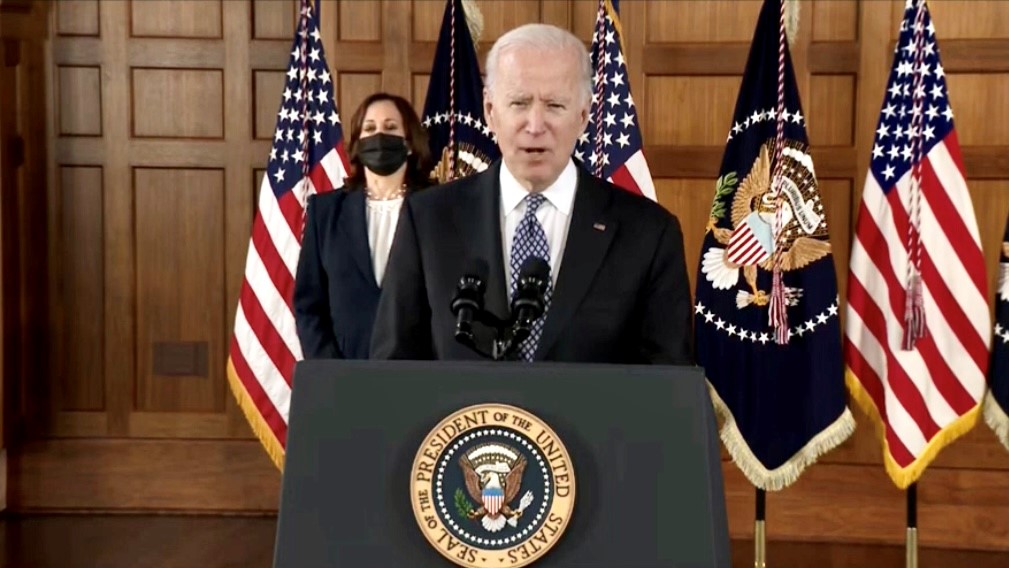
ATLANTA – President Joe Biden pardoned an Athens man Tuesday and commuted the prison sentences of seven other Georgians, all non-violent drug offenders, in the first acts of clemency of his presidency.
Dexter Eugene Robinson, 52, was convicted in 2002 of using his business as a front for the distribution of marijuana. While he wasn’t personally involved in trafficking the drug, he allowed dealers to use his pool hall for drug transactions, according to a statement from the White House.
Since being released from prison, Robinson has launched a cellphone repair service and hired local high school students. He also has worked to build and renovate houses in a community that lacks affordable housing.
Biden commuted the sentences of seven other Georgians still behind bars including:
Tellas Levallas Kennedy of Glennville, sentenced to 210 months in prison in 2013 for conspiracy to possess with intent to distribute cocaine. The sentence was later reduced to 168 months behind bars.
Carry Le of Duluth, sentenced to 120 months in prison in Texas for conspiracy with intent to distribute marijuana plants.
Stephanie McMurphy of Adel, sentenced to 102 months for distribution of methamphetamine within 1,000 feet of a school.
Ricky Norton and Sharon Ann Norton of Augusta, each sentenced to 120 months in prison for possession with intent to distribute a controlled substance.
Tony Lee Stanfield of Villa Rica, sentenced to 120 months for possession with intent to distribute methamphetamine.
Courtney Donnell Zeno of Warner Robins, sentenced to life in prison in Louisiana in 2010 for distribution of cocaine base. The sentence was later reduced to 240 months behind bars.
In each case, the commuted sentence will expire April 26 of next year, with the remainder of the sentence to be served in home confinement.
“America is a nation of laws and second chances, redemption, and rehabilitation,” Biden said in a statement. “Elected officials on both sides of the aisle, faith leaders, civil rights advocates, and law enforcement leaders agree that our criminal justice system can and should reflect these core values that enable safer and stronger communities.”
In all, Biden pardoned three Americans and commuted the sentences of 73.
This story is available through a news partnership with Capitol Beat News Service, a project of the Georgia Press Educational Foundation.
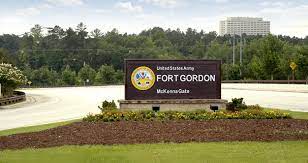
ATLANTA – One of the nation’s leading providers of privatized military housing is failing to make needed repairs and respond to environmental hazards inside homes at Fort Gordon, witnesses told a U.S. Senate hearing Tuesday.
A former resident of the Army base near Fort Gordon described how his daughter suffers from a dangerous form of dermatitis brought on by exposure to mold while her family was living in a home built by Balfour Beatty Communities.
“Her skin, once youthful and supple, is now reptilian in nature,” Capt. Samuel Choe told members of the Senate’s Permanent Subcommittee on Investigations, chaired by Sen. Jon Ossoff, D-Ga. “This is a potential lifelong condition and a potential fatal condition. … How do you explain to an eight-year-old child why she should have to endure something like that?”
The committee launched an investigation into the condition of privatized military housing at Fort Gordon and Sheppard Air Force Base in Texas after Ossoff visited families housing at Fort Gordon last year.
“The stories that I heard shocked me,” he said. “I heard stories about maintenance requests that were ignored, maintenance requests that were never followed up on – not just routine maintenance, but maintenance that impacted the health and safety of our service members and their families living in their homes.”
Balfour Beatty, a multinational company based in the United Kingdom, operates more than 43,000 on-base homes at 55 military bases in 26 states serving about 150,000 residents. The company pleaded guilty last December to committing major fraud against the U.S. government from 2013 to 2019 by falsifying work orders and was ordered to pay $65.4 million in fines and restitution.
But an eight-month investigation by the Senate subcommittee at the two bases released Tuesday to coincide with the investigation revealed Balfour Beatty has continued the same practices that led to the guilty plea, including ignoring or delaying responses to urgent requests from military families to address conditions such as mold and leaking roofs.
Rachel Christian, cofounder of the organization Armed Forces Housing Advocates, said the problem exists at military bases across the country.
“I have seen mold, lead, asbestos and raw sewage improperly handled,” she said.
“Military families make sacrifices every day,” added Jana Wanner, who spent two stints living at Fort Gordon with her husband, a sergeant 1st class, and two children. “A safe home should not be one of them.”
Richard Taylor, president of facility operations, renovation and construction at Balfour Beatty, defended the company before the subcommittee. He said Balfour Beatty has instituted changes since the guilty plea, including putting in place a formal process for resolving complaints.
“The overwhelming majority of our residents are happy with the homes we provide,” Taylor said. “We’re not perfect. We understand what our shortcomings are, and we’ve taken action to correct our deficiencies.”
But Ossoff hammered away at the subcommittee’s findings that Balfour Beatty has continued to draw complaints even after entering the guilty plea.
“Why should a company convicted of major criminal fraud against the United States government remain in a position of trust?” Ossoff asked Taylor. “Why should we believe your assurances?”
Christian suggested ending the military’s partnership with Balfour Beatty would be the only way to ensure the health and safety of military families.
This story is available through a news partnership with Capitol Beat News Service, a project of the Georgia Press Educational Foundation.
ATLANTA – Gov. Brian Kemp signed a package of public safety bills Monday, one day after he and Republican primary challenger former U.S. Sen. David Perdue clashed over the crime issue during a televised debate.
“Public safety is the No.-1 responsibility of the government,” Kemp said during a signing ceremony in the Buckhead section of Atlanta, an area he called an “epicenter” of growing crime.
“The rise in crime we’ve been facing in many communities across Georgia due to soft-on-crime policies and officials is unacceptable to me, it’s unacceptable to our law enforcement and it’s certainly unacceptable to the people that we serve,” he said.
Among the bills Kemp signed was legislation giving Georgia’s attorney general the authority to prosecute gang activity along with local prosecutors.
“Gangs do not confine their activities to one jurisdiction,” he said. “When they traffic drugs, illegal weapons and people, they don’t stop at county lines.”
The governor also signed bills allowing suspected child molesters to be charged separately for each image of child pornography or incident of child molestation and allowing separate charges for each illegal firearm seized from a suspect.
Another part of the package Kemp signed Monday increases penalties for fleeing or eluding law enforcement. And he signed a workforce development measure providing tuition reimbursement to former service members who enroll in training to become a law enforcement officer.
The governor also touted investments in law enforcement in the fiscal 2023 budget the General Assembly adopted this month, including a $5,000 pay raise for state law enforcement personnel, the addition of a new state trooper class and the addition of law enforcement and criminal justice to the high-demand degree programs that quality for tuition breaks.
“We will use every resource at our disposal to rid our communities of crime and keep Georgia families safe,” Kemp said.
During Sunday night’s debate, Perdue blamed Kemp for the rising crime rate in Georgia by not hiring enough state troopers. Perdue said North Carolina has twice as many troopers as Georgia, although the states are roughly equal in population.
“If we don’t get crime and education fixed, we are not going to have economic development,” Perdue said.
Kemp responded by citing the successes of the multi-agency Crime Suppression Unit he formed in April of last year, including the arrests of 745 suspects on outstanding warrants – 26 on murder charges.
This story is available through a news partnership with Capitol Beat News Service, a project of the Georgia Press Educational Foundation.
Gov. Brian Kemp (left) is being challenged by former U.S. Sen. David Perdue
ATLANTA – Gov. Brian Kemp defended his record of the last four years Sunday night against withering attacks from former U.S. Sen. David Perdue in the first televised debate of this year’s Republican gubernatorial campaign.
Perdue, who has former President Donald Trump’s endorsement, accused Kemp of failing to investigate allegations of voter fraud after what he called a “rigged and stolen” 2020 election in Georgia. He blamed the governor not only for President Joe Biden’s victory but for the loss of his Senate seat to Democrat Jon Ossoff.
“He sold us out,” Perdue declared in the debate, which aired on Atlanta’s WSB-TV.
“The only reason I’m not in the United States Senate is you caved in,” Perdue told Kemp.
After responding that he followed the law and the U.S. Constitution following the election, Kemp chastised Perdue for focusing so much attention on the last election cycle. Instead, the governor cited his accomplishments in going after criminals, creating jobs and reopening Georgia’s economy during the pandemic earlier than other states.
“That is a record that will beat [presumptive Democratic gubernatorial nominee] Stacey Abrams, not looking in the rear-view mirror,” Kemp said.
Both candidates supported legislation the Republican-controlled General Assembly passed this year allowing Georgians to carry concealed firearms without a permit and restricting how certain “divisive concepts” including racism can be taught in the schools.
But they clashed over the state’s strategy in luring electric vehicle startup Rivian to invest $5 billion in a truck manufacturing plant east of Atlanta that will create 7,500 jobs. Perdue criticized the use of generous tax incentives to convince the company to come to Georgia, suggesting a better approach to economic development would be to eliminate the state income tax.
“You’re taking hundreds of millions of taxpayer dollars in Georgia and giving them to a company owned by [billionaire and Democratic mega donor George] Soros,” Perdue said.
Kemp shot back that the Rivian deal was part of a successful effort he has waged to boost the economy of rural Georgia. The governor accused Perdue, on the other hand, of sending American jobs overseas during decades as a corporate CEO.
“We’re bringing in 7,500 great-paying jobs to rural parts of our state,” Kemp said. “He’s spent his whole business career outsourcing jobs to China.”
Perdue criticized the governor for not taking a position on a bill calling for a vote on whether the Buckhead area of Atlanta should break away and form its own city, legislation that ultimately fizzled. He tied the push for cityhood to rising crime in Atlanta.
“These people have no service up there,” Perdue said. “The only way they’re going to get there is to control their own government.”
Kemp said he decided to keep his “powder dry” on the issue.
“As much as you want me to be a dictator, I’m not,” the governor told Perdue. “That’s something that is going to have to go through the legislative process.”
The two also clashed on the issue of crime, with Perdue hammering away at statistics illustrating the increase in violent crime, particularly in Atlanta, since the pandemic began.
“What we have is a runaway crime situation the governor is burying his head about,” Perdue said.
Kemp responded by citing the number of arrests made by the multi-agency Crime Suppression Unit he formed in the spring of last year.
“We have taken stolen weapons off the street,” he said. “We’re going to continue to do that.”
Kemp and Perdue will meet twice more on the airwaves before the May 24 primary, later this week in Savannah and Sunday night on Georgia Public Television.
This story is available through a news partnership with Capitol Beat News Service, a project of the Georgia Press Educational Foundation.