ATLANTA – Democratic U.S. Senate candidate Jon Ossoff will release a campaign ad Thursday linking his background as an investigative journalist to his anti-corruption agenda.
“Corruption in Washington has infected both parties,” Ossoff says in the ad. “They’re too busy serving lobbyists to serve us.”
In the 30-second ad, titled “Together,” Ossoff pledges to push for a ban on corporate campaign contributions and to crack down on price gouging by health insurance and pharmaceutical companies, which he says generates money they use “to buy off Congress.”
“Together, we can end corruption and make health care affordable,” he says in the ad.
After serving as a congressional aide, Ossoff became managing partner and CEO of Insight TWI, a London-based company that produces documentaries about corruption in foreign countries.
In the last three years, the company has produced investigations of ISIS war crimes, high-level corruption in international sports, war crimes committed by international peacekeepers and death squads that target children.
Ossoff won the Democratic nomination in June to challenge Republican U.S. Sen. David Perdue’s bid for a second six-year term.
This year’s Senate campaign is the second for Ossoff. He lost a special election in Georgia’s 6th Congressional District in 2017 to former Republican U.S. Rep. Karen Handel, a race that ended up becoming the most expensive in the history of the House of Representatives.
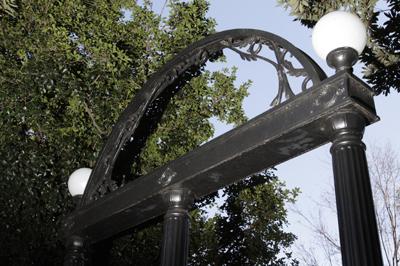
Hundreds of University of Georgia students tested positive for COVID-19 during the first full week of classes that began last week, the school announced Wednesday.
Between Aug. 24-30, 821 positive tests were reported through UGA’s weekly online self-reporting system. Of those, 19 tests returned positive for staff and four for faculty, the university said in a news release.
Around half of the tests were done by sources that were not university health staff or medical providers in the Athens area, the school said. Those tests, many of which were done by urgent care clinics and outside testing centers, have not been verified by the university.
But the university has confirmed 186 positive tests were reported by the campus health center, plus 126 more positive tests from Athens-area medical providers and another 97 tests that showed positive results of mostly students who had no COVID-19 symptoms.
UGA has roughly 50,000 students, faculty and staff.
UGA President Jere Morehead called the first-week test results “concerning” and urged students to wear masks, social distance and avoid “social venues.” He also pressed students to use caution if traveling off campus for the upcoming Labor Day holiday weekend.
“All of us must take our responsibilities very seriously as we seek to reduce the spread of COVID-19,” Morehead said in a statement.
UGA also announced Wednesday around 300 on-campus rooms and hundreds more off campus nearby have been made available for infected or symptomatic students to quarantine if they are unable to return home to isolate themselves.
Many Georgia college students and teachers have worried for weeks that returning to campus for in-person classes could exacerbate the coronavirus pandemic that has battered the state since March.
In Athens, UGA students and teachers have held “die-in” demonstrations with signs painted like tombstones to protest what they perceive as a lack of preparation on the part of University System of Georgia administrators.
Representatives from the university system, which oversees 26 colleges and universities, have stressed that they discussed safety measures with the state Department of Public Health before resuming classes.
Nearly all of the system’s 26 campus presidents wrote the Board of Regents in July to express support for holding in-person classes as “an essential part of the educational growth that is critical for the overall success of our students.”
Many students and teachers, however, have cast the resumption of in-person classes as a potentially grave health risk for students, staff, teachers, their families and members of local communities around campuses who may be elderly or suffer from chronic illnesses.
Plant Vogtle’s Unit 3 (far left) is scheduled to be completed in November 2021.
ATLANTA – The Plant Vogtle nuclear expansion project remains on schedule, Georgia Power Co. reported in a filing with the state Public Service Commission (PSC) this week.
The construction of two additional nuclear reactors at the site south of Augusta is about 87% complete, according to the latest progress update the Atlanta-based utility submits to the PSC every six months.
The first of the two new units is scheduled to go into service in November of next year followed by the second unit one year later.
In the report, Georgia Power asks the commission to verify and approve $701 million in capital costs incurred during the first half of this year.
While the completion schedule hasn’t slipped, the coronavirus pandemic is affecting the pace of the work. As of the end of last month, 800 workers at the site had tested positive for COVID-19 since the beginning of the pandemic.
The company laid off 20% of the project’s workforce last April.
“The project’s reduction in workforce during April 2020 helped to slow the spread of the pandemic on site but also contributed in part to the increased costs, productivity challenges and milestone schedule delays,” Georgia Power wrote in its filing. “These impacts were the results of circumstances outside of the project team’s direct control.”
Some are skeptical that the utility can complete the project under the current timetable. Independent experts retained as consultants by the PSC’s staff testified earlier this summer the schedule is likely to slip further behind and that the final cost probably will go up by at least $1 billion.
The cost of the Plant Vogtle nuclear expansion to Georgia Power and three utility partners has nearly doubled from the original estimated price tag of $14 billion the PSC approved 11 years ago. Much of the increase was due to the bankruptcy several years ago of Westinghouse Electric, the original prime contractor.
Southern Nuclear, like Georgia Power a subsidiary of utility giant Southern Co., has since take over management of the project.
Despite criticism from project opponents that the nuclear expansion has become more expensive than alternative sources of power generation, Georgia Power continues to maintain that finishing the project is in the best interest of the utility’s customers.
“Economic analysis shows that completion of the project provides approximately $3.9 billion in relative savings for customers over a gas-fired combined cycle alternative,” Georgia Power wrote in the filing.
Georgia Power also argues nuclear power is key to a diverse energy mix that will protect customers from the impacts of fossil-fuel cost volatility.
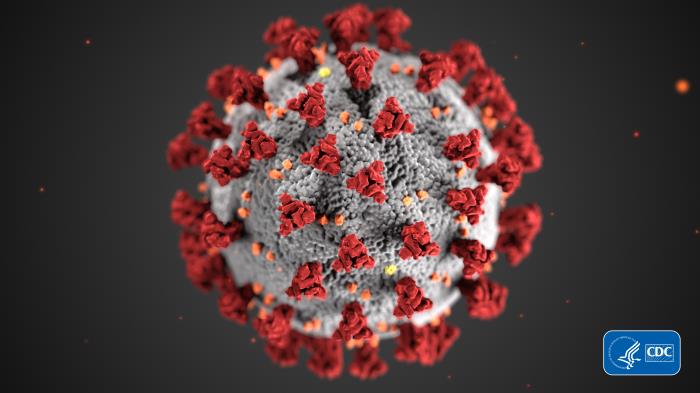
Coronavirus has sickened hundreds of thousands people and killed thousands more in Georgia. (Image: Centers for Disease Control and Prevention)
Georgia officials and public-health experts are urging people to take precautions for COVID-19 during the upcoming Labor Day holiday weekend.
State health officials have already spent the past month working to tamp down previous outbreaks of coronavirus cases sparked by holiday weekends over Memorial Day and July Fourth.
In remarks Tuesday, Gov. Brian Kemp said the state has made progress in curbing COVID-19’s spread over August but that Georgians need to be mindful to wear masks, keep their hands washed and maintain distance from others, especially in situations involving large gatherings.
“I want people to go out and enjoy the holidays,” Kemp said. “But do two things: Number one, think about all our public-health officials and our health-care workers who are going to be laboring on Labor Day. And number two, just be smart about what you’re doing.”
Traveling for the three-day weekend and holding big get-togethers could pose serious risks for sparking flare-ups of coronavirus cases, said Dr. Henry Wu, assistant professor in the infectious-diseases division of Emory University’s Department of Medicine and director of the Emory TravelWell Center.
In a news conference Wednesday, Wu advised people to avoid traveling if they have come into contact with anyone infected with COVID-19 and to abstain from businesses like restaurants where staff do not wear masks properly.
Keeping space between people is critical from reducing the chances for viral transmission, even in outdoor areas where it may seem safer to congregate more closely, Wu said. He advised against large gatherings like parties for the time being.
“I encourage travelers and the general public to really internalize this distancing,” Wu said. “Redefine what you what you consider what is your personal space when you’re out and about.”
Wu also recommended routine use of hand sanitizer, staying separated from others as much as possible on airplanes or in airport terminals and getting a flu shot to reduce the chances for a concurrent flu season with COVID-19.
“Please travel safely, do your best, take your precautions,” Wu said. “I think it can be done if everyone does it together.”
While the state has made strides since a late July peak, Georgia was still seeing a rolling seven-day average of around 2,000 cases per day as of Tuesday and a higher case-positivity rate than the national average, both key markers for assessing the virus’ presence in communities. The number of COVID-19 hospitalizations, which is also a key marker, has fallen steadily since peaking in July.
Memorial Day in particular likely played a key role in the state’s COVID-19 surge between May and July, according to a report released Tuesday by Amber Schmidtke, an immunology and microbiology expert and former Mercer University School of Medicine professor.
Schmidtke noted the rolling case average spiked in Georgia after Memorial Day from about 605 average cases per day to more than 4,300. Cases especially climbed in areas along the state’s border where the tourism and hospitality industries are important economic drivers, Schmidtke found.
“We need to protect the gains we’ve made in Georgia,” Schmidtke wrote in the report. “This is not the time to lose our focus on measures we know can reduce the spread of COVID-19.”
ATLANTA – President Donald Trump has opened up a lead on Democratic challenger Joe Biden in Georgia, according to the first poll released since last week’s Republican National Convention.
In a survey of 500 likely Georgia voters conducted by Landmark Communications for Atlanta’s WSB-TV, Trump led Biden 47.9% to 40.5%. Libertarian candidate Jo Jorgensen received the support of 9.3% of the respondents.
A series of earlier Georgia polls had shown Trump and Biden in a dead heat, with their support within those polls’ margin of error. The Landmark poll’s margin of error was 4.4%.
Trump held a decisive lead among older voters participating in the poll, with 56.3% of voters ages 65 and older preferring Trump to 36.5% for Biden.
Biden held a narrower lead over Trump among the youngest voters, with 42.9% of voters ages 18 to 39 supporting Biden to 36.9% for Trump.
In the middle-aged group, voters ages 40 to 64, Trump led Biden 47.7% to 42.1%.
Trump was the overwhelming favorite among white voters in Georgia, 70.8% to 21.3% for Biden. Biden drew an even larger majority of Black voters’ support, 78.1% to 6.9% for Trump.
Broken down by gender, Trump held a huge lead among Georgia men, 53.5% to 33.5% for Biden. Biden held a narrower lead among women, 46.5% to 43.1%.
The poll was conducted Aug. 29-31, two to four days following the end of the Republican convention.