Changes to Georgia’s dual enrollment program could be in the offing that would nix free college-level classes for freshman high schoolers.
Costs for the program allowing
high-school students to take post-secondary classes have swelled from around
$23 million in 2015 to around $140 million projected for the 2021 fiscal year.
A revised bill presented to a state Senate committee Wednesday would cap
enrollment enough to keep the program within its roughly $100 million budget
for this year, Georgia Student Finance Commission President Caylee Noggle said.
Sponsored by state Rep. Bert Reeves, R-Marietta, the bill aims to keep growing enrollment in the program from overwhelming its budget. It has the backing of Gov. Brian Kemp. On Wednesday, Reeves said the program’s taxpayer-funded offerings have evolved beyond their original intent, noting some students can now enroll in exercise classes like Zumba.
“These are the kinds of things that I
don’t think the program was intended to pay for,” Reeves said.
Rep. Bert Reeves.
The bill would limit dual enrollment to
30 hours per eligible student for college courses the state-run student-finance
agency funds. Beyond that, students would pay for classes out of their own
pockets. The proposal would also trim some course offerings to keep the focus
more on helping students gain technical certificates for future jobs.
Aside from eliminating ninth graders, the
bill would limit 10th graders to courses at technical schools unless they
qualify for the state’s Zell Miller scholarship, which requires students to
maintain a 3.7 grade point average or better.
Only upper-class students in the 11th and
12th grades could take classes at colleges and universities in Georgia.
Currently enrolled students would not be affected if the bill is signed into
law.
Reeves will carry the legislation as a
substitute to a bill he introduced last year on dual enrollment. His original
bill largely mirrors the replacement legislation, which was crafted with staff
from Kemp’s office.
Lawmakers on the Senate Higher Education
Committee got a rundown of the proposal Wednesday afternoon. Several hailed the
measure as a way to rein in the program’s costs and keep it from collapsing
from too much participation.
“I think the solution that has been
crafted meets the interest of students, their parents and the state of Georgia
in terms of fiscal responsibility,” said Higher Education Chairman Lindsey
Tippins, R-Marietta. “I’m very pleased about the work product that’s been
arrived at.”
The committee is expected to approve the
bill Thursday and move it to the Senate floor.
Georgia House Democrats want the state’s
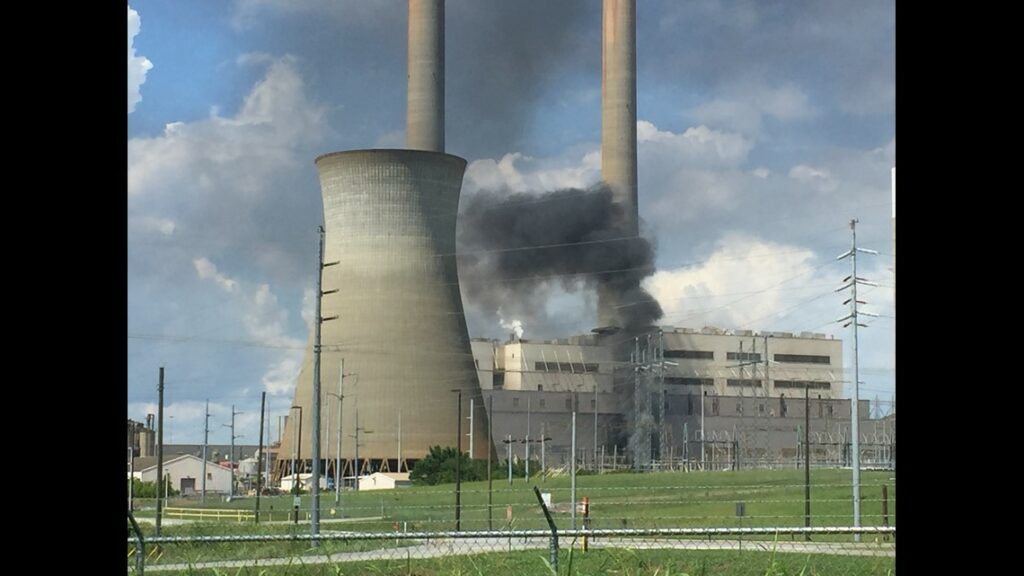
largest energy provider to clean up its coal ash, the toxic byproduct of
burning coal at several power plants in the state.
A bill filed Monday, the first day of the 2020 legislative session would force Georgia Power Co. to install impervious lining around every site where coal ash is stored, including ash ponds set for permanent closure in the coming years. The measure aims to keep the ash from leaching into nearby drinking wells and underground aquifers.
“We have to be protective of our groundwater,” said Rep. Mary Margaret Oliver, D-Decatur, one of the bill’s six Democratic co-sponsors. “The possibility of toxic coal ash seeping into the water is very real.”
Georgia Power is in the process of
closing all 29 of the large pond areas that store coal ash, which contains
compounds that can cause cancer after long exposure. Going forward, the company
plans to dispose the ash only in dry landfills.
But environmentalists say some ash ponds will be sealed in place forever without any protective lining, creating the potential for groundwater contamination. They point to reports released in August by the nonprofit Southern Environmental Law Center that showed ash has already leached into the groundwater around some ponds at Georgia Power plants.
Georgia Power spokeswoman Holly Crawford said the company is reviewing the bill. She said 10 of the 29 ponds will be sealed in place “using proven engineering methods and closure technologies,” and that the closures meet state and federal regulations. Company representatives also tout the economic benefits of recycling coal ash into materials like concrete.
The bill’s backers expect pushback from the bill to center on how much it would cost Georgia Power to install new liners. The company is set to collect $525 million from customers through 2022 to clean up coal ash under a rate increase request the Georgia Public Service Commission approved last month.
Tim Echols, the commission’s vice
chairman, stood behind Georgia Power’s current plans to close ash ponds in a
message on Twitter, noting new federal and state environmental rules on coal
ash factor into clean-up costs.
“Your rates are going up right now
because of the billions for coal ash clean up we just approved per federal
& state regs,” Echols said. “And I have seen the hundreds of wells they are
monitoring monthly. And they have purchased more properties creating a greater
buffer.”
Lawmakers may shy away from charging
Georgians extra for even more ash clean-up, said Fletcher Sams, the executive
director of the Brunswick-based nonprofit Altamaha Riverkeeper. Still, he
argued people living near power plants should have peace of mind over their
water quality, regardless of how much it costs to safeguard against ash
contamination.
“Ratepayers should not have to foot the bill for inadequate closure plans,” Sams said. “We want to do it the right way the first time.”
This story has been updated to include a response from Georgia Power.
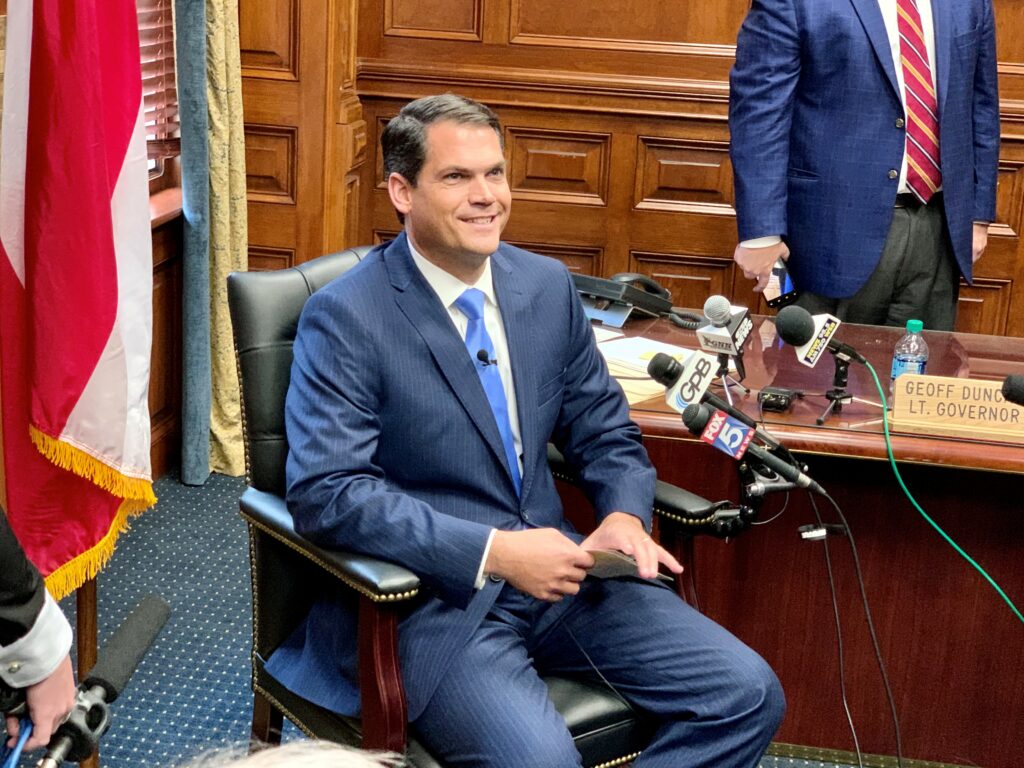
Georgia Lt. Gov. Geoff Duncan outlines his agenda for the 2020 legislative session at the State Capitol on Monday. (Photo by Beau Evans)
ATLANTA – Georgia Senate leaders cast the prospects for new legalized gambling in doubt Monday on the first day of the 2020 legislative session.
Lt. Gov. Geoff Duncan, plus members of
the influential Senate Majority Caucus, all said passing gambling legislation
is low on the legislative totem pole this year. Instead, they aim to push
through bills to boost revenue collections from online sales, expand rural
broadband internet and bolster foster care services.
“I just haven’t seen that overwhelming
support for gambling here in Georgia,” Duncan, the Senate’s presiding officer,
said at a news conference following the session’s first day.
Some state Senate and House lawmakers
have called for a constitutional amendment giving voters final say on whether
to allow casinos, sports betting and horse racing for the first time in
Georgia. Supporters say legalizing those activities would pump more money into
education and health-care programs at a critical moment when state revenues are
showing signs of strain. The Georgia Lottery has been the state’s only legal
form of gambling since its creation in 1992.
Along with Duncan, Senate Majority Leader
Mike Dugan dismissed gambling Monday as “not one of our priorities,” painting a
bleak future for a constitutional amendment to gain the required two-thirds
approval from both chambers for placement on the statewide ballot.
“We have evaluated it,” said Dugan,
R-Carrollton. “Honestly, we don’t have a consistent evaluation of what that
return on income would be.”
Sen. Brandon Beach, R-Alpharetta, who led
a Senate study committee on gambling last year and backs a constitutional
amendment, did not immediately respond to requests for comment Monday.
While Senate leaders shirked gambling
Monday, they did warm to another way to drum up revenues: taxing online
purchases. Senate Finance Committee Chairman Chuck Hufstetler, R-Rome, revived
a bill that would collect revenues from third-party retail sales channeled
through companies like Amazon, Walmart or Airbnb. The measure, he said, could
raise hundreds of millions of dollars for the state and help supplement revenue
collections that have slowed since summer.
Online sales-tax legislation sponsored by
House Ways and Means Committee Chairman Brett Harrell, R-Snellville, passed out
of the House last year but stalled in the Senate. Lawmakers disagreed on
whether to include an exemption for ride-share companies like Uber and Lyft.
The bill now winding through the General Assembly is a “clean bill” without tax
exemptions that could take effect as soon as April 1, Hufstetler said.
“Nobody gets a carve-out in this bill,”
Hufstetler said Monday.
Money bills look to dominate the
legislative session amid sluggish tax collections and Gov. Brian Kemp’s orders
for state government departments to cut their budgets by 4% this year and 6% in
fiscal 2021, which begins July 1. Lawmakers have pitched the gambling and
online sales-tax measures as ways to avoid the need for even deeper budget
cuts.
“The two things I guarantee is we will
pass a budget and it will be balanced,” Duncan said Monday.
Tax exemptions overall are under the
microscope this session. Lawmakers in both chambers are eying ways to close
loopholes in the state’s generous film tax credit after a scathing audit last
week found the program has under-taxed movie companies. A separate state audit
said a program doling out tax-deductible donations to struggling rural
hospitals falls short of making sure those donations actually make it many
hospitals.
“I think there are opportunities to
modernize and reform that bill,” said Duncan, who co-sponsored legislation in
2017 creating the rural hospital tax-credit program.
Other legislation Senate leaders said
they plan to pursue this session includes:
Securing funds to expand broadband internet access for Georgia residents in rural areas.
Beefing up healthcare and mental services for children in the state’s foster care system.
Making the details of health-care costs more transparent for patients.
Creating a database that lists all law enforcement officials – including retirees – who could be tapped for disasters or major crowd-control events.