ATLANTA – Poor
administration of Georgia’s film tax credit, the state’s largest and arguably
most generous, is wasting millions of tax dollars, a new state audit has found.
In a 75-page
report, the Georgia Department of Audits and Accounts accused the state
departments of Revenue and Economic Development of lacking the controls
necessary to prevent improper granting of credits to film production companies.
“Due to
control weaknesses, companies have received credits for which they are not
eligible and credits that are higher than earned,” the report stated in its
opening paragraph. “The issues can be attributed to limited requirements and
clarity in state law, inadequately designed procedures, insufficient resources
and/or agency interpretations of law that differ from our own.”
The General
Assembly first approved the film tax credit in 2005, then increased it three
years later when lawmakers found it wasn’t attracting as much interest as they
had anticipated. The 2008 legislation raised the base credit rate to 20% for
film companies that spend at least $500,000 on qualified productions, with an
additional 10% for a qualified promotion of the state, typically featuring the
Georgia peach logo at the end of a film’s closing credits.
The film
industry skyrocketed in Georgia after the 2008 changes, soaring from $242
million during fiscal 2007 to $9.5 billion by the end of fiscal 2018. By early
2016 Georgia had vaulted to No. 3 in the nation in filming movies and TV shows,
behind only California and New York.
According to
the audit, the state delivered more than $3 billion in credits from 2013 through
2017. The numbers grew steadily during that period, from more than $667 million
in 2016 to more than $915 million in 2017.
Despite
granting more credits than any other state, the audit found that Georgia
requires film companies to provide less documentation than any of the 31 other
states offering film tax credits. Georgia is among only three state that do not
require an audit by the state or a third party.
While the
state Department of Revenue does require limited documentation to receive the credit,
the audit found many production companies failed to provide the documentation yet
still received the credit.
In its
defense, the revenue agency responded to the report by noting that 38% of its
tax credit processing work is devoted to the film tax credit, even as it administers
more than 50 tax credits on the books.
The
Department of Economic Development pointed to “limited resources and the
inability to access confidential taxpayer information” as obstacles to the
agency’s efforts to administer the credit.
Fiscal
conservatives in the General Assembly have complained about the cost of the film
tax credit from time to time. With state tax revenues running well below
projections through the first five months of the current fiscal year, the film
tax credit and other tax incentives could
face scrutiny during the 2020 legislative session that begins next week
from lawmakers looking for ways to reduce spending.
“Some were great policy when they took place,” said Georgia Rep. Brett Harrell, R-Snellville, chairman of the House Ways and Means Committee. “But times change and we need to reevaluate them.”
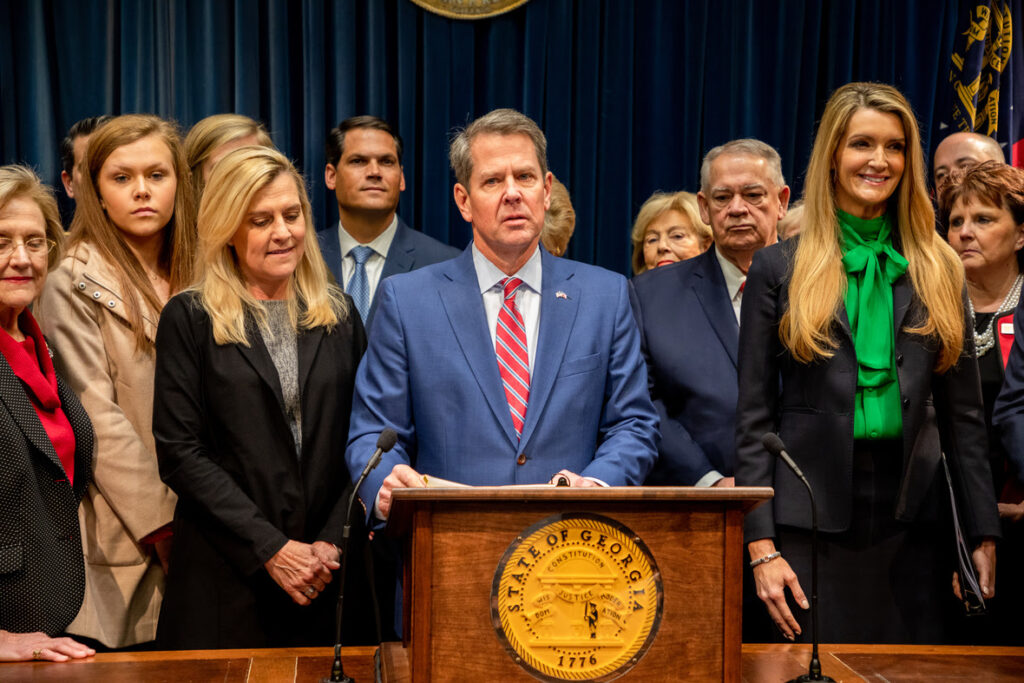
Gov. Brian Kemp introduced Kelly Loeffler (right) last month as his appointee to the U.S. Senate.
ATLANTA – With
the two words “I do,” Kelly Loeffler became Georgia’s new U.S. senator Monday.
Vice
President Mike Pence administered the oath of office to Loeffler during a brief
late-afternoon ceremony inside the Senate chambers.
Republican
Loeffler, an Atlanta businesswoman and political newcomer, was Gov. Brian
Kemp’s choice to succeed former Sen. Johnny Isakson, who retired at the end of
last year due to health concerns.
Loeffler
emerged from a competition of more than 500 hopefuls who responded when the
governor posted the job opening online.
Isakson, who
suffers from Parkinson’s disease, announced in September he would be leaving
office at the end of December, halfway through his third term in the Senate.
High-profile Republicans who applied for the opening included U.S. Rep. Doug Collins, R-Gainesville; former Congressman Tom Price, who also served as secretary of health and human services during the first year of President Donald Trump’s administration; state Rep. Jan Jones, R-Milton, who serves as House speaker pro tempore; Tim Echols, a member of the Georgia Public Service Commission, and Georgia Chief Justice Harold Melton.
Trump let it
be known that he preferred Collins, ranking Republican on the House Judiciary
Committee and a strong defender of the president.
But Kemp chose
Loeffler instead in a move widely seen as a bid to increase diversity within
Georgia Republican ranks.
Until her
appointment to the Senate, Loeffler was CEO of Atlanta-based Bakkt, a
Bitcoin-focused subsidiary of Intercontinental Exchange Inc., another Atlanta
company run by her husband, Jeff Sprecher. She also is co-owner of the WNBA’s
Atlanta Dream.
Loeffler,
who is currently serving in the Senate on an interim basis, has said she will
run in November to complete Isakson’s unexpired term.
She is
certain to draw Democratic challengers, and Collins has said he is considering seeking
the seat as well.
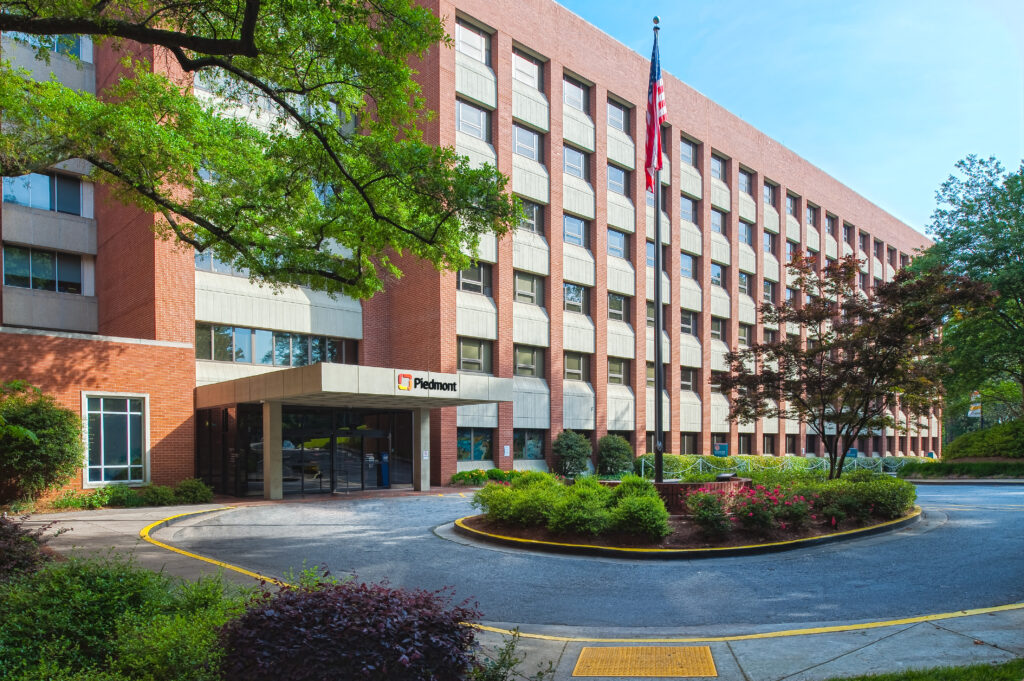
ATLANTA – The
11-hospital Piedmont Healthcare system is withdrawing its membership in the
Georgia Hospital Association (GHA), striking a blow at the hospital industry’s
ability to mount a united front in dealing with state policy makers.
In a
statement, Piedmont cited the increasing cost of GHA membership dues.
“As an organization,
we take seriously our responsibility to improve quality and control the rising
cost of health care,” the statement read. “Our GHA dues have increased over
recent years to a point that we can no longer ignore.”
For years, Piedmont
and other nonprofit hospital systems working with the GHA successfully fought
off legislation before the General Assembly industry lobbyists argued would have
put the hospitals at a competitive disadvantage.
But last
year marked a departure from that trend. Lawmakers passed a bill imposing new financial
disclosure requirements on nonprofit hospitals in the name of greater
transparency, including how much they pay their top executives.
The General
Assembly also did away with decade-old restrictions limiting the number of beds
and percentage of patients from Georgia that could be served at the Cancer
Treatment Centers of America hospital in Newnan.
“GHA firmly
believes in the importance of strength in numbers and a unified voice for the
hospital industry,” GHA President Earl Rogers said in a statement reported by
Georgia Health News.
“GHA is
certainly disappointed by the Piedmont decision. However, we respect their
leadership’s right to choose where resources are allocated, and we wish
Piedmont well.”
ATLANTA – Gov.
Brian Kemp infused the University System of Georgia Board of Regents Friday
with some new blood.
Kemp named
five new members to the board that oversees the 26 institutions that make up
the university system, including two who will serve at large and three who will
represent the state’s 10th, 12th and 14th
congressional districts.
The at-large
newcomers are Cade Joiner of Brookhaven, chairman of the state chapter of the
National Federation of Independent Business and founder of Shred-X Secure
Document Destruction, and T. Dallas Smith
of Atlanta, a long-time commercial real estate executive who founded his own
firm in 2006.
Joiner and
Smith will succeed Rogers Wade and Chris Cummiskey on the board.
Harold
Reynolds, CEO of BankSouth Holding Co. in Greene County, will represent the 10th
Congressional District, succeeding Ben Tarbutton III.
The 12th
District’s new regent will be Everett Kennedy, CEO at Berkshire Hathaway
Kennedy Realty in Statesboro. Kennedy will succeed Regent Laura Marsh.
Lowery May,
a member of the Georgia Student Finance Commission and the Rome-Floyd County
Land Bank Authority, will represent the 14th District, succeeding
Scott Smith.
“For many
years, I have worked closely with each of these individuals and found them to
be honest, hardworking and committed to our state’s long-term success,” Kemp
said. “I am truly honored to name them to the Board of Regents to serve our
top-notch university system with integrity and lead by example.”
The new
regents will join the board in time for its next meeting Jan. 8.
ATLANTA – Georgia
launched a marketing campaign Friday to spread the word about the upcoming 2020
U.S. Census.
The campaign
– Every. One. Counts. – is aimed at generating strong public participation in
the population count, conducted every 10 years to determine how federal funds are
distributed among the states. Census results also will be used to redraw
Georgia’s congressional and legislative district boundaries.
“Every. One.
Counts. is committed to ensuring that every Georgian is heard – and counted –
in the 2020 Census,” Gov. Brian Kemp said. “The campaign will work closely with
census-focused organizations at the state, local and federal levels to ensure
Georgia is best prepared for the next decade.”
For the
first time this year, the census will be conducted primarily online through a
secure Census Questionnaire. However, hard-copy versions still will be
available for submission via telephone and mail.
Under an
estimated timeline released by the governor’s office, Georgia households will
begin receiving invitations to complete the questionnaire between March 12 and
March 20. Those will be followed up with reminder postcards and letters.
If the
household has not responded after April 27, the U.S. Census Bureau will send workers
door to door to collect responses.
Kemp is
encouraging Georgians to learn more about the process by clicking on www.census.georgia.gov.