ATLANTA – Georgia’s
generous film tax credit is generating less economic impact for the state than
its backers have reported, according to a newly released state audit.
The Georgia Department of Economic Development (DED) has used an inflated
multiplier to calculate economic activity related to the credit, according to a
report the state Department of Audits and Accounts released Thursday. As a
result, the agency has reported misleading job numbers.
“Using the
multiplier nearly doubles the impact of the credit,” the report stated.
Thursday’s
report was the second from the state auditing agency this week criticizing
Georgia’s largest tax credit program. An audit released on Tuesday accused the
state departments of Revenue and Economic Development of lacking the controls
necessary to prevent improper granting of credits to film production companies.
The Thursday
report found that production companies spent $2.2 billion in 2016 to earn tax
credits of $667 million.
The credit’s
net economic impact that year was less than $3 billion and fewer than 10,000
jobs. However, those numbers rose to $4.1 billion and 23,816 jobs when adding the
ripple effect of the credit on local businesses and workers.
“While these
figures capture the impact of the projects supported by the credit, they do not
consider the cost of the public subsidy of the industry and the resulting
decrease in government spending,” the report stated.
The
Department of Economic Development disagreed with the report’s findings.
“The
Department of Economic Development and its consultants believe the methodology
used by [the Department of Audits and Accounts] undervalues the film tax credit
program’s impact on the economy, including the calculations of both the numbers
and cost of direct, indirect and induced industry jobs,” DED spokeswoman Marie
Gordon wrote in an e-mail.
“Because the
report is a snapshot of data that is three to four years old, the growth of the
Georgia screen sector and its relationship to the economy has rapidly outpaced
the information from this period.”
With state
revenues running well below expectations this year, the cost of the film tax
credit will be a subject of debate for the General Assembly during the 2020
legislation session, which begins on Monday.
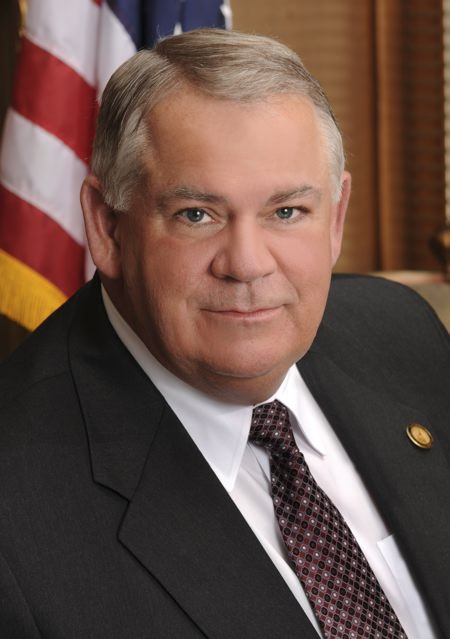
Georgia
House Speaker David Ralston said Thursday he would oppose any efforts by budget
cutters to abolish the credit.
“At the
other end of that tax credit is Georgians working,” said Ralston, R-Blue Ridge.
“If we need to make changes to it, I’m happy to have that discussion. But we
must continue it.”
The audit
recommended the General Assembly cap the film tax credit to reduce the fiscal
burden on the state and consider reducing the credit for wages paid to
out-of-state workers, requiring periodic evaluations of the credit and allowing
public disclosure of credit recipients and amounts.
ATLANTA – Georgia
House Republicans will push for the second installment of a state income tax cut
during this year’s legislative session, despite sluggish tax collections that
have prompted Gov. Brian Kemp to order spending reductions.
Lawmakers
voted two years ago to reduce Georgia’s income tax rate for the first time
since the 1930s, from 6% to 5.75%. The 2018 legislation called for another vote
in 2020 on cutting the tax rate further to 5.5%
“The income
tax cut was a commitment we made to the people of Georgia,” House Speaker David
Ralston, R-Blue Ridge, said Thursday. “I hope we do that.”
Ralston’s
determination to follow through with the rest of the promised tax cut sets up a
likely debate among majority Republicans during the session that starts next
week.
Senate
Appropriations Committee Chairman Jack Hill warned this week that 2020 may not
be the right time to be making additional tax cuts. Hill, R-Reidsville, pointed
to state tax revenues that are running well below projections, a trend likely
to create a budget gap the legislature will have to fill.
With tax
collections running well below expectations last summer, Kemp ordered state
agencies to reduce their spending by 4% during the remainder of the current
fiscal year and by 6% during fiscal 2021, which begins July 1.
For their
part, minority Democrats have opposed additional tax cuts as irresponsible at a
time the state is being forced to cut vital programs and services.
While
Ralston supported cutting state income taxes again, he was less enthusiastic
over giving Georgia teachers the remaining $2,000 of a $5,000 pay raise the
governor promised on the campaign trail in 2018. Lawmakers approved the first
$3,000 of the raise last year.
“That was
not my campaign promise, even though it’s a laudable goal,” Ralston said.
Given the current
money crunch, the speaker said the remainder of the teacher pay raise and other
spending priorities lawmakers may want to push in 2020 may have to wait until
next year.
On other
issues, Ralston said Thursday he supports a constitutional amendment letting
Georgians vote on whether to legalize casino gambling, pari-mutuel betting on
horse racing and sports betting.
During his
annual pre-session news conference, the speaker also endorsed legislation aimed
at increasing the availability of public transit in rural communities and
opposed a bill the Senate passed last year calling for the state to take over
operations at Hartsfield-Jackson Atlanta International Airport from the city of
Atlanta.
Georgia Power’s Plant Bowen near Euharlee, Ga. 11 Alive
ATLANTA – Georgia Power Co. has
launched a plan to reuse coal ash from 29 ash ponds around the state it is in
the process of closing.
The Atlanta-based utility
announced Wednesday it has released a request for proposals on ways to reuse ash
stored at 11 active and retired coal-fired power plants across the state.
Georgia Power already recycles
more than 75% of the dry coal it produces as a byproduct of its current
operations but is looking to do more.
“The request for proposals will
allow Georgia Power the potential to expand our efforts in the recycling of
coal ash, while continuing to permanently and safely close all of our ash
ponds,” said Mark Berry, the utility’s vice president of environmental and
natural resources.
“Today, most of the coal ash
Georgia Power produces is recycled for various beneficial uses, such as
Portland cement, concrete and cinder blocks, and we are committed to seeking
new beneficial reuse opportunities for the coal ash stored at our active and
retired plants.”
Georgia Power unveiled a
plan in 2015 to spend $1.5 billion to $2 billion to close all of its coal ash
ponds to meet new federal regulations for handling coal ash. The U.S.
Environmental Protection Agency got involved in the issue in response to a 2008
spill of 5.4 million cubic yards of coal ash at a plant near Kingston, Tenn.,
that smothered about 300 acres of land.
Under the Georgia Power plan, which the company updated in
2018, 19 of the ash ponds are slated for excavation and closure, including all
ponds located adjacent to lakes or rivers. The remaining 10 ponds will be
closed in place using advanced engineering methods and closure technologies.
The RFP announced Wednesday contemplates reusing ash both
from excavated ponds and from ponds closed in place.
Environmental groups have called on Georgia Power to dig up
all of the ponds due to be closed and not leave any in place.
A report several groups released in December 2018 found coal
ash was leaking into groundwater supplies at 10 of Georgia Power’s coal plants.
The report warned contamination of the groundwater would only get worse unless
the coal ash is removed.
On Wednesday, Georgia Power defended its ash pond closure
plan as in full compliance both with federal rules and more stringent state
requirements.
Bidders interested in the RFP must get a pre-qualification
questionnaire from Georgia Power and submit their information by Jan. 24.
ATLANTA – The
University of Georgia’s new master’s program in film, television and digital
media soon will have its own digs.
The
University System of Georgia Board of Regents approved a plan Wednesday to
renovate more than 5,800 square feet of space at UGA’s Grady College of
Journalism and Mass Communications to house the two-year master of fine arts
program the school launched last year.
The $3.75
million project, to be funded through private donations, will provide studio
and support space for the master’s program. The renovation will be designed,
constructed and outfitted in collaboration with the Georgia Film Academy (GFA),
which the state created and financed to train Georgians in the skills needed to
work in the fast-growing film industry.
The
renovation project will house students during the first year of the master’s
program. During the second year, they will move to Pinewood Studios to work
with instructors from the GFA.
The primary
feature of the project will be an instructional film production stage, with
flexible seating to allow for various types of presentations, an overhead
retractable lighting system, a green screen and post-production suites.
In other
business Wednesday, Jim James, the university system’s vice chancellor for real estate and
facilities, informed board members of
system Chancellor Steve Wrigley’s decision last month to rank three Atlanta-based
architectural firms to design a new $49.9 million dormitory for first-year
students at UGA.
The
top-ranked firm is Beck Architecture Georgia LLC, followed by Thompson, Ventulett,
Stainback & Associates Inc. and Collins Cooper Carusi Architects Inc.
If the university
system’s real estate staff is unable to negotiate a contract with the
top-ranked firm, it would then move to the second-ranked architect.
The
120,500-square-foot building will house 525 students. The project will be
funded through a combination of public-private venture financing and UGA
housing funds.
As
chancellor, Wrigley has the authority to make such decisions during months when
the Board of Regents does not meet.
ATLANTA – Low-income
pregnant women in Georgia should receive Medicaid coverage for one year after
giving birth, a legislative study committee is recommending.
The proposal
to expand Medicaid coverage for eligible women from the current limit of two
months postpartum highlights a 14-page report issued by the state House of
Representatives Study Committee on Maternal Mortality.
The panel
was formed last year to look into why Georgia is consistently among the 10
states with the highest maternal death rate.
A review
committee the General Assembly created in 2014 that examined 101 cases of
pregnancy-related deaths in Georgia from 2012 through 2014 estimated that 60% were
preventable.
Besides
extending Medicaid coverage for pregnant women to one year, the study committee
recommended the General Assembly pass legislation requiring an autopsy
following any woman’s death during pregnancy or up to one year after giving
birth.
Several of
the panel’s recommendations were aimed at the particularly high rates of
maternal mortality among black women in Georgia, women living in rural
communities and among obese women suffering from conditions that affect
pregnancy outcomes, including hypertension and diabetes.
The review
committee found that pregnancy-related mortality among black, non-Hispanic
women in Georgia during the three years it researched was 47 deaths per 100,000
live births, three to four times higher than among white, non-Hispanic women.
The study
committee suggested the state encourage hospitals and medical societies to
provide training in racial sensitivity for physicians, nurses and other
health-care workers.
To address
geographic disparities in pregnancy outcomes, the panel suggested the state continue
to fund and support efforts to increase Georgia’s rural health-care workforce
and expand the availability of telemedicine services by providing incentives
that prevent telemedicine from being a money-loser for providers.
The
committee also recommended continuing efforts to combat the obesity epidemic in
Georgia.