ATLANTA – The
Georgia House of Representatives overwhelmingly passed legislation Friday that
would add training and staffing requirements to the living facilities housing a
growing number of elderly Georgians.
The bill,
which passed 160-1 and now heads to the state Senate, would apply to assisted-living
and personal-care homes with 25 beds or more and add a new category called
memory care units for patients suffering from Alzheimer’s disease or dementia,
which would have extra security including locked wards to keep confused
residents from wandering away.
The legislation
would require at least one direct-care staff member be on duty at each home for
every 15 senior residents during waking hours and one for every 20 residents at
night.
A licensed
or registered professional nurse would have to be on site at assisted living
facilities for at least eight hours per week. All staff would have to undergo
training in caring for elderly and disabled residents,
The bill also
would require the homes to notify residents in writing at least 60 days in
advance of impending bankruptcy proceedings or evictions.
“Elderly
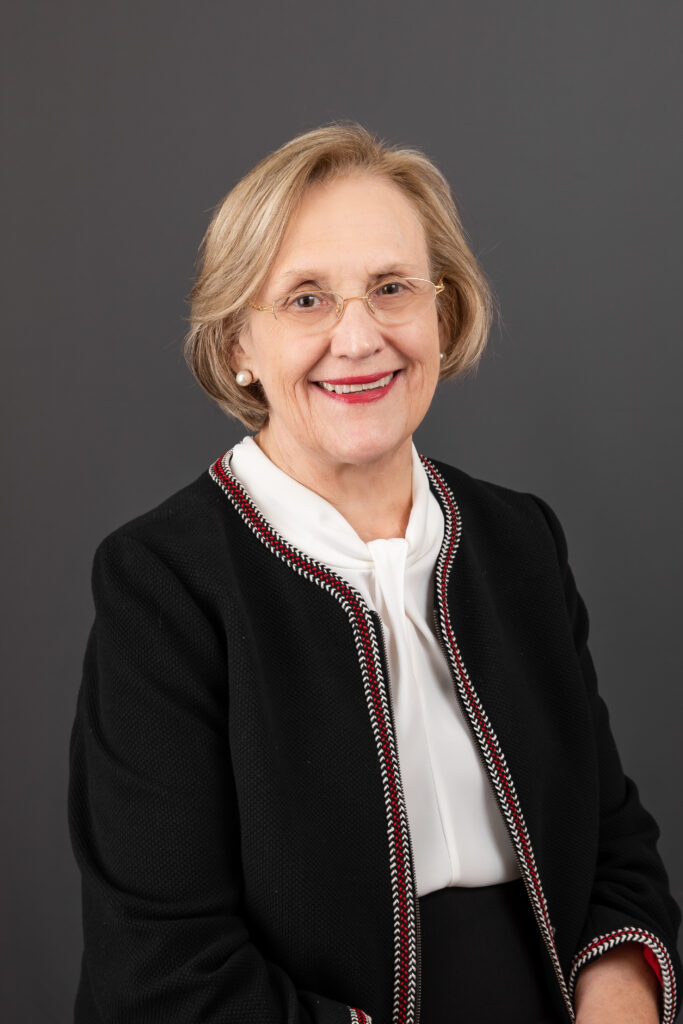
people consider these facilities their home,” Rep. Sharon Cooper, R-Marietta,
the measure’s chief sponsor, told her House colleagues Friday. “They don’t need
to get one week’s notice that they have to go out and find somewhere else to
live.”
Cooper said
Georgia’s elderly population is increasing at four times the rate of the rest
of the state’s population, as the Peach State grows in popularity among
retirees.
“People like
the atmosphere and weather of Georgia,” she said. “Many are bypassing Florida
now to make their homes in Georgia.”
ATLANTA – Gov.
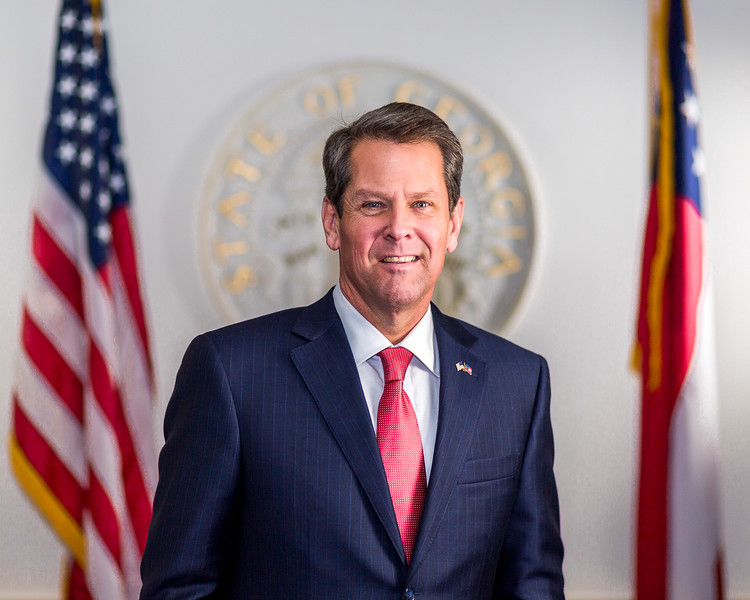
Brian Kemp named an 18-member task force Friday to handle Georgia’s response to
the coronavirus outbreak.
The governor
acted following a morning phone conversation with Vice President Mike Pence,
who is heading the Trump administration’s federal response effort to the virus,
which also goes by the name COVID-19.
“The Trump
administration understands that states and local governments are standing on
the front lines of COVID-19,” Kemp said. “In accordance with the
administration’s initiatives, Georgia’s coronavirus task force represents a
coalition of subject-matter experts from the private and public sectors who
will work together on preventative measures, strategic deployment of resources
and collaboration across all levels of government.”
As of Friday afternoon, there were no confirmed cases of COVID-19 in Georgia. Fourteen cases of the virus – which originated in China – have been diagnosed in the United States.
“We’re asking everyone to remain calm,” Kemp told reporters during a briefing Friday afternoon. “We have no confirmed cases in Georgia, but we want to be prepared for whatever comes our way.”
The new task
force will include Homer Bryson, director of the Georgia Emergency Management
& Homeland Security Agency; Felipe den Brok, director of Atlanta’s Office
of Emergency Preparedness; state Attorney General Chris Carr; Dr. Kathleen
Toomey, commissioner of the Georgia Department of Public Health; and Cherie
Drenzek, the state epidemiologist.
From the
General Assembly, Kemp named House Health and Human Services Committee Chairman
Sharon Cooper, R-Marietta, to the task force, along with Senate Health and
Human Services Committee Chairman Ben Watson, R-Savannah.
From
academia, the governor tapped Steve Wrigley, chancellor of the University
System of Georgia; Greg Dozier, commissioner of the Technical College System of
Georgia; and state School Superintendent Richard Woods.
Health-care professionals on the task force include John Haupert, CEO of Grady Health System, and Dr. Colleen Kraft, director of Emory University’s Clinical Virology Research Laboratory.
“We have a robust plan in place,” Toomey said. “We’re working with other state agencies and partners to make sure we have all the systems in place to respond.”
Toomey said the state is working with the Atlanta-based Centers for Disease Control and Prevention to identify travelers returning to Georgia, particularly from China.
Toomey said the best way to keep from getting the virus is to wash your hands frequently with soap and water and avoid touching your mouth or nose. To prevent spreading the virus, she said Georgians should stay home when they’re sick and cover their mouths when coughing or sneezing.
ATLANTA – Legislation
aimed at two biomass plants in Northeast Georgia that have drawn a public
outcry over the burning of railroad ties treated with creosote cleared a state
Senate committee Thursday.
The bill
would ban the practice, which has generated complaints from neighbors that it’s
fouling their air and polluting their water. It could reach the full Senate for
a vote as early as next week.
Birmingham,
Ala.-based Georgia Renewable Power (GRP) opened the plants last year in Madison
and Franklin counties northeast of Athens. The plants burn creosote-treated ties that have outlived
their usefulness and sell the ash to Georgia Power Co. as an alternative fuel.
The bill’s
supporters say the company misrepresented the project when it first approached
local elected officials by claiming the plants would burn clean wood chips
rather than railroad ties treated with creosote, which has been linked to some
forms of cancer and respiratory problems.
“They need
to be burning the material they said they’d burn,” Sen. John Wilkinson,
R-Toccoa, the bill’s sponsor, told members of the Senate Regulated Industries
Committee.
David Groves
of Veolia Energy, who manages the two plants for GRP, told the committee the complaints
from neighbors were the result of start-up issues surrounding the plants’
operation. He said more than $1 million is being spent on conditioners to
reduce fly ash and silencing systems that will reduce the noise coming out of
the plants.
“The plants
are state of the art. The pollution controls are state of the art,” he said.
“This is not new technology.”
Groves said
the plants rely on railroad ties treated with creosote and might be forced out
of business if they have to switch to other types of wood that have been harder
to get.
“It would be
a real shame for these communities and set a bad precedent for Georgia,” he
said.
Testimony
before the same committee on Tuesday indicated the two plants have become the
largest taxpayers in their respective counties.
Sen. Frank
Ginn, R-Danielsville, noted Thursday the plant in Madison County is generating
$4.7 million a year in tax revenue. But he said it must be operated
responsibly.
“We want to
make sure that plant is a good asset for the community and not a nuisance,” he
said.
The
committee approved an amendment to the bill Thursday essentially carving out a
similar biomass plant operated by WestRock near Dublin.
Lauren Curry,
deputy director of the Georgia Environmental Protection Division, said the
Dublin facility does not burn creosote – although it is allowed to under
current law – and has a larger buffer from nearby properties than the plants in
Northeast Georgia. The Dublin plant also has been around longer and, thus, is
not experiencing the same start-up challenges, she said.
ATLANTA – A
new committee of Georgia judicial leaders will look for ways to restructure the
state’s law libraries to serve a growing number of citizens acting as their own
lawyers, state Supreme Court Chief Justice Harold Melton announced Wednesday.
“Historically,
law libraries were the place lawyers and judges went to do legal research,”
Melton told a joint session of the Georgia House and Senate during the annual
State of the Judiciary address. “That paradigm has quickly faded, and many law
libraries today sit all but abandoned as monuments to legal tomes, devoid of lawyers.
… Today, just about the only people who go to law libraries are non-lawyers.”
Melton said
more and more low- and even middle-income Georgians are seeking to represent
themselves in civil cases because they can’t afford a lawyer. The number of
self-represented Georgians has reached more than 1 million, he said.
“When people
represent themselves, their unfamiliarity with the law and court procedures
often results in frustration for all involved, rescheduled and protracted
hearings and other inefficiencies that consume valuable state and local
resources,” he said. “Our legal system is an adversarial system; people win and
lose. Citizens who represent themselves more often lose.”
Melton cited
two local programs at different ends of the state for their work to help fill
the knowledge gap for self-represented citizens.
A self-help
center launched in 2018 by the Dougherty County Law Library is now serving an
average of 40 self-represented litigants a day. The Fulton County Superior
Court will open its Justice Resource Center within a month.
“Self-help
resource centers such as those in Fulton and Dougherty counties have the
potential to embody the new role of Georgia’s law libraries: a place where
citizens will gain greater access to our legal system,” Melton said.
The new task
force on law libraries will be chaired by state Supreme Court Justice Charlie
Bethel and Fulton County Superior Court Judge Robert McBurney.
On other challenges facing the Georgia judiciary,
Melton said he expects recommendations soon from a committee he formed last
fall to identify and mitigate the state judicial system’s vulnerabilities to
cyber attacks.
Last June, the Georgia Administrative Office of the
Courts was hit by a major ransomware attack that caused some courts to lose
access to electronic records from case files going back 20 years or more.
Melton
pledged to support the work of the state’s Behavioral Health Innovation and
Reform Commission, which the General Assembly created last year. The commission
is working to identify how Georgians suffering mental health problems can
become entangled in the criminal justice system.
Melton also
thanked former Gov. Nathan Deal for spearheading construction of the new
judicial center that bears his name, the first state building in Georgia
history dedicated solely to the judiciary. The building on Capitol Avenue in
downtown Atlanta was dedicated during a ceremony earlier this month.
And the
chief justice praised Georgia Supreme Court Justice Robert Benham, who is
retiring at the end of this week after more than 30 years on the high court.
Benham, who received a standing ovation in the House chambers Wednesday, became
the first African-American to sit on the state Supreme Court when then-Gov. Joe
Frank Harris appointed him to the post in 1989.
ATLANTA – Georgians
are divided over whether the Peach State should observe standard time all year
or daylight saving time.
But they
agree Georgia should stop the “spring forward” and “fall back” switching between
the two that takes place twice a year.
Georgia Rep.
Jimmy Pruett, chairman of the State Planning & Community Affairs Committee
in the state House of Representatives, said Tuesday that’s what he hears from
his constituents.
Margaret
Ciccarelli, director of Legislative Affairs for the Professional Association of
Georgia Educators, said most of the 85 e-mails she has received from teachers
on the issue expressed similar sentiments.
“Almost all
agree the toggling back and forth is bad for students and disruptive for
families,” Ciccarelli told Pruett’s committee.
The panel
held a hearing Tuesday on legislation calling for a nonbinding statewide
advisory referendum asking Georgians whether the state should stick with the
current system of switching between standard and daylight time twice a year,
observe standard time all year or go to daylight time all year.
The same
divided opinions exist among the states. Arizona and Hawaii have switched to
standard time permanently, while states including California, Oregon,
Washington, Utah and Maine have opted to observe daylight time all year, said Scott
Yates, a citizen activist from Denver who founded an organization called
LockTheClock.
Even though
most states that have taken up the issue have opted for daylight time, Yates
said the short-term sleep deprivation that occurs when Georgia and other states
switch from standard to daylight time in the spring is unhealthy.
“The Circadian
rhythm advocates for permanent standard time,” he said.
Gianluca
Tosini, a neuroscience professor at Morehouse School of Medicine, cited studies
showing an increase in heart attacks, strokes and auto accidents during the
week after the yearly switch from standard to daylight time.
The
committee did not vote on the bill Tuesday. Pruett suggested it might be a
better idea for the General Assembly to decide the issue rather than hold an
advisory referendum, based on research into the potential impacts of the options.
Similar legislation
is pending in the Georgia Senate sponsored by Sen. Ben Watson, R-Savannah.
Rep. Wes
Cantrell, R-Woodstock, the sponsor of the House bill calling for a nonbinding
referendum, also is pushing legislation urging the federal government to allow
states to observe daylight saving time all year.