ATLANTA – Nearly 250,000 state employees, including 132,000
educators, would be able to take up to three weeks of paid parental leave under
legislation introduced into the Georgia House of Representatives Tuesday.
The bill would apply to parents following the birth of a
child of their own, an adopted child or a foster-care placement. It’s modeled
after a policy the House adopted for its employees last summer and since embraced
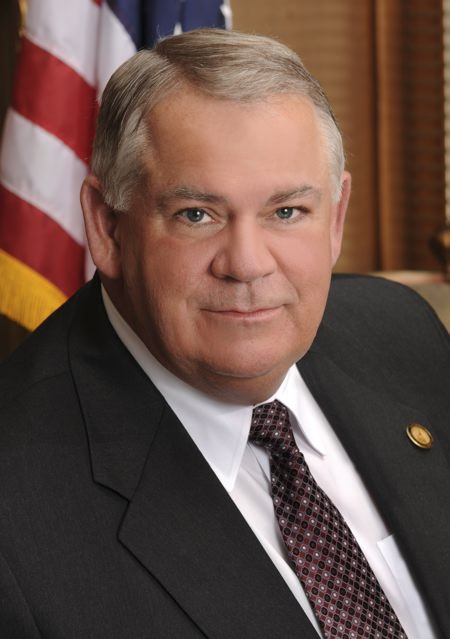
by the state Senate, House Speaker David Ralston said. Any state employee with
six months of creditable service would be eligible, regardless of gender.
“We in the House believe in a culture of life in Georgia,”
said Ralston, R-Blue Ridge. “That includes giving families time to welcome new
additions into their home.”
Rep. Houston Gaines, R-Athens, the bill’s chief sponsor,
said the measure also would help the state attract and retain quality employees.
Many other states and private businesses offer parental paid leave to their
employees.
“As we seek to recruit and retain the best and
brightest employees to serve Georgia’s citizens, this is an important step in
helping our employees maintain a healthy work-life balance,” Gaines said.
Ralston said setting paid parental leave at three
weeks is an idea the House borrowed from some of Georgia’s biggest private companies,
including Home Depot and Coca-Cola. He said he hopes smaller businesses will
see what the state is doing and follow suit.
“Our goal is not to dictate to the private sector,” he
said. “Hopefully, they will draw inspiration from this.”
If the General Assembly passes the bill and Gov. Brian
Kemp signs it, the measure would take effect July 1.
ATLANTA – The Georgia House of Representatives overwhelmingly
passed legislation Tuesday aimed at ending “surprise billing” in Georgia, unexpected
medical charges that can add up to thousands of dollars and bankrupt families.
The bill primarily would affect unexpected bills for
services a patient receives at a hospital inside their insurance plan’s network
from an out-of-network specialist such as a radiologist or anesthesiologist. The
Georgia Senate unanimously passed similar legislation last week.
However, the version of the bill the House approved 164-4 on
Tuesday also would apply to emergency services a patient receives from a
hospital outside of his or her insurance plan’s network, said Rep. Lee Hawkins,
R-Gainesville, the House measure’s chief sponsor.
“It cleans up a lot of in-network and out-network obstacles
for the patient,” Hawkins said.
Both the House and
Senate bills would require insurance companies to pay out-of-network physicians
either a contracted amount based on rates charged in 2017 for various
procedures, or a higher charge the patient’s insurance company proposes.
Disputes between
the insurer and provider would trigger an arbitration process overseen by the
state Department of Insurance, which would contract with outside arbitrators to
decide the final bill.
Lobbyists for
Georgia insurers, hospitals, physicians and consumer advocates have been
working for five years to come up with language all sides could agree on.
Hawkins said House Bill 888 is the result of those efforts.
Also on Tuesday,
the House passed a second measure addressing surprise billing. The legislation,
which passed 170-1 and now moves to the state Senate, would set up a rating
system patients could use to determine which physician specialty groups in
their insurance plan’s provider network serve a given hospital.
“We’re trying to shed a light of transparency on these plans,” said Rep. Mark Newton, R-Augusta, chairman of the House Special Committee on Access to Quality Health Care and the bill’s chief sponsor.
Newton’s bill
would apply to anesthesiologists, pathologists, radiologists and emergency room
doctors, the specialists typically responsible for the most cases of surprise
billing.
Under the
legislation, when an insurance company advertises a hospital as in its coverage
network, the insurer would have to disclose that hospital’s “surprise bill
rating.” If that rating is less than four, the insurer would be required to
disclose which of the four specialties are not in its network.
ATLANTA
– Lawmakers want to hear from voters on how
the Peach State should keep time.
The state Senate
unanimously passed legislation Monday calling for a nonbinding advisory
referendum asking whether Georgia should continue switching back and forth twice
a year between standard time and daylight saving time, observe standard time
all year or go with daylight time all year. An identical bill is before the
Georgia House of Representatives.
The question
of time has become a hot topic around the country. Since 2015, at least 39
states have considered putting an end to the twice-a-year switch, Sen. Ben
Watson, R-Savannah, the Senate measure’s chief sponsor, said during a brief
floor debate Monday.
While most
of those states are considering going with daylight saving time only, several
scientific studies have concluded losing an hour by switching from standard to daylight
time has health consequences, Watson said.
“There’s a
higher risk of heart attacks during the two weeks following the daylight saving
time transition,” he said.
Watson cited
one study by the Association of Psychological Science that found the annual “spring
forward” switch to daylight time even affects the legal system.
“Judges dole
out longer sentences when they’ve been sleep deprived,” he said.
The federal
government seems to have taken a stand in favor of standard time. States that
want to move to daylight time all year must receive congressional approval to
do so, while states wishing to go with year-round standard time can make the
change on their own.
Two states –
Arizona and Hawaii – observe standard time all year.
ATLANTA – The Georgia Senate Appropriations Committee put
its stamp on Gov. Brian Kemp’s $27.4 billion mid-year budget plan Monday,
agreeing with the House on restoring some spending reductions in the governor’s
recommendations while putting back other cuts on their own.
The fiscal 2020 mid-year budget, which covers state spending
through June 30, complies with 4% across-the-board spending cuts Kemp ordered last
August to help offset sluggish state tax collections. Many of those reductions
started taking effect last fall.
But the committee also put back some of the funding
reductions the governor proposed in areas lawmakers consider critical.
“What we tried to do is restore cuts where we can to services
that directly affect children, the elderly, the disabled, and essential public
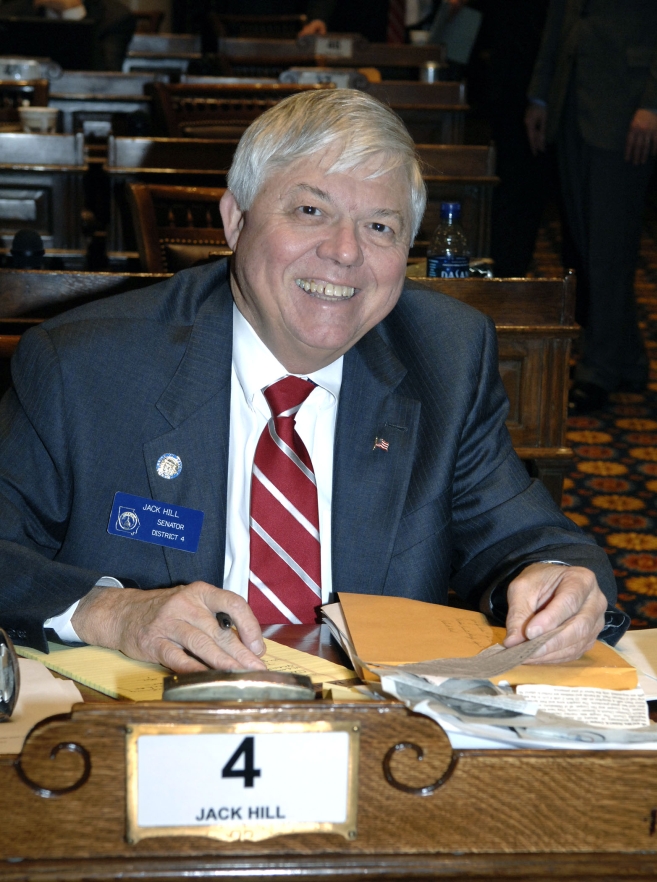
safety needs,” said committee Chairman Sen. Jack Hill, R-Reidsville.
The Senate committee’s version of the mid-year budget
includes $255.7 million to cover enrollment growth in Georgia’s public schools
since the General Assembly adopted the fiscal 2020 spending plan last spring.
The committee agreed with the House on adding $819,000 to
the Georgia Bureau of Investigation’s budget to hire additional agents and
analysts, and the Senate added another $420,000 to put in place a database to
track gang activity.
The Senate mid-year budget also stepped up the state’s
commitment to programs primarily affecting rural Georgia, kicking in an
additional $500,000 to add health-care staff in rural communities, $197,000 to
serve rural patients suffering from depression and $136,000 for maternal- and
children’s-health services, which are lacking more in rural areas than in the
state’s cities and suburbs.
The Senate disagreed with the House by restoring $2.1
million for the Department of Public Safety’s trooper school. The House cut the
money out of the mid-year budget after an entire class of trooper candidates was
fired for cheating on an exam.
The committee agreed with the House in adding back a $1.2
million reduction in funding for public libraries.
The full Senate is expected to vote on the mid-year budget
on Wednesday.
ATLANTA – After
years of false starts, Republicans in the General Assembly have renewed their
push for tort reform in a big way.
Several GOP-backed
bills moving through the Georgia Senate would make major changes in procedures
governing various types of civil lawsuits, including personal injury, medical
malpractice and product liability cases.
Supporters
say tort reform is gaining advocates because of a growing number of large
damage awards Georgia juries have handed out in recent years, a trend that is
causing the state’s legal climate to plummet in national rankings.
The
Institute for Legal Reform rated Georgia’s civil justice system 41st
among the 50 states last year, down from 24th just seven years ago. The
American Tort Reform Association lists Georgia sixth on its 2019-2020 ranking
of Judicial Hellholes.
“The
momentum behind this is these nuclear verdicts that keep coming out,” said Meagan
Hanson, a former member of the state House of Representatives now serving as
executive director of Georgians for Lawsuit Reform. “The entire business
community is feeling the pain of frivolous lawsuits.”
Lined up
against tort reform are Georgia’s trial lawyers, who have successfully beaten
back years of attempts at overhauling the state’s civil justice system. The
last significant tort reform bill that made it through the legislature came in
2005, when lawmakers set a $350,000 cap on non-economic damage awards only to
see the Georgia Supreme Court rule the limit unconstitutional in 2010.
The Georgia
Trial Lawyers Association opposes this year’s crop of bills as a violation of
Georgians’ constitutional right to trial by jury.
The
legislation before the Senate stems from the work of a study committee that
adopted an ambitious set of tort reform proposals in December. Its
recommendations included prohibiting plaintiffs from seeking “phantom damages,”
compensatory damages beyond what a plaintiff will actually pay for medical care
or treatment, and making it harder for juries to find defendants guilty of “premise
liability,” negligence for injuries victims suffer on a home- or business
owner’s property at the hands of a third party.
The study
committee also supported allowing defense lawyers in personal injury cases to
introduce into evidence whether an injured motorist was wearing a seatbelt at
the time of a crash. That recommendation has found its way into Senate Bill
226, a broader measure sponsored by Sen. Randy Robertson, R-Cataula, that expands
Georgia’s seatbelt requirement to the back seats of motor vehicles.
The Senate
Public Safety Committee approved Robertson’s bill on Feb. 26.
Another tort
reform bill, which cleared the Senate Insurance and Labor Committee Feb. 24, is
aimed at streamlining settlement offers so plaintiff lawyers can’t gum up the
system by tacking on additional non-monetary demands. Under Senate Bill 374, settlement
offers must contain only five terms: the time period within which an offer must
be accepted, the amount of the payment, the defendants who will be released
from a claim if the offer is accepted, whether the release is full or limited
and itemization of the claims to be released.
“We all know
the most important part of a settlement is paying the money,” said Jonathan
Adelman, an Atlanta lawyer who represents insurance companies. “We need to
eliminate the gamesmanship. There’s no place for it.”
But Jay Sadd,
a plaintiff lawyer in Sandy Springs and a past president of the Georgia Trial
Lawyers Association, said limiting settlement agreements to five terms is a
one-size-fits-all approach that would deprive insurance policyholders of the
right to make their own decisions on how to settle cases.
“The problem
really is insurance companies deny claims, defend claims when they shouldn’t
and make low-ball offers,” he said. “We are worried about these material terms
being foisted on our citizens.”
Two other
Senate bills take a more comprehensive approach to tort reform, with multiple
provisions.
Senate Bill
390 is the longer of the two bills at 48 pages and includes many of the study
committee’s recommendations. But it has been sitting in the Senate Judiciary
Committee, which has yet to hold a hearing on it.
Senate Bill
415, on the other hand, was sent to an Insurance and Labor subcommittee for a
thorough airing out, and cleared that panel on Friday. It’s a bit shorter than
Senate Bill 390 but contains many of the same provisions, including a limit on
the awarding of punitive damages in liability cases.
The bill
also contains the limits on premises liability the study committee recommended,
requires judges to give written instructions to juries and prohibits defense
lawyers from suggesting specific damage awards to juries, another suggestion
from the study committee.
Sen. Steve
Gooch, R-Dahlonega, chief sponsor of both bills, said passing meaningful tort
reform in Georgia is critical to the state’s business prospects.
“The
reputation of Georgia’s civil justice system is being called into question
around the country,” he said. “Georgia’s reputation will continue to
deteriorate unless meaningful tort reform is achieved.”
Gooch said the
state’s consumers also have a stake in tort reform.
“The current
system drives up the cost of every item in a typical family budget [because]
businesses are burdened by this added cost,” he said,
But the
Georgia Trial Lawyers Association said Gooch’s tort reform measures would diminish
judges’ ability to manage their court dockets while reducing negligent parties’
responsibility for the harm they cause.
“[Senate
bills 390 and 415] are a sweeping overthrow of our judiciary that benefits
insurance companies at the expense of our citizens who have been harmed by the
negligence of others,” the association wrote in a prepared statement.
Senate Bill
374 is scheduled for a vote of the full Senate on Monday. Meanwhile, the full
Industry and Labor Committee is expected to vote on Senate Bill 415 early in
the week.