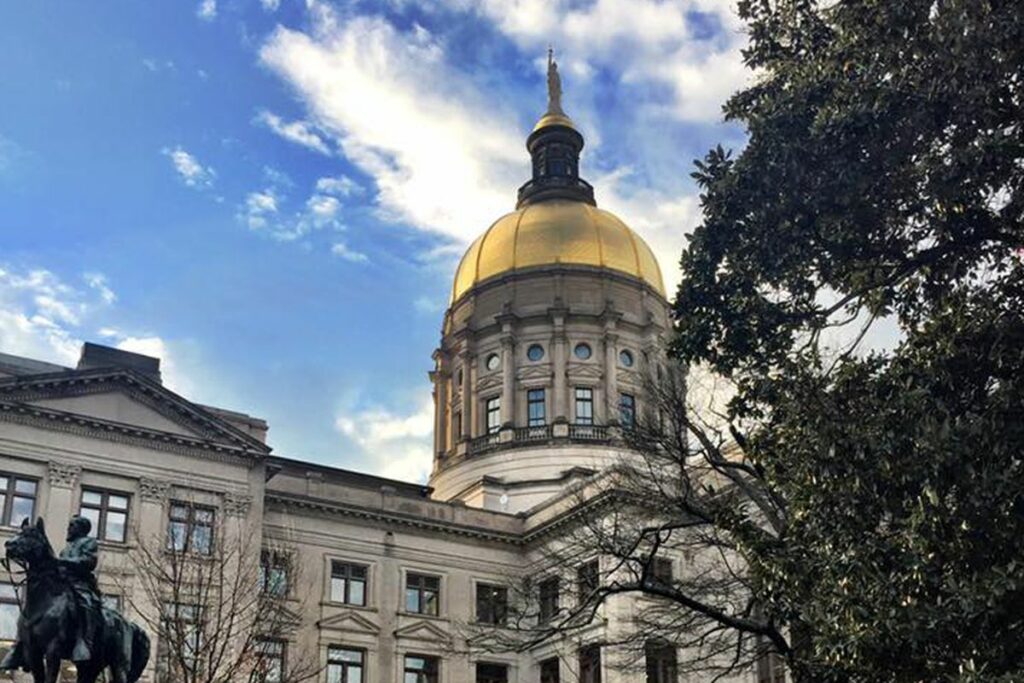
ATLANTA – Legislation
aimed at speeding up the deployment of broadband service in rural Georgia
cleared a state Senate committee Thursday.
The bill,
which the Senate Regulated Industries Committee approved unanimously, would
require Georgia’s electric membership corporations (EMCs) to allow communications
service providers to attach broadband-capable wires or cable to their utility
poles for free.
The General
Assembly passed legislation last year authorizing EMCs to deploy broadband
services to rural communities. But telecom executives have complained pole
attachment fees the EMCs charge are too high to make the investment worthwhile.
Comcast
officials sent a letter recently to Sen. John Kennedy, R-Macon, chief sponsor
of this year’s bill offering to invest $20 million in broadband deployment in
Georgia if the pole attachment fees are reduced.
“This is
something that will move the needle and get broadband further out into
Georgia,” Kennedy said.
But EMC
officials argued lower pole attachment fees would come out of their customers’
pockets. Unlike Georgia Power Co., the EMCs are nonprofits and have no
shareholders to absorb higher costs.
Tim Martin,
CEO of Carroll EMC, which serves 52,000 customers in seven counties, said the
utility is working to expand rural broadband connectivity by seeking grant
funding. He said the approach Kennedy’s bill takes wouldn’t work because telecom
companies wouldn’t necessarily invest the savings in rural broadband.
“We think
the cable companies will focus on areas that are higher density and [larger] return
on investment,” he said.
Sen. John
Albers, R-Roswell, sought to address the EMCs’ concerns by proposing amendments
to mandate that pole attachment fees be set no lower than $9 per pole and that
the fee reductions be phased in over four years.
But the
committee rejected those amendments in favor Sen. Steve Gooch’s proposal to cut
the pole attachment fees to zero for 10 years in parts of Georgia that are
underserved in terms of broadband capability.
Gooch,
R-Dahlonega, said providing pole attachments for free in the areas most in need
of broadband would make last year’s legislation, which he sponsored,
successful.
The bill now
heads to the full Senate, which likely will take it up next week.
Georgia House bill seeks Medicaid expansion for new mothers
By Dave Williams
Bureau Chief
Capitol Beat News Service
ATLANTA – Low-income Georgia mothers would receive expanded
Medicaid coverage after the birth of their babies under legislation introduced
in the state House of Representatives Thursday.
The bill would authorize the state to apply for a federal
waiver that would allow Georgia to offer Medicaid coverage to income-eligible
women up to six months post partum. The current Georgia Medicaid program only
permits coverage for up to two months.
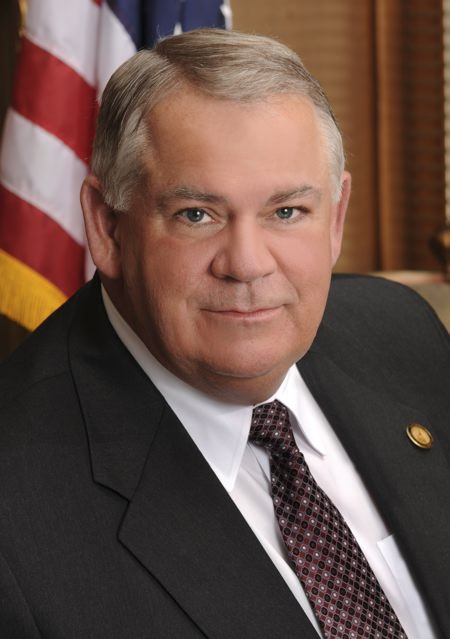
Improving Georgia’s high maternal mortality rate is a House
priority for this year’s legislative session, Speaker David Ralston told
reporters Thursday.
“It is completely unacceptable for the No.-1 state in the
nation in which to do business to have one of the highest maternal mortality
rates in the country,” said Ralston, R-Blue Ridge.
Rep. Sharon Cooper, R-Marietta, chaired a House study
committee on maternal mortality that held hearings last summer and fall. One of
the panel’s recommendations was to expand Medicaid coverage in Georgia for new
mothers for one year post partum.
A review committee in 2014 that examined 101 cases of
pregnancy-related deaths in Georgia between 2012 and 2014 found that 60% were
preventable.
“As a nurse and nursing professor who taught maternal care,
I am very much a champion for quality health care for our mothers and babies,” Cooper
said.
House Bill 1114 also would extend Medicaid coverage to lactation
specialists for mothers having trouble feeding their babies.
ATLANTA – While most of
the action on tort reform in this year’s General Assembly session has been in
the Georgia Senate, the state House of Representatives is about to jump into
the fray.
House Speaker David
Ralston has appointed 15 House members to an ad hoc committee that will
consider legislation seeking to make significant changes in Georgia’s civil
justice system, including a bill introduced into the House this week, the
chamber’s first tort reform measure of the 2020 legislative session.
“For the last seven years
in a row, Georgia has been named the best state in the nation in which to do
business,” Ralston, R-Blue Ridge, said in announcing the formation of the
Special Committee on Access to the Civil Justice System. “Any
legislation which may negatively impact our business climate and limit access
to our civil justice system must be carefully considered.”
The Senate began working
on tort reform early in the session and already has passed one tort reform
bill. Two others have cleared Senate committees and await action by the full
Senate.
Representatives of
insurance companies, physician groups and tort reform advocates have pointed to
“runaway” jury verdicts in Georgia in recent years that have driven up the cost
of insurance premiums as evidence of the need for tort reform. Opponents,
spearheaded by the trial lawyers lobby, say the bills are skewed in favor of
insurers and make it harder for victims of car crashes and medical malpractice
to get their day in court.
House Bill 1089, sponsored by Rep. Tom McCall, R-Elberton, would require separate trials to determine guilt and assess damages in cases where the plaintiff seeks more than $150,000 in damages. Like other legislation pending before the Senate, it also would allow defense lawyers to introduce as evidence whether an injured plaintiff was wearing a seatbelt at the time of a motor vehicle crash.
The new committee will be
chaired by House Majority Whip Trey Kelley, R-Cedartown.
ATLANTA – A
$27.4 billion mid-year budget covering state spending through the end of June
overwhelmingly cleared the Georgia Senate Wednesday.
Senators
took the fiscal 2020 mid-year spending plan the state House of Representatives approved
last month and made a number of changes, many aimed at squeezing more savings
out of the tight budget Gov. Brian Kemp proposed in January. It’s the product
of 4% across-the-board spending cuts Kemp ordered last summer for the current fiscal
year to help offset sluggish state tax collections.
“It was a
difficult year,” Senate Appropriations Committee Chairman Jack Hill,
R-Reidsville, told his Senate colleagues before Wednesday’s 52-1 vote. “The
Senate has done its best to meet the needs of the state given our fiscal
situation.”
The Senate
agreed with many of the changes the House made to the spending plan, including an
appropriation of $104.2 million for the annual mid-year adjustment to account
for enrollment growth in the state’s public schools. Senators also sided with
the House to restore several budget cuts the governor had recommended, including
$1.2 million to hire more agents and analysts for the Georgia Bureau of
Investigation’s Gang Task Force and develop a database to track gang activity,
and $1.3 million for local accountability courts, a criminal justice reform
initiative aimed at reducing the prison population.
The Senate
supported House additions of $235,000 to help the secretary of state’s office
with cybersecurity measures and the legal costs of election-related litigation,
and kicked in $244,000 in startup costs for the new state commission that will
oversee Georgia’s medical cannabis program.
Besides
agreeing with many of the budget cuts restored by the House, senators acted on
their own to restore $258,000 in cuts to foster care services. Before this
year’s legislative session started, Kemp declared improving foster care a major
priority.
“In an era
where we’re constantly seeking foster-care parents, it’s a good thing to spend
this money,” Hill said.
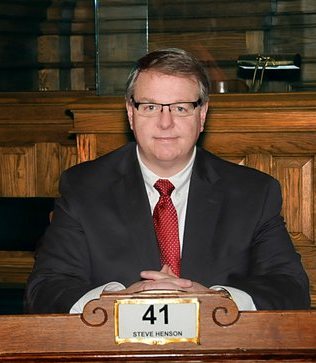
Senate
Minority Leader Steve Henson congratulated Hill and members of the Senate
Appropriations Committee for restoring many of the governor’s spending cuts. But
he complained the mid-year budget still leaves the state short of funding many
critical needs because of the revenue hit from an income tax cut Republicans pushed
through the General Assembly two years ago.
“Our
constituents sent us here to make tough decisions,” said Henson, D-Stone
Mountain. “If we don’t have state roads, a strong public education system and
protections of our drinking water and air, we’re letting the people down.”
The mid-year
budget now goes back to the House, which could either agree with the changes
the Senate made or resolve the two chambers’ differences in a legislative
conference committee.
Even tougher
decisions on a $2,000 teacher pay raise proposed by Kemp and whether to follow
through with a second phase of the 2018 income tax cut await lawmakers later
when they take up the governor’s $28.1 billion fiscal 2021 budget plan.
ATLANTA – Legalizing
sports betting in Georgia would convert what’s already going on illegally into
a regulated activity that would offer greater protection for consumers and much-needed
tax revenue for the state, supporters said Tuesday.
Top
executives with Atlanta’s pro sports teams and gaming industry lobbyists urged
the state Senate’s Regulated Industries Committee to pass legislation to allow
sports betting online and steer a portion of the proceeds to education.
The bill,
sponsored by Sen. Burt Jones, is modeled after Tennessee, which recently took
advantage of a 2018 U.S. Supreme Court ruling allowing states to legalize
sports betting by setting up an online sports book in the Volunteer State.
Jones,
R-Jackson, argued the Georgia Lottery has become financially strapped in recent
years as increasing demand for lottery-funded HOPE scholarships has outstripped
the growth of ticket sales. The General Assembly passed legislation in 2011
that has gradually reduced the percentage of tuition HOPE covers for all but
the highest-achieving students.
“If we don’t
do something to evolve the lottery system … we’re going to be in a situation 10
years from now that’s almost desperate,” Jones said.
The CEOs of
the Atlanta Braves, Hawks and Falcons testified they need sports betting to better
connect with a younger fan base increasingly fixated on their digital gadgets.
“The future
of being a sports fan is about having dialogue with your team,” Braves CEO
Derek Schiller said.
“It’s about
engagement, having something to do while watching a game, multi-tasking,” added
Hawks CEO Steve Koonin.
Stacie
Stern, manager of government affairs for FanDuel, which has expanded its online
business from fantasy sports into sports betting, said legalizing sports
betting in Georgia would add a level of consumer protection not available as
long as the activity remains illegal. She said bettors would have to set up an
account and fund it, so they couldn’t run up a huge credit card bill.
“Bettors are
not betting with a digital equivalent of an IOU,” Stern said.
Jones’ bill
also would require bettors to be at least 21 years of age. Companies offering
apps under Georgia’s sports betting program would be required to have
“geofencing” technology to ensure all betting takes place inside the state.
It’s unclear
whether legalizing sports betting in Georgia would require a constitutional
amendment. Jones introduced one several days after putting in his sports
betting bill as a precaution.
But on
Tuesday, Atlanta lawyer Robert Highsmith told committee members the legislation
creating the Georgia Lottery specifically prohibited casinos and pari-mutuel on
horse racing but said nothing about sports betting.
“If you can
offer Keno on an app, surely a sports book isn’t a far departure from that,” he
said.
The
committee did not vote on Jones’ bill Tuesday. With the General Assembly headed
toward “Crossover Day” next week, the deadline for bills to pass at least one
legislative chamber, the panel likely would have to vote on the measure at its
next meeting Thursday in order to keep it alive.