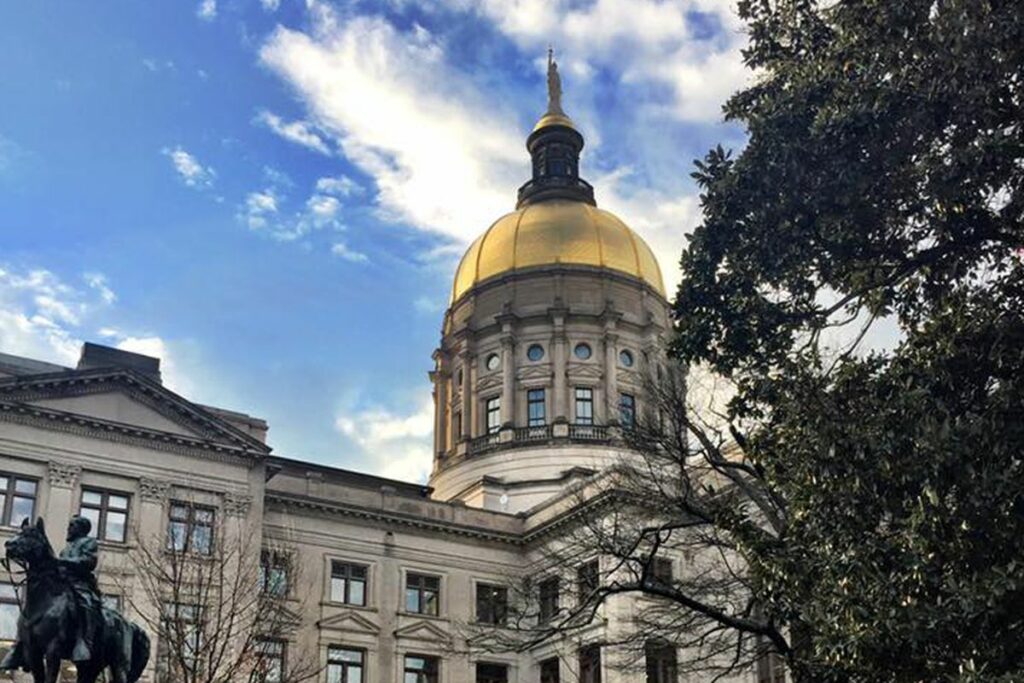
ATLANTA – The
Georgia House of Representatives overwhelmingly passed two bills Tuesday that
would give the General Assembly more say over state spending and revenue
decisions.
The measures
sped through the House just one day after they were introduced because they had
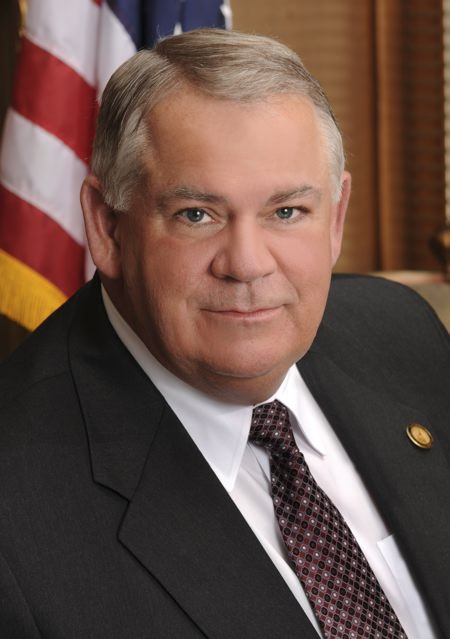
the backing of Speaker David Ralston, R-Blue Ridge.
Ralston and
Gov. Brian Kemp have been at odds over the budget process since last August,
when the governor ordered across-the-board spending cuts to help offset the
impact of slowing tax collections. The speaker had the House Appropriations
Committee hold hearings on the proposed reductions in September, only to see
Kemp instruct executive branch agency heads not to appear.
Earlier in
this year’s legislative session, the House took a break of a week and a half to
focus solely on Kemp’s budget recommendations after Ralston complained the Governor’s
Office of Planning and Budget (OPB) hadn’t provided enough information on the
spending cuts the governor recommended when he presented his mid-year fiscal
2020 and fiscal 2021 budgets to lawmakers.
House Bill
1111, which cleared the House 144-14 on Tuesday, would limit the governor’s
ability to withhold funds appropriated by the General Assembly. He could only
do so when tax collections are trailing more than 1% behind revenue estimates
and would have to inform the legislature of his actions.
House Bill
1112, which passed 138-28, calls for the creation of a five-member state
council of economic advisors, three to be appointed by the governor, one by the
lieutenant governor and one by the speaker. The council would set a range
within which the governor would set a revenue estimate for the state.
“It does not
take away the governor’s executive authority to set the revenue estimate,” said
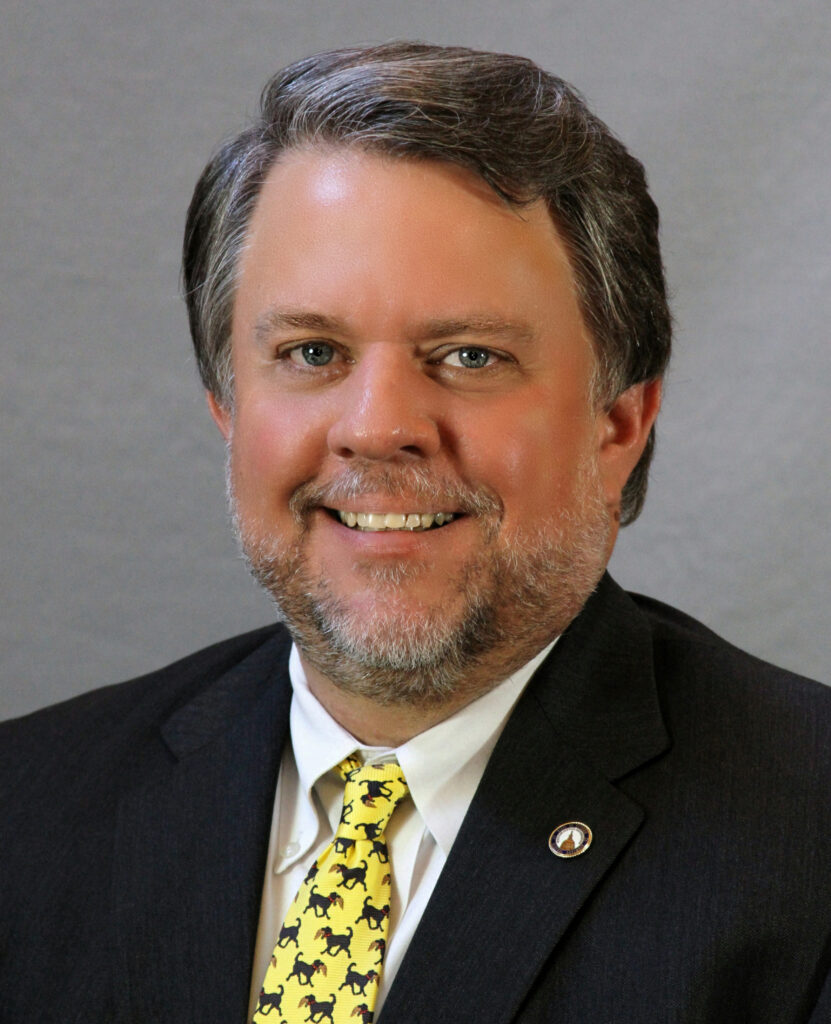
Rep. Clay Pirkle, the bill’s chief sponsor. “It puts some additional eyes on an
important process.”
The
legislation also would require executive branch agencies to share information
on their budgets with the General Assembly at the same time they give it to the
OPB and give lawmakers the right to review any proposed redirections of
budgeted funds to another purpose.
During a
brief debate on the House floor, Rep. Don Parsons, R-Marietta, said he was
concerned lawmakers might use the deliberations of the proposed council of
economic advisors and the additional scrutiny the bills would give the General
Assembly to play politics with the appropriations process.
But Pirkle,
R-Ashburn, said the legislature would take its additional responsibilities as
“a solemn duty.”
“This is a
policy decision,” he said.
Several of
Kemp’s floor leaders in the House voted against both bills, which now move to
the Senate.
ATLANTA – Georgia
voters will decide this fall whether to require that dedicated state funds be
spent on their intended purpose.
The state
Senate voted unanimously Monday to put the proposed constitutional amendment on
the statewide November ballot, giving final passage to a measure that
originated in the Georgia House of Representatives.
Committing
dedicated state money such as Georgia’s Solid Waste and Hazardous Waste trust
funds to their intended use was a longstanding priority of the late state Rep.
Jay Powell, R-Camilla, who died unexpectedly last November. As chairman of the
House Ways and Means Committee and later the Rules Committee, Powell opposed
the legislative practice of diverting those monies into the state’s general
fund budget absent a financial emergency.
“It would
bring a level of accountability to these fees and truth in taxation back to the
dedication of these fees,” Rep. Andrew Welch, R-McDonough, said on the House
floor last week.
Although the
Senate at one point in this year’s session favored limiting the legislation to
the Solid Waste and Hazardous Waste trust funds, senators on Monday agreed to a
House proposal applying the constitutional amendment to all dedicated revenues
derived from state fees or taxes.
The
legislation includes substantial limits to make sure dedicated funds don’t grow
too large and can be put to general use in emergencies.
Under the
constitutional amendment, dedicated funds could not exceed 1% of total state
revenues from the previous year. In a financial emergency, the governor and
General Assembly would have the authority to temporarily suspend the dedication
of funds.
“This is
true middle ground in the appropriations process,” Welch said.
As a
constitutional amendment, the legislation does not go to the governor to be signed
into law. Its passage Monday guarantees its placement on the general election
ballot Nov. 3.
ATLANTA – Republican
leaders in the Georgia House of Representatives doubled down Monday on the
promised second phase of a state tax cut launched two years ago.
House Ways
and Means Committee Chairman Bret Harrell introduced legislation to reduce
Georgia’s personal income tax rate from the current 5.75% to 5.375%. Heading
into this year’s legislative session, House GOP leaders were expected to propose
cutting the tax rate to 5.5%.
“We will
keep the promise we made to Georgians in 2018 and more,” House Speaker David
Ralston said Monday during a luncheon speech at the Capital City Club in
Atlanta sponsored by the Atlanta Press Club.
The personal
income tax cut is part of a comprehensive tax reform bill that also would
provide an earned income tax credit to working families but leave Georgia’s
corporate income tax rate untouched at 5.75%.
“We want
working Georgians, Georgia families, to realize the maximum benefit from this
income tax cut,” Ralston said.
Legislative
Democrats and some Republicans in the state Senate have warned against a
further tax cut while the state struggles to bring in enough revenue to provide
vital services. Tax collections have been coming in well below expectations for
most of the past year, in part because of the 2018 tax cut, which reduced the
income tax rate from 6.0% to 5.75%.
But Harrell,
R-Snellville, said some new revenue increases would help offset the $250 million
to $270 million impact of the tax cut, including collecting taxes on sales through
third-party “marketplace facilitators” including Amazon and Google the
legislature passed in January and a bill that would prohibit taxpayers from
deducting federal income tax payments from their state income taxes.
“When people
sit down and look at how state [revenues] are actually performing … it will
reduce any likelihood of [pushback],” Harrell said.
Ralston also
unveiled during Monday’s speech the introduction of two bills aimed at asserting
the House’s authority as a co-equal branch of state government with the
governor’s office.
The measures
would limit the ability of the executive branch to withhold funds appropriated
by the General Assembly and require executive branch agencies to provide
budget-related information to the state House and Senate at the same time it is
provided to the Governor’s Office of Planning and Budget (OPB).
Earlier in
this year’s session, Ralston blamed a lack of timely information from the OPB for
forcing the legislature to take off a week and a half so the House could focus
solely on the budget.
“It is my
sincere hope this will help us avoid some of the problems we had earlier this
session,” the speaker said.
ATLANTA – Budget
writers in the Georgia House of Representatives Monday cut in half the teacher
pay raise Gov. Brian Kemp proposed in January.
Reducing the
salary hike from $2,000 per teacher to $1,000 would allow lawmakers to restore
spending cuts the governor recommended in other areas of his $28.1 billion
fiscal 2021 budget plan, including funding for programs that affect education,
House Appropriations Committee Chairman Terry England said.
“To
teachers, it’s not all about the money,” said England, R-Auburn. “It’s support
services and wraparound services, not only in the classroom but in the
community.”
In keeping
with the $27.4 billion mid-year budget for the current fiscal year now before a
legislative conference committee, the fiscal 2021 spending plan the House
Appropriations Committee approved Monday would restore many of the
across-the-board cuts Kemp is proposing to help offset sluggish state tax
collections.
Last August,
the governor ordered state agencies to reduce spending by 4% this fiscal year
and 6% in fiscal 2021, which begins July 1.
Besides
increasing teacher pay, next year’s budget calls for a 2% pay raise for employees
across state government and targeted increases of 2%, 4% and 5% for workers in
agencies experiencing annual turnover rates of more than 30%.
As is the
case with the mid-year budget, the fiscal 2021 spending plan the committee
approved would restore cuts to the Department of Agriculture Kemp recommended,
including funds to hire five additional food safety inspectors and two animal
inspectors.
The
committee also put back funds to add 44 beds to the Department of Behavioral
Health’s budget for treatment of Georgians with drug addictions and expand
Medicaid coverage to low-income mothers for up to six months after their babies
are born.
Some of the restored
cuts are aimed specifically at the needs of rural Georgia, including funds for
the Georgia Rural Health Innovation Center, the state’s new hemp farming
program and for a new rural psychology residence program at Colquitt Regional
Medical Center in Moultrie.
The House
budget also would fully fund school counselors across the state at the rate of
one counselor for every 450 students, reject cuts the governor recommended to
Georgia’s accountability courts, add two environmental engineers to the state Environmental
Protection Division to monitor the disposal of coal ash and reduce cuts to the
state’s public libraries.
England said
Georgia teachers still would be getting an 11.7% pay increase over two years
despite losing $1,000 from next year’s raise. Kemp and the General Assembly
approved $3,000 increases for teachers in this year’s spending plan.
England said
the House is committed to revisiting teacher pay when it takes up the fiscal
2022 budget next year.
The full
House is due to vote on the fiscal 2021 budget on Tuesday.
ATLANTA – Georgia
Democrats are off to a strong start in their bid to build on the electoral
gains they made in congressional and legislative races two years ago.
But
Republicans say they will have the enthusiasm and resources to retain
majorities in both the General Assembly and the state’s congressional
delegation they have held for most of this century.
As the deadline for candidate qualifying fell at the state Capitol Friday, Democrats had fielded a candidate in all 14 of Georgia’s congressional districts for the first time since 2008. Democrats also were running for about three-fourths of the 236 seats in the state House of Representatives and Senate.
The influx
of candidates angling to unseat Republicans gives Democrats a better shot at
flipping the 16 seats needed to win control of the Georgia House for the first
time since the 2004 election, said state Sen. Nikema Williams, D-Atlanta, who
doubles as the state’s Democratic chair.
“I am very
optimistic about what that means for our prospects in November because we are
laser focused about taking the House back,” she said. “I see that the future of
Georgia is blue.”
But
Democrats face an uphill battle to reclaim a majority in either Georgia’s
congressional delegation or the General Assembly.
Although Democrat
Lucy McBath of Roswell pulled an upset in 2018 by capturing a congressional
seat in Atlanta’s northern suburbs held by Republicans for decades, Republicans
still control the congressional delegation 9-5.
The GOP must
defend three vacant congressional seats this year, but only one of those – the
7th District primarily in Democrat-trending Gwinnett County – is in
serious play.
Meanwhile,
Republicans currently hold a 35-21 majority in the Georgia Senate and 105 of
the 180 House seats.
More than
1,500 Republican candidates signed up to run for federal, state and local office
during the qualifying period compared to just 880 Democrats. Many will be going
up against members of their own party in the May 19 primaries.
“Republicans
are better organized and more enthusiastic than at any time I can remember,”
Georgia Republican Chairman David Shafer said Friday. “We will be campaigning
everywhere to everyone.”
McBath, who
ran former U.S. Rep. Karen Handel out of office two years ago, has drawn five
Republican challengers for the 6th Congressional District seat, including
Handel. The Democrat edged Handel by a razor-thin margin in the 2018 general
election to claim the traditionally Republican district previously held by
influential former Georgia officeholders Newt Gingrich and Tom Price.
Four other
Republicans who Handel bested in the 2018 GOP primary have jumped back into the
race this year including Joe Profit, Blake Harbin, Paulette Smith and Mykel
Lynn Barthelemy.
The
neighboring 7th Congressional District is also poised for a brawling contest following
current seat holder U.S. Rep. Rob Woodall’s decision not to seek re-election.
In 2018, Republican
Woodall won a fourth term to the suburban Atlanta district by less than 500
votes over Democrat Carolyn Bourdeaux, who is making a second run at the seat
this year and already has amassed nearly $1.3 million in campaign
contributions.
Two state senators
and top competitors for the district – Zahra Karinshak, D-Duluth, and Renee
Unterman, R-Buford – have already squared off several times over bills on the
Georgia Senate floor during the legislative session now underway.
Other 7th
District candidates include businessman Mark Gonsalves, businesswoman Lynne
Homrich, physician Dr. Rich McCormick, activist Nabilah Islam and state Rep.
Brenda Lopez Romero.
The 9th
District, which Rep. Doug Collins is vacating to run for the U.S. Senate, has
also drawn a swarm of candidates including a trio of Republican state
lawmakers: Sen. John Wilkinson, R-Toccoa; Rep. Kevin Tanner, R-Dawsonville; and
Rep. Matt Gurtler, R-Tiger. Another Republican hopeful is former U.S. Rep. Paul
Broun, launching a comeback bid after representing Georgia’s 10th
Congressional District from 2007 through 2015.
A fourth
congressional seat up for grabs is the 14th District, held by U.S. Rep. Tom
Graves, who announced late last year that he will not seek re-election. Ten
candidates qualified to run for the Northwest Georgia seat including former
state School Superintendent John Barge, state Rep. Kevin Cooke, R-Carrollton,
and businesswoman Marjorie Taylor Greene.
In a unique
development, both of Georgia’s U.S. Senate seats are up for grabs this year
following the recent retirement of longtime U.S. Sen. Johnny Isakson, who
stepped down due to health issues.
Nearly two
dozen candidates have jumped into the race to challenge Isakson’s successor,
U.S. Sen. Kelly Loeffler, who Gov. Brian Kemp appointed late last year.
It will be
a free-for-all special election set for Nov. 3, with all 21 candidates from
parties of all stripes – Republican, Democratic, Libertarian, Independent and
Green – competing at the same time.
Loeffler’s
campaign has stepped up an advertising war with Collins, a staunch ally of
President Donald Trump who was passed over by Kemp for the Senate appointment.
On the
Democratic side, several prominent candidates qualified for the Senate seat last
week, including the Rev. Raphael Warnock, pastor of Dr. Martin Luther King
Jr.’s congregation at Ebenezer Baptist Church; former U.S. Attorney Ed Tarver
of Augusta; and Matt Lieberman, the son of former U.S. Sen. Joseph Lieberman of
Connecticut.
U.S. Sen.
David Perdue, R-Ga., on the other hand, is seeking re-election through the
normal primary process. Seven Democrats are vying in the May primary for the
nomination to challenge Perdue’s bid for a second six-year term, while the
incumbent drew no GOP opposition during qualifying week.
The Democrats
hoping to take on Perdue include former Columbus Mayor Teresa Tomlinson; Sarah
Riggs Amico, who lost a close statewide race for lieutenant governor in 2018;
and filmmaker Jon Ossoff, who lost a tight and expensive special-election race to
Handel for the 6th Congressional District in 2017.
Charles
Bullock, a political science professor at the University of Georgia, said the
immensely crowded contest for Loeffler’s U.S. Senate seat could help generate a
record turnout in the November election.
“It looks
like a tremendous amount of money will be spent on that seat, including money
coming in from independent groups,” he said. “All that money should capture
people’s interest.”
Democrats
believe they have a good opportunity to capture Loeffler’s Senate seat because
of the unique nature of an election with no May primary.
But Bullock
said the most important contests to Democrats are in the Georgia House, where
capturing a majority would guarantee them a role in redrawing the state’s
congressional and legislative district maps next year based on the 2020 Census.
“That’s why
Democrats are concentrating on controlling the state House,” he said. “If they
actually do that, it gets them a seat at the table.”
But if
Republicans retain control of both legislative chambers, they will be in the
driver’s seat to control district boundaries that will govern Georgia elections
until 2032.
Here is the list of candidates who qualified for 2020
statewide and congressional races in Georgia:
U.S. Senate special election (Nov 3)
Candidate Occupation Party
Doug Collins Attorney Republican
Derrick Grayson Network
engineer Republican
Annette Davis Jackson Businesswoman Republican
Wayne Johnson Business
executive Republican
Kelly Loeffler* Atlanta U.S. senator Republican
Kandiss Taylor Educator Republican
Tamara Johnson-Shealey Advocate Democratic
Deborah Jackson Attorney Democratic
Jamesia James Business
owner/retired Air Force Democratic
Matt Lieberman Attorney Democratic
Joy Felicia Slade Physician Democratic
Ed Tarver Attorney Democratic
Raphael Warnock Pastor Democratic
Richard Dien Winfield Professor Democratic
Brian Slowinski Retired Libertarian
Al Bartell Business
consultant Independent
Allen Buckley Attorney/CPA Independent
Valencia Stovall Business
owner Independent
John Fortuin Property
manager Green
Rod Mack Member,
Hapeville Board of Appeals Write-in
U.S. Senate
Candidate Occupation Party
David Perdue* U.S.
senator Republican
Sarah Riggs Amico Executive
chairperson Democratic
Marckeith DeJesus Health
care professional Democratic
James Knox Retired
Air Force Democratic
Tricia Carpenter McCracken Journalist Democratic
Jon Ossoff Journalist Democratic
Maya Dillard Smith Civil
and human rights lawyer Democratic