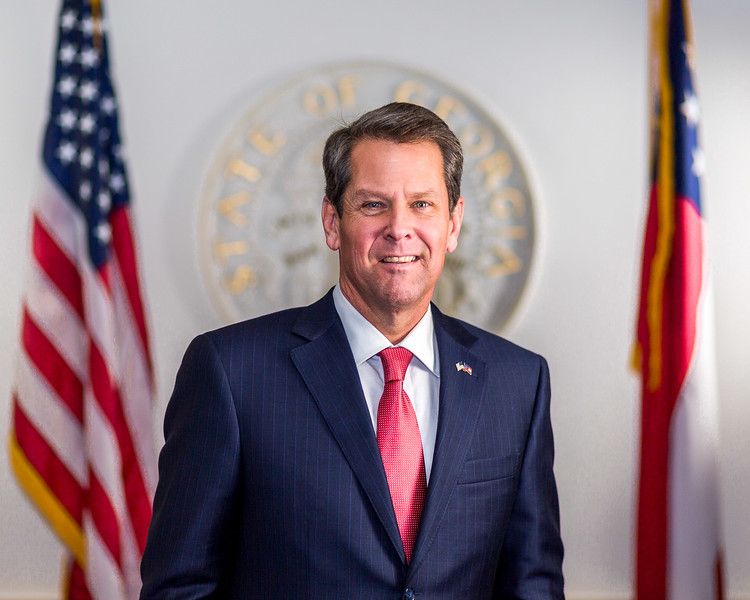
ATLANTA – Gov. Brian Kemp signed the fiscal 2020
mid-year budget Tuesday, including a late addition of $100 million to help with
Georgia’s response to coronavirus.
The General Assembly passed the $27.5 billion plan
covering state spending through June 30 last week shortly before suspending the
2020 legislative session indefinitely because of the coronavirus crisis.
“I applaud the General Assembly’s strong support in
these difficult times,” Kemp said in a prepared statement. “Together, we will
continue to fight for Georgians to ensure a safe, prosperous future for all.”
The funds addressing the coronavirus emergency will be
drawn from the state’s reserves, which stand at a healthy $2.8 billion after
plummeting dangerously low during the Great Recession more than a decade ago.
Other than the coronavirus funding, the mid-year budget
also includes $132.8 million to reflect enrollment growth in Georgia’s public
schools since the General Assembly adopted the original fiscal 2020 budget a
year ago.
Lawmakers also added $5 million in grants to help
stabilize financially struggling rural hospitals and boosted funding for mental
health services by $8.2 million.
The legislature restored some of the spending reductions
the governor had recommended in January to help offset sluggish tax revenues.
Restored cuts included $4 million to the state’s public defenders and a network
of accountability courts formed as part of a criminal-justice reform initiative
aimed at providing an alternative to prison for non-violent offenders.
The mid-year budget also put back $1.3 million in cuts
to public libraries across the state.
ATLANTA – The
state is expanding its capacity to test for coronavirus as the number of cases
in Georgia continues to grow, Gov. Brian Kemp said Tuesday.
At a media briefing
conducted online as a safety precaution, Kemp reported 146 cases of coronavirus
in 27 Georgia counties as of Tuesday afternoon, up from 121 cases Monday in 23
counties.
Kemp said the
state’s testing capacity is expected to double by the end of this week to 200
per day. Private labs are pitching in to help the Georgia Department of Public Health
(DPH) increase testing for the virus.
However, the
federal Centers for Disease Control and Prevention (CDC) is recommending that
health officials prioritize who is tested, DPH Commissioner Dr. Kathleen Toomey
said.
“Not every
individual who wants to get tested can be tested because of limited supplies,”
she said. “We want to test those individuals at highest risk.”
Toomey said
that list includes elderly Georgians with chronic health conditions and their
caregivers, health-care workers and emergency responders.
Kemp reviewed
steps his administration and state agencies have taken in recent days to combat
the spread of coronavirus, including calling out up to 2,000 Georgia National
Guard troops, closing public schools until the end of the month and suspending
Milestones testing, switching Georgia’s public colleges and universities and
technical colleges to online courses through this semester and putting up emergency
trailers at Hard Labor Creek State Park in Morgan County and the state Public
Safety Training Center in Forsyth.
The governor
said all Georgians from the Grand Princess cruise ship taken to Dobbins Air
Reserve Base in Marietta have gone home to self-quarantine, while 124
passengers from Illinois, Indiana and Delaware were due to head home Tuesday.
Kemp asked
Georgians to help prevent the spread of coronavirus by following the CDC recommendations
for what has come in recent days to be known as social distancing, including
avoiding large gatherings.
The CDC has
gradually ratcheted down what it considers a large gathering. Its latest recommendation
is to stay away from groups of 10 or more.
The governor
praised Georgia restaurants for beefing up their drive-through operations to
accommodate social distancing. That hasn’t been a choice in some communities,
including the city of Atlanta, which has limited occupancy of bars, restaurants
and other public gathering places to 50.
“A lot of
creative people in our state in our state are coming up with ways to
incorporate social distancing in their establishments,” Kemp said.
Kemp said
the state is about to wrap up the paperwork required to submit a request for U.S.
Small Business Administration loans to help the many businesses affected by the
coronavirus crisis.
“This is
unlike anything we’ve ever seen,” the governor said. “We’re just going to have
to work through it.”
ATLANTA – The
General Assembly ratified Gov. Brian Kemp’s public health emergency declaration
Monday in a one-day special session that took several hours longer than
expected.
The governor
called the special session last Friday, one day before he declared the first
public health emergency in Georgia’s history to give him additional authority
to deal with the coronavirus crisis.
Lawmakers
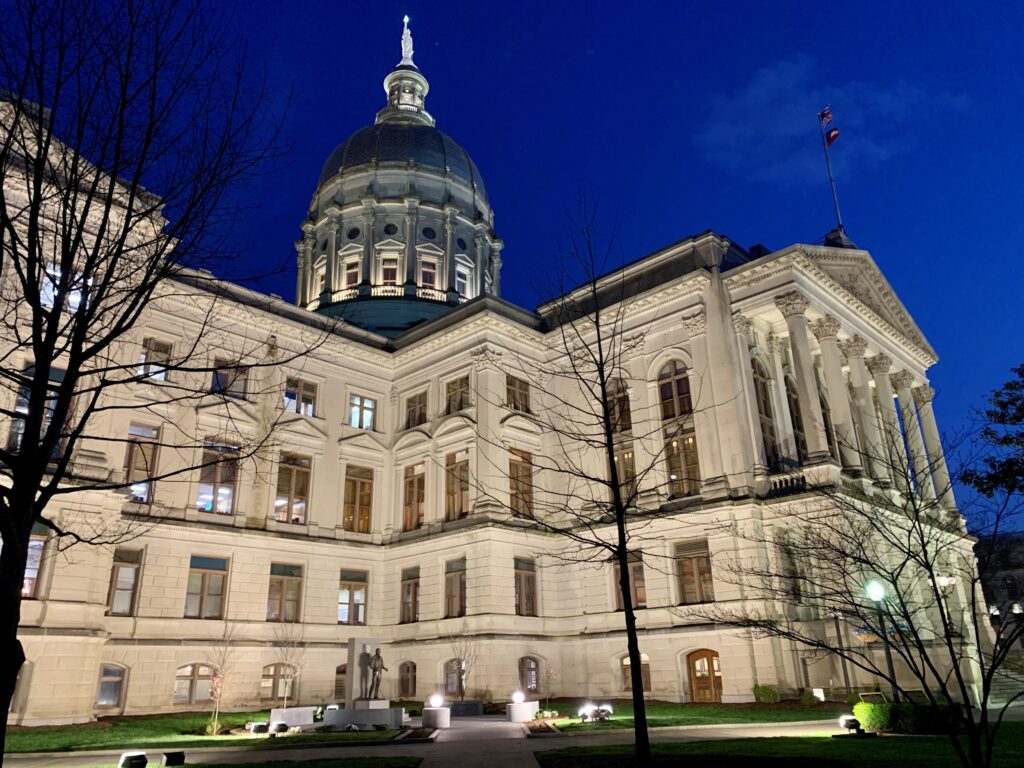
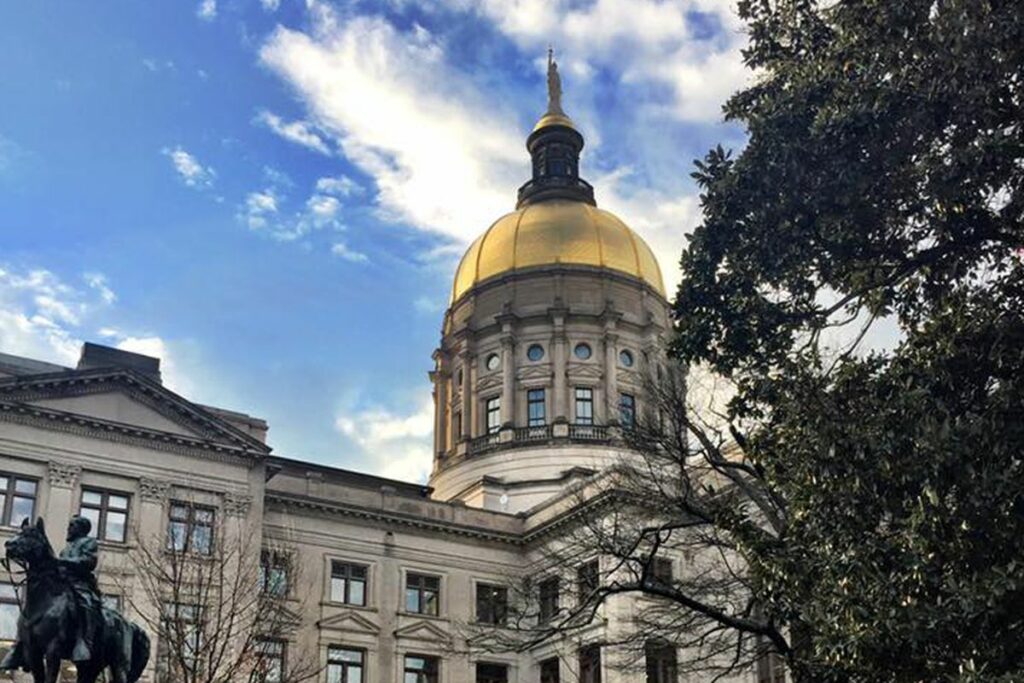
convened under the Gold Dome just three days after suspending the regular 2020
session indefinitely due to coronavirus.
Unlike the
political conflicts that typify the 40-day regular sessions, legislative
leaders called for and got bipartisanship on Monday.
“Now is the
time for us to speak with one voice and act with one heart,” Rep. Calvin Smyre,
D-Columbus, the longest serving member of the state House of Representatives,
told his colleagues from the House podium.
The emergency
declaration gives Kemp the power to limit the size of public gatherings, a step
the federal Centers for Disease Control and Prevention is recommending, and to
restrict travel.
While the
governor has yet to do either, he called up as many as 2,000 members of the Georgia
National Guard during the weekend to work with local governments to ensure
adequate supplies of medical equipment, food and shelter.
Georgia Senate
Majority Leader Mike Dugan, R-Carrollton, said handing the governor unique
executive powers is needed to “get in front of” the spreading virus. He noted
the expanded powers include limiting truck operations and boosting support for
the state Department of Public Health to keep elderly and chronically ill Georgians
safe.
“This is
one of those situations where half the population is going, ‘Are they
overreacting? And the other half is going, Are they doing enough?’ ” Dugan
said. “Unfortunately, the only way to know if we were overreacting is to not do
anything and to see where the disease takes us.”
House
Speaker David Ralston pledged his chamber’s help with the crisis in a brief
address to House members before Monday’s vote.
“We will do
what we must to protect the safety, health and wellbeing of the people of
Georgia,” said Ralston, R-Blue Ridge. “There is no higher obligation that we
have.”
While
Democrats and Republicans stuck together in passing the resolution, the votes
came only after House and Senate leaders spent hours behind closed doors hashing
out a disagreement over the measure’s wording.
The original
House version of the ratifying resolution called for the public health
emergency declaration to last until April 13 unless Kemp acted to renew it
beyond that date, subject to the General Assembly ‘s approval of the extension.
The Senate
resolution, however, left the decision on renewing the emergency declaration strictly
up to the governor.
Because of
the dispute, a special session that began shortly after 8 a.m. lasted until
after 3:30 p.m.
Lawmakers
eventually agreed to schedule another special session April 15 to ratify any
extension of the emergency declaration Kemp decides to issue. However, the
governor will have the authority to renew the declaration unilaterally if the
General Assembly is unable to return to the state Capitol because the coronavirus
has rendered such large gatherings unwise.
Senate Minority Leader Steve Henson, D-Stone
Mountain, said he thought the arrangement devised Monday would be enough to
provide a legislative check on the governor’s power amid uncertain times.
“I think we have to be optimistic that he’s going to work for the best interest of Georgians and the state,” Henson said.
The Senate passed the resolution unanimously. It cleared the House 142-1, with Rep. Matt Gurtler, R-Tiger, voting “no.”
Staff
writer Beau Evans contributed to this report.
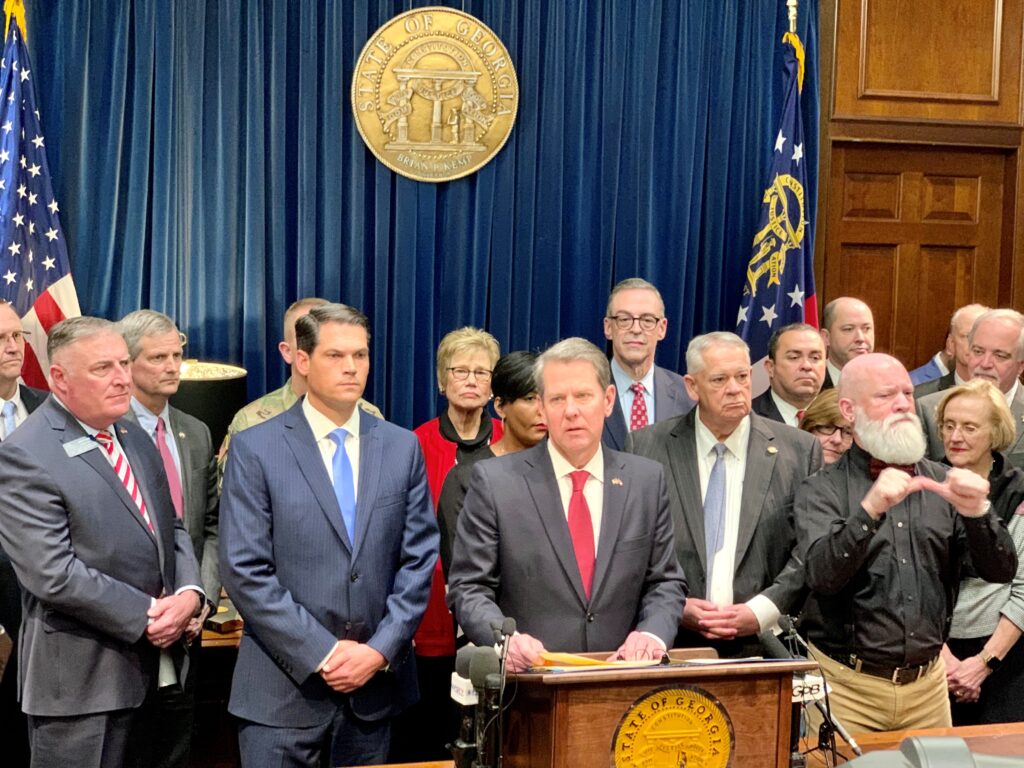
Gov. Brian Kemp addresses a news conference on coronavirus this week. (Photo by Beau Evans)
ATLANTA – Gov. Brian Kemp will declare a public health emergency
for the state of Georgia Saturday morning, the governor announced late Friday
afternoon.
Kemp issued a statement following President Donald Trump’s declaration
of a national emergency, which will free up more federal aid to help with the
response to coronavirus.
“This [state] declaration will greatly assist health and
emergency management officials across Georgia by deploying all available
resources for the mitigation and treatment of COVID-19,” Kemp said.
The governor’s declaration is Georgia’s first ever public health
emergency, according to a review of state records by Kemp’s office.
“At this time, it is appropriate for faith-based
organizations and similar entities to consider cancellation of public events
and services,” Kemp said. “Contact your local public health office or consult
official sources, such as the [federal] Centers for Disease Control and
Prevention and the Georgia Department of Public Health, for helpful guidance on
decision-making.
“Elderly citizens and those with chronic, underlying health
conditions face a serious threat to their health, and we must do everything in
our power to reduce risk associated with this virus. Continue to support one
another, be mindful of potential exposure, use best practices to prevent
infection, and pray for your fellow Americans in the weeks ahead.”
Kemp said he will call the General Assembly back to the state
Capitol on Monday to ratify his action through a joint resolution. Legislative
leaders had suspended the current 40-day session on Friday, so lawmakers’
return to the Gold Dome likely will be brief.
As of
Friday afternoon, 42 cases of coronavirus had been confirmed in Georgia and one
person had died from it. State health officials have urged vulnerable
populations like people age 60 and older and those with chronic health issues
to avoid crowds, stock up on supplies and prepare to stay at home in the event
of a worse outbreak.
ATLANTA – Last
year, a General Assembly determined to bring the benefits of high-speed
internet to rural Georgia passed legislation authorizing the state’s electric
membership corporations (EMCs) to deploy broadband to rural customers.
Last week, a
bill that squeaked through the Georgia House of Representatives less than 90
minutes before the annual “Crossover Day” deadline fell aims to give telecom
companies the financial incentive to take advantage of the 2019 measure.
“This is a Hail
Mary attempt,” state Rep. Ron Stephens, R-Savannah, the bill’s chief sponsor, said
from the House floor just before 11 p.m. last Thursday night. “Let’s not leave
rural Georgia in the dark any more when it comes to broadband.”
While
high-speed internet has become commonplace in metro Atlanta and Georgia’s other
urban and suburban communities, school kids in parts of rural Georgia are
forced to go to the local library so they can go online and do their homework.
Lack of
adequate internet service makes it difficult for rural development authorities
and chambers of commerce to attract new businesses and retain existing ones, Jaeson
[CQ] Smith of the Tallapoosa Development Authority in Haralson County told
members of a state Senate committee this month.
“We’ve had
the issue of brain drain for the last 50 years, and it’s beginning to choke
us,” he said. “We got to have internet. We got to have it a month ago.”
Broadband
enthusiasts attacked the problem last year with Senate Bill 2, which authorized
EMCs to deploy broadband service to their customers. Georgia’s 41 EMCs serve
more than 4 million customers, primarily in rural communities.
But with
EMCs charging telecom providers $20 and more to attach broadband wire or cable
to each utility pole, the providers have been reluctant to take the plunge.
Lobbyists
for the telecom industry told lawmakers they would be willing to launch a major
investment in rural broadband if the EMCs lowered pole attachment prices. In a
letter late last month, officials with Comcast revealed plans to spend $20
million on broadband deployment in rural Georgia if the attachment fees were
reduced enough to justify the cost.
Michael
Power, executive director of the Georgia Cable Association, said lower
attachment fees would free up savings to provide broadband to 35,000 homes and
businesses.
“Every
dollar we save [on pole attachment fees] would allow the business of cable to
deploy [broadband] in Georgia,” he said.
Sen. John
Kennedy, R-Macon, introduced legislation last month requiring pole attachment
fees to comply with a standard set by the Federal Communications Commission, which
would represent a significant reduction from the fees EMCs have been
collecting.
However, representatives
of the EMCs complained a major drop in the fees would cause revenue losses they
would have to pass on to their customers. As nonprofits, EMCs have no
shareholders to absorb such costs.
The
situation was further complicated when Sen. Steve Gooch, R-Dahlonega, who has
made expanding rural broadband a top priority, pushed through a substitute to
Kennedy’s bill this month requiring EMCs to provide pole attachments for free.
However, the offer was to apply only in rural areas lacking broadband service,
meaning telecom providers would have to pay EMCs the going rate to run
broadband through suburban communities to get to those unserved rural areas.
Lobbyists for
both the EMCs and the telecom industry had reason for concern about the new
substitute. With the two sides unable to agree, the full Senate tabled the bill
on the afternoon of Crossover Day, and the push for rural broadband appeared to
be dead.
That left it
to the House to resurrect the legislation. After sitting on the sidelines
throughout the session, supporters in the House grabbed a bill left over from
last year and essentially rewrote it.
As Stephens
explained it Thursday night, the legislation calls for the Georgia Public
Service Commission (PSC) to set pole attachment rates after all current
contracts between EMCs and telecom providers expire. He said representatives of
both sides had agreed with the bill’s provisions.
“A lot of
plans have been put on the table,” House Majority Leader Jon Burns,
R-Newington, said during Thursday’s night brief floor debate. “This seems to be
the one that’s got the most traction.”
Despite the
airing of concerns over the new regulatory authority the bill would give the
PSC, the House passed it 116-44. The legislation now moves to the Senate.