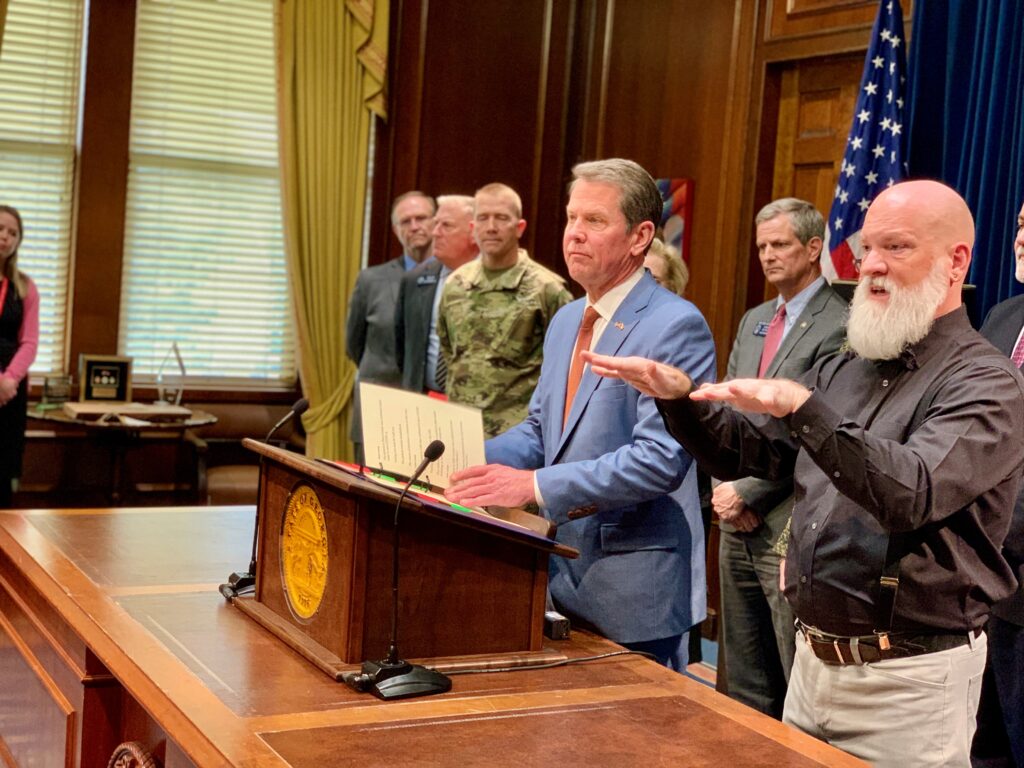
Gov. Brian Kemp gives an update on coronavirus in Georgia on March 9, 2020. (Photo by Beau Evans)
ATLANTA – Gov.
Brian Kemp Friday ordered more than $19.5 million transferred from the Governor’s
Emergency Fund to go toward the state’s response to coronavirus.
Before
suspending the 2020 legislative session last week because of the pandemic, the
General Assembly added $100 million at the governor’s request to the mid-year
state budget to deal with the crisis. The governor signed the spending plan
earlier this week.
The money
will help the state Department of Public Health and the Georgia Emergency
Management and Homeland Security Agency buy medical supplies and equipment.
Also on Friday,
Kemp filled out the rosters of four committees he announced last month when he
formed a Coronavirus Task Force of state agency heads, legislators, business
leaders, health-care executives and other subject matter experts. Separately,
the committees will address the economic impact of coronavirus, emergency
preparedness, primary care providers and how coronavirus is affecting Georgia’s
homeless.
“In February, we formed the Coronavirus Task Force with a
focus on preparing for COVID-19 and its effects,” Kemp said. “Now, as we
mitigate the spread of the virus, these committees will address the specific
impacts that COVID-19 will have on communities, industry sectors, our health-care
system, and emergency preparedness.
“I have full confidence in these committees to serve the needs
of all Georgians during this challenging time. In the weeks ahead, we will
continue to ensure that our state stands ready for any scenario.”
State Fiscal
Economic Jeffrey Dorfman will chair the task force’s Economic Impact Committee.
Georgia Sen. Ben Watson, R-Savannah, who is a physician, will head the Primary
Care Provider Committee.
John King,
the state’s insurance commissioner, will chair the Emergency Preparedness
Committee. Atlanta Mayor Keisha Lance Bottoms will lead the Committee for the
Homeless and Displaced.
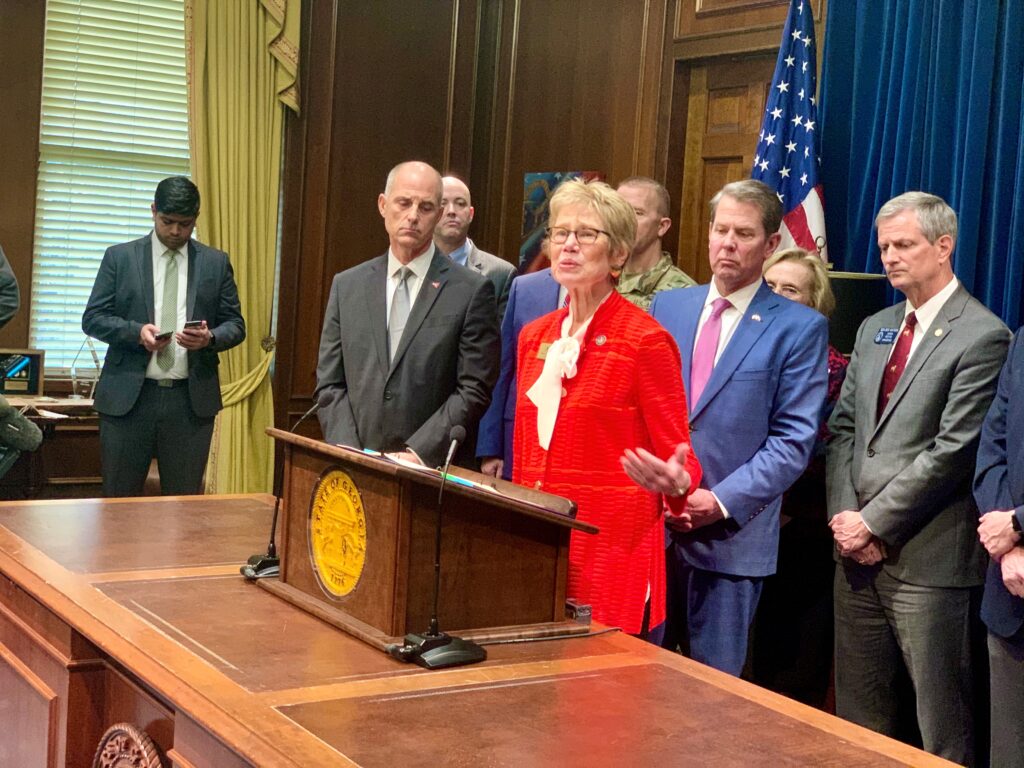
Georgia Public Health Commissioner Dr. Kathleen Toomey talks about coronavirus at a recent news conference. (Photo by Beau Evans)
ATLANTA – Coronavirus
cases in Georgia and deaths from the virus continued to climb on Friday.
As of noon
Friday, the state Department of Public Health reported 420 cases, a big jump
from the 287 cases reported on Thursday. Thirteen patients have died from
coronavirus, up from 10 the previous day.
While
elderly Georgians are considered most vulnerable to contracting the virus, 41%
of those testing positive for coronavirus as of Friday were between the ages of
18 and 59. Thirty-three percent of the current cases were Georgians 60 years of
age or older.
Between the
state and private labs, 2,386 Georgians have been tested for coronavirus. Gov.
Brian Kemp and state health officials are calling for prioritizing the limited
number of available test kits so that the elderly, health-care workers and
other first responders are tested first.
While Kemp
has not imposed a mandatory stay-home order, a strategy the governors of California and New York have resorted to
during the last two days, he is urging Georgians to practice social distancing
and wash their hands frequently. The governor is leaving decisions on closing
businesses up to local governments and the companies themselves.
Coronavirus
now has expanded to 50 Georgia counties. Fulton County leads the way with 79 cases
as of Friday, followed by Cobb County with 45, Bartow County with 40, DeKalb
County with 35 and Gwinnett County with 20.
ATLANTA – Georgia’s
two U.S. senators and 15 of their congressional colleagues are working to make
sure the coronavirus pandemic isn’t allowed to stem the flow of temporary
agricultural workers into the U.S.
Republican
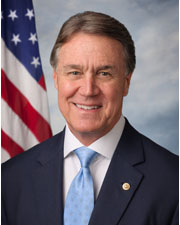
Sens. David Perdue and Kelly Loeffler have signed onto a bipartisan letter dated
Thursday asking Secretary of State Mike Pompeo, Acting
Secretary of Homeland Security Chad Wolf and Secretary of Labor Eugene Scalia
to take steps to ensure access to temporary farm workers.
“We
understand the importance of maintaining public health safety during this time
and appreciate the administration’s actions to minimize the impacts of the
ongoing COVID-19 pandemic,” the senators wrote. “However, there are substantial
national security concerns that will arise should our farmers not have the
labor they need.
“Food security is national security. We believe suspending
visa services that our farmers rely on will be detrimental to families across
our nation trying to put food on the table.”
The letter follows this week’s decision by the federal
government to put new restrictions on the temporary farmworker program. While
interviews are not being conducted of farmworkers from Mexico who wish to enter
the U.S., guest workers who have previously worked in this country under the
program can be granted interview waivers if their visas expired within the past
year.
The letter goes on to urge the Cabinet members to provide
maximum flexibility to consulate staff in processing applications for H-2A
visas while putting protocols in place to protect public health in the U.S. if
coronavirus cases increase in Mexico or other countries that participate in the
visa program.
Perdue and Loeffler were joined as signatories on the
letter by 12 other Republican senators, two Democratic senators and a GOP
member of the U.S. House of Representatives.
ATLANTA – As
anyone who has ventured out on the highways in the last few days has noticed, the
coronavirus pandemic has reduced traffic volumes.
Traffic
across metro Atlanta during morning rush has been down 20% to 40%, Georgia
Commissioner of Transportation Russell McMurry told members of the State
Transportation Board Thursday.
“Seeing these
traffic volumes off is a good indicator people are heeding the messaging of
staying home,” McMurry said during the board’s monthly meeting, which was
streamed to most board members online as a safety precaution.
McMurry said
the Georgia Department of Transportation is driving home that message to
drivers on highways across the metro region with changeable electronic signs warning
motorists to stay home if possible, wash their hands frequently and avoid public
events.
There is a
down side to the reduced traffic. McMurry said the DOT is tracking what is
certain to be a hit on revenue the agency takes in from the state’s motor fuels
tax, although it’s too early to determine what that impact will be.
“We need to
get through this first week to see what the overall traffic volumes are like,”
he said.
McMurry said
the mid-year budget Gov. Brian Kemp signed this week provides the DOT with sufficient
funding through June. However, the outlook for fiscal 2021 beginning in July is
less certain, he said.
Meanwhile,
McMurry updated board members on the damage to highways wreaked by winter
flooding south of Interstate 20. Kemp declared a state of emergency in 120
counties two weeks ago due to flooding.
McMurry said
the worst damage to the state’s highway system was from a washout on Georgia
112 in Wilcox County. He said crews will have to rebuild 1,000 feet of highway
and replace four 60-inch pipes.
McMurry said
at least 50 counties have submitted requests for at least $15 million in
assistance, the threshold to qualify for aid from the Federal Emergency
Management Agency (FEMA). Four two-person FEMA assessment teams will conduct
inspections in 30 counties during the next week, he said.
ATLANTA – Bars,
restaurants, hotels and retail stores across Georgia are bearing the brunt of
the economic impact of the coronavirus crisis.
Restaurants
are closing the dine-in portions of their businesses to prevent the spread of
the virus and limiting their operations to drive-through and takeout orders.
Stores are
limiting their hours of operation, cutting employee hours or laying off workers
entirely.
Even
professional services businesses such as accountants are losing business
because they can’t interact in person with their customers.
“It’s
devastating,” said Jim Sprouse, executive director of the Georgia Hotel &
Lodging Association. “We’re hearing of massive layoffs. Hotel occupancy has
fallen off to virtually nothing.”
“At first,
everybody thought this was about Atlanta,” added Chris Clark, president and CEO
of the Georgia Chamber of Commerce. “We’re hearing from literally every part of
Georgia.”
Clark said
small businesses are being hit particularly hard because their narrow profit
margins give them less wiggle room. Nationwide, the average small business has
27 to 45 days of operating capital, he said.
A survey the
chamber conducted of more than 500 member businesses found 14% reporting they
have less than three months of operating capital. Another 25% have just three
to six months of operating capital.
Clark said
36% of businesses reported they have responded to coronavirus by limiting their
operating times, cutting back employees’ hours and/or limiting the number of
customers inside their business at one time.
“When you
have a Chick-fil-A that says, ‘We’re not going to have in-restaurant dining,’
that changes your operating model a lot,” he said.
Clark said
he’s encouraged by efforts at the state and federal levels to help businesses
and their workers affected by the public health crisis.
Gov. Brian Kemp announced Wednesday that Georgia has received an official statewide disaster declaration from the U.S. Small Business Administration (SBA), which will provide assistance through the agency’s Economic Injury Disaster Loans program.
“This is great news for Georgia small business owners,” Kemp said. “Small business owners can apply for much-needed funding to continue operation and pay their employees.”
The Georgia
Department of Labor has issued an emergency ruling requiring employers to
electronically file partial unemployment claims on behalf of employees they are
forced to temporarily lay off. Filing partial claims speeds unemployment
insurance to workers faster.
“We are partnering
with the governor’s office and our federal and state authorities to make sure
we are able to get the citizens of Georgia paid,” state Commissioner of Labor
Mark Butler said. “We are working as an agency to provide innovative solutions
to meet the needs of our customers, even when information is changing every
day.”
At the federal level, the Trump administration is pushing a $1
trillion emergency stimulus package that could send two $1,000 checks to
affected Americans and $300 billion to help small businesses avoid layoffs.
Georgia’s two U.S. senators, Republicans David Perdue and Kelly
Loeffler, have sent a joint letter asking Treasury Secretary Steven Mnuchin, National Credit Union Administration Chairman Mark McWatters,
Federal Deposit Insurance Corporation Chairman Jelena McWilliams, and SBA Administrator
Jovita Carranza to make sure small business have the flexibility and certainty
to protect their employees during the coronavirus crisis while still serving
their customers.
“Businesses
and their employees face unique risks and challenges from COVID-19,” the
senators wrote. “This is particularly true for small businesses and their
employees that are supported by the traveling public, including the hotel, hospitality,
sporting event, entertainment and restaurant industries. These small businesses
face staggering cash flow and liquidity challenges as travel continues to slow
as a result of COVID-19.”
Among other
things, Perdue and Loeffler suggested the federal agencies remove any
unnecessary barriers to SBA loans.
Clark said
there’s also a private sector alternative that can be brought to bear to help
affected businesses. He said this week’s decision by the Federal Reserve to essentially
reduce the U.S. benchmark interest rate to zero will make it easier for banks
to float loans to small businesses.
“We’re trying
to get small businesses to go to their banks,” Clark said. “They want to work
with them.”