ATLANTA – The
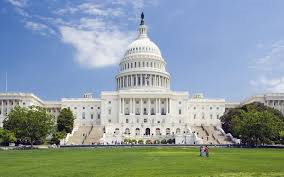
$2 trillion economic stimulus package the U.S. Senate passed Wednesday night to
deal with the impacts of coronavirus was historic, far eclipsing the $831
billion Congress doled out during the Great Recession in 2009.
But
depending on how long COVID-19 keeps sickening and killing Americans, the
record bailout may be too little to put businesses and workers back on their
feet.
“If we have
a V-shaped recession, it will probably be sufficient,” said David Sjoquist, an
economics professor at Georgia State University. “If it lasts longer, that will
not be enough.”
Senators
voted 96-0 to approve the stimulus package. The U.S. House of Representatives is
expected to pass it on Friday and send to President Donald Trump for his
signature.
Besides its
unprecedented size, the bailout steers hundreds of billions of federal dollars to
a variety of parties affected by the economic impact of coronavirus.
The package
would deliver:
$500 billion in loans to distressed
large companies, including $50 billion for airlines.
$350 billion in loans to small
businesses affected by the virus.
$250 billion in direct payments to
individuals and families.
$250 billion in unemployment
insurance benefits.
$150 billion to state and local
governments.
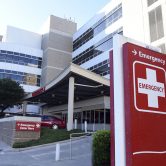
$130 billion to hospitals hit hardest
by COVID-19.
Atlanta-based Delta Air Lines, one of Georgia’s largest employers, has
been severely affected by a significant drop in travel since the pandemic
struck. In a letter to Delta employees last week, CEO Ed Bastian reported the
airline’s March revenue is expected to decline by almost $2 billion over the
same month last year, while the financial projection for April is even worse.
All Delta officers have been hit with a 50% pay cut through the end of
June, with directors and managing directors seeing their pay reduced by 25%
during the same period.
Bastian announced he will go without pay for the next six months.
“I know everyone is concerned about the security of your jobs and pay,”
the CEO wrote. “In this unpredictable environment, we can’t take any options
off the table, but any steps that would affect your jobs or pay rates would be
the absolute last thing we would do, and only if necessary to secure Delta’s
long-term future.”
Nathan Humphrey, Georgia director of the National Federation of
Independent Business, said the portion of the stimulus package aimed at small
businesses will help small business owners who have been affected
psychologically by the pandemic.
“Unlike with corporations, our guys, when they lay their employees off,
they know them intimately,” he said. “They live in the same communities. It’s a
lot more personal to them.”
U.S. Sen. David Perdue, R-Ga., said the main objective of the economic
stimulus is to let employers maintain their relationships with their employees
by giving them the liquidity to do so.
“We need to make sure we don’t kill the economy while we’re killing this
disease … so when people get well, they’ll have a job to go back to,” Perdue
said on the Senate floor Wednesday as the bill was being debated.
“We are now taking action to protect
our health care professionals, strengthen our hospitals and treatments, and
support hardworking families and small businesses who are the heartbeat of
America,” Sen. Kelly Loeffler, R-Ga., added following the vote.
Both Perdue and Loeffler voted for
the bill.
To make sure Americans out of work can cover their bills while they’re
without a paycheck, the stimulus package includes direct payments of $1,200 to
individuals with adjusted gross incomes of up to $75,000 a year. Married
couples with adjusted gross incomes of up to $150,000 a year will receive $2,400
plus an additional $500 per child.
The dollar amount of direct payments to Americans and the per-child
payments will decline gradually until they phase out completely for individuals
with adjusted gross incomes of $99,000 and above, and for married couples with adjusted
gross incomes of $198,000 and above.
While officials in the Trump administration have talked about getting the
checks out in as little as two weeks, the logistics of sending out so many
checks coupled with the need for the Internal Revenue Service to determine who
qualifies for which amount could delay the money into May.
Sjoquist said state and local governments are in dire need of the $150
billion due to come their way.
“Sales are down. People aren’t working,” he said. “Tax revenues are going
to decline significantly.”
Some governors, notably New York’s Andrew Cuomo, have complained the
funding earmarked for state and local governments hard hit by COVID-19 won’t be
nearly enough and that Congress will have to come back later and provide
another stimulus measure.
Sjoquist said the stimulus package likely will be sufficient as long as
the pandemic doesn’t stretch into the summer or fall. He said the nature of the
coronavirus-driven recession bodes for a quicker recovery than past economic
downturns.
“It’s not an issue of people losing their homes or that there’s no
demand,” he said. “This is really a case of people holding back on spending
because they’re afraid to go to stores. … Once the virus is over, the recovery
will be pretty quick.”
ATLANTA – Georgia’s
two U.S. senators are asking the Trump administration to steer more of the
available COVID-19 testing resources to Georgia’s academic medical centers.
In a letter
to U.S. Health and Human Services Secretary Alex Azar, Republicans David Perdue
and Kelly Loeffler explain that the medical schools at Augusta University and
Emory University are returning test results faster than Georgia’s commercial
labs.
“While the
commercial laboratories in our state have turnaround times in the range of two
to six days, our academic medical centers have been able to return medical test
results in a matter of hours,” the letter stated.
Augusta
University President Brooks Keel said the university’s Medical College of
Georgia is using a variety of innovative approaches to speed up test results,
including setting up two drive-through test facilities that are conducting more
than 100 tests per day and expanding a virtual screening app to include more of
the state.
“This is why
we’re here,” Keel said. “It’s times like these that we, as the state’s academic
medical center, step up and lead.”
Both Augusta
University and Emory have developed their own tests for coronavirus and are
actively processing results each day.
Logo of the Georgia Department of Economic Development
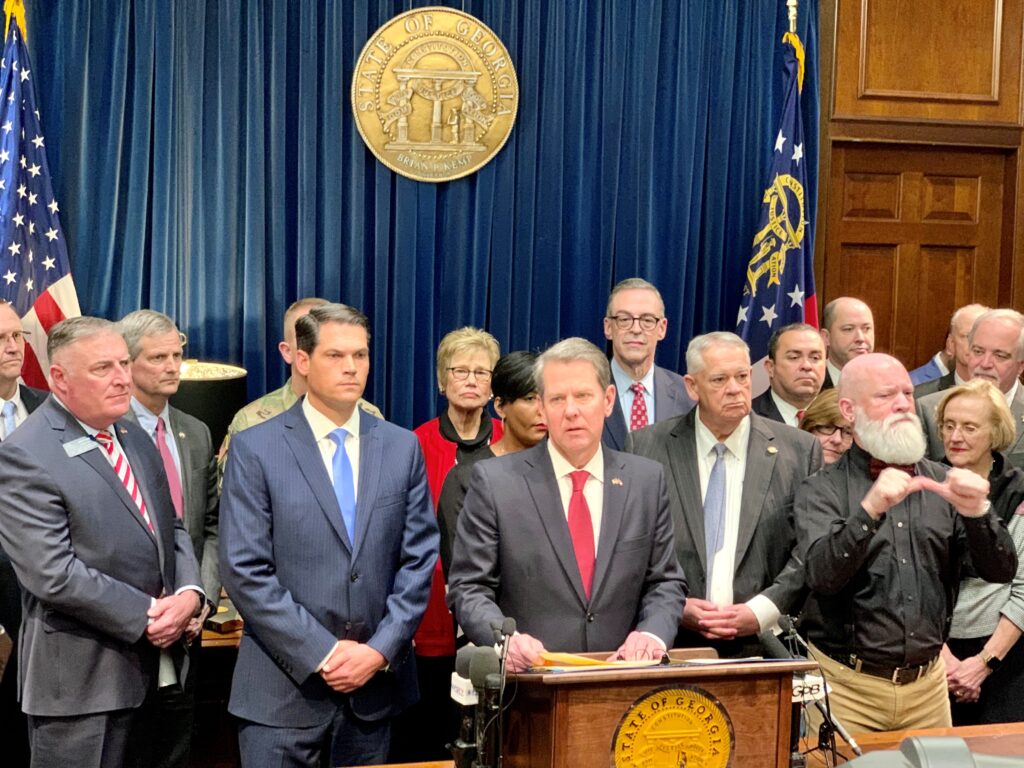
ATLANTA – Gov.
Brian Kemp called on Georgia businesses Tuesday to step up in the midst of the
coronavirus pandemic and help by providing, producing, distributing or storing
critical health-care supplies.
Specifically, the governor is asking
for hospital beds, ventilators, surgical masks, N-95 masks or their equivalent,
face shields, nitrile or latex-free gloves of various sizes, safety goggles, hand
sanitizer, sanitizing spray, sanitizing wipes, hair covers, no-touch thermometers
(regular if no-touch are not available), air purifying machines, negative
pressure machines, sanitation units, shoe covers and Tyvek suits.
Those are the kinds of supplies that
are running short around the world as the pandemic worsens, particularly in areas
hardest hit by the virus.
“As our state’s hardworking health-care workers and first
responders stand on the front lines of the battle against COVID-19, it is our
job to come together as Georgians and arm them with the necessary resources to
keep them safe and effective,” Kemp said. “I ask all Georgia businesses who are
able to support us in the fight against this global pandemic.”
Kemp’s request came as the number of confirmed COVID-19 cases in
Georgia rose to 1,026, and the number of deaths increased to 32.
Businesses able to provide assistance and
resources with factories already up and running, or facilities that can be
repurposed for needed health-care supplies are asked to complete an
informational form online at www.georgia.org/covid19response. The form is only for the
purposes of collecting information and does not represent a commitment by the
state to make a purchase.
The Georgia Department of Economic Development
has been working to identify manufacturers and distributors across the state
who have in their inventories, or could produce, distribute or store critical
health-care supplies that are in short supply now or are likely to be in the
coming weeks.
“We could not be
more grateful for the dedication our medical workers, first responders, and
partners have shown during this challenging time,” said Pat Wilson, the state’s
commissioner of economic development. “They consistently continue to make
Georgians’ health and safety their No.-1 priority.
“As we fight
COVID-19 and its expanded consequences together, we thank our Georgia
businesses who have stepped up to help our state and pledge the continued full
support of the Georgia Department of Economic Development.”
ATLANTA – Every
Georgia voter will receive an absentee ballot request form in the mail ahead of
the May 19 primaries, Secretary of State Brad Raffensperger announced Tuesday.
The unprecedented
step will reinforce the social distancing public health officials are
recommending in the midst of the worldwide coronavirus pandemic.
“Times of
turbulence and upheaval like the one we Georgians face require decisive action
if the liberties we hold so dear are to be preserved,” Raffensperger said. “Georgia
has faced challenges before and overcome them, and we can do so again.”
Raffensperger
already has postponed Georgia’s presidential primary, which was to have been
held Tuesday, until May 19, when it will take place in conjunction with primaries
for congressional, legislative and county offices.
Only 5% of Georgia
voters cast their ballots by mail during the November elections in 2018 and
2016. But with COVID-19 raging, a much higher percentage of voters likely will vote
absentee this spring.
All 6.9
million Georgia voters will be able to request and vote an absentee ballot for
any reason.
Raffensperger
said making it easier to vote by mail will help protect the health not only of
voters but of poll workers. The reluctance of poll workers, many of whom are
elderly, to show up for the presidential primary was a key factor in the
decision to postpone that vote until May 19.
For voters
who prefer to cast their ballots in person, the secretary of state’s office is
taking steps at each polling place to reduce the threat of COVID-19. Poll
workers will be given the materials they need to clean voting equipment regularly.
Also, the state
will be helping counties add more and younger poll workers.
Voters age
65 and older and voters with disabilities will be able to request absentee
ballots for this year’s primary and general elections as well as any runoffs
that might be needed through the 2020 election cycle.
Gov. Brian Kemp addresses the coronavirus crisis earlier this month. (Photo by Beau Evans)
ATLANTA – The
number of confirmed coronavirus cases in Georgia soared past 1,000 Tuesday,
while the number of deaths rose to 32.
The state Department
of Public Health attributed the significant increase over the 772 confirmed
cases reported on Monday in part to “improvement in electronic reporting
efficiency from commercial laboratories.”
As of noon
Tuesday, 1,026 Georgians had confirmed cases of COVID-19 and 32 had died from
the virus, a mortality rate of 3.12%.
The virus
has spread to 85 counties. Fulton County continues to far outpace the rest with
184 confirmed cases, followed by DeKalb County with 94, Dougherty County with
90, Cobb County with 86, Bartow County with 75 and Gwinnett County with 45.
Gov. Brian
Kemp’s executive order requiring Georgians considered at risk of contracting
COVID-19 to stay at home took effect at noon Tuesday. Some local governments –
including Atlanta, Athens, Savannah and DeKalb County – have gone further by
requiring everyone to stay at home.
With both
types of shelter-in-place orders, exceptions include trips to grocery stores
and pharmacies and to and from work for those in essential jobs who can’t work
from home.
As of noon
Tuesday, the state had tested 1,378 Georgians for coronavirus, and commercial
labs had tested 4,106.
The highest
prevalence of the virus was among those between the ages of 18 and 59, with 56%
of the cases in that group. Georgians age 60 and older accounted for 36% of
cases.
Women
accounted for slightly more COVID-19 cases than men.