ATLANTA – Georgia’s
Libertarian and Green parties have filed a lawsuit charging the state’s laws
for third-party candidates to get on the ballot are unfair and onerous,
particularly in the midst of the coronavirus pandemic.
The suit,
filed in federal court Thursday, accuses the Georgia secretary of state’s
office of setting up two standards for major-party and third-party candidates
to qualify for elections.
While
Republicans and Democrats can get on the ballot almost automatically by paying
the required fee, Libertarians, Greens and other third-party and independent
candidates must collect thousands of signatures, amounting to 5% of registered
voters in the case of a congressional race. Going door to door to gather those
signatures is impossible while Georgians are engaged in social distancing to
avoid being exposed to COVID-19, the suit alleges.
“We’re
optimistic that the courts will recognize how inappropriate it would be for
independent candidates to go knocking on doors, handing around pens and
clipboards, and speaking to voters about how signature requirements work,” said
Martin Cowen, a would-be candidate for Georgia’s 13th Congressional
District seat and a plaintiff in the case.
“Georgia’s
signature requirements are unconstitutional under the best of circumstances. To
enforce them now is not just unfair but dangerously negligent of 2020’s novel
public health concerns.”
Cowen is the
most recent of more than two dozen candidates who have tried and failed to meet
the state’s requirements for getting on a congressional ballot.
The other
plaintiff in the case is the Green Party’s Jimmy Cooper III, who wishes to run
for Georgia’s 8th Congressional District seat.
The suit
recommends reducing the number of petition signatures candidates need to land a
place on the ballot or eliminating the signature requirement altogether.
ATLANTA – The first confirmed
case of coronavirus has surfaced in the Georgia House of Representatives.
Rep. Matthew Gambill,
R-Cartersville, has tested positive for COVID-19, a spokesman for House Speaker
David Ralston reported Thursday night.
Gambill began self-quarantining
the weekend following Friday, March 13, after learning he had been exposed to
someone who tested positive for the virus.
On Monday, March 16, Gambill
was tested for the virus and the results came back on Thursday. He did not attend the one-day special session
of the General Assembly on Monday, March 16, during which lawmakers ratified
the statewide public health emergency Gov. Brian Kemp had declared late the
previous week.
Gambill has experienced only
mild symptoms and remains in isolation at home.
Before Gambill, five state
senators had tested positive for coronavirus: Republicans Brandon Beach of
Alpharetta, Kay Kirkpatrick of Marietta and Bruce Thompson of White, and
Democrats Nikema Williams of Atlanta and Lester Jackson of Savanah.
In the Georgia House, Rep. Angelika Kausche, D-Johns
Creek, told the Johns
Creek Herald she has likely contracted coronavirus
after her husband tested positive last week. Kausche said she decided to forgo
testing since materials needed for the test are in short
supply.
ATLANTA – Georgia
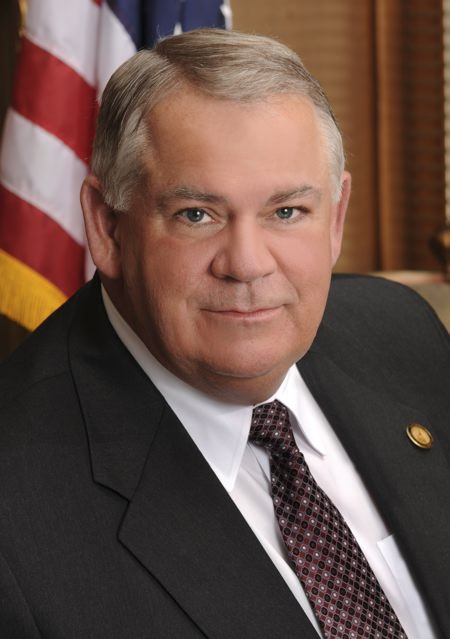
House Speaker David Ralston is asking Secretary of State Brad Raffensperger to
delay the May 19 primaries because of the coronavirus pandemic.
In a letter
dated Thursday, Ralston, R-Blue Ridge, suggested holding the primaries no earlier
than June 23.
“You and I
both agree that the right to vote is one of our most cherished freedoms,” the
speaker wrote. “It is a right which, to the extent possible, should be free of
impact from circumstances which create obstacles to its exercise.
“However,
the inescapable truth is that we do not know the duration of the immediate
health peril. Reputable scientists and physicians cannot agree on its duration.”
Raffensperger
already has postponed Georgia’s presidential primary, which was to have been
held this week. Under the current timetable, the presidential voting would take
place May 19 in conjunction with the state’s congressional and legislative primaries.
Earlier this
week, the secretary of state announced that every Georgia voter would receive an
absentee ballot request form, so they could cast their primary ballots by mail
and not risk exposing themselves or others to the virus.
Ralston
praised Raffensperger for coming up with a plan to accommodate the public
health concerns generated by the COVID-19
outbreak. But the speaker said delaying the vote until the summer could allow
voting to take place as usual.
“Pushing the
primary back a month or more gives us more time to allow the situation to
improve so that voters can vote in the manner in which they are most familiar,”
he wrote. “More importantly, it would make our highest priority the health and
safety not only of voters, but our hard-working poll workers and elections
officials.”
ATLANTA –
The coronavirus pandemic is putting an unprecedented demand on unemployment
compensation from Georgians thrown out of work.
The state
Department of Labor processed 12,140 initial unemployment claims during the
week of March 15 through March 21, more than double the previous week’s 5,545
claims.
The
agency is anticipating substantially higher claims in the coming weeks, with
numbers expected to surpass the number of claims filed by unemployed Georgians
during the Great Recession.
To deal
with the exploding demand for economic relief, Gov. Brian Kemp signed an
executive order Thursday authorizing Commissioner of Labor Mark Butler to issue
two emergency rules extending the length of time an individual can collect
benefits from 14 weeks to 26 weeks and providing that the first $300 of wages
earned in a week will not count against eligible unemployment benefits paid.
“As we
work together as a state to combat COVID-19, Commissioner Butler and I are
taking steps to ensure Georgia’s workforce is supported during this challenging
time,” Kemp said. “I ask Georgians to continue to support their local
businesses by getting take-out, tipping well, and ordering your favorite
products online, while also observing social distancing and following the
directives of state and federal public health officials.”
Other
emergency rules were issued last week expanding unemployment eligibility for applicants,
suspending work search requirements and relieving employers of benefit charges
for claims related to COVID-19.
Another rule assures that
employers and non-profits will not be charged for coronavirus-related
benefit claims. This means their current tax rate will not be affected,
relieving them of the additional burden of higher unemployment taxes during the
economic recovery expected to follow the pandemic.
“We
understand Georgia businesses and workers are anxious during the
COVID-19 public health crisis about how to take care of themselves, their
families and their businesses,” Butler said. “We are making
unprecedented modifications to policies to help all
Georgians survive this economic hardship and get us all back to
work.”
Butler said
partial claims should be filed for both full-time and part-time employees.
Filing of partial claims is being mandated for an employer to file on behalf of
employees affected by COVID-19 and will expedite the issuance of payment.
The
Georgia numbers mirrored the filing of unemployment claims across the country.
Nationally, unemployment claims skyrocketed to 3.3 million last week, more than
quadrupling the previous record high.
Information
on filing an unemployment claim, details on how employers must file partial
claims, and resources for other re-employment assistance can be found on the
agency’s webpage at www.gdol.ga.gov
Coronavirus is keeping Georgia public schools closed.
ATLANTA – Gov.
Brian Kemp Thursday ordered Georgia’s public schools closed through April 24 as
cases of coronavirus continue to rise.
“I am deeply grateful to State School Superintendent
Richard Woods, the Georgia Department of Education, superintendents, and
parents for keeping us informed and helping us make the right decision for our
students,” Kemp said in a prepared statement.
“Throughout this process, we will continue to seek the
advice of public health officials, school leaders, and families to ensure the
health and safety of the educational community. As we approach April 24, 2020,
we ask for continued patience and flexibility since circumstances may change,
but we encourage families to stay strong and follow the guidance of federal,
state, and local leaders in the weeks ahead.”
Georgia’s public colleges and universities and technical
colleges, which were shut down earlier this month for the rest of the current
semester, will continue to provide online instruction.
As Kemp made
his announcement on the schools, the number of confirmed coronavirus cases in
Georgia moved past 1,500, with 48 deaths reported from the virus.
As of noon
Thursday, 1,525 Georgians had tested positive for COVID-19. Of those patients, 473
– or 31% – were hospitalized.
More than
8,900 Georgians have been tested for coronavirus, 1,646 by the state Department
of Public Health and 7,280 by a commercial lab.
The virus
has spread to 97 of Georgia’s 159 counties. Fulton County has the most COVID-19
cases with 211. Cases in Dougherty County have soared to 156, a huge number
considering the county’s population.
DeKalb
County was third as of noon Thursday with 129 positive cases, followed by Cobb
County with 115, Bartow County with 86 and Gwinnett County with 75.