ATLANTA – While many Georgia businesses have struggled during the weeks since the coronavirus pandemic took hold, Amazon is expanding its already robust presence in the state.
The Seattle-based e-commerce giant announced Monday plans for a new fulfillment center in Columbia County that will create 800 full-time jobs.
Workers at the new facility along Interstate 20 in Appling will use innovative robotics technology to pack and ship smaller customer orders, including books, toys and small household goods.
Amazon already has more than 3,500 employees in Georgia working at facilities in Jefferson, Braselton, Lithia Springs, East Point, Kennesaw, Macon and Union City, representing an investment of $3.6 billion. The company plans to add another 1,000 at a new fulfillment enter in Stone Mountain and 500 at the Newnan fulfillment center announced in January.
“We are proud to continue our investment in Georgia with great jobs and a new, state-of-the-art fulfillment center in Columbia County to serve our customers across the state,” said Robert Packett, regional director of Amazon operations. “The Peach State and its incredible workforce have been vital to our ability to provide great selection, competitive prices and the Prime services we know our customers love.”
Pat Wilson, commissioner of the state Department of Economic Development, welcomed the additional investment and job growth Amazon will bring to Georgia.
“Especially now, during COVID-19, we are proud of our team’s hard work to continuously meet the needs of world-renowned companies like Amazon,” he said. “We are also grateful for our economic development partners in Columbia County and the region, who again have shown their strong commitment throughout this project.”
Hank Evans, the economic development department’s assistant director, represented the agency’s Global Commerce Division in landing the project, in partnership with Georgia EMC and the Development Authority of Columbia County.
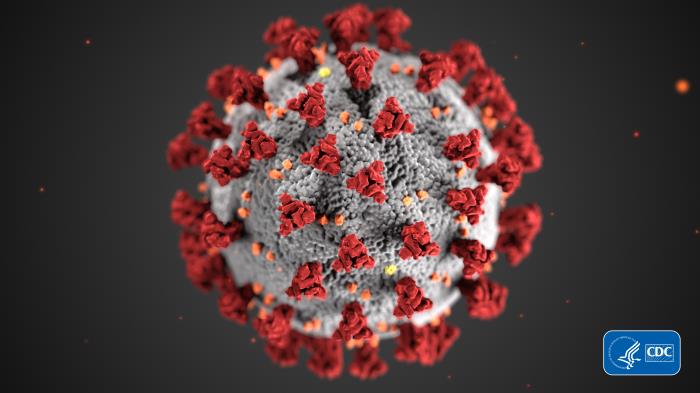
(Image: Centers for Disease Control and Prevention)
ATLANTA – A mobile COVID-19 testing unit will begin rotating between the Augusta area, Milledgeville and Tifton starting Monday, Gov. Brian Kemp announced Sunday.
The new initiative is an effort to increase access to testing for coronavirus in parts of Georgia where tests have not been readily available , Kemp said.
“”Serving Augusta, Milledgeville, Tifton, and the surrounding regions, this mobile unit will be a game-changing step in our efforts to ensure access to COVID-19 across Georgia,” the governor said. “Increased testing is critical as we continue the measured process of safely reopening parts of our state.”
The new drive-through sites will be supported by Walmart, eTrueNorth – a federal health-care contractor – and state and local officials.
The sites will test Georgians who are showing signs of COVID-19 as well as first responders, whether or not they have symptoms of the virus. While appointments can be made at www.DoINeedaCOVID19test.com, on-site scheduling also will be available.
Those being tested should remain in their cars for verification of eligibility criteria and an ID check. The test will not be available to people on foot.
A self-administered nasal swab will be used to conduct the test. However a trained medical professional will observe to make sure the test is done correctly.
Processing of tests will be handled by eTrueNorth, which will send results to those tested. The sites will be staffed by volunteers, including Walmart health-care professionals and eTrueNorth team members.
Weather permitting, tests will be conducted Mondays and Tuesdays at Diamond Lakes Regional Park in Hephzibah, Wednesdays and Saturdays across from 240 Lawrence Road in Milledgeville, and Thursdays and Fridays at the Tift County National Guard Armory in Tifton.
Chris Clark, president and CEO, Georgia Chamber of Commerce
ATLANTA – As Georgia dine-in restaurants and theaters prepare to reopen Monday, Gov. Brian Kemp continues to be hit with criticism over businesses including barbershops and hair salons he let reopen Friday.
Public health experts, mayors across Georgia and legislative Democrats are questioning the logic of making such “close-contact” businesses the first to reopen when the state has yet to see a 14-day decline in COVID-19 cases as specified under federal coronavirus guidelines for reopening the economy.
But the criticism of Kemp’s handling of the crisis misses the fact that bars and nightclubs, gyms and fitness centers, dine-in services at restaurants, theaters, bowling alleys and the close-contact personal care shops are the only businesses the governor shut down to discourage the spread of COVID-19, said Chris Clark, president and CEO of the Georgia Chamber of Commerce.
The shelter-in-place order Kemp issued early this month allowed all other businesses – including those in the retail sector – to remain open, subject to a lengthy list of restrictions aimed at preserving social distancing. The restrictions include screening employees for illness, disinfecting the premises, requiring employees who come into close contact with customers to wear masks and requiring at least six feet of space between workers and between workers and customers.
Some businesses have stayed open by complying with the restrictions, including providing curbside service to customers or limiting the number of customers allowed inside the business at any one time. Other businesses have chosen to close while the shelter-in-place order remains in effect.
Clark suggested allowing the approximately 20,000 businesses throughout the state that were shut down by law to reopen is a matter of fairness.
“These are small mom-and-pop [businesses], most of which ran out of capital 14 days ago,” Clark said last week. “Many of them are minority- and immigrant-owned businesses. Most of them are sole proprietors. … They’re really struggling.”
Judging by the response of affected business owners to Friday’s reopening, many theaters and restaurants likely will remain closed on Monday out of concern over potentially spreading the virus.
Clark said that’s their choice.
“Businesses have a responsibility if they want to open to follow the guidelines, take the temperatures of their employees, disinfect and provide masks,” he said. “The governor’s not forcing any business to open that doesn’t want to.”
Kemp’s shelter-in-place order is due to expire this Thursday unless he decides to extend it.
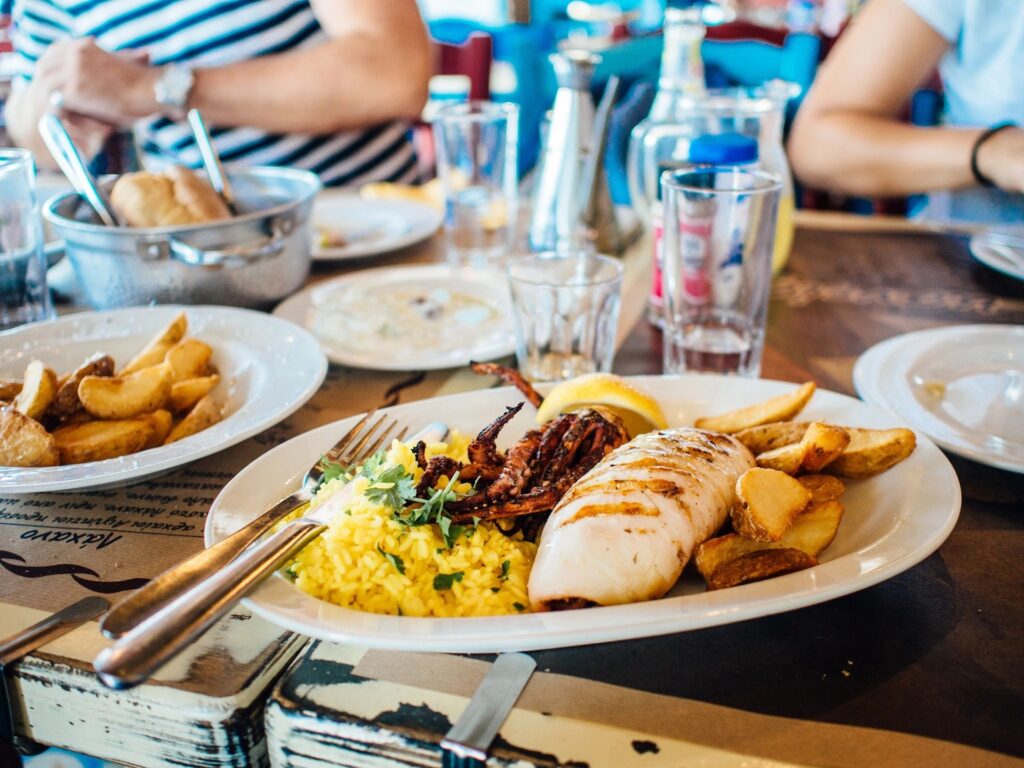
Georgia restaurants will be allowed to reopen dine-in service on Monday.
ATLANTA – Restaurants across Georgia will be allowed to reopen dine-in areas starting Monday, more than three weeks after Gov. Brian Kemp imposed a shelter-in-place order shutting them down.
But restaurant operations will be a far cry from normal, thanks to 39 restrictions listed in an executive order Kemp issued Thursday aimed at discouraging the spread of COVID-19.
Many of the restrictions are similar to those the state is applying to such close-contact businesses as barbershops and hair salons, which were allowed to reopen Friday for the first time since April 3.
All restaurant employees must wear masks at all time, and workers exhibiting signs of illness such as a fever, cough or shortness of breath must be screened and evaluated. Employees who become sick at work or show signs of illness must be sent home.
Restaurants owners will be required to modify their floor plans to ensure at least six feet of separation between tables and use physical barriers for booth seating if possible. Parties at tables must be limited to no more than six, and reservations-only or call-ahead seating should be practiced where practical.
Patrons will not be allowed to congregate in waiting areas or bar areas. Salad bars or buffets will be prohibited, and self-service drink, condiment and utensil stations should be removed.
Restaurants must be thoroughly cleaned and sanitized before reopening to dine-in customers, with cleaning and sanitizing maintained regularly moving forward.
The executive order encourages restaurants to use disposable paper menus whenever possible. Customers should be provided with hand sanitizer, including sanitizing stations when available.
Despite the restrictions, Kemp has drawn criticism from many quarters for reopening businesses too soon, from President Donald Trump down to mayors across the state, from Democratic lawmakers and from public heath experts.
State and local Republican leaders and some business groups have defended the decision as a first step toward a more robust reopening of Georgia’s economy that will get the growing ranks of unemployed back to work and collecting paychecks.
Kemp’s statewide shelter-in-place order is due to expire next Thursday unless he acts to extend it.
ATLANTA – The U.S. House of Representatives gave final passage early Thursday evening to a $484 billion economic stimulus package to help offset the financial impacts of the coronavirus pandemic.
House members voted overwhelmingly 388-5 to send the package to President Donald Trump, who is expected to sign it as early as Friday.
Most of the funding – $310 billion – will go to benefit small businesses through the Paycheck Protection Program (PPP). The initial $350 billion Congress put toward the new program late last month – part of a $2.2 trillion stimulus package – ran out a week ago, just two weeks after the initiative was launched.
“This new funding for the Paycheck Protection Program will offer a lifeline to small businesses and the millions of hardworking women and men they employ,” U.S. Sen. David Perdue, R-Ga., said earlier this week after the stimulus package cleared the Senate. “By providing cash flow assistance, we are helping businesses keep their employees and preventing a liquidity crisis from becoming an insolvency crisis.”
“For weeks, I’ve heard from small business owners, farmers, nonprofits and charities across Georgia that they need these critical loans immediately to keep their employees on payroll and their doors open,” added Sen. Kelly Loeffler, R-Ga. “This new funding will help businesses get back on their feet.”
Small business owners left out when the first package of PPP money was depleted are hoping loans from the new funding will be processed more smoothly than were the initial loan applications.
While the U.S. Small Business Administration (SBA) had approved more than 48,000 PPP loans to Georgia businesses as of Tuesday, many business owners have complained their loans are being held up by incompetence if not outright deception.
Complaints have been focused particularly on the largest banks participating in the program. A federal lawsuit filed last weekend accuses Bank of America, Wells Fargo, JPMorgan Chase and U.S. Bancorp of prioritizing applications for the largest loan requests because they would generate higher fees for the banks.
When the program was launched early this month, the SBA assured small businesses their loan applications would be accepted and processed on a first-come, first-served basis.
“The little guys are not being treated fairly because it’s not worth their time,” said Brint Fanizza, president of Famoré Cutlery of Gainesville.
Fanizza said the company applied for a PPP loan from Bank of America within minutes after the program’s online portal went live on April 3, but the bank still hasn’t even sent the application to the SBA.
“We did $1.8 million last year,” he said. “We’re small potatoes but were a growing business.”
Bank of America spokesman Bill Halldin disagreed with the allegations contained in the federal lawsuit. The bank has about 8,000 employees working on processing applications, Halldin told the Charlotte Business Journal earlier this week.
Besides the $310 billion addition to the PPP, the stimulus package also includes $60 billion in forgivable loans of up to $10,000 to individual small businesses under a separate SBA program, $75 billion for hospitals and $25 billion for COVID-19 testing.