ATLANTA – Nearly 250,000 Georgians filed initial unemployment claims last week as the coronavirus pandemic and Gov. Brian Kemp’s shelter-in-place order continued to shut down businesses across the state, the Georgia Department of Labor reported Thursday.
While marking a decline from the almost 320,000 who filed for unemployment the previous week, that brought the number of claims for the past month up to almost 1.1 million, more than the combined total for the last three years.
Of the 247,003 initial unemployment claims filed last week, 94% were submitted by employers.
“Employer-filed claims have proven to be beneficial not only for employers wishing to provide financial support for employees until they can get them back to work, but also employees who are able to work a few hours a week and still recover state and federal benefits,” state Commissioner of Labor Mark Butler said Thursday. “Despite claims to the contrary, returning to work does not automatically eliminate an individual’s state unemployment eligibility.”
Butler explained that Georgians can earn up to $300 per week without reducing their weekly benefit amount, under an emergency rule issued late last month. Employees also can still receive the federal supplement of $600 each week while working reduced hours.
“We are working very diligently to come up with solutions to get Georgians back to work as soon as it is safe to do so,” Butler said. “Although some people are returning to work, the [labor department] will continue to process and make payments for all weeks an individual was eligible for benefits.”
The accommodations and food services sector accounted by far for the most initial unemployment claims last week, with 67,774 out-of-work Georgians in those industries submitting claims. Health care and social assistance was next with 31,266 claims, followed by retail trade with 30,672, and manufacturing with 28,597.
The agency issued $101.4 million in regular state unemployment benefits last week, up $32 million over the previous week. The $309 million the state has paid out so far this year is already more than the annual total for each of the previous two years.
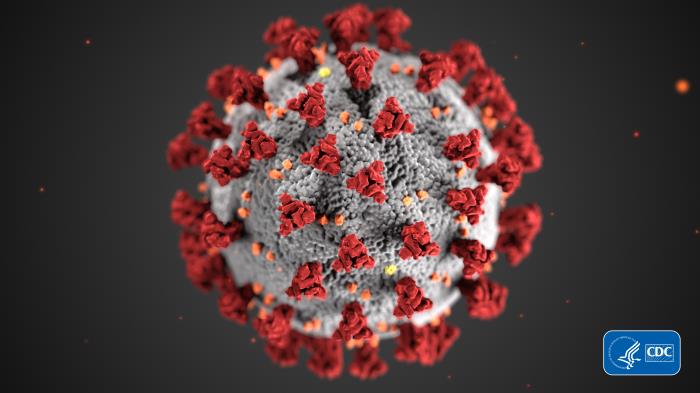
Coronavirus cases continue to climb in Georgia. (Image: Centers for Disease Control and Prevention)
ATLANTA – President Donald Trump said Wednesday he disagrees with Gov. Brian Kemp’s decision to let some Georgia businesses open late this week and early next week despite the ongoing coronavirus pandemic.
Kemp announced Monday he would let “close-contact” businesses including barbershops and hair salons reopen on Friday. Dine-in restaurants and movie theaters will be allowed to reopen on Monday.
The state board that regulates barbershops and hair salons released guidelines Tuesday to govern the reopening of those businesses, requiring employees to wear masks and thoroughly clean their premises. Guidelines for restaurants are expected later this week.
After speaking with Kemp by phone late Tuesday, Trump said Wednesday he believes it’s too soon to be reopening businesses in Georgia.
“When you have spas, beauty parlors, tattoo parlors and barbershops … maybe you want to wait a bit longer,” Trump told reporters early Wednesday evening during his daily coronavirus press briefing at the White House.
Kemp also has come under fire from public health experts and mayors across Georgia for moving ahead with reopening businesses while deaths from COVID-19 continue to mount and new positive cases remain on the rise. As of 6:30 p.m. Wednesday, 21,102 Georgians had tested positive for coronavirus and 846 had died.
However, the governor also has drawn support from some local elected officials. The Monroe County Commission adopted a resolution this week endorsing reopening businesses, and several members of the Cobb County Commission have individually voiced their support.
Kemp has defended his decision as a “measured action” to get Georgians back to work safely, given the social distancing restrictions that will apply to reopening businesses and his commitment to ramp up testing for COVID-19 and contact tracing patients who have tested positive to identify people with whom they have come into contact.
Trump said he has a good relationship with Kemp and noted he helped Kemp get elected by endorsing him before the 2018 Republican gubernatorial primary at a time he was trailing.
“Do I agree with him [on reopening businesses]? No,” the president said. “But I respect him and will let him make that decision.”
ATLANTA – State energy regulators are rolling out the rules that will govern the deployment of broadband service to communities in rural Georgia.
The Georgia Public Service Commission is directing the state’s electric membership corporations (EMCs) to submit a “cost allocation manual” that must be approved by the commission before they can start providing internet service.
The General Assembly passed legislation last year authorizing EMCs to deliver broadband service to their customers. The PSC signed off Tuesday on the first EMC service application, voting to approve a cost allocation manual submitted by LaGrange-based Diverse Power.
The lack of internet connectivity in rural Georgia has long been a concern, but broadband service has become even more critical amid the coronavirus pandemic, with students and businesses more reliant upon online communications.
“This is a major issue,” said Commissioner Jason Shaw of Lakeland, who represents mostly rural South Georgia on the PSC. “Hopefully, what we’re doing here will move the needle on rural broadband, which I think is the No.-1 issue facing rural Georgians.”
EMCs must show in their cost allocation manuals that they will not raise energy prices to their customers to support developing broadband service, not charge customers who subscribe to broadband less for energy than their other customers and that they have the financial assets to provide broadband.
While last year’s legislation lets EMCs get into the broadband business, the state House of Representatives passed a bill last month aimed at giving them financial incentives to do so. The measure, which cleared the House just before the General Assembly suspended the 2020 session because of COVID-19, will move to the Senate when lawmakers reconvene under the Gold Dome.
Georgia barbershops and hair salons will be allowed to reopen this Friday.
ATLANTA – A frequently asked question since Gov. Brian Kemp announced some businesses will be allowed to reopen in Georgia this Friday is how people are supposed to get a haircut while practicing social distancing.
The Georgia Board of Cosmetology and Barbers has addressed that issue by releasing a set of guidelines the state’s barbershops and hair salons should follow that combines social distancing with screening, cleaning and the use of personal protective equipment.
“Under our sanitation laws and rules, we are charged with the responsibility of protecting consumers from the spread of contagious diseases everyday in our salons,” board Chairman Kay Kendrick said in a prepared statement. “By adding the safety guidelines that have been developed by the board and some of our industry leaders in the cosmetology and barber profession, we feel that our professionals will be able to do an even better job of protecting themselves and their clients.”
While common sense dictates a barber or hair stylist cannot remain at least six feet from a customer, the guidelines require employees to wear masks at all times and suggest shops consider providing masks to customers. Also, customers should wear masks “to the extent possible” while receiving services.
The guidelines also suggest shops use touchless infrared thermometers to take the temperature of employees each day and of customers entering the premises. Shops should additionally screen customers by asking them whether they have experienced a cough or fever or been near anyone exhibiting these symptoms within the last 14 days.
Shops also should consider seeing customers by appointment only and limit the number of customers in their waiting areas.
All shops should be thoroughly cleaned and disinfected before reopening. Shops should then maintain regular disinfection of all tools, shampoo bowls, pedicure bowls, work stations, treatment rooms, and restrooms.
“As we begin the process of safely reopening our economy, it is critical that business owners, operators, and contractors adhere strictly to increased safety and sanitation guidelines to mitigate the spread of COVID-19,” said Kemp, whose reopening announcement drew criticism both inside Georgia and nationally, particularly over reopening barbershops and hair salons. “Working together, I am confident that we can get these sectors back online and work to ensure the health and safety of all Georgians.”
ATLANTA – The economic impacts of coronavirus could put the state government $3 billion to $4 billion in the hole during the next fiscal year, an Atlanta-based public policy think tank warned Monday.
Closing such a huge budget shortfall without massive cuts to state agencies and vital services is going to require massive federal assistance, more aggressive than the economic stimulus package Congress passed late last month, said Danny Kanso, a policy analyst for the Georgia Budget and Policy Institute (GBPI).
“If the federal government does not come up with a serious response … it could really have very dangerous effects for the economy and the government of our state,” he said.
In an eight-page analysis released Monday, the GBPI predicted that a sustained unemployment rate of 10% to 20% in Georgia – a good possibility considering that 18% of the state’s workforce has filed unemployment claims in recent weeks – would send state income tax revenues for fiscal 2021, plummeting more than $3 billion below expectations. The new fiscal year starts July 1.
The report projects state sales tax collections to fall $300 million to $670 million, depending on how long businesses are closed to maintain social distancing.
Georgia is to receive about $3.5 billion of the $150 billion Congress earmarked for state and local governments from last month’s stimulus package.
But Kanso noted that money is going primarily to help offset the costs of the state’s response to COVID-19, not to address the looming budget shortfall.
Making up the shortfall by furloughing state workers and making deep cuts to critical state services including education, health care and public safety would only prolong and intensify the economic downturn, he said.
“We can’t cut our way out of this crisis or borrow our way out of this crisis,” Kanso said.
Instead, the GBPI report recommends addressing the shortfall by increasing revenues. A way to do that would be by increasing Georgia’s tobacco tax, currently one of the lowest in the country.
Kanso said raising the tax from 37 cents per pack of cigarettes to the national average of $1.81 would generate $575 million a year.
The report also suggests a deep dive into the generous tax incentives the state doles out every year to generate new jobs and keep businesses already in Georgia from leaving.
Even the state’s most popular – and costly – tax incentive, the film industry tax credit, could be reduced by raiding $2 billion in unused credits an audit turned up in March of last year.
The General Assembly already has passed and Gov. Brian Kemp has signed the fiscal 2020 mid-year budget, which covers state spending through June 30. The GBPI report projects the state will end the current fiscal year with a $1 billion shortfall.
Lawmakers will have to deal with the lion’s share of the projected shortfall when they reconvene the 2020 legislative session to take up the fiscal 2021 budget. The session was suspended indefinitely March 13 as the coronavirus outbreak took hold in Georgia.