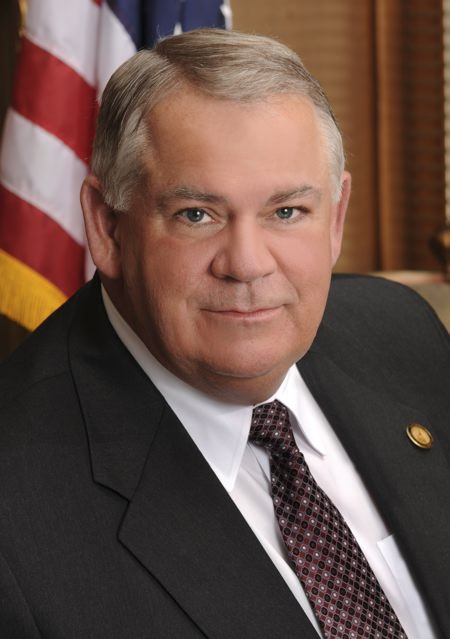
ATLANTA – Georgia House Speaker David Ralston outlined a short agenda of priorities Tuesday for the short remainder of the 2020 General Assembly session.
Ralston, R-Blue Ridge, reiterated the two top priorities he had listed previously: passing a state budget – the only action required of the legislature each year by law – and passage of a hate-crimes bill.
But during a media availability at the Georgia Capitol, Ralston touted three other bills the House passed last winter and sent to the state Senate before the coronavirus pandemic forced a three-month suspension of the session:
Legislation extending Medicaid coverage for new mothers in Georgia from the current three months postpartum to six.
A bill providing up to three weeks of paid parental leave for state employees and teachers.
Legislation adding training and staffing requirements for elderly-care facilities in Georgia.
“That’s essential considering what we’ve been through,” Ralston told reporters, referring to the disproportionate share of COVID-19 deaths in Georgia that have occurred to nursing home patients.
The proposed fiscal 2021 budget currently is in the hands of the Senate Appropriations Committee, which is expected to vote on it Wednesday.
State agencies are being ordered to reduce their spending by 11% across the board to help offset losses in tax revenue due to the business lockdown that followed the coronavirus outbreak.
Some lawmakers and budget watchers have called for raising revenues to balance the budget instead of such deep spending cuts, including increasing Georgia’s tobacco tax, now third-lowest in the country, to the national average.
But Ralston said raising taxes during an economic downturn would not be a wise policy choice. While it might discourage smoking, it also likely wouldn’t bring in much tax money, he said.
“Raising that tax would probably do more to change behavior than raise revenue,” he said.
Ralston repeated his plea for the Senate to pass a “clean” hate-crimes bill in the waning days of the session. He said attempts by the Senate to amend hate-crimes legislation the House passed last year could sink the bill given the few days remaining in the session.
It’s a good thing for the speaker that he has such a short agenda in mind.
Because of social distancing requirements, House members are meeting in three locations inside the Capitol: the House chamber, the public gallery above the chamber and a room around the corner. Since that makes electronic voting unworkable, every vote is being taken by a roll call of all 180 members, a laborious process that takes at least 10 minutes.
That will render impossible the usual flurry of rapid-fire lawmaking that goes on at the end of the session, particularly late on the 40th and final day, when votes come so quickly lawmakers sometimes can’t digest what they’re voting on.
“As the clock ticks down, you’re not going to see the pace get as frantic as it usually does,” Ralston said. “But I’m not a believer in passing a large quantity of bills. To the extent it makes our workload more manageable, that makes it a good thing.”
ATLANTA – Legislation that could clear the way for developers in Georgia to construct mid-rise office buildings made mostly of wood gained final passage in the General Assembly Tuesday.
The state Senate unanimously approved a bill asking the state Department of Community Affairs (DCA) to review a provision in the International Building Code that allows buildings constructed of “mass timber” to rise as high as 18 stories and recommend whether Georgia should adopt it. The state building code limits wood office buildings to six stories.
Only four Western states – Oregon, Washington, Montana and Utah – have adopted the new provision for their states, Senate Agriculture and Consumer Affairs Committee Chairman John Wilkinson, R-Toccoa, told his Senate colleagues Tuesday.
Wilkinson pitched the bill as a potential boost to Georgia’s timber industry, which already leads the nation in a number of categories. Forestry generates an annual economic impact of $36.3 billion and is Georgia’s second largest industry, accounting for 148,414 direct and indirect jobs, according to the Georgia Forestry Association.
“This will help the forestry industry, which is so important to our state,” Wilkinson said.
Mass timber has yet to make significant inroads in Georgia. Some cities have passed ordinances in recent years limiting the height of buildings made of wood, but the General Assembly passed a bill in 2018 prohibiting local governments from imposing height restrictions below what the state building code allows.
Wilkinson said the legislation would expedite the DCA’s review of the International Building Code provision on mass timber. It calls for the agency to begin its review this summer and complete its work by July 1, 2021.
Georgia Rep. John Corbett, R-Lake Park, introduced the legislation into the House of Representatives, which passed it unanimously in February.
It now heads to Gov. Brian Kemp for his signature.
ATLANTA – Legislation allowing nonprofits in Georgia to provide sandwiches to needy children when school is not in session gained final passage in the state House of Representatives Monday.
The bill, which passed 150-12 and now heads to Gov. Brian Kemp’s desk, was prompted when state health inspectors halted a Marietta-based summer food program last summer after 24 years of serving free sandwiches to thousands of school children in Cobb and six other counties.
A stipulation in state law barred MUST Ministries from receiving and distributing donated homemade sandwiches, forcing the group to raise nearly $250,000 to keep the program afloat last summer.
“Every community that’s represented here has children that if they don’t go to school, they do not eat,” said Georgia Rep. Bert Reeves, R-Marietta, who carried the bill in the House on behalf of state Sen. Kay Kirkpatrick, R-Marietta, who introduced the bill in the Senate.
Rep. Doreen Carter, D-Lithonia, objected to a provision in the bill that prohibits nonprofits from taking part in the free-sandwich program if they don’t have a kitchen on their premises for preparing the food. She argued that would make it more difficult for small rural-based nonprofits to participate.
Reeves suggested nonprofits that don’t have a kitchen of their own could look to partner with a church or another non-profit with kitchen facilities.
“This bill solves a lot of problems, but it doesn’t solve every problem,” he said.
ATLANTA – An effort to end “surprise billing” of medical charges in Georgia appears about to pay off.
The state Senate’s Health and Human Services Committee unanimously passed legislation Sunday aimed at unexpected medical bills that can add up to thousands of dollars and bankrupt families. Sunday’s vote came one day before the General Assembly resumes a 2020 legislative session interrupted three months ago by the coronavirus pandemic.
House Bill 888, which the Georgia House of Representatives passed overwhelmingly in March, would require insurers to cover emergency services a patient receives whether or not the provider is a participant in the patient’s insurance coverage network, said Sen. Chuck Hufstetler, R-Rome, sponsor of a similar bill the Senate passed in February.
Typically, unexpected out-of-network charges come from specialists including radiologists or anesthesiologists.
In the case of non-emergency services, the bill requires out-of-network providers to notify patients in advance of what the charges will be, Hufstetler said.
Disputes over a bill between an insurer and provider would trigger an arbitration process overseen by the state Department of Insurance, which would contract with outside arbitrators to decide the final bill.
Hufstetler said the arbitration would be conducted “baseball-style,” meaning the insurer and provider would each set a number, and the arbitrator would choose one or the other. Such a system would lead to more realistic proposals by parties to an arbitration, he said.
“If both sides want their number picked, they won’t put out a number from left field,” he said.
Lobbyists for Georgia insurers, hospitals, physicians and consumer advocates have been working for five years to come up with language all sides could agree on.
On Sunday, representatives of the Georgia Hospital Association (GHA) and the Medical Association of Georgia (MAG) testified in support of the legislation as a good compromise.
“This bill will take patients out of the sometimes stressful negotiations that come with out-of-network providers,” said Anna Adams, vice president of government relations for the GHA.
“We’re glad to be close to the finish line on this thing,” added Derek Norton, MAG’s director of government relations. “It’s a great bill for patients.”
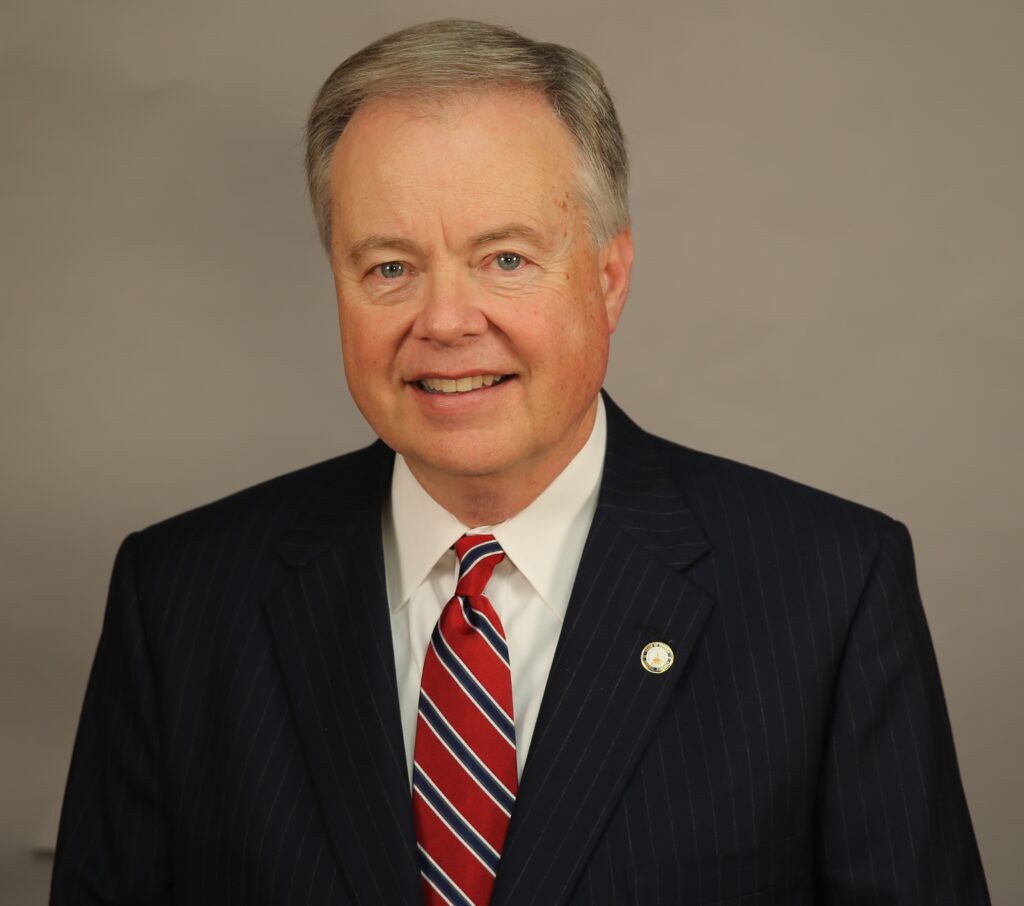
Sen. Ben Watson, R-Savannah, the committee’s chairman, said he considers the surprise billing legislation among his top five priorities for the final 11 days of the 2020 session. It could get a final vote on the Senate floor as early as Wednesday.
ATLANTA – Legislation supporters say would attract private dollars to historic preservation projects across Georgia is raising fears it could threaten 120 state parks, wildlife management areas and historic sites designated as heritage preserves.
A bill the Georgia House of Representatives passed with little fanfare on a busy Crossover Day in March would let the state sell parcels of up to 15 acres at sites listed as heritage preserves to private entities or nonprofits. Under current law, the state can sell heritage properties only to local governments.
Putting such publicly owned lands in private hands could pave the way for development projects that would go against the intent of the 1975 state law establishing the preserves, the co-directors of a University of Georgia historic and cultural preservation warned in an open letter.
“Limiting public access and permitting development is the opposite intent of the Heritage Act’s purpose to make the state’s unique natural, historical and recreational places ‘available to all Georgians, now and in the future,’ ” wrote Maurice Bailey and Nik Heynen, co-directors of the Cornelia Walker Bailey Program on Land and Agriculture, named to honor a member of Sapelo Island’s Hog Hammock who fought for the survival of the Gullah-Geechee community there.
Historic preservation advocates in coastal Georgia have been particularly active in bringing public awareness to House Bill 906.
They have raised concerns about a distillery proposed for Butler Island in McIntosh County, part of the Altamaha Wildlife Management Area. A rice plantation there that once housed more than 900 slaves was the site of the largest slave auction in U.S. history in 1859.
But the bill would affect other parts of Georgia where preservationists are eyeing projects that could benefit from an injection of private or nonprofit funding.
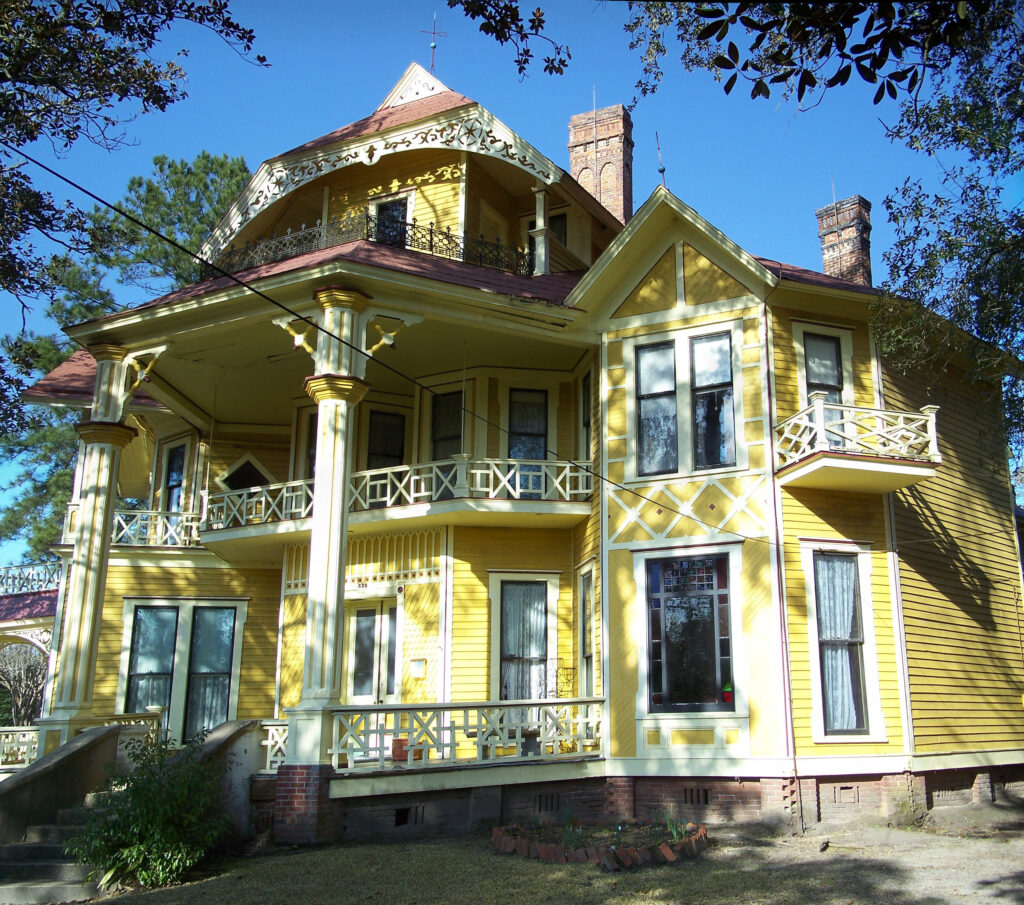
The historic state-owned Lapham-Patterson House in Thomasville, built in the Victorian style during the 1880s, is among the state’s heritage preserve sites. But it’s deteriorating with age and needs extensive repairs the cash-strapped state can’t afford, said Georgia Rep. Darlene Taylor, R-Thomasville.
“It takes a lot of money to maintain it,” said Taylor, chief sponsor of House Bill 906. “[But] in today’s budget world, how can we find the money? We still have to fund maternal mortality [prevention], teachers, Medicaid. There’s only so much money.”
Josh Hildebrandt, director of governmental affairs for the Georgia Department of Natural Resources, said historic buildings like the Lapham-Patterson House are prime candidates to benefit from the proposed legislation, rather than the state parks or wildlife management areas on the list of heritage preserve sites.
“It’s different with a structure,” he said. “Anybody from a homeowner to a historic preservation organization knows what houses and other structures go through from nature and the weather, as opposed to a piece of land that’s used as a deer habitat.”
Taylor said the bill includes safeguards aimed at protecting the historical integrity of heritage properties the state decides to privatize. Proposed sales would be subject to a public hearing and would have to be approved by the Georgia Board of Natural Resources, she said.
“If something is a bad project, it will be killed,” she said.
But the bill’s critics point to uncertainties in its wording, including whether the 15-acre tracts the measure envisions could be subdivided into smaller lots and sold to several private entities, or whether a single private entity could buy up enough contiguous 15-acre parcels to take over an entire heritage preserve site.
“House Bill 906 opens a door for Ossabaw [Island] and other heritage preserves to be removed piecemeal from use by generations of Georgians, subdivided and conveyed to out of state ownership … for just about any use,” Elizabeth DuBose, executive director of the Ossabaw Foundation, warned in a letter.
But Hildebrant said the bill includes provisions to prevent the negative consequences of a sale DuBose fears.
“It is critically important to realize that any property that might be conveyed is required to have a perpetual conservation easement placed on it,” he said. “[That] would limit the type of activities and changes that could be done on the property … protecting its historic nature and integrity.”
The state Senate is expected to take up the bill when the General Assembly resumes the suspended 2020 legislative session on Monday.