ATLANTA – Democratic U.S. Senate nominee Jon Ossoff is challenging incumbent Republican Sen. David Perdue to a series of five live televised debates throughout Georgia, the Ossoff campaign announced Thursday.
Ossoff, an investigative journalist, won last week’s Democratic primary outright, avoiding a runoff despite a field of seven candidates. Perdue’s bid for the Republican nomination to seek a second six-year term was unopposed.
“Our country faces great challenges – public health and economic crises, unequal justice and compromised voting rights, and widespread corruption in our political system,” Ossoff wrote in a letter to Perdue. “Georgians deserve to hear candidates for office debating these issues publicly.”
Since capturing the Democratic primary, Ossoff has picked up the endorsement of one of his opponents for the nomination, Marietta businesswoman Sarah Riggs Amico. Amico, who ran unsuccessfully for lieutenant governor two years ago on the Democratic ticket, came in third in the Senate primary to Ossoff and former Columbus Mayor Teresa Tomlinson, who finished second.
Perdue and Ossoff will face off in the general election Nov. 3.
University System of Georgia Chancellor Steve Wrigley
ATLANTA – The University System of Georgia (USG) has launched an effort to determine whether any buildings or colleges on the system’s 26 campuses should be renamed to send a more inclusive message to students, faculties and host communities.
Sachin Shailendra, chairman of the university system’s Board of Regents, and system Chancellor Steve Wrigley have named a five-member advisory group to review those names and recommend any changes.
“USG’s mission is knowledge, and this action today is a step toward addressing how communities understand the history and context involving our campuses,” Wrigley said. “While the review may be one part of a much broader discussion, I believe it is essential to advance how we serve students and all Georgians.”
Street protests across the nation that erupted following the death of George Floyd, a black man, in Minneapolis at the hands of a white police officer and the fatal shooting of another black man, Ahmaud Arbery, by a white man near Brunswick have been accompanied by a push to remove statues and rename buildings and streets honoring Confederate political and military leaders.
In some cases, demonstrators have pulled down statues or defaced them with graffiti.
The USG advisory group will be chaired by Marion Fedrick, president of Albany State University. Other members will include:
Michael Patrick, marketing and strategic growth at Chick-fil-A.
Herbert Phipps, a retired former Georgia Court of Appeals judge.
Neal J. Quirk, a lawyer and executive vice chairman of the University of Georgia Foundation.
Sally Wallace, dean of the Andrew Young School of Policy Studies at Georgia State University.
The group’s recommendations will be announced when it finishes its work.
ATLANTA – Georgia Power Co. is offering customers behind on their electric bills because of the coronavirus pandemic a chance to pay them back over time.
Customers who enroll in the Atlanta-based utility’s special payment plan will be able to pay past-due balances over six months from October through next March with no late fees.
In mid-March, as Georgia businesses began laying off or furloughing workers to discourage the spread of COVID-19, the state Public Service Commission (PSC) instructed Georgia Power as well as the state’s gas utilities not to cut off services to customers for non-payment.
Earlier this month, commissioners voted to lift that moratorium effective July 1 for gas service and July 15 for Georgia Power.
“We recognize that our customers across the state have endured an extraordinary burden due to the COVID-19 pandemic,” said Kevin Kastner, Georgia Power’s vice president of customer service. “We appreciate the support of the Georgia Public Service Commission as we work to help our customers navigate through these unprecedented times.”
Georgia Power customers can sign up for the company’s special payment plan by calling Georgia Power at 888-660-5890 or by logging on to www.georgiapower.com/paymentplan.
Meanwhile, the PSC has ordered the natural gas marketers to develop repayment plans for their customers who are behind on their bills.
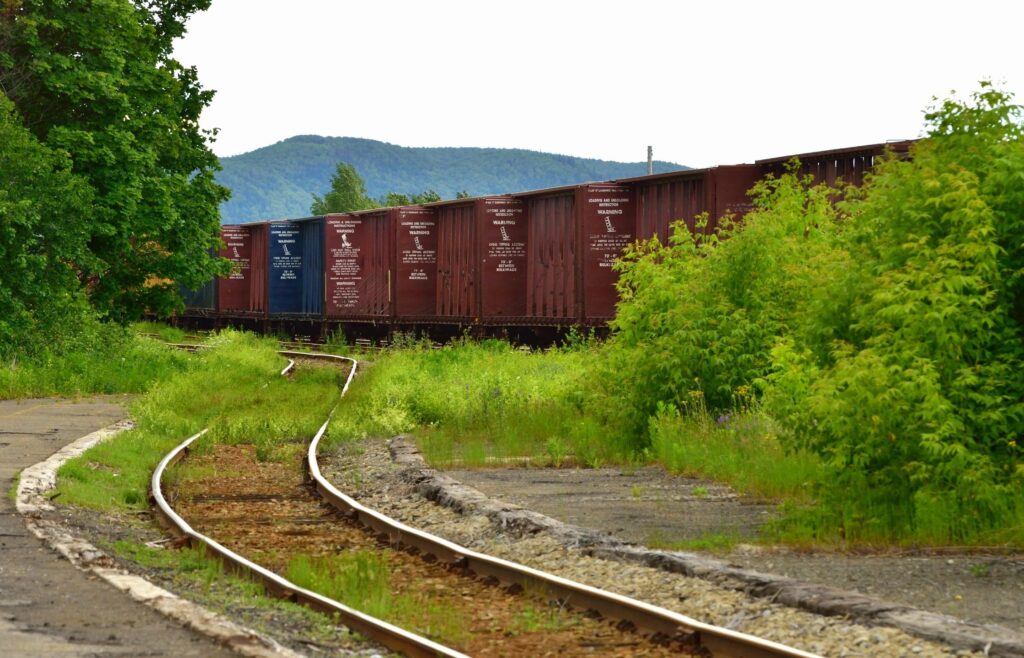
Legislation that would give state spending on freight rail a permanent spot in Georgia’s annual budgets gained final passage in the General Assembly Wednesday.
The state Senate passed the bill unanimously without making any changes to the version of the measure that cleared the Georgia House of Representatives overwhelmingly in February.
Guaranteeing freight rail investment a line item in the state budget was among the recommendations of the Georgia Freight & Logistics Commission, a task force of legislators, business leaders and logistics industry executives formed last year to look for ways to move freight more efficiently through the state.
The bill, which was introduced by House Transportation Committee Chairman Kevin Tanner, R-Dawsonville, does not commit the Georgia Department of Transportation to actually spend money on freight rail every year, Senate Majority Whip Steve Gooch said on the Senate floor Wednesday. But it does ensure that will be a spot in the budget for freight rail investment when funding is available, said Gooch, R-Dahlonega.
In researching the issue, the Georgia Freight & Logistics Commission found that only 27% of cargo moving through Georgia each year is on rail. State transportation policy makers are determined to increase the role freight rail plays in Georgia to take pressure off the state’s highway network.
House Bill 820 now moves to Gov. Brian Kemp’s desk for his signature.
ATLANTA – A legislature that was poised last winter to give Georgia teachers a 2% raise and follow through with the second installment of a state income tax cut is moving forward with a fiscal 2021 budget that does neither.
The Senate Appropriations Committee Wednesday approved a budget for the year starting July 1 that cuts spending by $2.6 billion, acknowledging the economic impact of the coronavirus pandemic on the state’s coffers.
“Our financial situation has dramatically shifted,” said Sen. Blake Tillery, the committee’s chairman. “There will be less. There’s no sugar coating of that.”
But Tillery, R-Vidalia, did his best during a brief presentation to committee members to shed the best light on the budget he could.
For one thing, the committee was able to scale back planned across-the-board reductions from 14% to 11% after the state Department of Revenue reported tax revenues haven’t plummeted as much as expected. Tillery cited the partial reopening of Georgia businesses for the rebound.
The committee’s budget also fully funds Georgia’s lottery-funded pre-kindergarten program, which had been threatened with losing 4,000 enrollment slots.
Agencies preparing to furlough employees for two days per month – including the human services and behavioral health departments – would only have to furlough workers once a month, or 12 days, during the coming fiscal year.
However, Georgia’s public schools, university system and technical college system still would have to make to do with 11% cuts.
Tillery said the Department of Agriculture would get enough funding to launch the state commission that will oversee the new hemp cultivation program the General Assembly approved last year. Also, farm markets in Cordele and Thomasville that were facing closure would be funded, he said.
The committee’s budget also leaves intact a healthy bond package of $990 million for capital projects, including $342 million for K-12 school construction.
Lawmakers are prepared to take part in the sacrifices. The committee’s budget would reduce senators’ annual salaries by 11% from the current $17,000, and Lt. Gov. Geoff Duncan’s salary of about $91,600 a year would be cut by 14%.
The full Senate is expected to take up the budget later this week.