ATLANTA – Rural Georgians have complained for years about the lack of broadband connectivity in their communities.
Now, the exact extent of the problem will be known for the first time, thanks to a new broadband availability map published by the state Department of Community Affairs.
The General Assembly authorized preparation of the map as- part of legislation passed two years ago aimed at making reliable high-speed internet service more widely available across Georgia.
“This innovative map will enable the private sector to better see where Georgians lack access to high-speed internet, improve open-market competition and help providers explore partnerships to address the connectivity needs of our state,” Gov. Brian Kemp said in a prepared statement.
The new map shows clearly the huge disparity between access to high speed internet in metropolitan and rural areas. Of more than 507,000 home and businesses lacking access to reliable broadband service, nearly 70% are in rural parts of Georgia.
With the map about to come online, telecom providers have stepped up their investments in broadband deployment in recent months. Comcast Inc. announced a $9 million investment just last month to expand its internet services to nearly 8,000 homes and businesses in Haralson and Carroll counties in West Georgia.
“Broadband providers are not only key to solving the connectivity issues, but they have also been great partners in developing these maps,” said Calvin Rhodes, executive director of the Georgia Technology Authority.
The lack of adequate internet service in rural Georgia has become particularly glaring during the coronavirus pandemic. Students from rural communities have been forced to travel to the parking lots of closed businesses and libraries during the spring semester to pick up WiFi signals so they could download the online instruction that was replacing in-person classes.
“At the onset of the coronavirus pandemic, preliminary mapping data proved extremely useful in supporting [Georgia] Department of Education efforts to ensure student access to Wi-Fi solutions,” said Deana Perry, executive director of the Georgia Broadband program. “The Georgia Broadband office will continue to work closely with communities, providers and state agencies to support effective public-private partnerships aimed at serving those who are currently unserved.”
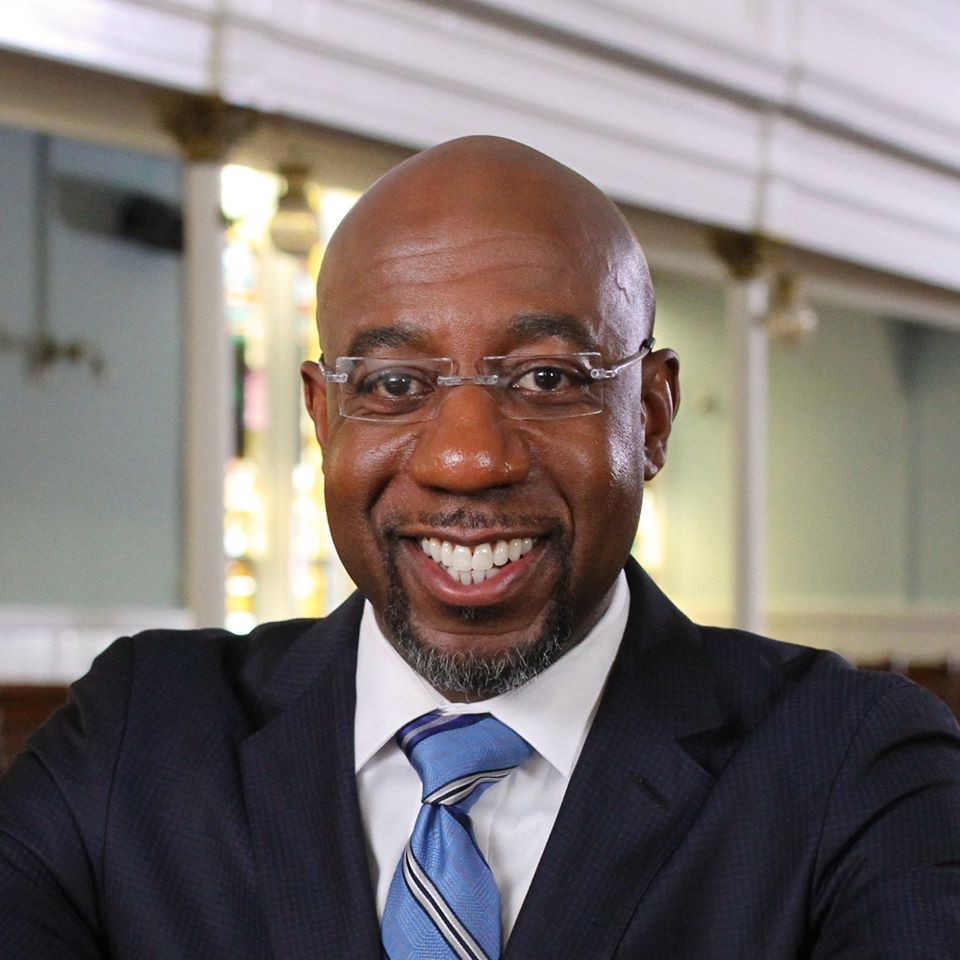
Rev. Raphael Warnock of Ebenezer Baptist Church (Credit: Warnock for Georgia)
ATLANTA – The Rev. Raphael Warnock raised more than $2.85 million during the last three months in his bid for a U.S. Senate seat, the Atlanta minister’s campaign reported Thursday.
Warnock, a Democrat, entered the race in January for the seat now held by Republican Sen. Kelly Loeffler, who succeeded retired Sen. Johnny Isakson on an interim basis that same month.
Under unique rules that apply to the race, Loeffler and Warnock are among 21 candidates who be on the ballot in a November free-for-all being conducted without the benefit of party primaries. If no one receives more than 50% of the vote – a virtual certainty in such a crowded field – the top two vote-getters will square off in a runoff in January.
Warnock’s second-quarter fund-raising totals give him more than $4.3 million since he filed his candidacy with the Federal Election Commission (FEC).
“Our strong fund-raising shows that Georgians are looking for real change and above all else, an authentic voice in Washington,” Warnock said. “Folks want to know someone is looking out for them, their health care, their children’s futures and their rights.”
Loeffler raised more than $1.1 million in campaign contributions during the first quarter. But the wealthy Atlanta businesswoman has much deeper pockets, having loaned her campaign $10 million thus far.
Loeffler’s main Republican opponent, U.S. Rep. Doug Collins, reported about $2.2 million on hand at the end of March.
Loeffler, Collins and the other candidates face a July 15 deadline for reporting their second-quarter fund-raising to the FEC.
University System of Georgia Chancellor Steve Wrigley
ATLANTA – The University System of Georgia Board of Regents signed off Wednesday on a fiscal 2021 budget that includes $2.3 billion in state funds.
The regents got their marching orders last week when the General Assembly adopted a $25.9 billion state budget that cuts spending across the board by 10%. For the university system, that represents a reduction of $278 million from last year’s spending plan.
The damage could have been worse. When the coronavirus pandemic hit Georgia in March, prompting shelter-in-place orders that forced businesses to close and lay off employees, Gov. Brian Kemp and legislative leaders told state agency heads to prepare to cut their budgets by 14%.
But that was revised downward subsequently to 11% and then 10% when reports from the Georgia Department of Revenue showed the downturn in the economy was not affecting state tax revenues as much as had been anticipated.
“That gives us a little more flexibility … going into fiscal ’21,” university system Chancellor Steve Wrigley told the regents before Wednesday’s vote.
As a result of the lowering of the spending reduction target, the legislature restored $78 million to the system’s budget, enough to avoid furloughing any of the system’s 55,000 employees. In May, the regents authorized either four or eight furlough days for most employees, depending on their salary level.
Lawmakers also appropriated $3.2 million to fully fund the Georgia Public Library System’s materials grants program. The grants allow the state’s libraries, particularly in rural communities, to buy books, technology and other resources.
The university system budget also is being supported with more than $157 million in federal coronavirus relief funds.
The fiscal 2021 state budget took effect on Wednesday.
ATLANTA – U.S. Senate Democratic nominee Jon Ossoff raised more than $3.45 million during the last three months in his bid to unseat incumbent Republican Sen. David Perdue, the Ossoff campaign reported Wednesday.
More than $2.35 million of that amount came during the three weeks since Ossoff captured his party’s nomination, avoiding a runoff by winning nearly 53% of the vote in a crowded Democratic primary field.
Democrats have grown increasingly confident that they can compete this year with the long-dominant GOP in Georgia. Besides Ossoff’s fund-raising prowess, they point to a $457,000 ad buy in the Peach State by President Donald Trump’s re-election campaign as evidence Republicans believe they need to shore up their support in Georgia.
“Georgia is the premier battleground state in 2020, and we are building a grassroots movement to defeat Senator Perdue and deliver a government that works for the people,” said Ellen Foster, Ossoff’s campaign manager. “Jon’s message of ensuring every Georgian has health care, passing a new Civil Rights Act and new Voting Rights Act, and reforming our corrupt campaign-finance system is clearly resonating with Georgia voters, and our unstoppable momentum will lead us to victory in November.”
Ossoff’s average contribution during the second quarter was about $20. The investigative journalist is not accepting donations from corporate political action committees.
Despite Ossoff’s strong fund-raising since his June 9 primary victory, he still has a long way to go to match Perdue.
The first-term senator had raised more than $13.4 million through May 20, according to the pre-primary campaign-finance disclosure report he filed with the Federal Election Commission (FEC). Perdue had almost $9.4 million on hand at that time.
The deadline for filing second-quarter reports with the FEC is July 15.
ATLANTA – Gov. Brian Kemp signed a $25.9 billion state budget Tuesday that he called “bittersweet” because of $2.2 billion in spending cuts brought on by the devastation the coronavirus pandemic is wreaking on Georgia’s economy.
“This budget reflects our values as a state. It prioritizes education, health care and public safety,” Kemp said during a signing ceremony at his Capitol office. “But this budget speaks to some of the hard choices made by state leaders.”
Despite 10% across-the-board reductions to state agency budgets, Kemp stressed that he and legislative budget writers still were able to fully fund K-12 student enrollment growth as well as projected growth in Georgia’s Medicaid and PeachCare for Kids programs.
Tapping into the state’s general-fund budget reserves for $250 million along with $50 million from Georgia’s share of the national tobacco settlement helped avoid the furlough days that had been looming over teachers and state employees.
In the public safety arena, the budget includes funds to expand the Georgia Bureau of investigation’s Gang Task Force and provide a 50-trooper training school.
Kemp also highlighted the $1.13 billion bond package as an economic development opportunity. It includes $335 million for K-12 school construction, $340 million to repair and renovate state-owned buildings and $115 million to repair, renovate and – in some cases – replace roads and bridges.
“This bond package was designed with projects for every part of our state, to help Georgia regain its competitive advantage,” the governor said.
However, the budget still cuts K-12 education by $950 million, while teachers and state employees must do without the 2% raises Kemp had included in his original budget recommendations, before COVID-19 prompted shelter-in-place orders that closed businesses, laid off workers and sent state tax collections plummeting.
Legislative Democrats, most of whom voted against the budget, took majority Republicans to task for not allowing revenue raising proposals – including a tobacco tax increase and legislation reining in state tax credits – to reach the floor of either the House or Senate for a vote.
Kemp was flanked throughout Tuesday’s signing ceremony by House Appropriations Committee Chairman Terry England, R-Auburn, and his Senate counterpart, Blake Tillery, R-Vidalia.
The governor bumped fists with both men after signing the budget, which takes effect on Wednesday.