ATLANTA – A longtime consumer advocate in the energy industry is running for a seat on the Georgia Public Service Commission (PSC).
Patty Durand, a Democrat from Peachtree Corners, announced Tuesday she will challenge incumbent Republican Commissioner Tim Echols next year in PSC District 2, which stretches across parts of eastern and Middle Georgia from Gwinnett County on the north and Macon on the south through Athens and the Lake Oconee region to just south of Augusta.
Durand owns a consulting business with a focus on consumer engagement and education in energy and technology. Before that she was president and CEO of the Smart Energy Consumer Collaborative.
Durand has been an opponent of the planned nuclear expansion at Georgia Power’s Plant Vogtle since before the PSC approved the project a dozen years ago. Originally expected to cost about $14 billion, the project’s price tag has soared to nearly double that amount, according to estimates.
“That is an obscene amount of money for the amount of electricity [the plant] will produce and is nine times more expensive than other clean energy choices the commission could have made,” she said.
Durand also has criticized the PSC for not moving aggressively enough to develop renewable energy.
“Why is Georgia one of only 11 states with no renewable energy goals or climate plan?” she asked. “North Carolina produces 20% of its energy from renewable resources. Georgia can too.”
Durand is also calling for re-establishing the state’s Consumer Utility Council, a panel that represented consumer interests before the PSC but was defunded in 2008 during the Great Recession.
Echols was elected to the PSC in 2010 and reelected in 2016. The owner of an electric car, he has been an advocate for clean energy on the commission.
Echols supports the completion of the Plant Vogtle expansion as an important addition to solar power in the effort to reduce the role carbon-burning power plants play in Georgia’s energy generation mix.
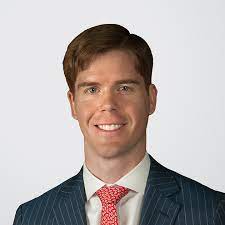
ATLANTA – Cobb County lawyer Jake Evans announced his candidacy Tuesday for Georgia’s 6th Congressional District seat.
Evans, a Republican, recently stepped down as chairman of the state ethics commission to challenge Democratic U.S. Rep. Lucy McBath of Roswell next year
In his announcement, Evans described McBath as a single-issue candidate for her championing of gun control legislation. McBath was elected to Congress in 2018 after losing her son to gun violence in 2012.
“The Northern Arc of metro Atlanta is a thriving, dynamic region that cares about education, public safety, national defense and fair trade,” Evans said. “But we’re stuck with a member of Congress who only cares about one issue – taking away the Second Amendment rights of law-abiding Americans and leaving them defenseless against out-of-control crime. We need change, and I’m here to offer bold, conservative leadership.”
The 6th District, which includes East Cobb, North Fulton and North DeKalb counties, was once a conservative bastion that sent former House Speaker Newt Gingrich to Congress in 1978. The district was later represented by Republican Johnny Isakson before he was elected to the U.S. Senate in 2004.
More recently, the district’s increasingly diverse population led to the election of Democrat McBath, who defeated Republican incumbent Karen Handel in 2018 and won a rematch between the two last year.
Evans is the third Republican to enter the 6th District race. Former state Rep. Meagan Hanson and Eric Welsh, a retired U.S. Army colonel and former Coca-Cola executive, are vying for the GOP nomination to oppose McBath.
ATLANTA – Georgia hauled in $3.2 billion more in taxes during the last fiscal year – a period dominated by a worldwide pandemic – than it brought in during fiscal 2020, Gov. Brian Kemp reported Monday.
That represented a 13.5% increase in tax revenues during fiscal 2021, which ended June 30.
Kemp attributed the strong revenue numbers to his decision to reopen the state’s pandemic-stricken economy sooner than many other states while still protecting public health.
“Thanks to our work alongside the General Assembly to budget conservatively and protect both lives and livelihoods throughout a global pandemic, Georgia remains on solid financial footing,” the governor said.
“The COVID-19 crisis highlighted the importance of states living within their means, and Georgia did so without widespread layoffs, tax hikes, furloughs or drastic cuts to essential services. … State leaders worked together to fund our priorities of education, health care, and public safety – all while cutting taxes.”
Net tax receipts of $26.9 billion during fiscal 2021 leaves the state sitting on a large surplus that, along with $4.8 billion in federal COVID-19 relief, promises to make spending decisions easier for Kemp and his staff as they put together budget recommendations for the next fiscal year.
That’s a far cry from last year, when the early stages of the pandemic forced Georgia businesses to close and lay off workers, sending tax collections plummeting. The budget the General Assembly adopted in June of last year imposed 10% spending cuts on state agencies across the board.
However, the reductions weren’t as steep as had been feared. With the impact of the pandemic on tax collections not as dire as had been expected, lawmakers were able to avoid furloughing teachers or state employees and plug gaps in state funding with federal dollars.
ATLANTA – A coalition of mental health and substance abuse organizations is pushing for Georgia to do something about the state’s dismal status as 51st in the nation in access to mental health care.
The Georgia Mental Health Policy Partnership and Substance Use Disorder Community Monday unveiled a “unified vision” for how to improve mental health and substance abuse care.
The coalition is asking Gov. Brian Kemp and the General Assembly to make a series of policy changes taking advantage of $170 million in federal coronavirus relief funding allocated to Georgia since last year.
“The unified vision sets out a transformational roadmap that will significantly improve the lives of Georgians with mental health and substance abuse disorders,” Jeff Breedlove, chief of communications and policy for the Georgia Council on Substance Abuse, said during a news conference at the state Capitol.
Improving mental health and substance abuse services has been on state elected officials’ radar screens for several years. In 2019, Kemp formed a commission of state lawmakers, health-care professionals, mental-health advocates and criminal-justice officials to address the issue.
This year, the General Assembly unanimously passed legislation aimed at increasing the delivery of care via telemedicine. Among other things, the bill prohibits requiring patients to receive in-person medical consultation before getting telemedicine services and prohibits separate insurance deductibles for telemedicine care.
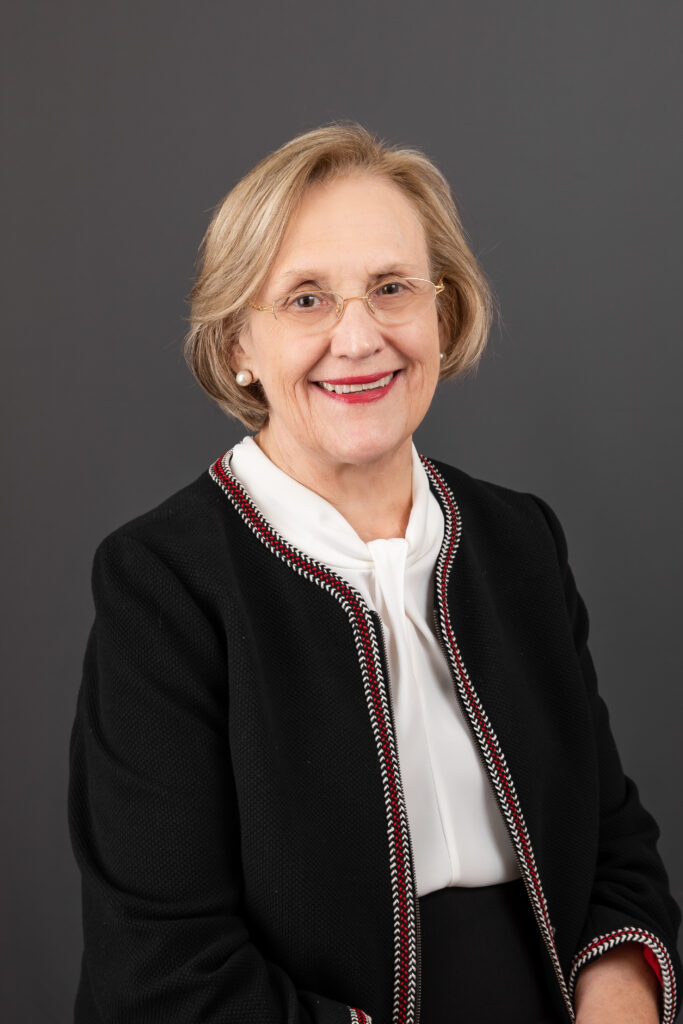
The measure was sponsored by Rep. Sharon Cooper, R-Marietta, chairman of the House Health and Human Services Committee, who has written two textbooks on psychiatric nursing. Cooper said Monday her late mother and sister have suffered from mental illness.
“I understand what it’s like to be a family member trying to help someone who’s having a problem in this area,” she said.
The coalition’s unified vision makes a series of recommendations, including addressing a severe shortage of mental health care workers and improving access to mental health care by improving broadband service.
“If we’ve learned anything from COVID-19 … that public health emergency has underscored the need for high-speed broadband connectivity, particularly in rural Georgia,” said Kim Jones, executive director of the National Alliance on Mental Illness Georgia chapter.
The coalition also is recommending that the state put greater emphasis on early identification of people suffering mental illness or substance abuse issues and require insurance companies to treat patients with mental illness the same as those with a physical illness.
State Rep. Gregg Kennard, D-Lawrenceville, said another step will be finding ways to treat Georgians suffering from mental illness or substance abuse without throwing them in jail.
“The biggest mental health provider in our state is the prison system,” he said. “We need to turn that ship around.”
Jones said the coalition will push for comprehensive legislation addressing its recommendations during this winter’s General Assembly session.
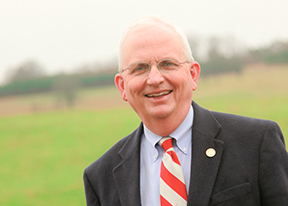
ATLANTA – Former Gov. Nathan Deal endorsed Georgia Agriculture Commissioner Gary Black Monday for the U.S. Senate.
“I’ve known Gary for over 20 years. We worked together for the entire time that I was governor,” said Deal, who served as Georgia’s chief executive from 2011 until the beginning of 2019. “He’s done a great job representing everyone in our state. That’s the kind of leadership we need in Washington.”
Black, elected agriculture commissioner in 2010, entered the race for the Republican nomination last month. The winner of next spring’s GOP primary will challenge incumbent Democratic Sen. Raphael Warnock.
Several other Republicans with high name recognition are said to be thinking about running. However, they are waiting to see whether University of Georgia football icon Herschel Walker enters the contest.
Former President Donald Trump has been pushing for a Walker candidacy, but Walker has yet to make a decision.
Black, like Deal, hails from northeastern Georgia. He has a long background in farming, including a stint as president of the Georgia Agribusiness Council before running for agriculture commissioner.
Two lesser-known Republicans also have entered the Senate race: Latham Saddler, an Atlanta banking executive, and Kelvin King, a small business owner and Air Force veteran from Atlanta.
While U.S. senators normally serve six-year terms, Warnock is being forced to run for the seat next year even though he just won a runoff election in January. The Democrat is currently completing the unexpired term of former Sen. Johnny Isakson, R-Ga., who retired at the end of 2019 due to health issues.