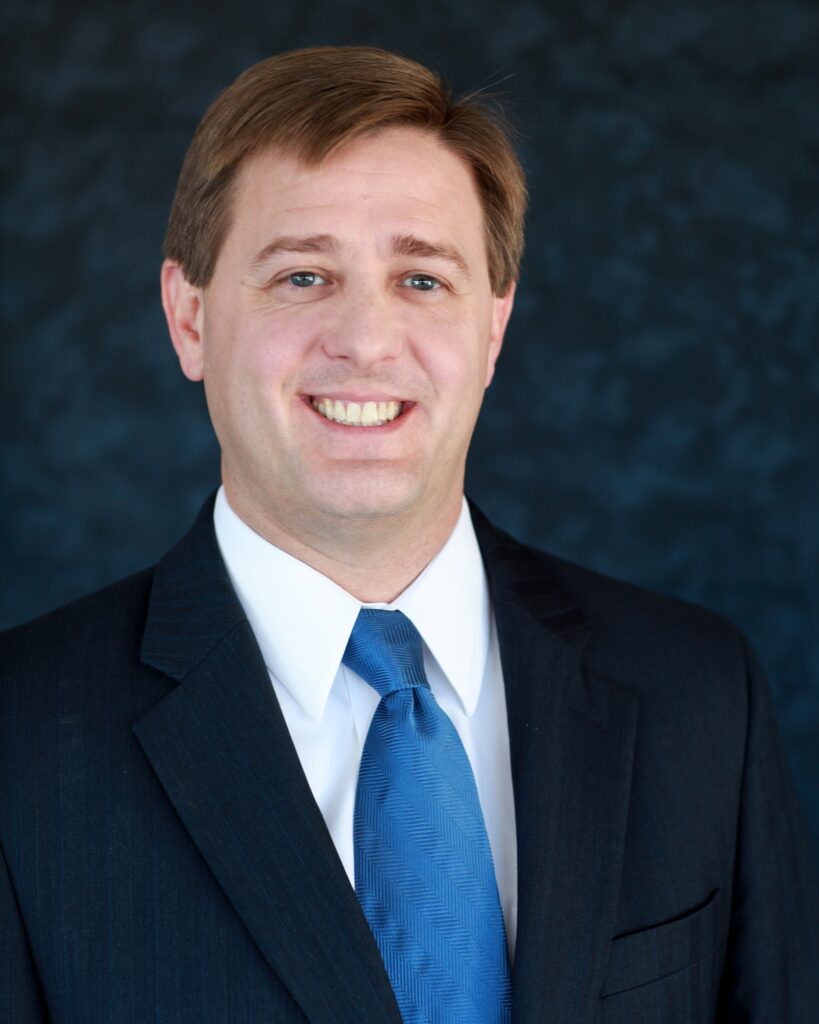
ATLANTA – Former state Rep. Meagan Hanson is running for Congress in Georgia’s 6th Congressional District in Atlanta’s northern suburbs.
Hanson, a Republican from Sandy Springs, served one term in the Georgia House of Representatives before losing her reelection bid in 2018. A lawyer by profession, she went on to serve as executive director of Georgians for Lawsuit Reform, a conservative legal activist group.
Hanson is seeking to unseat two-term U.S. Rep. Lucy McBath, D-Roswell, who flipped the seat from Republican control in 2018 for the first time in decades.
“With the direction the country is going, the America I had growing up will not be the same America my kids will live in. I’m not content to watch this nation’s promise slip away,” Hanson said Monday. “We need a congresswoman who will fight for Georgia’s families, not [House Speaker] Nancy Pelosi’s liberal agenda. I’ll work every day to lower taxes, end out-of-control government spending and get America back on track.”
The 6th District, covering East Cobb, North Fulton and North DeKalb counties, is one of two north of Atlanta now in Democratic hands that Republicans will be targeting next year. The other is held by Rep. Carolyn Bourdeaux, D-Suwanee, a freshman who won the open 7th Congressional District seat after Republican incumbent Rob Woodall retired.
Eric Welsh, a retired U.S. Army colonel and former Coca-Cola executive, is also vying for the Republican nomination to oppose McBath next year. Welsh entered the race in May.
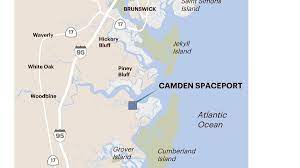
ATLANTA – The state of Georgia has given the green light to plans to build a commercial spaceport in southeastern Georgia.
In a letter dated Thursday, the Georgia Department of Natural Resources (DNR) agreed with officials from Camden County that no insurmountable environmental concerns stand in the way of the Federal Aviation Administration (FAA) issuing an operator license for Spaceport Camden.
The go-ahead from the DNR marks a major step toward making the project a reality.
“With DNR’s concurrence and the release of the Final Environmental Impact Statement by the FAA, regulators at all levels of government have given Spaceport Camden a thorough review and found it consistent with state and federal environmental regulations,” Camden County Commission Chairman Gary Blount said Friday.
“For over 50 years, nature and space activities have coexisted at other spaceports. We aim for that same type harmonious relationship at Spaceport Camden! We look forward to a final decision from the FAA on our application later this month.”
Supporters are counting on Spaceport Camden to create up to 2,000 jobs and help convince the next generation of aerospace engineers, many of whom graduate from Georgia Tech, to stay in Georgia. The project has the backing of Gov. Brian Kemp and the state’s congressional delegation.
The DNR letter cited a series of steps Camden County has agreed to take to minimize environmental damage associated with commercial satellite launches. For one thing, the state agency cited the county’s decision to launch only small rockets from the site rather than medium-to-large rockets, which will reduce the “debris dispersion radius” and decrease the area to be closed to the public before and during launches.
The county also agreed to use “turtle-friendly” lighting to avoid disturbing nesting sea turtles, work with the DNR to limit launches during bird-nesting season and limit closings of public waterways during weekends and holidays, and during organized fishing tournaments.
Such provisions don’t go nearly far enough, said Dick Parker, one of a group of property owners on nearby Little Cumberland Island who oppose Spaceport Camden.
“Georgia DNR is giving Spaceport Camden permission to use more than 2,700 pristine acres of state-owned salt marsh, tidal creeks, and the Satilla River for debris dispersion, allowing exploding rockets and fuel to fall into the marsh, creeks, and river,” he said. “It’s hardly different from letting someone back a dump truck up to the marsh and empty their trash.”
Parker also pointed to the potential rocket-failure rate of up to 20% Camden County officials projected in their license application.
“With plans for 12 launches per year, that’s more than two failures every year,” he said. “Hundreds of gallons of fuel and hundreds of rocket parts will penetrate the soft marsh mud and pollute the tidal creeks with each failure.”
ATLANTA – Six years ago, the General Assembly passed legislation allowing Georgia property owners to use third-party financing to install rooftop solar panels at their homes and businesses.
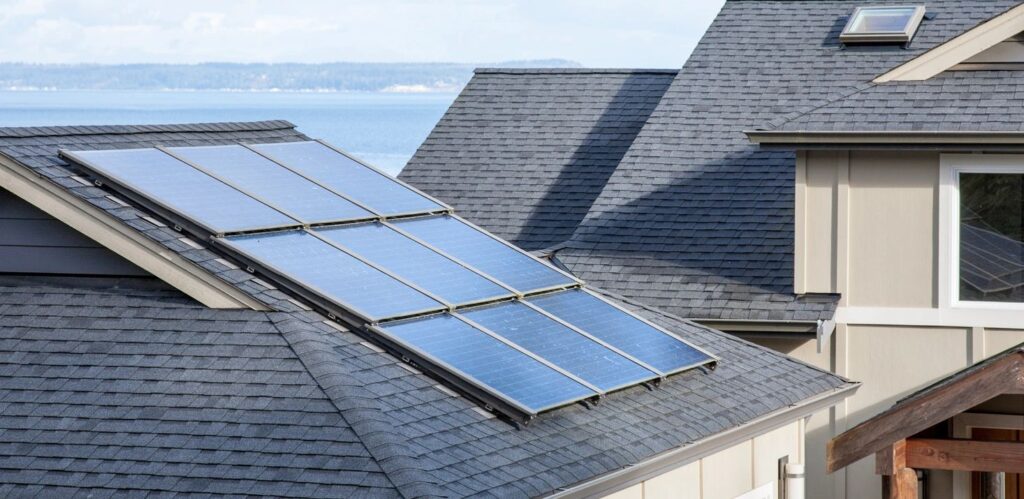
Now, representatives of solar installers and their environmentalist allies are warning the momentum the industry has built since 2015 could grind to a halt unless the state Public Service Commission (PSC) orders Georgia Power to lift a cap on a pilot rooftop solar program limited to 5,000 customers. The program is about to hit that cap because of an unexpected surge of interest.
“It’s a very popular program,” Don Moreland, policy chairman for the Georgia Solar Energy Association and owner-operator of Solar CrowdSource, told the PSC during a recent hearing. “[But] once we hit this cap … it is going to cause the rooftop market to completely crash.”
The commission approved the pilot program as part of Georgia Power’s 2019 rate case. It got off to a slow start, with just 1,347 applications last year.
But interest has taken off this year. Just in May and June, Georgia Power received as many applications as in all of 2020 and three times the number that came in during 2019.
“The large volume of applications have been, quite frankly, surprising,” said Steven Hewitson, a lawyer representing the Atlanta-based utility at the July 1 hearing. “That’s slowed down the processing time.”
The pilot program is due to be reevaluated next year when Georgia Power brings its next rate case before the PSC. The utility wants to keep the cap at 5,000 customers until then.
“The limitations specifically were put in place so the company and the commission could evaluate the impact of … the program to the system and other customers,” Hewitson said. “There’s no reason to revisit that limitation now.”
But Moreland said the PSC isn’t expected to issue a ruling in the rate case until late next year. Waiting 18 months for a decision on lifting the cap would create a long period of uncertainty that could “chill the [solar] market,” he said.
“This is a popular policy right now,” added Russell Seifert, founder and CEO of Creative Solar USA. “It’s working.”
Seifert and others point to neighboring states that are more aggressively pursuing rooftop solar than Georgia. Florida leads the way with more than 85,000 installations, according to the U.S. Energy Information Administration.
More than 23,000 rooftops in South Carolina sport solar panels, and more than 21,000 solar installations have taken place in North Carolina.
A coalition of solar installers recently sent a letter asking Georgia Power to lift the cap on its rooftop solar pilot program.
“Rooftop solar means local jobs. It puts money directly into Georgia’s economy,” Seifert said. “[Lifting the cap] will allow the industry to continue its steady growth, provide clear market signals to promote additional investment and allow the pilot to continue until the commission is able to fully review it.”
Mark Woodall, legislative chair for the Georgia chapter of the Sierra Club, said Georgia Power has emphasized large “utility-scale” solar projects over rooftop solar because the larger projects are less expensive per kilowatt-hour of power they produce.
“Utility-scale is cheaper, but we need all the solar we can get,” he said.
Jill Kysor, a senior attorney with the Atlanta-based Southern Environmental Law Center, praised the PSC for supporting utility-scale solar investment. The latest example came July 7 when the commission approved Georgia Power’s plan to buy 970 megawatts of solar power from five other utilities.
“We have become a solar leader on utility-scale solar because of commission action,” Kysor said. “There’s an opportunity to follow through with rooftop solar without any big risk.”
Even if the PSC doesn’t lift the cap on rooftop solar installations in Georgia, the General Assembly may step in. Legislation introduced in the state Senate in March would limit the fees utilities can charge property owners who install rooftop solar and allow the commission to lift any cap a utility places on the number of solar installations under certain circumstances.
Senate Bill 299 didn’t receive a hearing because it was introduced so late in this year’s legislative session. But it’s still alive in the Senate Regulated Industries and Utilities Committee with the influential bipartisan backing of Senate Rules Committee Chairman Jeff Mullis, R-Chickamauga, and Senate Minority Leader Gloria Butler, D-Decatur.
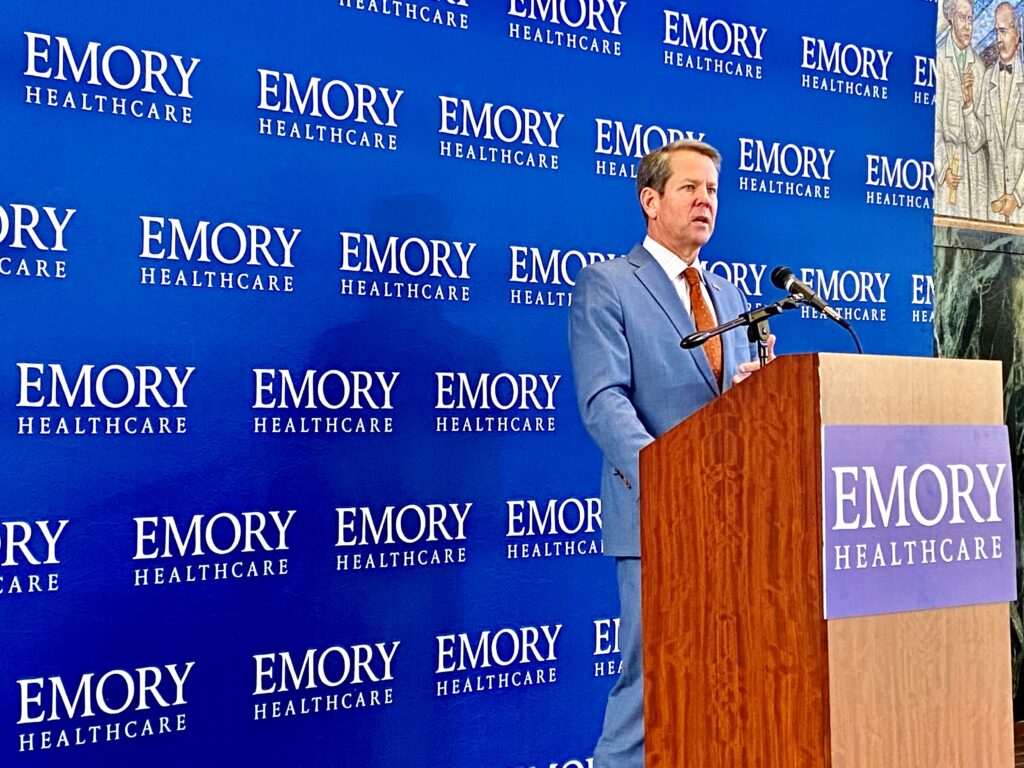
ATLANTA – Gov. Brian Kemp is sitting on a record campaign war chest for this early stage of his reelection bid with no declared Democratic challenger and a Republican primary opponent considered a heavy underdog.
Kemp had raised $11.9 million through the end of last month, including $3.9 million during the three months since this year’s General Assembly session ended, according to a report filed Thursday with the Georgia Government Transparency & Campaign Finance Commission.
The Republican governor’s Democratic opponent in 2018, Stacey Abrams, has not entered what would be a rematch between the two, although she is considered likely to declare her candidacy.
Former state Rep. Vernon Jones is mounting a GOP primary challenge to Kemp as a loyalist of former President Donald Trump. His campaign had not filed a report on the commission’s website as of Friday morning,
Kemp’s report was among a flurry that landed at the commission on the deadline for candidates for state office to submit campaign fund-raising totals covering February through June. While the data showed many statewide Republican incumbents getting off to strong starts, some of their GOP primary challengers and potential Democratic opponents were also active.
In the race for attorney general, incumbent Republican Chris Carr had amassed $1.6 million through June 30. Democratic state Sen. Jen Jordan, however, had a strong second quarter, outraising Carr in April, May and June $673,761 to $564,762.
Another Democratic hopeful, Charlie Bailey, who lost to Carr in 2018, had raised $573,168 through the end of June, including $294,194 during the second quarter.
One of the Republicans seeking to oust GOP Secretary of State Brad Raffensperger in next year’s primary is giving him a run in the battle for bucks.
U.S. Rep. Jody Hice, R-Greensboro, has raised $575,771 since entering the race in March. That bested the $497,468 Raffensperger raised during the second quarter, but the incumbent’s campaign has brought in a total of $746,761 including fund-raising prior to the April-June reporting period.
Like Kemp, Raffensperger is being targeted by Trump allies in Georgia because he refused to go along with efforts to reverse the results of last year’s presidential election in Georgia amid allegations of widespread voter fraud that were subsequently dismissed in a series of court challenges.
Another Republican challenger attacking Raffensperger over the 2020 election, former Alpharetta Mayor David Belle Isle, had raised $164,308 through June 30.
On the Democratic side, state Rep. Bee Nguyen raised $386,713 during the second quarter. The other Democrat in the race, Manswell Peterson, is being investigated by the commission for questionable disclosures on his campaign finance report.
State Senate President Pro Tempore Butch Miller, R-Gainesville, reported earlier this week that he has raised more than $2 million in his bid for lieutenant governor. The seat became vacant when incumbent Geoff Duncan announced in May he would not seek reelection.
The other Republican in the race, Savannah activist Jeanne Seaver, and two Democrats running for lieutenant governor – Erick Allen of Smyrna and Derrick Jackson of Tyrone – had not posted campaign reports with the commission as of Friday morning.
ATLANTA – The processing of first-time unemployment claims in Georgia is being slowed down because the vast majority do not involve layoffs, the state Department of Labor reported Thursday.
Only 10% of May’s 74,783 initial jobless claims resulted from Georgians being laid off from their jobs, according to labor department data. Layoffs accounted for 49% of claims at the height of the coronavirus pandemic in April of last year.
“Claims filed due to layoffs are determined quickly and payments can be released without delay,” Georgia Commissioner of Labor Mark Butler said. “However, we are not seeing many simple layoff claims at this time, and we must review each claim thoroughly to ensure a claimant is eligible.”
Delays in processing first-time unemployment claims have been a frequent complaint since COVID-19 struck Georgia in March of last year, forcing businesses to close and lay off workers. Such delays are among the allegations in a class-action lawsuit filed against the labor department last month.
Last week was the first full week since Georgia ended its participation in several federal unemployment insurance programs begun during the pandemic. However, 19,761 jobless Georgians still filed initial unemployment claims during the week, down 988 from the week before.
With the federal programs discontinued, claimants for state unemployment are required to be able and available to work and be actively seeking a job during each week they’re asking for benefits.
Information on the best way to conduct work searches can be found on the agency’s website at dol.georgia.gov.
The labor department has processed more than 4.9 million first-time unemployment claims since March of last year, more than during the last 10 years before the pandemic. The agency has paid out more than $22.8 billion in state and federal jobless benefits.
More than 203,000 jobs are listed on EmployGeorgia. Claimants receive access to job listings, support to upload up to five searchable resumes, job search assistance, career counseling, skills testing, job fair information and job training services.