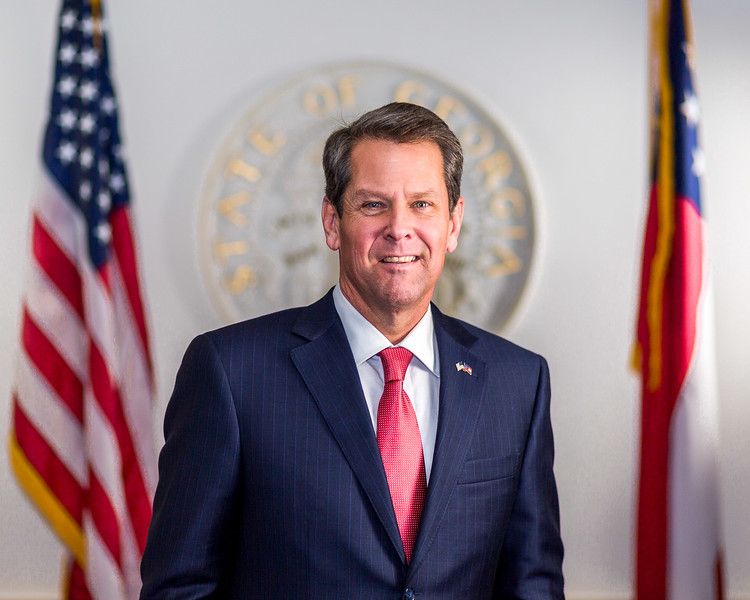
ATLANTA – A pioneer in robotic-assisted surgery is expanding its presence in Georgia with an investment of more than $500 million that will create about 1,200 jobs, Gov. Brian Kemp announced Wednesday.
Intuitive will add to the approximately 180 professionals already based in Gwinnett County. The company, which has been in Peachtree Corners for a decade, plans to grow its campus to include more than 750,000 square feet of manufacturing and engineering operations, state-of-the-art training facilities for surgeons and hospital care teams, and administrative offices.
“With our advanced medical environment, dynamic workforce, pro-business policies, and thriving economy, Intuitive made the right decision in choosing Georgia,” Kemp said.
Headquartered in Sunnyvale, Calif., Intuitive is the manufacturer of the da Vinci robotic-assisted surgical systems, which surgeons worldwide have used in more than 8.5 million procedures. Growing demand for robotic-assisted technologies spurred the Gwinnett expansion.
“Intuitive needs a highly educated, committed, and diverse workforce, quality infrastructure and the right geography to meet the rising demand for minimally invasive surgical technologies,” Intuitive CEO Gary Guthart said. “We’ve found that here, and we’re excited to continue to grow in the state.”
Intuitive is expected to open its new campus in phases, with completion by 2024.
The company plans to fill a variety of jobs in manufacturing, production, distribution, engineering, sales, training and customer service. Individuals interested in future careers with Intuitive are encouraged to check careers.intuitive.com/us/en.
The Georgia Department of Economic Development’s Global Commerce Division worked with Partnership Gwinnett, the city of Peachtree Corners, the Metro Atlanta Chamber, and Georgia Power to land the project.
“The last year truly has highlighted the need to aggressively expand our life sciences and health care device ecosystem and partner with cutting-edge companies like Intuitive as they continue to innovate and grow,” state Commissioner of Economic Development Pat Wilson said.
“We are grateful to Intuitive for their commitment to creating hundreds of quality jobs in this vital strategic industry right here in Georgia.”
ATLANTA – A civil rights group Wednesday criticized Georgia’s new absentee ballot form as an invasion of privacy.
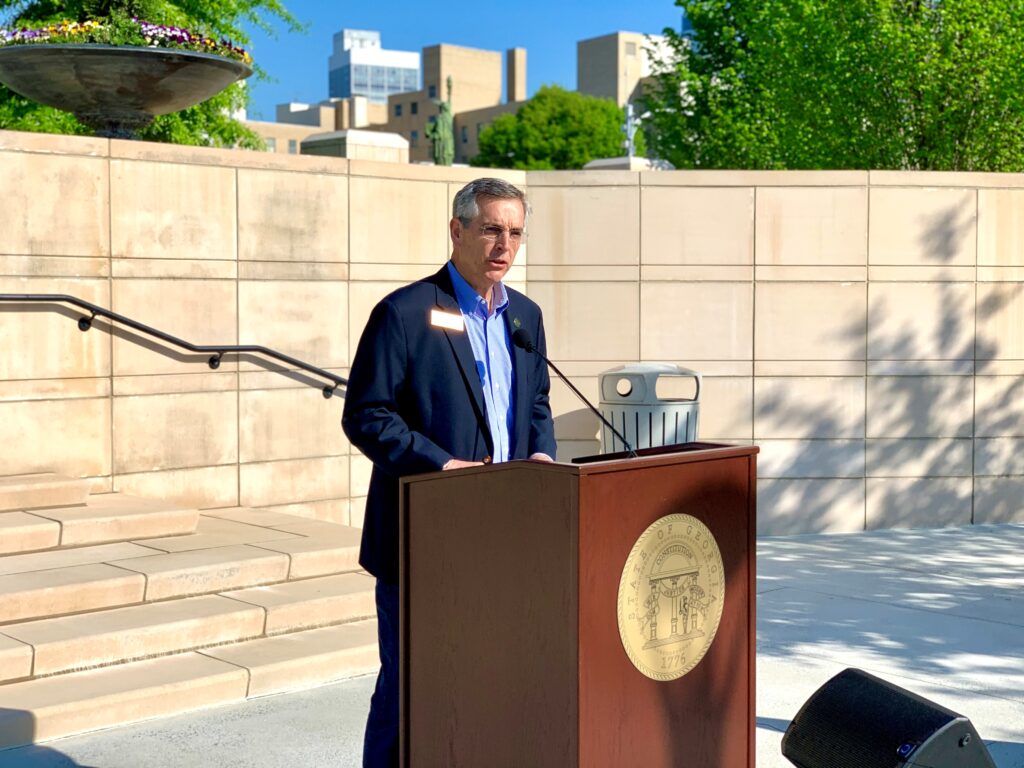
Secretary of State Brad Raffensperger unveiled the new ballot on Tuesday. Based on the controversial election law overhaul the Republican-controlled General Assembly passed in March, it requires absentee voters to provide their driver’s license number or some other form of state ID.
“Georgia’s anti-voter law is requiring voters to provide sensitive personal information in an era where identity theft is easy,” said Rahul Garabadu, voting rights attorney of the ACLU of Georgia.
“Our lawsuit challenges these unnecessary and more burdensome ID requirements that will have the heaviest impact on voters of color and voters with disabilities.”
The ACLU, other civil rights and voting rights groups and the Biden administration’s Justice Department have sued to overturn the new law, which took effect July 1.
Among other things, the legislation replaces the signature-match verification process for absentee ballots with the ID requirement, restricts the location of ballot drop boxes and prohibits non-poll workers from handing out food and drinks within 150 feet of voters standing in line.
Raffensperger has defended requiring absentee voters to provide a driver’s license number as an objective form of identity verification compared with signature matches, which have long drawn complaints from Democrats and Republicans as requiring subjective judgment.
The law’s opponents say it amounts to politically motivated voter suppression, with requirements that will disproportionately affect low-income and minority voters.
Supporters say it’s a voting integrity measure aimed at restoring public trust in the electoral process.
Coronavirus has sickened hundreds of thousands people and killed thousands more in Georgia. (Image: Centers for Disease Control and Prevention)
ATLANTA – The University System of Georgia is stopping short of requiring students returning to classes during the next couple of weeks to wear masks or get vaccinated against COVID-19.
With confirmed cases of the virus, hospitalizations and deaths on the rise in Georgia, the university system issued guidelines this week urging but not mandating masking and vaccinations.
“The University System of Georgia recognizes COVID-19 vaccines offer safe, effective protection and urges all students, faculty, staff and visitors to get vaccinated either on campus or with a local provider,” the guidelines stated.
“Additionally, everyone is encouraged to wear a mask or face covering while inside campus facilities. The system continues to work closely with the Georgia Department of Public Health to prioritize the health and safety of our campus communities.”
With the particularly contagious Delta variant of the virus spreading, about 600 of the nation’s 4,000 colleges and universities have ordered students to get fully vaccinated in time for the fall semester, while hundreds also have imposed mask mandates.
The schools have cited new guidelines from the Atlanta-based Centers for Disease Control and Prevention recommending that even fully vaccinated Americans mask up indoors.
The University System of Georgia policy is in keeping with Gov. Brian Kemp’s position on virus mandates. Like other Republican governors, Kemp has resisted calls to require Georgians to mask up or get vaccinated throughout the course of the pandemic.
Kemp criticized Atlanta Mayor Keisha Lance Bottoms Wednesday for ordering the wearing of masks inside buildings.
“Atlanta police don’t have time to be enforcing an unnecessary mask mandate,” the governor wrote on Twitter. “We trust people to do the right thing, talk to their doctor, and get vaccinated.”
Kemp has been getting pressure from both sides of the mandates debate. Some Republicans have urged him to prohibit local school systems from imposing mask mandates – as officials have ordered in the Gwinnett County and city of Decatur school districts.
On the other hand, state Sen. Michelle Au, D-Johns Creek, urged the governor to impose a statewide mask mandate.
“You can’t just talk about personal liberties and not take into account personal responsibility,” Au said. “You shouldn’t run for office if you don’t want to make the hard calls and take the unpopular stances.”
As a Tuesday afternoon, the state Department of Public Health had confirmed 942,887 cases of coronavirus in Georgia since the pandemic began. The virus was responsible for 67,309 hospitalizations and 21,734 confirmed or probable deaths.
ATLANTA – Three Georgia-based labor unions are getting behind the nearly $1 trillion infrastructure bill now being considered by the U.S. Senate.
In a letter late last week to Republican members of the state’s congressional delegation, executives from the Atlanta North Georgia Labor Council, the Coalition of Black Trade Unionists and Amalgamated Transit Union Local 732 urged passage of the legislation to repair and replace Georgia’s aging roads and bridges, boost investment in public transit and broadband and create good-paying jobs.
“For too long … Georgia workers and commuters have weathered poor road, bridge, and highway conditions — from metro Atlanta all the way to the Florida-Georgia line,” wrote James Williams, president of the Atlanta North Georgia Labor Council, and Sandra L. Williams, the union’s executive director.
“Thankfully, President Biden is bringing both sides of the aisle to the table to make historic investments in Georgia jobs, transportation, and connectivity. We are urging you to put aside Washington partisanship, support President Biden’s Bipartisan Infrastructure Deal, and make critical investments in Georgia’s infrastructure.”
The Senate bill contains $550 billion in new spending over five years. The package is expected to provide $110 billion for roads and bridges, $66 billion for rail and $39 billion for public transit.
Another $65 billion would go to expand high-speed broadband connectivity, while $55 billion would fund water and sewer projects.
With substantial bipartisan support, the legislation stands a good chance of passing the Senate by the end of this week. Congress is scheduled to begin its annual August recess next week.
However, the bill could run into difficulty in the U.S. House of Representatives, where Speaker Nancy Pelosi, D-Calif., wants to link it to a larger measure funding “human” infrastructure including child care and health care programs. That $3.5 trillion investment plan lacks Republican support.
ATLANTA – U.S. Sen. Jon Ossoff, D-Ga., introduced legislation Tuesday aimed at making the installation of rooftop solar panels more affordable for American businesses and homeowners.
The RAISE the Roof Act (Revamping Appropriate Incentives for Solar Energy) would expand solar tax credits to cover roof repairs and replacements necessary to accommodate solar panels. It also would help property owners pay for integrated solar roofing systems, a cutting-edge technology that involves making solar panels a part of the roof rather than using brackets to attach them.
“This bill will make it more affordable for all Americans to install rooftop solar panels, saving them money on their electric bills and boosting renewable energy production nationwide,” Ossoff said. “I will continue leading Senate efforts to scale up renewable energy production.”
The rooftop solar bill follows legislation Ossoff introduced in June providing tax credits to U.S. manufacturers of solar panels. Both bills enjoy widespread support across the solar energy industry.
“We need millions of new solar installations to decarbonize the economy, and that starts with equal tax treatment for solar built on new home construction, manufactured homes, and existing homes,” said Abigail Ross Hopper, president and CEO of the Solar Energy Industries Association.
“This legislation will make sure that homes that have solar built into the original design are eligible for the same [investment tax credit] benefits as any other residential solar installation and will extend the cost-saving benefits of solar energy to all Americans.”
A companion bill to Ossoff’s legislation is being introduced in the U.S. House of Representatives, sponsored by Democratic Reps. Bill Pascrell Jr. and Mikie Sherrill, both from New Jersey.