ATLANTA – Most bills the General Assembly passes each year take effect on July 1.
But a smattering of new laws enacted during the 2022 legislative session will kick in this Sunday, Jan. 1, including a bill making it easier for food trucks to do business and several new or expanded tax credits.
The food truck legislation does away with a current requirement in Georgia law that food truck operators obtain a permit and inspection in every county where they do business.
“Almost all food trucks operate in multiple counties,” said Tony Harrison, board president of the Food Truck Association of Georgia. “That means multiple permits and fees. It’s just insane.”
Under House Bill 1443, which members of the General Assembly passed unanimously last March, food truck operators need only notify county health departments when they open for business in their communities.
“We do not have to go through all the paperwork and fees,” Harrison said. “We’ve already seen an increase in food trucks popping up before the law has even taken effect.”
While the tax credit bills technically became effective last summer, they don’t really become reality until New Year’s Day, the beginning of the tax year.
Three of the measures create new income tax credits.
House Bill 424 will provide a tax credit to Georgia taxpayers who contribute to nonprofit organizations that help foster children about to age out of the foster care system. More than 700 young men and women age out of the system each year.
Senate Bill 361, which was championed by Lt. Gov. Geoff Duncan, will provide a dollar-for-dollar income tax credit on contributions to public safety initiatives in the taxpayer’s community. Law enforcement agencies will be able to use the money for police officer salary supplements, to purchase or maintain department equipment and/or to establish or maintain a co-responder program.
Senate Bill 87, the Jack Hill Veterans’ Act, honors the late state Sen. Jack Hill of Reidsville, who died in 2020. It provides income tax credits in exchange for contributions to scholarships for service-disabled veterans through the Technical College System of Georgia Foundation.
The General Assembly also expanded Georgia’s rural hospital tax credit through House Bill 1041, which increases the annual statewide cap on the credit from $60 million to $75 million. Rural hospital administrators and the program’s legislative supporters originally sought to raise the cap to $100 million but were forced to settle for the lower figure.
Fiscal conservatives in the General Assembly have launched efforts in recent years to bring closer scrutiny to Georgia’s tax credits to ensure they’re worth the hit to state tax revenues.
But tax credits that incentivize taxpayers to contribute toward popular causes that need financial help have tended to survive unscathed, said Kyle Wingfield, president and CEO of the Georgia Public Policy Foundation.
“There don’t seem to be a whole lot of problems with them,” Wingfield said.
Another bill that will take effect on Sunday, Senate Bill 332, also known as the Inform Consumers Act, is aimed at preventing criminals from selling goods stolen from retail stores on any online marketing platform. It establishes financial and contact information requirements for high-volume sellers to online marketplaces and requires such platforms to establish an option for consumers to report suspicious activity.
“Here in Georgia, we will do everything possible to curb crime and make life difficult for those who break the law,” Gov. Brian Kemp said last May as he signed the bill. “We’re dealing another blow to the organized gangs that steal from Georgia shops and stores by making it much harder for them to profit from their heists.”
This story is available through a news partnership with Capitol Beat News Service, a project of the Georgia Press Educational Foundation.
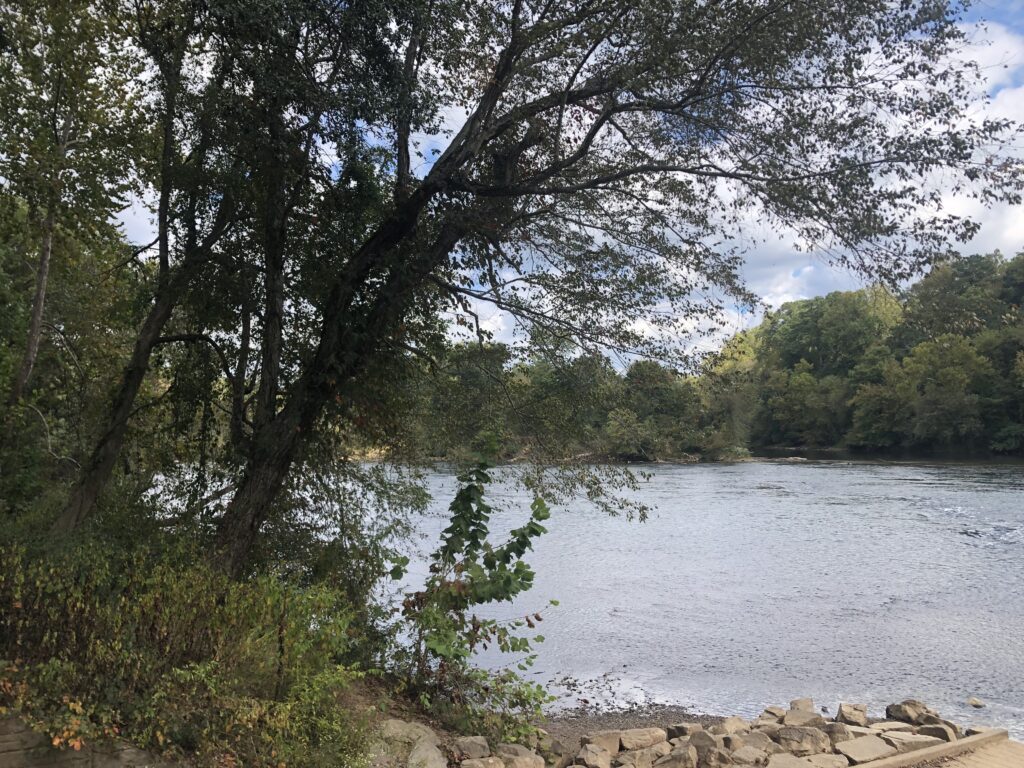
ATLANTA – President Joe Biden has signed legislation aimed at protecting the Chattahoochee River.
The first-of-its-kind measure authorizes $90 million in federal funds for the U.S. Army Corps of Engineers to work with local partners on water projects throughout the Chattahoochee River system.
Biden signed the bill last week as part of congressional reauthorization of the Water Resources and Development Act.
“This exciting new program will improve water quality, protect essential public works, and restore ecosystems along the river, which supplies much of our state’s drinking water,” said U.S. Sen. Jon Ossoff, D-Ga., who introduced the bill into the Senate along with Sen. Raphael Warnock, D-Ga.
“Clean water is essential for healthy and thriving communities,” Warnock added. “While the Chattahoochee River’s water quality has improved in recent years, hundreds of miles of Chattahoochee watershed waterways still do not meet water-quality standards.
“I’m proud to have worked with Senator Ossoff to ensure this provision that will invest in improving, protecting, and preserving the Chattahoochee River gets signed into law.”
According to the Georgia River Network, the Chattahoochee supplies 70% of metro Atlanta’s drinking water. The river is also a key source of water for farmers and an important source of power generation through hydroelectric dams.
However, more than 1,000 miles of waterway within the Chattahoochee watershed do not meet water quality standards, creating potential health risks to humans and wildlife.
In 2019, the National Park Service reported visitors to the Chattahoochee River National Recreation Area added more than $200 million to the metro region’s economy, supporting more than 2,000 local jobs.
This story is available through a news partnership with Capitol Beat News Service, a project of the Georgia Press Educational Foundation.
ATLANTA – Marietta-based WellStar Health System and Augusta University Health System (AUHS) have signed a letter of intent to form a partnership, the two systems announced Tuesday.
The proposed partnership, subject to a final agreement and regulatory approval, would let WellStar create a broader affiliation with Augusta University’s Medical College of Georgia (MCG) as AUHS joins the WellStar system.
“By bringing Augusta University Health System together with WellStar Health System and leveraging our respective strengths, we would improve the health of the community, address social determinants of health and expand access to quality care for all Georgians,” said Candice Saunders, WellStar’s president and CEO.
The two systems have been working toward a partnership since 2019.
“AUHS, Augusta University and the WellStar Health System have a shared mission to solve Georgia’s health-care challenges,” said Sonny Perdue, chancellor of the University System of Georgia. “By joining forces and working together, we can leverage WellStar’s clinical platform and leading-edge systems to support patients while providing more opportunities for students to learn, train and care for residents in local communities across Georgia.”
If approved, the partnership would focus on expanding digital health offerings to create more convenient access to care and provide more individualized care regardless of location. It also is aimed at growing Georgia’s pipeline of physicians and other health-care providers as well as developing new treatments.
While there are aspects of the proposed partnership yet to be determined, it likely would result in significant investments to improve existing health-care facilities and expand access to care across the state, including a new hospital and medical office buildings in Columbia County.
“Providing health care has never been as dynamic and complex as it is today,” said Brooks Keel, president of Augusta University. “This partnership … would enable us to extend our mission of improving health through excellence in patient care, education and research for the benefit of Georgians.”
A new teaching campus at WellStar Kennestone Hospital could also be established under the proposed partnership. As a result, MCG, which already has the ninth-largest freshman medical school class in the nation, would grow to become one of the largest public medical schools in the country.
Tuesday’s announcement came less than two months after WellStar’s Atlanta Medical Center closed its doors, dealing a huge blow to patient care in Georgia’s capital city. The state responded by sending $130 million in federal pandemic funds to Grady Memorial Hospital to help offset the impact of the closure.
This story is available through a news partnership with Capitol Beat News Service, a project of the Georgia Press Educational Foundation.
ATLANTA – A South Georgia lawmaker is preparing another effort to stop an Alabama-based company from mining titanium near the Okefenokee Swamp.
State Rep. Darlene Taylor, R-Thomasville, plans to introduce legislation early in this winter’s General Assembly session banning surface mining along Trail Ridge in Charlton County, where Twin Pines Minerals is seeking permits to mine titanium oxide near the edge of the largest black water swamp in North America.
“It’s a very special place,” Taylor said last week. “It’s ecologically important to the region, the state, and the country. If there’s a miscalculation, you can’t correct it.”
Taylor introduced a bill to stop mining near the Okefenokee during this year’s legislative session. But when the bill died in the House Natural Resources & Environment Committee, the project’s opponents settled for passing a non-binding resolution recognizing the importance of the swamp and encouraging efforts to promote it as a tourist destination.
House lawmakers approved the resolution in early April at a time the question of whether the U.S. Army Corps of Engineers or Georgia Environmental Protection Division (EPD) held jurisdiction over permits for the proposed mine was up in the air.
“They were batting it back and forth,” Taylor said. “We didn’t feel like it was a good time to move it forward until we knew who had authority over it.”
Since then, the EPD has resumed its review of Twin Pines’ plan. The Army Corps stepped aside last summer in an out-of-court settlement of a lawsuit filed by Twin Pines.
Josh Marks, an environmental attorney and a leader of a successful effort during the 1990s to stop DuPont Chemical from strip mining near the Okefenokee, welcomed the renewal of Taylor’s bid to block the Twin Pines project.
“With leading scientific experts from [the University of Georgia] saying that mining on Trail Ridge will lower the swamp’s water level and drop salt into the swamp, with devastating consequences, there’s simply no justification for allowing any mining there,” Marks said. “That’s why legislation … is so desperately needed.”
The Biden administration also weighed in on the project recently. After visiting the Okefenokee National Wildlife Refuge in September, Interior Secretary Deb Haaland sent a letter to Gov. Brian Kemp urging the state not to approve the proposed mine.
Twin Pines officials argue the mine does not threaten the swamp, noting the proposed site for the project is about three miles from the southeast corner of the Okefenokee at its closest point. The company also is pledging to restore the land to its original contours and native vegetation after mining activity is completed.
EPD spokeswoman Sara Lips wrote in an email the agency will conduct a public comment period on the project – likely to run for 60 days – beginning at a date yet to be determined. Additionally, EPD is accepting comments at TwinPines.Comments@dnr.ga.gov, which will be considered during the permitting process.
This story is available through a news partnership with Capitol Beat News Service, a project of the Georgia Press Educational Foundation.
ATLANTA – The Georgia Senate seat vacated this week by Sen. Dean Burke, R-Bainbridge, already is drawing attention.
State Rep. Sam Watson, R-Moultrie, has resigned his House seat to run for the opening in Southwest Georgia’s 11th Senate District.
Gov. Brian Kemp has scheduled special elections Jan. 31 to fill both seats.
Watson was elected in 2012 to represent House District 172, which at the time included portions of Colquitt, Tift, and Thomas counties.
A farmer by trade, Watson has been active on agricultural issues in the General Assembly. He served on the House Agriculture Committee as well as the Appropriations, Natural Resources & Environment, and Ways and Means committees.
Watson was reelected to a newly redistricted House District 172 seat in November, running unopposed. The district now no longer includes Tift County but instead takes in a portion of Cook County.
Burke resigned the Senate seat this week to take a job as chief medical officer of the Georgia Department of Community Health.
This story is available through a news partnership with Capitol Beat News Service, a project of the Georgia Press Educational Foundation.