ATLANTA – The interim commissioner at the Georgia Department of Revenue will take over the position on a permanent basis. Gov. Brian Kemp announced Thursday.
Kemp appointed Frank O’Connell interim commissioner of the revenue agency last November when then-Commissioner Robyn Crittenden left state government to take a job in the private sector.
“Frank O’Connell has demonstrated the leadership and expertise necessary to lead the Department of Revenue in the days ahead,” Kemp said.
“Under his leadership, I am confident the Department of Revenue will remain focused on its duties to the people of Georgia and responsible stewardship of the resources entrusted to us by taxpayers.”
O’Connell served as the revenue department’s general counsel and director of legal affairs and tax policy before being named interim commissioner.
He began almost 20 years of service with the state in the agency’s Compliance Division before transferring to the Legal Affairs & Tax Policy Division as assistant director.
This story is available through a news partnership with Capitol Beat News Service, a project of the Georgia Press Educational Foundation.
ATLANTA – A Georgia House committee has approved legislation aimed at breaking a legal logjam that has held up the state’s medical marijuana program for years.
House Bill 196, which cleared the House Judiciary Committee (Non-civil) late Wednesday, would expand the number of medical cannabis production licenses the state awards to 14, up from the current six.
The eight licenses not already awarded would go to companies that filed lawsuits when their bids for licenses were denied. Those legal protests remain pending and – if unresolved – could drag on for up to two years, preventing the program from moving forward and providing low-THC cannabis oil to Georgia patients suffering from a range of diseases.
“I’m recommending a fix to get this thing up and going,” state Rep. Alan Powell, R-Hartwell, the bill’s chief sponsor, told the committee. “This gets us out of litigation. The licenses could be issued, and [the companies] could go forward.”
The General Assembly first legalized possessions of cannabis oil for medicinal purposes back in 2015. However, it wasn’t until 2019 that lawmakers passed legislation allowing commercial businesses to grow marijuana indoors under close supervision, convert the leafy crop into low-THC cannabis oil and sell the product at dispensaries they own.
The 2019 law created a state commission to oversee the program by issuing six licenses to winning bidders, two Class 1 licenses allowing marijuana to be grown in spaces up to 100,000 square feet. The other four were for a smaller growth space of up to 50,000 square feet.
The Georgia Access to Medical Cannabis Commission has awarded the two Class 1 licenses, and the winning companies are preparing to launch their operations.
Botanical Sciences LLC recently dedicated its production facility in Glennville, while Trulieve Georgia is ramping up its plant in Adel.
“We have already begun the production process, which starts with the seeding of cannabis plants in our indoor growing facility producing a variety of tinctures, capsules, and topicals formulated to address the needs of Georgia patients,” Botanical Sciences CEO Gary Long said this week.
“The opening of our facility was a key milestone for our company, for the city of Glennville, and for the many thousands of those in need awaiting access to this critical form of medicine.”
While the two Class 1 licensees move ahead, the four Class 2 licensees – which were awarded tentative licenses last year – are in legal limbo, with their awards being held up by lawsuits pending in the Georgia Court of Appeals.
Kristen Goodman, a lawyer representing four of the losing bidders, called the commission’s procurement process a “train wreck” veiled in secrecy. Without naming names, she said donations were made by winning bidders to some of those involved in evaluating the bids.
Goodman said the licenses the commission has awarded – both tentative and final – have gone to out-of-state companies that have concentrated their planned dispensaries in the more populated areas of Georgia around Atlanta, Macon, and Augusta.
“They’re not serving the children who have excessive seizures in Northwest Georgia. They’re not serving the children with cancer in Southwest Georgia,” she said. “They have all the market they need right here in the central part of the state.”
Goodman urged the committee to approve the bill because the additional licenses would render the lawsuits moot and allow the program to move forward.
“We owe it to the citizens of Georgia waiting for this medication,” she said.
Powell’s bill now heads to the House Rules Committee to schedule a vote on the House floor.
This story is available through a news partnership with Capitol Beat News Service, a project of the Georgia Press Educational Foundation.
ATLANTA – The Inflation Reduction Act (IRA) Congress passed last year includes nearly $370 billion to address climate change, enough to launch a “whole new industry,” Vice President Kamala Harris said Wednesday on the campus of Georgia Tech.
“There are going to be a lot of new jobs, a lot of new work,” Harris said during an appearance promoting the State of the Union message President Joe Biden delivered Tuesday night. Biden was promoting his speech to the nation almost simultaneously with Harris during a presidential visit Wednesday to Wisconsin.
Harris’ remarks in Atlanta were focused on the portion of the State of the Union message in which Biden called climate change “an existential threat” that the IRA will begin addressing with “the most significant investment ever in climate change.”
Harris, America’s first Black vice president, said she approaches climate change from the perspective of the need for environmental justice.
“Some of the poorest air quality zones in our nation are where people of low income and people of color live,” she said.
Harris said the same dynamics are at play when it comes to water policy in America, citing the discovery in 2014 that the water supply in mostly Black Flint, Mich., was contaminated with lead.
“Access to clean water should be a right and not just a privilege to those who can afford it,” she said. “Government should be paying to remove those pipes. We shouldn’t be putting it just on the residents and homeowners in those communities.”
The government is striking another blow for environmental justice in the tax rebates being offered to Americans who purchase not just new electric vehicles but used EVs, Harris said.
“Everyone should be able to participate in this new clean energy economy,” she said.
Harris said the Biden administration feels a sense of urgency when it comes to dealing with climate change that is already causing a rise in droughts, wildfires, floods, and hurricanes.
“The clock is not just ticking,” she said. “It’s banging. It’s requiring us to move quickly.”
Republicans criticized Harris’ trip to Georgia.
“While hardworking Georgians … are burdened by the high cost of everyday goods, Kamala Harris’ visit today proves just how out of touch this administration is,” said Ronna McDaniel, chairwoman of the Republican National Committee, echoing Arkansas GOP Gov. Sarah Huckabee Sanders’ Republican response to the State of the Union address.
“Instead of spewing more of the same empty rhetoric that Biden delivered last night, Democrats need to take accountability for their failures on everything from rising prices to skyrocketing crime.”
This story is available through a news partnership with Capitol Beat News Service, a project of the Georgia Press Educational Foundation
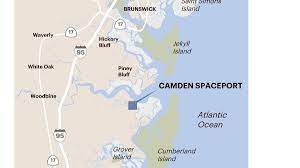
ATLANTA – The Georgia Supreme Court Tuesday upheld a lower court ruling verifying the validity of a voter referendum in Camden County last March that rejected plans to build a commercial spaceport.
In the referendum, Camden voters soundly defeated the county’s plan to purchase land for the proposed Spaceport Camden. The county, which had gone to probate court before the referendum to try to block it, appealed to the state Supreme Court after the vote.
In oral arguments before the justices last October, lawyers for Camden County argued the Georgia Constitution’s Home Rule Paragraph does not allow local voters to veto a county commission’s resolution after the fact.
Lawyers for the project’s opponents, registered voters who gathered petition signatures to force the referendum, countered that the vote was valid under a plain reading of Home Rule.
In Tuesday’s unanimous ruling, the state Supreme Court agreed with Spaceport Camden’s opponents, declaring that the county had no legal authority to try to block the referendum.
“The Home Rule Paragraph makes no provision authorizing a county, or any other party, to file a caveat, or any other form of opposition, to an electors’ petition,” Justice Carla Wong McMillian wrote for the court.
“With respect to challenging an election, the statute governing contests to elections … limits the right to contest elections to ‘electors.’ Because the county is not an elector, it would not be authorized to contest the outcome of the special election.”
Camden County’s political leaders have sought to build a spaceport for years, claiming it would bring jobs and economic development to southeast Georgia. The county has spent $12 million pursuing the project.
Opponents say firing small rockets from Spaceport Camden over populated areas of Little Cumberland Island, just off the coast, would pose a major safety risk.
The National Park Service – which operates the Cumberland Island National Seashore – and environmental organizations worried about the spaceport’s impact on a fragile coastal ecosystem have also expressed reservations about the project.
Tuesday’s ruling didn’t bring to an end to the litigation surrounding Spaceport Camden. A federal lawsuit challenging the Federal Aviation Administration’s issuance of a launch permit in December 2021 remains pending.
Opponents of Spaceport Camden also have filed a lawsuit in Camden County Court seeking the release of public records concerning the project.
This story is available through a news partnership with Capitol Beat News Service, a project of the Georgia Press Educational Foundation.
ATLANTA – Georgia Secretary of State Brad Raffensperger urged the General Assembly Monday to pass legislation aimed at preventing the financial exploitation of Georgia seniors.
Senate Bill 84, sponsored by Senate Finance Committee Chairman Chuck Hufstetler, R-Rome, would authorize financial advisors to delay transactions involving their elderly or disabled clients if they suspect fraud.
Financial exploitation of seniors has been on the rise since the pandemic struck nearly three years ago, Raffensperger said Monday during a news conference at the state Capitol.
“The COVID pandemic helped [drive] that rapid increase as you saw many people isolated from their support systems and under tremendous financial strain and worry,” he said.
Raffensperger said the rate of financial exploitation of seniors has doubled across the country since the start of the pandemic, with COVID-related scams accounting for more than $100 million in losses.
He cited a federal study that found U.S. financial institutions lost more than $3.4 billion to fraudulent criminal activity in 2020 alone.
The Securities Division in the secretary of state’s office handles complaints of financial exploitation. But those complaints often come too late, Raffensperger said.
“The money is usually gone well before we are notified,” he said. “Recovery is difficult.”
Senate Bill 84 is designed to avoid financial exploitation by letting financial advisors who spot something amiss in a pending transaction head it off.
“This bill will give financial institutions the tools to be preemptive instead of waiting until after the fact when the money may be gone,” Hufstetler said. “There’s many horror stories of that out there, and we want to take care of them.”
The bill’s cosponsors include Republican Sens. Mike Dugan of Carrollton, Kay Kirkpatrick of Marietta, Ben Watson of Savannah, and Rick Williams of Milledgeville, and Democratic Sen. Jason Esteves of Atlanta.
This story is available through a news partnership with Capitol Beat News Service, a project of the Georgia Press Educational Foundation.