ATLANTA – Initial unemployment claims in Georgia declined again last week for the ninth week in a row, the state Department of Labor reported Thursday.
Jobless Georgians filed 117,485 initial unemployment claims during the week ending June 27, down 8,240 from the previous week.
“The claims numbers continue to improve each week,” Georgia Commissioner of Labor Mark Butler said. “The sheer volume of claims is enough to overwhelm any office, but I am proud that my staff has worked day in and day out to accomplish a 91% payment record.”
Acknowledging the unprecedented workload massive unemployment resulting from the coronavirus pandemic has forced on the labor department, the General Assembly spared the agency from spending cuts when it adopted a fiscal 2021 state budget last week with $2.2 billion in spending reductions.
On Thursday, the department reported paying out more than $7.5 billion in state and federal unemployment benefits during the 15 weeks since the pandemic prompted shelter-in-place orders that forced Georgia businesses to close and lay off workers.
Since March 21, the job sector accounting for the most initial unemployment claims is accommodations and food services with 702,127. The health-care and social-assistance sector is well below that in second place with 338,505 initial unemployment claims, followed closely by retail trade with 319,225 claims.
More than 107,000 jobs are listed online at EmployGeorgia.com for Georgians to access. The labor department offers online resources for finding a job, building a resume and helping with other reemployment needs.
A tidying up for Georgia’s dual enrollment program that state lawmakers passed earlier this year should help rein in costs and tighten what courses high schoolers can claim as college credits, according to a recent state audit.
The popular program allowing Georgia high schoolers to take certain courses that satisfy both high school and college credits has faced criticism in recent years over unsustainable enrollment growth and soaring costs.
In 2018, the state Department of Audits and Accounts found the program had no clear oversight and that few controls were in place to track dual enrollment’s impact on boosting college readiness for Georgia students.
Those problems were addressed in legislation brought by Rep. Bert Reeves, R-Marietta, that passed out of the General Assembly and gained Gov. Brian Kemp’s signature in late April, according to a state audit issued this week.
In particular, the audit highlighted how caps on student enrollment and trimming course offerings to core subjects as required by the bill should help manage costs to keep the program financially afloat.
It also noted the bill hands oversight duties to the Georgia Student Finance Commission, making it easier for the state to track whether the program is meeting its purpose and avoiding excessive spending.
“The General Assembly took significant steps to control dual enrollment costs,” reads the audit.
Changes included limiting dual-enrollment classes at colleges and universities largely to 11th and 12th graders. Tenth graders will only be able to take courses at technical colleges unless they quality for the state’s Zell Miller scholarship.
College credits will be capped at 30 hours per semester for most eligible high schoolers. Those who have completed 19 or more hours by June 30 will be able to take an additional 12 hours.
Courses will also be limited to core subjects like English, math, science, social studies and foreign languages, as well as some career, technical and agricultural education classes.
Students can take extra dual-enrollment courses at their own expense.
The changes took effect on July 1.
Around 60,000 students were funded for the dual enrollment program at a total cost of $100.8 million this past fiscal year, according to the audit.
ATLANTA – Rural Georgians have complained for years about the lack of broadband connectivity in their communities.
Now, the exact extent of the problem will be known for the first time, thanks to a new broadband availability map published by the state Department of Community Affairs.
The General Assembly authorized preparation of the map as- part of legislation passed two years ago aimed at making reliable high-speed internet service more widely available across Georgia.
“This innovative map will enable the private sector to better see where Georgians lack access to high-speed internet, improve open-market competition and help providers explore partnerships to address the connectivity needs of our state,” Gov. Brian Kemp said in a prepared statement.
The new map shows clearly the huge disparity between access to high speed internet in metropolitan and rural areas. Of more than 507,000 home and businesses lacking access to reliable broadband service, nearly 70% are in rural parts of Georgia.
With the map about to come online, telecom providers have stepped up their investments in broadband deployment in recent months. Comcast Inc. announced a $9 million investment just last month to expand its internet services to nearly 8,000 homes and businesses in Haralson and Carroll counties in West Georgia.
“Broadband providers are not only key to solving the connectivity issues, but they have also been great partners in developing these maps,” said Calvin Rhodes, executive director of the Georgia Technology Authority.
The lack of adequate internet service in rural Georgia has become particularly glaring during the coronavirus pandemic. Students from rural communities have been forced to travel to the parking lots of closed businesses and libraries during the spring semester to pick up WiFi signals so they could download the online instruction that was replacing in-person classes.
“At the onset of the coronavirus pandemic, preliminary mapping data proved extremely useful in supporting [Georgia] Department of Education efforts to ensure student access to Wi-Fi solutions,” said Deana Perry, executive director of the Georgia Broadband program. “The Georgia Broadband office will continue to work closely with communities, providers and state agencies to support effective public-private partnerships aimed at serving those who are currently unserved.”
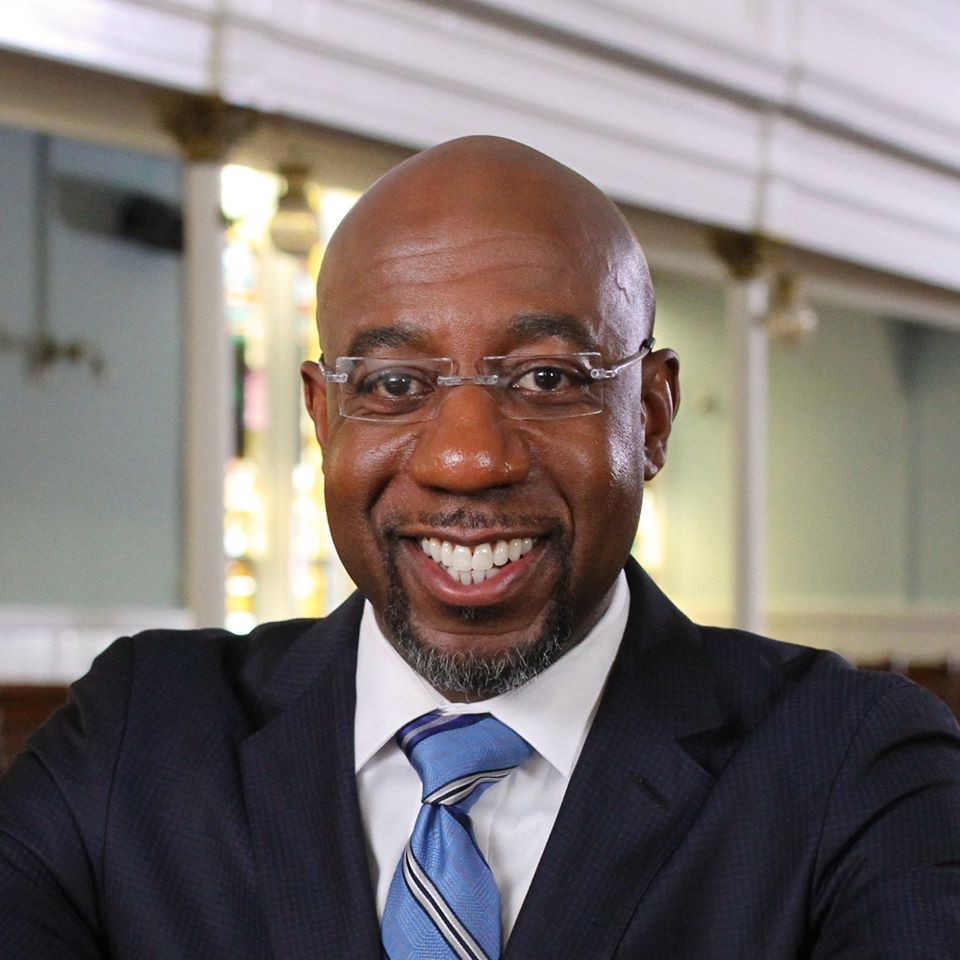
Rev. Raphael Warnock of Ebenezer Baptist Church (Credit: Warnock for Georgia)
ATLANTA – The Rev. Raphael Warnock raised more than $2.85 million during the last three months in his bid for a U.S. Senate seat, the Atlanta minister’s campaign reported Thursday.
Warnock, a Democrat, entered the race in January for the seat now held by Republican Sen. Kelly Loeffler, who succeeded retired Sen. Johnny Isakson on an interim basis that same month.
Under unique rules that apply to the race, Loeffler and Warnock are among 21 candidates who be on the ballot in a November free-for-all being conducted without the benefit of party primaries. If no one receives more than 50% of the vote – a virtual certainty in such a crowded field – the top two vote-getters will square off in a runoff in January.
Warnock’s second-quarter fund-raising totals give him more than $4.3 million since he filed his candidacy with the Federal Election Commission (FEC).
“Our strong fund-raising shows that Georgians are looking for real change and above all else, an authentic voice in Washington,” Warnock said. “Folks want to know someone is looking out for them, their health care, their children’s futures and their rights.”
Loeffler raised more than $1.1 million in campaign contributions during the first quarter. But the wealthy Atlanta businesswoman has much deeper pockets, having loaned her campaign $10 million thus far.
Loeffler’s main Republican opponent, U.S. Rep. Doug Collins, reported about $2.2 million on hand at the end of March.
Loeffler, Collins and the other candidates face a July 15 deadline for reporting their second-quarter fund-raising to the FEC.
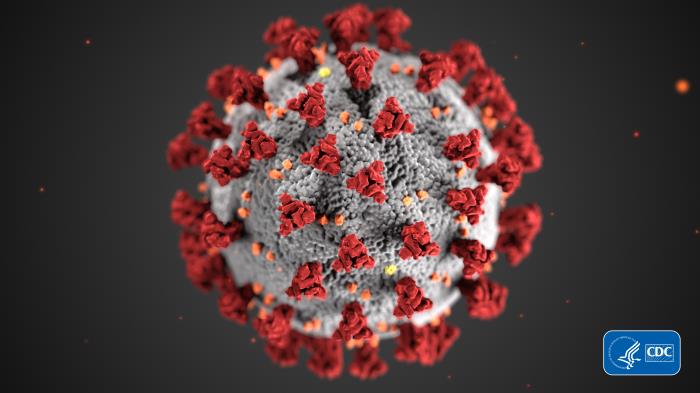
The Georgia dog is officially the second case of coronavirus confirmed in a U.S. canine since the virus swept across the country starting in March. (Image: Centers for Disease Control and Prevention)
A dog has tested positive for coronavirus in Georgia, marking the state’s first case of COVID-19 found in a dog.
The state Department of Public Health said Wednesday a six-year-old mixed breed was tested for coronavirus after developing a fatal neurological condition. The agency did not say where the dog resided.
The dog was tested after its owners also tested positive for the virus and was euthanized due to the neurological condition, which was unrelated to COVID-19, according to the agency.
Pets and wild animals do not pose a significant threat to spreading COVID-19 among humans, according to the federal Centers for Disease Control (CDC). Research is still being done on how easily the virus can spread from humans to animals.
Health experts advise people who contract COVID-19 to avoid touching their pets and have a relative or friend take care of them.
The Georgia dog is officially the second case of coronavirus confirmed in a U.S. canine since the virus swept across the country starting in March.
A German shepherd in New York was the first positive case, according to the U.S. Department of Agriculture (USDA).
A pug from North Carolina also reportedly tested positive for the virus, according to a study by Duke University in April.
Several lions and tigers at the Bronx Zoo in New York City tested positive for COVID-19 in April.
The Georgia dog’s positive tests were confirmed by state public health officials, the CDC, the USDA and the University of Georgia College of Veterinary Medicine.
As of Wednesday afternoon, more than 84,000 people in Georgia had tested positive for COVID-19. It had killed 2,827 people.
Gov. Brian Kemp and state health officials are urging Georgians to wear masks in public to help curb a growing number of positive COVID-19 cases and hospitalizations seen in recent weeks.