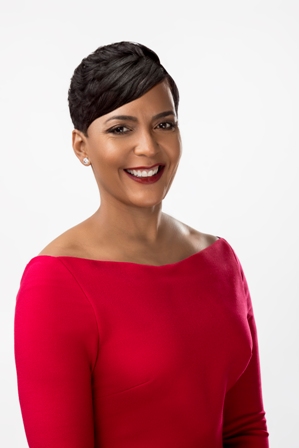
Atlanta Mayor Keisha Lance Bottoms has contracted COVID-19.
Bottoms, 50, announced Monday evening she has tested positive for the virus but has not experienced any symptoms.
“COVID-19 has literally hit home,” the mayor said on Twitter. “I have had NO symptoms and have tested positive.”
Georgia is among several states to see an uptick in positive coronavirus cases and hospitalizations in recent weeks following the Memorial Day holiday in late May.
Roughly 97,000 people in Georgia had tested positive for the virus as of Monday afternoon. It had killed 2,878 Georgians.
In an interview on MSNBC Monday, Bottoms said she did not know where she might have contracted the virus. She and her family members have been diligent about washing hands and wearing masks, she said.
Bottoms said her positive COVID-19 results arrived after she and her family had tested negative about two weeks ago.
“It leaves me for a loss of words because I think it really speaks to how contagious this virus is,” Bottoms said. “We’ve taken all of the precautions that you can possibly take.”
Public health experts and elected officials including Gov. Brian Kemp have urged people over the past week to wear masks in public. So far, the governor has held off on ordering a statewide mask mandate.
The mayor’s announcement comes as she grapples not only with the city’s response to coronavirus but also a spate of violence centered around a burned-down Wendy’s that has been a focal point for recent protests against police brutality and racial injustice.
The fatal shooting Saturday night of an eight-year-old girl, Secoriea Turner, near the Wendy’s restaurant sparked swift condemnation from Bottoms and other officials.
Kemp has placed Georgia under a state of emergency through next Monday in response to Turner’s death and vandalism at the state Department of Public Safety headquarters in Atlanta.
Atlanta authorities said Turner was shot and killed when a group of armed people opened fire on the car in which she was riding across the street from the Wendy’s.
The restaurant was burned down amid protests shortly after Brooks’ killing. Since then, the site has been frequented by armed persons who at times have barricaded the property, according to police.
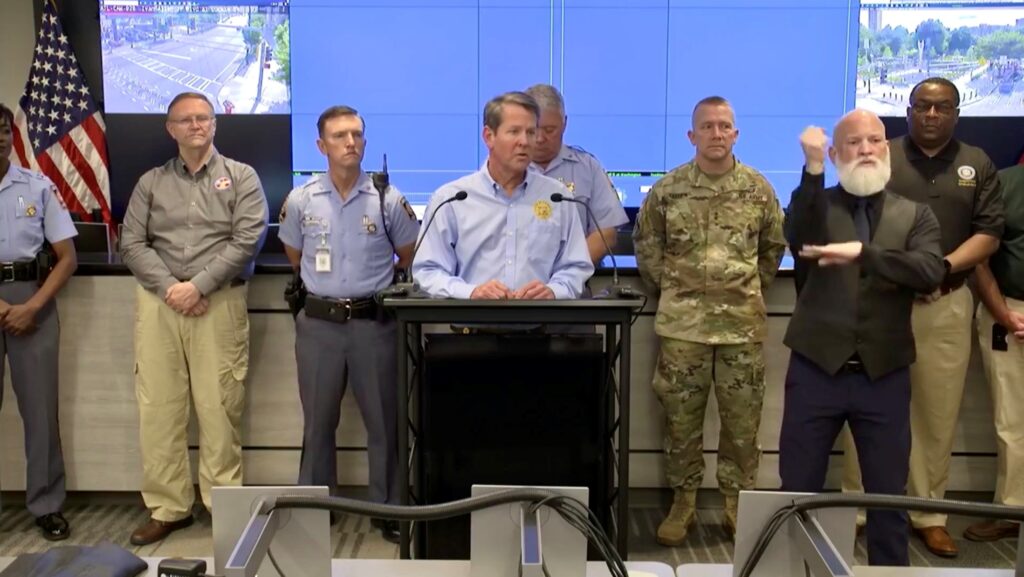
Gov. Brian Kemp discusses the state’s response to protests over police brutality and racial injustice at the State Operations Center in Atlanta on June 2, 2020. (Gov. Kemp’s officials Facebook page)
Gov. Brian Kemp placed Georgia under a state of emergency Monday afternoon following a pair of fatal shootings near a burned-down Wendy’s in Atlanta that has been a focal point for recent protests against police brutality and racial injustice.
The emergency order came hours after Kemp sounded a warning that his administration “won’t hesitate to take action” in the wake of the shooting deaths and after protesters damaged the state Department of Public Safety headquarters in Atlanta around 1 a.m. Sunday, according to the Georgia State Patrol.
The order authorizes Georgia National Guard troops to help quell any unruly protests and for state and local law enforcement “to do all things necessary to maintain peace and good order.”
“This measure will allow troops to protect state property and dispatch state law enforcement officers to patrol our streets,” Kemp said in a news release Monday. “Enough with the tough talk. We must protect the lives and livelihoods of all Georgians.”
Kemp’s office added the governor could authorize as many as 1,000 National Guard members under the order. The state of emergency is set to run through next Monday (July 13).
Atlanta authorities said eight-year-old Secoriea Turner was shot and killed when a group of armed people opened fire on the car in which she was riding late Saturday night.
The car was attempting to enter a parking lot across the street from the Wendy’s restaurant that the armed group had blocked off south of downtown Atlanta, according to city police.
A 53-year-old man was killed in a triple shooting next to the Wendy’s Sunday night roughly 24 hours after Turner’s death, according to police.
Kemp called the shootings and property damage part of a “recent trend of lawlessness [that] is outrageous and unacceptable.”
“While we stand ready to assist local leaders in restoring peace and maintaining order, we won’t hesitate to take action without them,” Kemp wrote on Twitter Sunday night.
The Wendy’s has been the site of intense protests following the death of Rayshard Brooks, a 27-year-old man who was shot by an Atlanta police officer on June 12 during an altercation outside the restaurant.
The restaurant was burned down amid protests shortly after Brooks’ killing. Since then, the site has been frequented by armed persons who at times have barricaded the property, according to police.
The governor’s comments come amid weeks of protests locally and across the country following the death of George Floyd in Minneapolis by a police officer who kneeled on his neck on May 25.
Last month, Kemp ordered 3,000 Georgia National Guard troops to mobilize for assisting local and state authorities with crowd control during protests in Atlanta and other Georgia cities.
On Sunday night, Atlanta Mayor Keisha Lance Bottoms also decried the shootings and vandalism, labeling the killing of Turner as a “random wild, wild west shoot ‘em up” that tarnishes the aim of peaceful protesters seeking criminal justice reform.
“We’ve got to stop this,” Bottoms said at a news conference Sunday night. “We are doing each other more harm than any police officer on this force.”
Kemp’s state-of-emergency order levelled criticism at Atlanta officials, saying they had “failed to quell” recent acts of violence and property damage in the city.
His order also notes between 60 and 100 people “armed with rocks, spray paint and fireworks” vandalized the Public Safety headquarters early Sunday and tried to set it on fire.
“Criminals are now victimizing Georgians to inflict chaos, cause fear among residents and thwart law enforcement,” the order says. “This ongoing threat to public safety will not be tolerated.”
Other elected officials also lamented Turner’s death and condemned the presence of armed persons involved in protests at the Wendy’s.
Sen. Nikema Williams, who chairs the Democratic Party of Georgia, urged an end to the “scourge of gun violence” threatening children.
“We must keep guns out of the hands of bad actors and protect our communities,” said Williams, D-Atlanta.
And U.S. Sen. Kelly Loeffler, R-Ga., touted legislation she introduced last month to withhold federal highway safety funds from state and local governments that move to reduce law enforcement funding.
“The heartbreaking and senseless violence in Atlanta must stop,” said Loeffler.
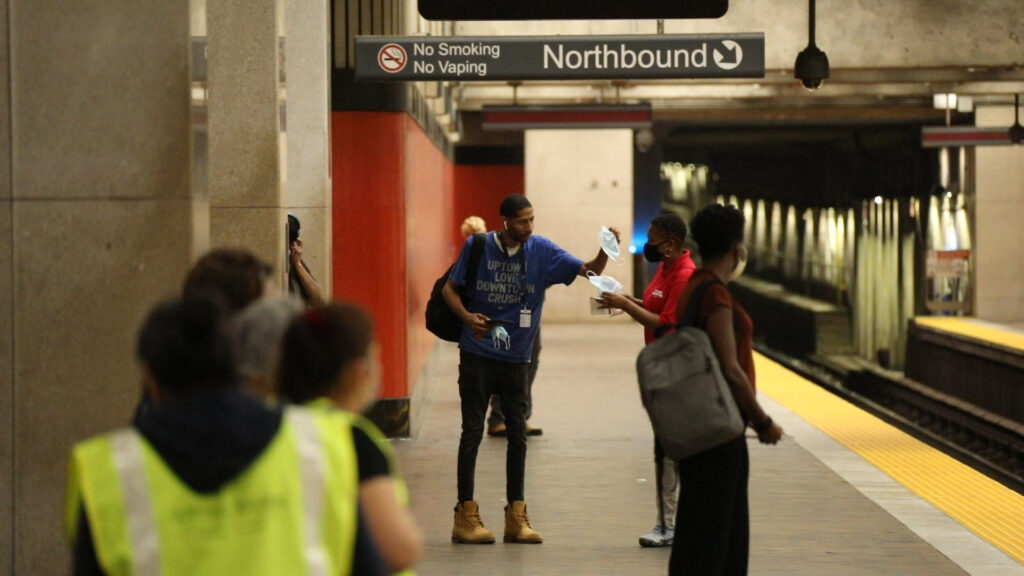
A MARTA employee (right) hands out a free mask Monday at the Five Points Station.
ATLANTA – MARTA employees and volunteers began handing out the first of up to 2 million free masks Monday at rail stations and bus stops.
The mask giveaway is part of the transit agency’s commitment to fight the spread of COVID-19. While MARTA is not requiring riders to wear masks, it is encouraging them to do so to protect themselves and those around them.
MARTA does require mask wearing of all of the system’s employees and contractors.
“Since the onset of the pandemic, we have instituted safety precautions and new cleaning protocols in order to continue providing essential transit service while protecting our customers and employees,” MARTA General Manager and CEO Jeffrey Parker said. “We are now asking our customers to join us in helping to stop the spread of this virus by wearing a mask while on MARTA.”
MARTA will be handing our free masks between 7 a.m. and 11 a.m. on weekdays, then expand the program to weeknights and weekends depending on ridership.
Customers needing a mask should look for a uniformed MARTA station agent or transit ambassador wearing a red “Team MARTA” shirt.
MARTA uses electrostatic sprayers to clean and sanitize its entire fleet of about 500 buses every night and disinfects high-touch surfaces on 200 buses each day.
Rail cars are lightly cleaned while in service and disinfected every night. The sprayers sanitize high-touch areas inside MARTA’s 38 rail stations daily.
The mask giveaway initiative will continue until further notice or until public health recommendations change.
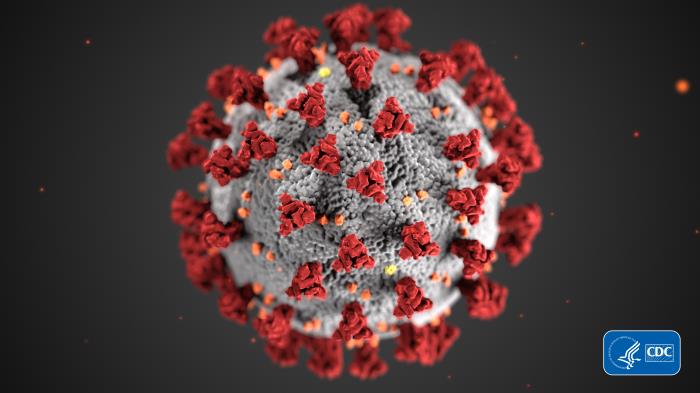
Coronavirus has sickened tens of thousands and killed thousands more in Georgia. (Image: Centers for Disease Control and Prevention)
A mix of relief, fear and uncertainty has cropped up for business leaders and worker advocates in Georgia eyeing new protections for companies and hospitals against coronavirus-related lawsuits.
Liability legislation passed the General Assembly last week to shield Georgia businesses and health-care facilities from lawsuits brought by people who contract coronavirus in all but the worst negligence or recklessness cases.
Gov. Brian Kemp has not yet decided whether to sign the liability protections into law. His office said Thursday the legislation is still under legal review.
If he signs the bill, business groups say the protection measures should lend confidence to a range of Georgia enterprises from mom-and-pop shops to sports stadiums that they will not face crippling litigation due to coronavirus.
But union representatives worry workers will be left in the lurch as thousands of front-line and low-wage employees in the state struggle to keep themselves safe from the virus either in the workplace or the courts.
“We rely on those people for our well-being and for our survival,” said Charlie Flemming, president of the AFL-CIO’s Georgia chapter. “If we’re not going to treat those front-line people with every safety precaution, I think that’s just a misplaced judgment.”
Senate Bill 359 would let Georgia businesses and hospitals waive liability for coronavirus-related claims so long as they post certain warning signs and do not willfully or grossly neglect their patrons or workers.
Those protections would take effect as soon as Kemp signs the bill and would cover anyone who contracts coronavirus until July 14, 2021.
The intent is to give local businesses and health-care workers assurances their actions likely won’t lead to lawsuits as they continue struggling amid the coronavirus pandemic, said state lawmakers supporting the bill.
The Georgia Chamber of Commerce backs the bill, noting the liability measures aim to reduce legal risks for businesses still rebounding from the economic slowdown spurred by the virus.
“The Georgia Chamber prioritizes the health and well-being of all Georgians as we support state leadership to safely reopen our economy,” said David Raynor, a spokesman. “COVID-19 threatens not only the health of Georgians but also their livelihood.”
A host of sanitizing and social distancing measures for restaurants, offices and other gathering spots also remain in place under orders by the governor.
Kemp has sought to spur the state’s economic recovery by relaxing closure mandates and certain social distancing requirements put in place since April, even as positive cases of coronavirus and hospitalizations have climbed in recent weeks.
As of Thursday afternoon, about 87,700 people in Georgia had contracted COVID-19. It had killed 2,849 Georgians.
Meanwhile, the liability protections face stern pushback from worker advocates like Flemming and the AFL-CIO, which has 220,000 members in Georgia from a spectrum of industries like food service, airports, building trades, nursing homes and poultry plants.
Arguing safety issues will likely hit low-income workers hardest, Flemming called the bill an example that “once again the state has put profits and corporations ahead of workers.”
Flemming also argued state workers’ compensation laws – which would not be disrupted under the bill – are already too weak for employees to address coronavirus-related problems.
Democratic lawmakers in the General Assembly also condemned the bill in debates over its passage in the final hours of the 2020 legislative session late last month, arguing more safety considerations should be made for workers.
They especially homed in on a decision by the bill writers to make “gross negligence” the minimum threshold for having a COVID-19 damage claim, which attorneys on both sides of the issue acknowledge is a high hurdle to meet – but not impossible.
Republican lawmakers in the state Senate also took issue with that standard, contending it would be too lax to fully protect businesses and hospitals from lawsuits.
Setting the bar at gross negligence marked a compromise between health-care professionals, business leaders and trial attorneys. Critically, it persuaded the Georgia Trial Lawyers Association to support the bill following last-minute negotiations in the session.
Brett Turnbull, a trial attorney with offices in Atlanta and Birmingham, Ala., agreed keeping gross negligence in the bill was key for giving workers some legal options despite his concerns generally with immunity-style COVID-19 liability measures.
“The gross negligence standard is definitely the sweet spot,” Turnbull said. “It can create issues, but I think how it’s written is probably the best way it can be written. Otherwise, every business that opened would be in a predicament.”
Even so, Turnbull said liability protections that include gross negligence could still dissuade workers with legitimate cases from filing claims. Near-immunity from lawsuits might also encourage some businesses to avoid taking all possible steps to keep their premises clean and safe, he said.
“The longer that this pandemic continues to rage in our country, and the more people who are getting sick and dying, balancing that with businesses that recognize they would suffer economic ruin creates a very, very flammable situation,” Turnbull said. “It’s hard to say what people are going to do.”
Legalized gambling legislation fizzled again this year in the General Assembly.
ATLANTA – With state tax collections running below expectations even before the coronavirus pandemic hit, supporters of legalized gambling in Georgia were optimistic they could finally prevail during the 2020 legislative session after years of failure.
But even the glaring need for additional sources of tax revenue wasn’t enough to get casino gambling or pari-mutuel betting on horse racing over the finish line this year. A new player in the gambling debate, sports betting, also fizzled during the session’s final days.
Proponents blamed state Senate Republican leaders for blocking both a constitutional amendment asking Georgia voters to decide whether to legalize casinos, horse racing and sports betting and separate legislation embracing sports betting. Lt. Gov. Geoff Duncan, the Senate’s presiding officer, and leaders in the Senate Republican Caucus made it clear on the session’s opening day in January that legalized gambling would not be a priority for them.
“We had support in the [Georgia] House,” said Billy Linville, spokesman for a coalition of Atlanta’s pro sports teams that banded together to push the sports betting bill. “We’ve got more work to do with Senate leadership.”
But it wasn’t just external opposition that sank the legalized gambling legislation. Advocates for the standalone sports betting measure and those favoring the constitutional amendment putting casinos, horse racing and sports betting on the statewide ballot got in each other’s way, said Georgia Rep. Alan Powell, chairman of the House Regulated Industries Committee and a key supporter of the constitutional amendment.
“You had such a mixed bag of folks involved in this … the Atlanta sports teams, the casino interests,” said Powell, R-Hartwell. “They were working at diametrically different purposes.”
Both the constitutional amendment and the sports betting bill appeared to be dead back in mid-March when they failed to survive Crossover Day, the annual deadline for legislation to pass one chamber or the other to remain alive for that year’s session.
But supporters took advantage of loopholes in legislative procedure to bring them back when the coronavirus-interrupted session resumed last month by attaching them to other bills that were still eligible for passage.
Powell’s committee approved the constitutional amendment following a presentation by Rep. Ron Stephens, perennially the driving force behind efforts to get casino gambling on the ballot in Georgia.
“I don’t understand how we can sit up in Atlanta and tell folks they’re not allowed to vote for themselves,” Stephens, R-Savannah, said last week. “It’s 50,000 permanent jobs, $1 billion in new revenue, no tax incentives and local control. That’s four things that are hard to vote against.”
But state Sen. Burt Jones said his bill to legalize online sports betting in Georgia stood a better chance of passing than the constitutional amendment.
For one thing, sports betting was new to the General Assembly this year. It wasn’t until 2018 that the U.S. Supreme Court overturned a federal law prohibiting states from legalizing gambling on sports.
Also, since Jones’ bill would not change the state Constitution, it only would have required a simple majority in each legislative chamber to pass. Constitutional amendments need two-thirds majorities to clear the House and Senate.
Jones, R-Jackson, argued online sports betting doesn’t require a constitutional change because it simply would represent an expansion of the existing Georgia Lottery.
“The Georgia Lottery already has an app where you can go online and play the lottery from the comfort of your cellphone,” he said.
The Senate Special Judiciary Committee, made up entirely of minority Democrats, resurrected Jones’ bill and approved it. He said the full Senate likely would have passed it if Republican leaders had let it reach the Senate floor for a vote.
But even if the sports betting bill had made it through the Senate, it would have died in the House.
Stephens said lawmakers there weren’t going to vote for a sports betting bill that Gov. Brian Kemp would have been expected to veto.
“You don’t send him a bill knowing he’s going to veto it,” Stephens said.
The only way to bypass the governor would have been to pass the constitutional amendment, since those go directly onto the ballot.
But Powell said any momentum the constitutional change had in the House went away during the last two days of the session when Senate Republican leaders signaled they would not take up the measure even if the House could muster the two-thirds vote necessary to clear the lower chamber.
“That’s what collapsed it,” Powell said.
Linville said members of the coalition he represents plan to crisscross the state this summer and fall to educate the public on the advantages of sports betting and the estimated $60 million a year in tax revenue it would bring to the state.
With a large number of incumbent lawmakers leaving office this year, supporters of legalized gambling also can hope a more sympathetic crop of newly elected legislators will join the General Assembly next year.
However, a more likely source of momentum lies in Georgia’s ongoing budget woes. The fiscal 2021 state budget lawmakers adopted late last month reduces state spending by 10% across the board, but the cuts could go deeper next year if the recession brought on by the spread of COVID-19 drags on.
“Right now, we’re not having to lay off teachers or let prisoners go,” Stephens said. “Next year, if we come back here and have real budget problems again and the federal [stimulus] money is not coming back, we’re going to be in deep doo-doo.”