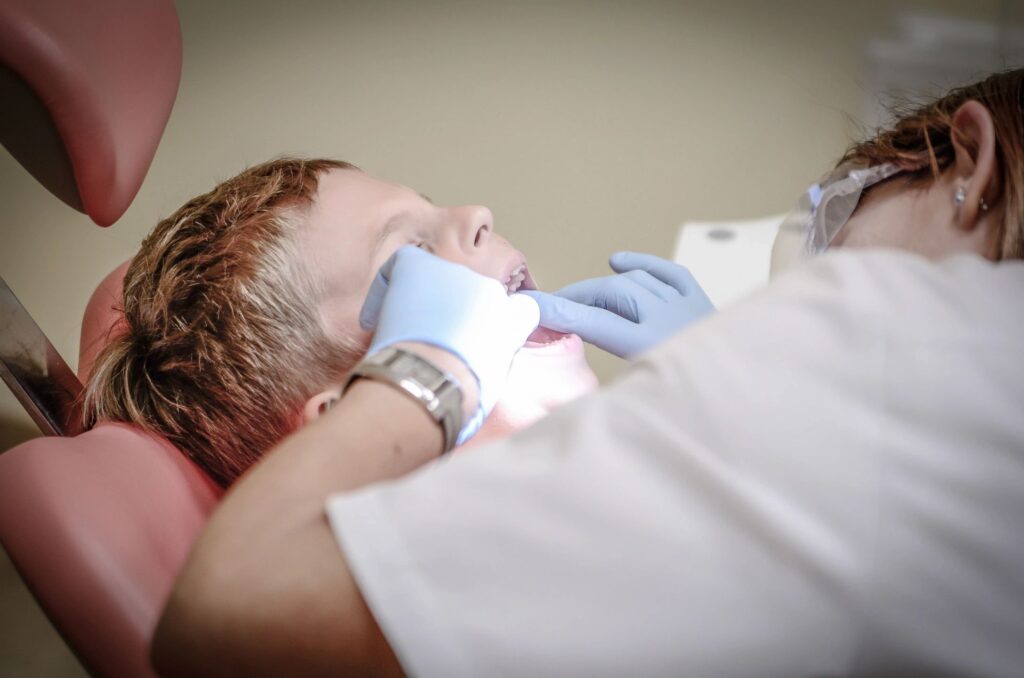
ATLANTA – Legislation adding new protections for patients being sedated for certain medical and dental procedures in outpatient settings cleared the Georgia House of Representatives Monday.
The bill, which passed the House 160-5, requires the Georgia Composite Medical Board to establish regulations for administering sedation to patients by the end of this year. The regulations would cover such subjects as proper equipment and training, separation of surgical and sedation monitoring functions during procedures and care and transfer protocols in case of an emergency.
The legislation excludes licensed dentists, registered nurse anesthetists and physician assistants who have completed an anesthesiologist assistant program.
One section of the bill adds new language in state law defining “medispas,” facilities that offer outpatient cosmetic surgery including liposuction, laser procedures and injection of cosmetic-filling agents.
The bill originated in the state Senate, where it passed unanimously last month. It was introduced by Sen. Kay Kirkpatrick, R-Marietta.
The legislation was carried in the House by Rep. Lee Hawkins, R-Gainesville. Because of changes the House Health and Human Services Committee made to the bill, it must return to the Senate to gain final passage.
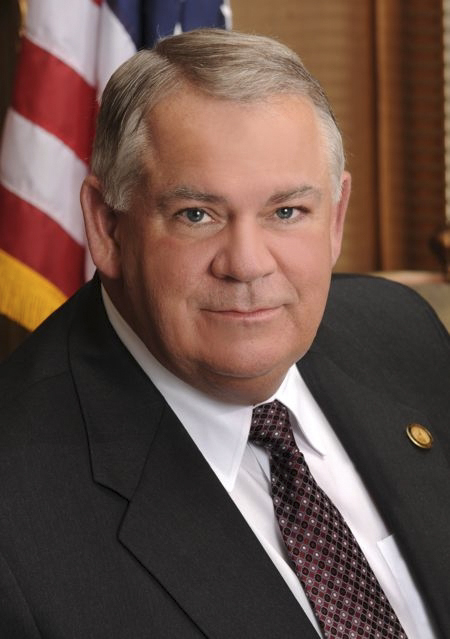
ATLANTA – Georgia House Speaker David Ralston is continuing to lobby the federal government not to attach strings on the $350 billion in the American Rescue Plan earmarked for state and local governments.
In a letter to Treasury Secretary Janet Yellen dated Thursday, Ralston, R-Blue Ridge, cited language in the $1.9 trillion COVID-19 relief bill Congress passed this week that prohibits states from using any of the aid money to “either directly or indirectly” offset reductions in net tax revenue.
Thursday’s letter followed similarly worded missives the speaker sent on Wednesday to President Joe Biden and members of Georgia’s congressional delegation.
The American Rescue Plan, which Biden signed into law on Thursday, threatens two bills now before the General Assembly, Ralston wrote.
One of the measures would give Georgians a tax cut of $140 million by raising the standard deduction on state income taxes. The other would extend a tax credit for families who adopt a child out of foster care.
“As secretary of the treasury, it will fall to your department to interpret this act and promulgate rules and regulations,” the speaker wrote. “I pray you will protect the states by ameliorating the impact of this flawed law and respect our right to budget responsibly.”
In the letter, Ralston cited an editorial in The Wall Street Journal criticizing the provision as potentially a violation of the U.S. Supreme Court’s “anti-commandeering” doctrine, which prohibits Congress from using federal funds to coerce states.
“Even if the tax cut ban doesn’t meet the court’s legal test of coercion, it’s still an egregious affront to constitutional federalism,” the paper’s editorial board wrote.
The relief bill includes $8.1 billion for Georgia. The state will receive $4.6 billion of that directly, while the rest is earmarked for local governments.
Georgia’s two Democratic U.S. senators voted for the legislation, as did all six Democrats in the state’s U.S. House delegation. All eight of the delegation’s Republicans opposed it.
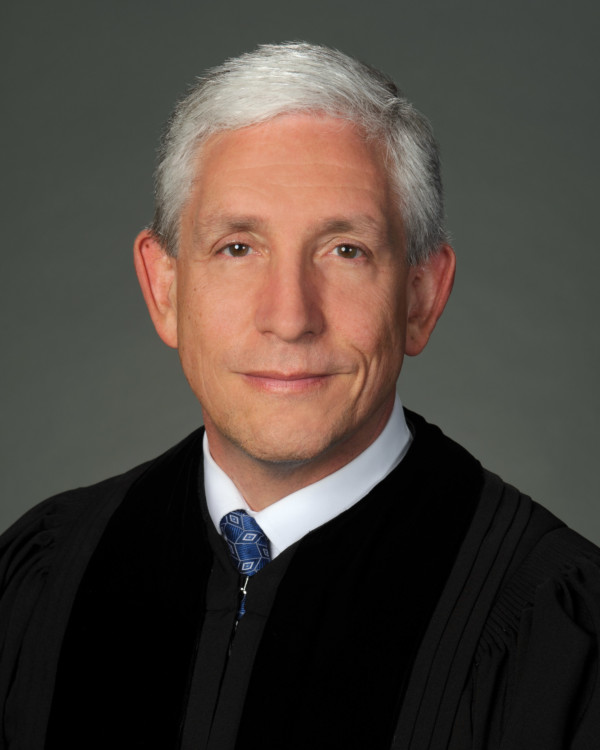
Georgia Supreme Court Presiding Justice David Nahmias
ATLANTA – David Nahmias was unanimously elected by his colleagues on the Georgia Supreme Court Thursday to become the court’s chief justice starting July 1.
Current Chief Justice Harold Melton announced last month that he would be stepping down from the court this summer after serving on the court for 16 years.
Nahmias, currently the court’s presiding justice, was appointed to the state Supreme Court in 2009 by then-Gov. Sonny Perdue to fill a vacancy. Georgia voters then elected Nahmias to a six-year term in 2010 and reelected him in 2016.
Before joining the court, Nahmias was U.S. attorney for the Atlanta-based Northern District of Georgia. Before that, he served as a senior member of the U.S. Justice Department.
The DeKalb County native earned his undergraduate degree at Duke University and his law degree from Harvard Law School, where he served on the Law Review with former President Barack Obama and U.S. Supreme Court Justice Neil Gorsuch. Nahmias went on to serve as a law clerk to the late U.S. Supreme Court Justice Antonin Scalia.
In his new role as chief justice in Georgia, Nahmias will lead the state’s judicial branch and act as the Supreme Court’s spokesman. He also will chair the Georgia Judicial Council, the policymaking body for the judicial branch.
Georgia chief justices serve one four-year term.
Also on Thursday, the justices unanimously elected Justice Michael Boggs to succeed Nahmias as presiding justice.
ATLANTA – First-time unemployment claims in Georgia rose last week for the second week in a row, even as jobless claims nationwide were on the decline.
Unemployed Georgians filed 28,387 initial claims last week, up 2,940 from the previous week, the state Department of Labor reported Thursday. Nationwide, first-time unemployment claims fell by 42,000 during the week to 712,000.
On the positive side, the labor department also reported Thursday that unemployment in Georgia fell slightly in January to 5.1%, a drop of 7.4% since the coronavirus pandemic began a year ago and 1.2% below the national jobless rate for January.
Meanwhile, the labor department began gearing up to implement the extended unemployment benefits contained in the $1.9 trillion American Rescue Plan that gained final passage in Congress on Wednesday. President Joe Biden then signed the bill on Thursday.
The legislation will extend the $300-per-week unemployment supplements Americans have been receiving for an additional 25 weeks. Without the new bill, those benefits were due to expire this month.
“If the … [U.S. Department of Labor] issues guidance on the extensions that does not include significant programming adjustments, we do not anticipate interruptions in payments for those currently receiving [Unemployment Insurance] benefits,” Georgia Commissioner of Labor Mark Butler said Thursday.
“We will meet with the [federal labor department] … to review the details of the implementation and subsequently update our system and programs.”
Since COVID-19 took hold in Georgia in March of last year, more than $19.3 billion in state and federal unemployment benefits have been paid out to nearly 4.5 million Georgians, more than during the nine years before the pandemic combined.
The job sector that accounted for the most initial unemployment claims in Georgia last week was accommodation and food services with 5,336 claims. The administrative and support services job sector was next with 2,922 claims, followed by manufacturing with 2,811.
More than 206,000 job listings are online at https://bit.ly/36EA2vk for Georgians to access. The labor department offers online resources for finding a job, building a resume and assisting with other reemployment needs.
ATLANTA – Substance-abuse centers would not be allowed to pay third parties to procure patients under legislation the Georgia House of Representatives passed unanimously Thursday.
Senate Bill 4, sponsored by state Sen. Kay Kirkpatrick, R-Marietta, cleared the Georgia Senate last month. It would make illegal what is known as “patient brokering.”
The practice has been on the rise as the emphasis on addressing substance abuse has shifted from criminalizing the behavior to treating it, said Rep. Bert Reeves, R-Marietta, who carried the bill in the House.
“A lot of aspects of this industry are shady,” he said. “There are always some bad players.”
Rep. Shelly Hutchinson, D-Snellville, is a mental health and substance abuse services provider.
“I’m contacted constantly to offer referrals for a fee,” she said. “This is a problem that really needs to be addressed in Georgia.”
The bill also criminalizes fraudulent and excessive medical testing, including overbilling for multi-panel drug screening.
“Some testers are breaking it into separate tests and billing accordingly,” Reeves said. “That’s just wrong.”
The bill sets fines and prison sentences that would rise in severity depending on the number of patients involved. The maximum penalty would be up to 10 years in prison and a fine of up to $500,000 per violation for patient brokering involving 20 or more patients.
Fraudulent testing would be a misdemeanor subject to a jail sentence of up to one year and a fine of up to $1,000 per violation.
Because the House Insurance Committee offered Senate Bill 4 as a substitute to the original version, it now must go back to the Senate before it can gain final passage.