ATLANTA – A federal jury has convicted a South Georgia resident on charges stemming from a dog-fighting operation.
Kizzy Solomon, 44, of Camilla, was found guilty last week of 15 counts of aiding and abetting the possession and training of dogs for purposes of animal fighting following a two-day trial. Solomon is facing a maximum of five years in prison and a $250,000 fine per count and three years of supervised release.
Federal agents raiding Solomon’s property in 2018 discovered 27 pit bull-type dogs housed on chains in poor living conditions, according to court documents and evidence presented during the trial. All but the puppies had scarring and injuries consistent with dog fighting.
Agents also seized a large amount of dog fighting equipment, notably a large dog treadmill on which various dogs’ fighting histories – including whether they were killed in a fight – was written in print.
“Dog fighting is an atrocious crime that often serves as a breeding ground for other illegal behavior,” said Acting U.S. Attorney Peter D. Leary for the Middle District of Georgia. “Our office will vigorously prosecute individuals found abusing and using animals for illegal fighting and gambling.”
“The successful conclusion of this case highlights … efforts to combat animal cruelty since we took responsibility for combating this vicious and cruel crime in 2014,” said Acting Assistant Attorney General Jean E. Williams of the Justice Department’s Environment and Natural Resources Division. “We will continue to prosecute significant and major offenders to maximize the impact of these cases on this illegal industry.”
Eleven co-defendants previously entered guilty pleas to various offenses related to taking part in dog fighting. Each faces a maximum sentence of one to five years in prison and fines of $100,000 to $250,000, or both.
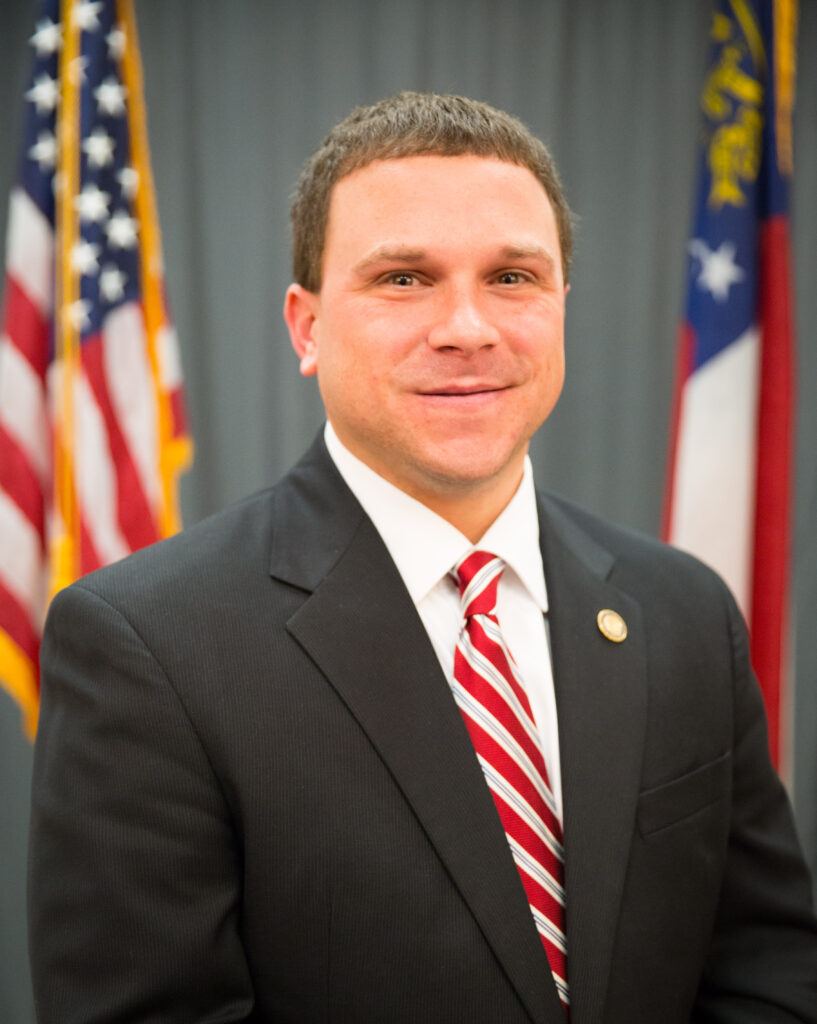
ATLANTA – State Sen. Tyler Harper, R-Ocilla, has jumped into the race for Georgia agriculture commissioner, a post incumbent Commissioner Gary Black is vacating to run for the U.S. Senate.
Harper, a seventh-generation farmer and South Georgia native, has served in the Senate since 2013. He is chairman of the Senate Natural Resources and the Environment Committee and vice chairman of the Public Safety Committee.
“I have a deep, personal appreciation and understanding of the challenges our growers face every day,” Harper said.
“For me, being a farmer is more than just a job – it’s a way of life. As agriculture commissioner, I will use my background, experience, and record of results to fight for our farmers, the consumer, our conservative values, and our way of life here in Georgia.”
Harper pledged to work to level the playing field for farmers on trade, improve the state’s food safety programs, speed the delivery of relief funding for farmers whose crops are damaged or destroyed by natural disasters and expand rural broadband across Georgia.
Harper holds a bachelor’s degree in agricultural engineering from the University of Georgia and an associate degree from Abraham Baldwin Agricultural College. He represents Georgia’s 7th Senate District, a largely rural area that stretches through all or parts of 10 counties in South Georgia.
Black, a Republican elected agriculture commissioner in 2010, entered the 2022 Senate contest earlier this month. He is challenging Sen. Raphael Warnock, D-Ga., who won one of Georgia’s two U.S. seats last January in a runoff.
Georgia Commissioner of Community Health Frank Berry
ATLANTA – State health officials are asking the federal government’s permission to delay the implementation date of a limited, Georgia-specific expansion of Medicaid for at least a month.
In a letter dated June 24, state Community Health Commissioner Frank Berry cited a decision during the early weeks of the Biden administration to withhold approval of a Georgia Medicaid waver application then-President Donald Trump’s administration signed off on last year.
Biden’s Center for Medicare & Medicaid Services (CMS) objected to provisions in the proposed Georgia Pathways program requiring Medicaid recipients to work, attend school or volunteer at least 80 hours a month. CMS officials argued recipients would have a particularly hard time complying with a work requirement during the pandemic.
Berry disagreed with the federal agency position’s in a letter he sent to CMS in March.
“Georgia Pathways provides a wide range of qualifying activities in which individuals can engage,” the commissioner wrote. “Moreover, there is also a temporary ‘good cause’ exception if, after enrolling in Medicaid through Georgia Pathways, an individual or immediate family member experiences a hospitalization or serious illness or needs to quarantine due to COVID exposure.
“If anything, the COVID-19 crisis makes the qualifying hours and activities — which include work, job training, education, or volunteering—more important, not less. CMS must allow this program to begin as planned and authorized.”
With the program set to take effect July 1, Berry’s letter asks for more time while discussions between the state and CMS continue.
Gov. Brian Kemp rolled out the limited Medicaid expansion plan early in 2019 as an alternative to the Affordable Care Act then-President Barack Obama steered through a Democratic Congress in 2010. The General Assembly passed legislation later in 2019 authorizing the governor to submit two waiver applications to the feds.
Besides the Medicaid waiver, a second waiver would substitute a private-sector alternative to the federal government’s healthcare.gov insurance exchange.
CMS is also revisiting that second waiver, which the Trump administration approved last fall. Earlier this month, the agency ordered the state to revisit the data used to justify the new approach, taking into account changes in federal law and policy that have occurred since Biden took office.
ATLANTA – The landscape of college sports in Georgia is about to change forever.
Legislation taking effect July 1 will let student-athletes at Georgia colleges, universities and technical colleges receive compensation for their name, image and likeness (NIL).
Supporters steered the concept of paying college athletes through the General Assembly this year at the same time legislatures in other states were passing similar measures, Congress was looking at the issue and the U.S. Supreme Court was taking up related cases.
“What we’re hoping it will do is put Georgia colleges and universities and the men and women who play for them in a position that when a more comprehensive process is put in place … Georgia athletes will be able to take advantage of that,” said state Rep. Chuck Martin, R-Alpharetta, the bill’s chief sponsor.
Pressure to compensate college athletes beyond scholarships covering tuition, room and board has increased in recent years as major college sports – particularly football and basketball – have become huge moneymakers for the schools as well as TV networks.
“No one could have imagined this would be a multi-billion-dollar business with everyone making millions but the athletes,” said Rep. Billy Mitchell, D-Stone Mountain, who introduced a similar bill into the Georgia House of Representatives. “It’s such an inequitable system.”
The urge to cut college athletes in on the profits also is being driven by instances of athletes running afoul of the NCAA for making a few bucks under the table.
“We’ve had draconian penalties on athletes selling jerseys,” Mitchell said.
Under House Bill 617, college athletes in Georgia will be required to take five hours of a financial literacy and life skills workshop to ready them for the added burdens of receiving compensation for their sports performances.
The colleges have been busy in recent weeks putting those programs in place. In April, the NIL advisory and education firm Altius Sports Partners announced a partnership with the University of Georgia to educate UGA’s student-athletes on adjusting to the new reality.
“Education will be critical to prepare our student-athletes to thrive in a new paradigm,” said Will Lawler, UGA’s deputy athletic director for legal and regulatory affairs.
This month, Georgia Tech launched its 404 Academy of five weekly sessions for student-athletes.
“The 404 Academy is an example of Georgia Tech’s commitment to put our student-athletes in the best position to take advantage of name, image and likeness opportunities,” Tech Athletic Director Todd Stansbury said.
While most of those opportunities likely will go to football and basketball players, Martin noted that other college sports have been benefiting from increased coverage. He pointed to the barrage of publicity the U.S. women’s soccer team generated for winning the World Cup two years ago and, more recently, the extensive coverage of softball’s Women’s College World Series on ESPN.
“The opportunity for ladies and men in all sports is certainly going to be there,” he said.
Other states have jumped on the NIL bandwagon. Florida, Alabama and Mississippi have passed NIL laws due to take effect on the same day as Georgia’s law.
A NIL law in Tennessee takes effect on Jan. 1, and South Carolina’s NIL law becomes effective next July.
Georgia’s law, however, contains a wrinkle not found in other states’ laws, a revenue-sharing provision giving schools the option of taking up to 75% of an athlete’s earnings for redistribution. That pooled income would be placed into an escrow account from which the student-athlete could not withdraw funds until at least one year after graduating or otherwise leaving school.
Martin said the provision, inserted during the latter stages of the legislative debate over the bill, could put Georgia schools at a competitive disadvantage in recruiting top high school athletes.
“In a competitive world, are you going to want to go to a college or university that chooses to take 75% of your compensation?” he asked.
However, Martin said he hopes the competitive nature of the market for top athletes will convince Georgia schools to “do the right thing.”
The state laws eventually could be superseded by Congress, which has seven versions of NIL legislation before it. The Georgia law is set to expire either in mid-2025 or when Congress passes a federal law establishing pay for college athletes nationwide.
The U.S. Supreme Court also has the issue on its docket. The justices ruled unanimously June 21 that the NCAA may not put limits on modest education-related payments to student-athletes.
The court heard oral arguments in March in a broader case from California brought by former University of West Virginia running back Shawne Alston, who sued the NCAA and several college leagues in 2014 for not allowing compensation beyond his scholarship.
The uncertainty has left colleges unsure what to do to prepare for the new era, other than provide education courses to student-athletes.
“We know something’s going to happen on July 1,” said Bryan Johnston, spokesman for Georgia Southern University’s Athletics Department. “We’ll see which way this goes and react accordingly.”
Mitchell said he doesn’t expect the uncertainty to last long. There’s too much pressure on the NCAA to act, he said.
“I expect the NCAA will do something pretty quickly,” Mitchell said. “Colleges are starting to recruit off this.”
ATLANTA – The Justice Department sued the state of Georgia Friday over passage of an election reform law it claims violates the 1965 Voting Rights Act by intentionally discriminating against Black voters.
The Republican-controlled General Assembly passed the controversial legislation in March, voting along party lines, and Gov. Brian Kemp signed it into law that same day.
“Recent changes in Georgia’s election laws were enacted with the purpose of denying or abridging the right of Black Georgians to vote on account of their race or color,” Attorney General Merrick Garland said during a news conference.
Garland and Kristen Clarke, the assistant attorney general overseeing the department’s Civil Rights Division, said the law was passed in the aftermath of a record voter turnout in last year’s elections in Georgia, particularly among absentee voters.
“The provisions we are challenging reduce access to absentee voting at each step of the process, pushing more Black voters to in-person voting, where they will be more likely than white voters to encounter long lines,” Clarke said.
Senate Bill 202 replaces the signature-match verification process for absentee ballots with an ID requirement. It also restricts the location of ballot drop boxes and prohibits non-poll workers from handing out food and drinks within 150 feet of voters standing in line.
The law’s critics have accused Republicans of passing the law in an effort to blunt the high voter turnout last November that saw President Joe Biden become the first Democrat to carry Georgia since Bill Clinton in 1992 and that propelled Democrats Jon Ossoff and Raphael Warnock to U.S. Senate runoff wins in January.
“We are happy to have the Biden administration join the fight to defend the very fabric of our democracy against Georgia’s reckless, unconstitutional Republican-led voter suppression laws, said Nse Ufot, CEO of The New Georgia Project Action Fund.
“These attacks are a direct backlash and whitelash against the progressive, multiracial, multigenerational, and multilingual coalition we built in Georgia that flipped the Peach State and secured a victory for President Biden and a Democratic Senate.”
“Brian Kemp and Georgia Republicans’ discriminatory anti-voting law violates Georgians’ civil rights, plain and simple,” added U.S. Rep. Nikema Williams, D-Atlanta, chair of the Democratic Party of Georgia. “It makes it harder for all Georgians to vote, and disproportionately harder for people of color and low-income voters to cast a ballot.”
Georgia Republican leaders came to the law’s defense, calling the lawsuit a politically motivated attempt aimed at a legitimate effort to restore election integrity in Georgia.
“The Biden administration continues to do the bidding of [2018 Democratic gubernatorial nominee] Stacey Abrams and spreads more lies about Georgia’s election law,” Secretary of State Brad Raffensperger said. “It is no surprise that they would operationalize their lies with the full force of the federal government. I look forward to meeting them, and beating them, in court.”
Kemp sounded equally confident during a late afternoon news conference in Savannah.
“Joe Biden, Stacey Abrams and Merrick Garland don’t scare me,” he said. “When I was secretary of state, I sued the Obama Justice Department twice and won. I look forward to making it three for three.”
Clarke also criticized the General Assembly for rushing the bill through the legislative process. She complained that the three-page bill that passed the Georgia Senate ballooned within days to more than 90 pages when it went over to the state House of Representatives.
Garland said the Justice Department also is examining election laws other Republican-led states have passed in the wake of last year’s elections.
He urged Congress to reverse a 2013 U.S. Supreme Court decision that invalidated a provision in the Voting Rights Act requiring states with a history of racial discrimination in voting to “preclear” any election law changes with the Civil Rights Division.