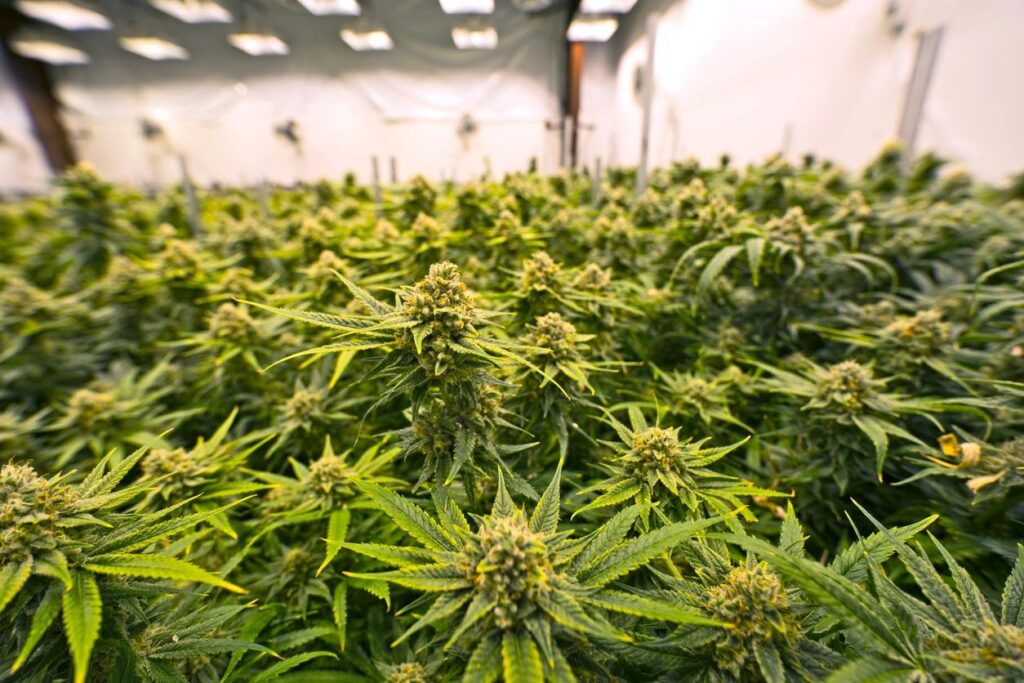
Marijuana for medicinal purposes must be grown indoors in Georgia under close supervision.
ATLANTA – The state commission in charge of Georgia’s medical marijuana program has announced its intent to award six licenses to companies to grow the leaf crop and convert it into low-THC cannabis oil.
Two so-called “Class 1” licenses will allow the licensees to grow marijuana under close supervision in up to 100,000 square feet of growing space. Four “Class 2” licensees will limit recipients to not more than 50,000 square feet.
“It’s a great day for Georgians who need access to low-THC oil and their families who have advocated a quality of life for their loved ones,” Dr. Christopher Edwards, chairman of the Georgia Access to Medical Cannabis Commission and principal surgeon at the Atlanta Neurological & Spine Institute, said Saturday after the commission’s board met in Walker County.
The announcement of winning licensees was long in coming. While the General Assembly first legalized cannabis oil for the treatment of certain diseases in 2015, it wasn’t until 2019 that lawmakers passed a bill giving patients a legal means of obtaining the drug inside Georgia.
The legislation created the state commission to oversee the program, but it got off to a slow start. Members of the commission weren’t appointed until November 2019, four months after the law took effect, and it took another year to release a request for proposals from interested companies.
Sixty-nine businesses submitted competitive bids for the six licenses.
The businesses chosen to receive Class 1 licenses are Florida-based Trulieve GA Inc. and Botanical Sciences LLC.
“This will expand our Southeast operations hub to our neighboring state, and we are excited to bring the benefits of Trulieve cannabis products to Georgia patients,” said Kim Rivers, CEO of Trulieve.
“As the largest cannabis company in Florida, built on providing the broadest patient access to medical marijuana in the state, we feel well-positioned to approach the Georgia market with the same commitment to quality products, patient access, and positive customer experience.”
Class 2 licenses will go to FFD GA Holdings, TheraTrue Georgia, Natures GA and Treevana Remedy.
Under the 2019 legislation, licensees will be limited to producing low-THC cannabis oil containing no more than 5% THC, the psychoactive ingredient that gets marijuana users high.
The drug will be sold at licensed dispensaries or specially licensed pharmacies to patients suffering from a range of diseases including cancer, seizure disorders, multiple sclerosis, amyotrophic lateral sclerosis (ALS), Crohn’s disease, Parkinson’s disease, mitochondrial disease and sickle-cell anemia.
Patients enrolled in a registry overseen by the state Department of Public Health must have a doctor’s prescription.
“Because of the dedication and hard work of the commission, we have been able to stay focused on getting the work done while always keeping patients’ needs as a top priority,” said Danielle Benson, the commission’s vice chair.
“This is a big step in the right direction, and the announcement of the six companies is an indication that help is on the way for Georgians.”
ATLANTA – Republicans in the Georgia House of Representatives Friday elected Rep. Matt Hatchett, R-Dublin, to serve as majority whip.
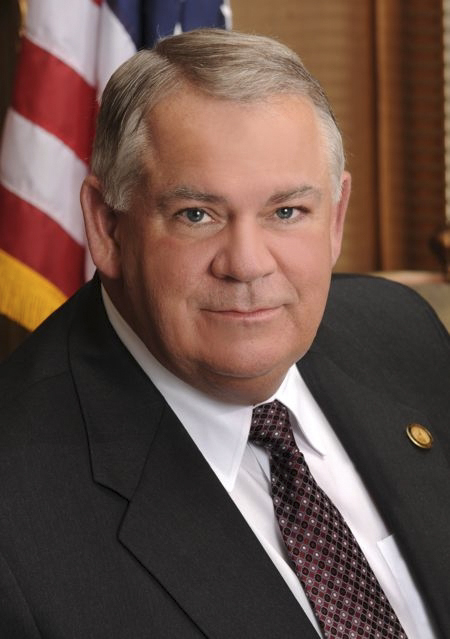
Hatchett, an ally of House Speaker David Ralston, defeated Rep. Barry Fleming, R-Harlem, during a meeting of the House Republican Caucus in Jekyll Island. The vote totals from the closed-door session were not released.
“Matt Hatchett is a proven leader who has earned the trust of the House Majority Caucus,” Ralston said after Friday’s vote. “He has fought time and again for our priorities and principles both on the campaign trail and in the well of the Georgia House.”
Hatchett was elected to the House in 2010, succeeding longtime Democratic Rep. DuBose Porter, who left the General Assembly that year in an unsuccessful bid for governor.
Hatchett now succeeds Rep. Trey Kelley, R-Cedartown, in the whip’s post. Kelley stepped down from leadership earlier this month to focus on a misdemeanor indictment related to a 2019 fatal hit-and-run crash.
Hatchett has resigned his position as chairman of the House Republican Caucus to take up his new role.
The majority whip’s job is to monitor legislation as it moves through both the Georgia House and Senate and work to line up votes among Republican House members for bills favored by the GOP Caucus.
ATLANTA – Kia Motors America, which operates an assembly plant in Troup County producing 340,000 vehicles a year, recently dropped “Motors” from its name and is now known simply as “Kia America.”
The reason? The Korean automaker’s $25 billion plan to transition to electric vehicles soon will make “motors” obsolete.
That same trend is behind Gov. Brian Kemp’s announcement July 20 of a new statewide initiative aimed at strengthening Georgia’s status as a leader in the electric mobility industry.
The Electric Mobility and Innovation Alliance (EMIA) will bring industry executives together with state leaders in government, education, utilities and nonprofits to look for ways to build up an industry that already has enjoyed some major successes.
“Georgia has a proven track record of investing early in the resources and infrastructure needed to connect it to the world and develop jobs of the future,” Kemp said. “The Electric Mobility and Innovation Alliance will ensure that our state is positioned to continue leading the nation in the rapidly growing electric mobility industry.”
The EMIA won’t be starting its work from scratch. Georgia already boasts an impressive roster of recent international investments in electric mobility, including:
two SK Innovation electric vehicle battery manufacturing facilities in Jackson County, a nearly $2.6 billion investment by the South Korean company.
Dutch electric-vehicle charging company Heliox’s decision to base its North American headquarters in Atlanta.
Turkish electric-vehicle parts manufacturer TEKLAS, which plans to open its first North American plant in Gordon County.
German-owned GEDIA, a manufacturer of lightweight auto-body parts, which plans to open a plant in Whitfield County.
South Korea-based Duckyang, an electric mobility parts supplier, which will build two plants near Braselton.
But there’s still plenty of room for the industry to grow in Georgia, said Chris Clark, president and CEO of the Georgia Chamber of Commerce. He cited projections showing electric vehicles in Georgia will balloon from just 7% of the market in 2025 to 30% by 2030, 58% by 2040 and 96% by 2050.
“Kia, SK and all these companies have to got to build out these vehicles,” Clark said. “We want Georgia to do it.”
Pat Wilson, commissioner of the state Department of Economic Development, said 55,000 jobs in Georgia are connected in some form to the auto industry. But many of those jobs involve manufacturing vehicles with traditional internal-combustion engines in an industry that is rapidly moving to electric vehicles.
“We’re probably going to see more change in the next 20 years in the auto industry than we’ve seen in the past 100 years,” Wilson said. “We’re focused on public policy that can help drive that transition.”
That’s where the EMIA comes in. Participants in the initiative will be divided into five committees that will set objectives in five categories: supply chain, infrastructure, workforce development, innovation and policy. The Carl Vinson Institute at the University of Georgia will host committee meetings.
Wilson said the auto industry will be represented in the initiative by executives from Kia, Cox Automotive, Porsche – which has its North American headquarters in Hapeville – and Sandy Springs-based Mercedes-Benz USA.
He said the work also will involve executives from Georgia Power and the state’s electric membership cooperatives (EMCs). The public sector will be represented by the state Department of Transportation and the Technical College System of Georgia, which will take part in discussions on workforce development.
“We’re looking at this as a true public-private partnership,” Wilson said.
What emerges from the initiative could come in the form of legislation for the General Assembly to consider, new policy initiatives or a combination of the two.
The state has been down the legislative road on electric mobility before. Lawmakers approved a tax credit for purchasers of electric vehicles back in the 1990s, when EVs were scarce, but eliminated it in 2015 as EV sales soared.
Georgia Rep. Chuck Martin, R-Alpharetta, the 2015 bill’s chief sponsor, said the tax credit was mainly generating sales for the Nissan Leaf electric vehicle.
“It wasn’t helping drive innovation,” he said. “It was just subsidizing a purchase.”
Clark agreed a tax credit to stimulate sales of EVs is no longer needed. But he said he expects some form of tax credit proposal could come out of the new initiative that will neither incentivize EV sales or offer the jobs tax credit Georgia traditionally has provided industries the state hopes to attract.
“It’s a new industry, a new economy, and our old jobs tax credit is not going to move the needle for these guys,” he said. “We’re going to have to listen to the industry.”
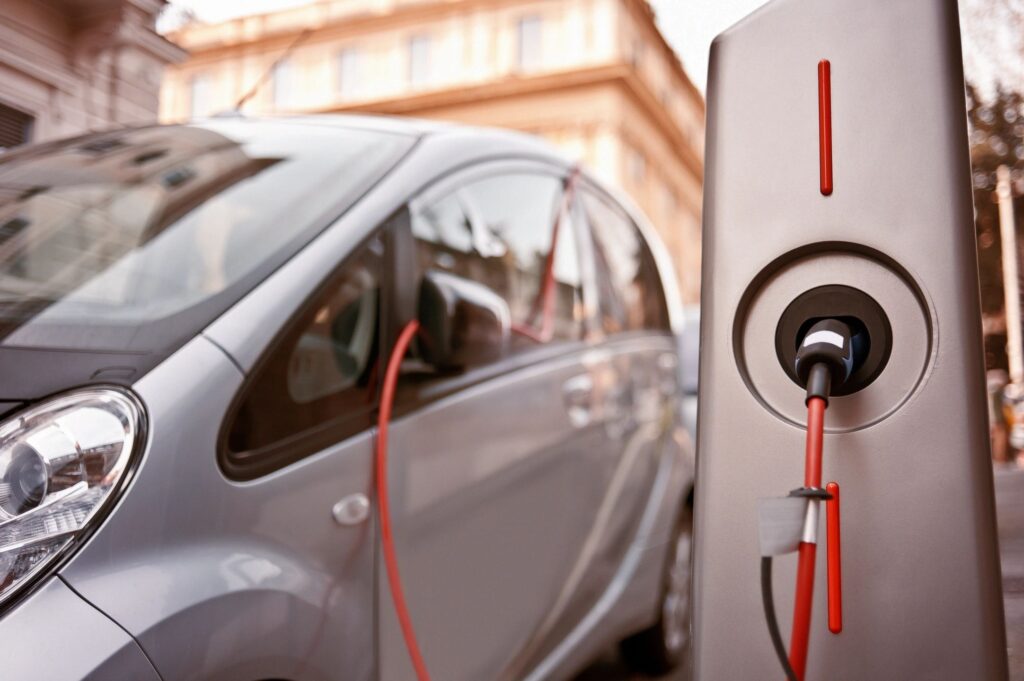
Clark envisions new tax breaks that would incentivize gasoline stations to install charging stations for EVs or encourage homebuilders to put chargers in new houses.
Martin said state government needs to be careful not to get ahead of the industry by pushing too aggressively for a transition to all electric vehicles.
“Innovation will get us there,” he said. “But in some places, there won’t be the electric grid or charging stations for that to happen.”
Wilson said it’s uncertain what solutions the committees will hit upon.
“We want to go into this with a blank slate and really listen to the professionals,” he said.
Wilson said the committees will meet this fall with a goal of making recommendations in time for the 2022 General Assembly session starting in January.
ATLANTA – Georgia schools are about to receive the final $1.4 billion installment of $4.2 billion in federal coronavirus relief funds the state Department of Education was allocated through legislation Congress passed in March.
The U.S. Department of Education approved the state’s plan for the stimulus money on Thursday. Georgia received the first $2.8 billion shortly after President Joe Biden signed the American Rescue Plan into law.
Of the total $4.2 billion package earmarked for Georgia, $3.8 billion will go directly to school districts across the state. The other $425 million will be used to address statewide needs.
“We are focused on supporting learning, expanding resources for student mental health and wellbeing, and ensuring the safety of students, staff, and families,” State School Superintendent Richard Woods said.
“We will use these funds to deploy state-level Academic Recovery Specialists, establish school-based health clinics, and more. The resources we’ve been given will directly support schools and students.”
More than 1.7 million Georgia students were forced to switch to online classes in March of last year as cases of COVID-19 began to mount. The 2020-21 school year that began last August was conducted with a mishmash of virtual and in-person instruction.
The state- and regional-level Academic Recovery Specialists will help teachers and administrators recover from the gaps in learning resulting from the disruption the pandemic brought to the schools.
The federal money also will pay for state-level support for school nurses, school psychologists, school social workers, wraparound services and military families. It will help establish school-based health clinics for rural students, provide mental-health awareness training for educators and provide support and therapeutic services for students with disabilities.
Georgia will return fully to in-person classes with the start of the 2021-22 school year, with most districts beginning classes next month.
ATLANTA – Georgia House Speaker David Ralston has decided not to run for the U.S. Senate next year.
Ralston, R-Blue Ridge, had been considering seeking the Republican nomination to challenge Democratic Sen. Raphael Warnock but has chosen instead to run for reelection to his Northwest Georgia House seat and, if successful, bid for another two-year term as speaker.
“Speaker Ralston is focused on continuing to move the House’s agenda forward, particularly on critical policy issues like public safety, mental health and economic development,” Ralston spokesman Kaleb McMichen wrote Thursday in an email to Capitol Beat News Service.
While U.S. senator is a prestigious statewide post, being among 100 senators lacks the political clout Ralston now enjoys as leader of the state House of Representatives. Political observers considered it unlikely that he would give that up to vie for the Senate.
Ralston’s decision not to enter the Senate fray leaves the race for the Republican nod wide open, at least for now.
Georgia Agriculture Commissioner Gary Black is the best known candidate in the field at this point. Other announced GOP candidates include Atlanta banking executive and former Navy SEAL officer Latham Saddler and Kelvin King, a small business owner and Air Force veteran also from Atlanta.
Former President Donald Trump has openly touted University of Georgia football icon Herschel Walker, who spoke at the Republican National Convention last summer. But Walker has not yet announced whether he will run.
As an incumbent, Warnock not surprisingly has jumped out to an early fundraising lead. He raised nearly $7 million during the second quarter, giving him a total campaign treasury of $10.5 million as of June 30, including the results of earlier fund-raising.
Warnock won the Senate seat in a January runoff over incumbent Republican Sen. Kelly Loeffler.