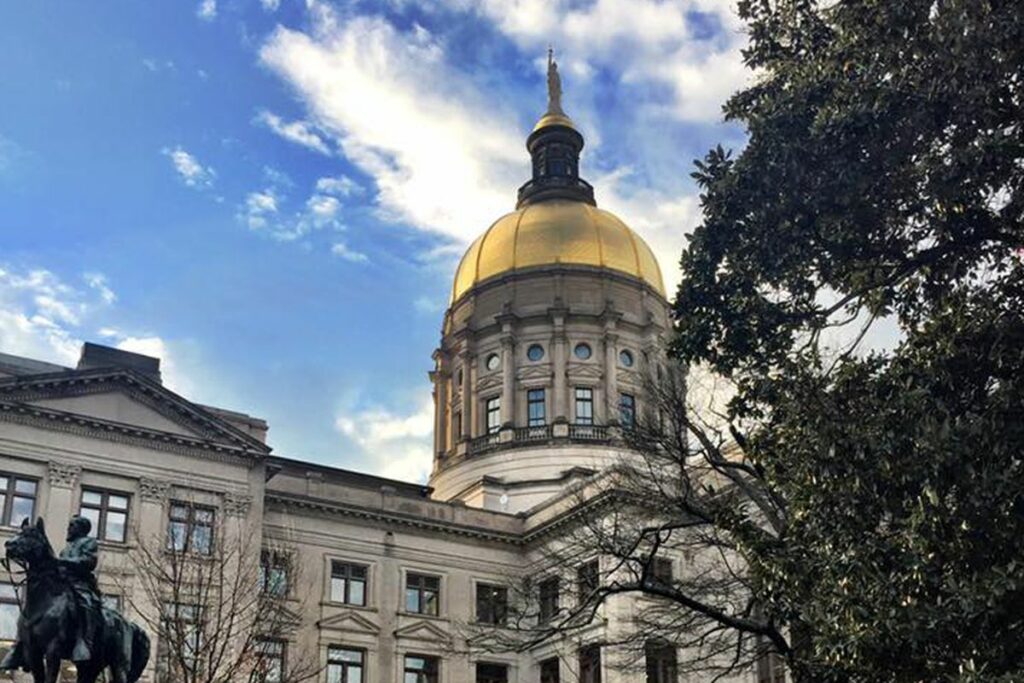
ATLANTA – The General Assembly will meet Nov. 3 to begin a special session to redraw Georgia’s congressional and legislative districts.
Gov. Brian Kemp announced the date for the session in a proclamation late Thursday.
Under Georgia law, the legislature must adopt new district boundaries every 10 years to account for population shifts reflected in the U.S. Census.
Two legislative committees, one from the Georgia House of Representatives and one from the state Senate, held hearings across the state during the summer to gather public feedback ahead of drawing the new maps.
Lawmakers heard an earful from representatives of civil rights and voting rights groups calling for new district lines that accurately reflect population gains by minority groups during the last decade.
But if the past is any indication, the party in control of the General Assembly – in this case, the Republicans – will draw maps aimed at regaining losses during the last two election cycles in both the legislature and the state’s congressional delegation.
With dramatic growth having occurred in metro Atlanta and some parts of North Georgia since 2010, the maps also are expected to shift more legislative districts north of Interstate 20. Rural counties in the southern half of the Peach State likely will see a reduction in the number of districts reflecting losses in population sustained by those areas.
Among other things, lawmakers during the special session also will be asked to ratify executive orders Kemp issued in May to suspend the collection of state gasoline and diesel fuel taxes. The governor acted after the shutdown of the Colonial Pipeline disrupted fuel supplies.
However, the special session will not include legislative proposals to address the crime wave that has hit Georgia during the past 18 months. Kemp had indicated in July that he planned to put crime on the agenda for the special session.
Also absent will be discussion of whether the state should expand its Medicaid program to cover more uninsured Georgians. Democrats have been calling for adding Medicaid to the special session agenda, but the governor has consistently opposed the idea due to the costs.
The special session likely will run at least into the week of Thanksgiving. The last redistricting special session, which took place in 2011, lasted for two and a half weeks.
This story is available through a news partnership with Capitol Beat News Service, a project of the Georgia Press Educational Foundation.
ATLANTA – Georgia’s prison system needs a total overhaul to stem the neglect and violence rampant inside prison walls, a Democratic member of the General Assembly said Thursday.
State Rep. Josh McLaurin, D-Sandy Springs, chaired a hearing that included jarring testimony from mothers of Georgia inmates who have died while in the state’s custody or suffered serious neglect.
“The level of human rights abuses is intolerable,” said McLaurin, chairman of the Georgia House Democratic Caucus Committee on Crisis in Prisons, which was formed to raise public awareness of conditions in the prisons. “We want to change the system. We want there to be a reckoning.”
Thursday’s hearing came a week after the U.S. Justice Department announced it has opened an investigation into conditions inside Georgia’s prisons following complaints from civil rights groups and others who have expressed concerns about inmate safety.
The federal agency cited deaths of at least 26 inmates in state custody by confirmed or suspected homicide last year and 18 so far this year.
The Georgia Department of Corrections responded to the announcement with a statement denying has failed to protect inmates in its charge from harm due to violence.
On Thursday, Jennifer Bradley told the committee she is still seeking answers following the stabbing death of her son, Juwon Frye, at Macon State Prison in March of last year. She said it was inmates – not prison officials – who first notified her of his death – and she still has not received his belongings.
Stephanie Lee testified that her son, Justin Wilkerson, who suffered from bipolar disorder and schizophrenia, made multiple suicide attempts before being killed last January after he was placed in a cell with an inmate serving a life sentence without parole for malice murder.
“The GDC (Georgia Department of Corrections) failed to address and treat his mental illness,” Lee said. “[Then], the GDC failed to protect Justin.”
Atteeyah Hollie, a lawyer with the Atlanta-based Southern Center for Human Rights Georgia’s prison system is guilty of a glaring lack of transparency.
Hollie said the agency hasn’t issued a press release following an inmate suicide in two years. Thirteen inmates died in state custody during the first half of this month, again with no word from the department, she said.
“We shouldn’t have to search Facebook to learn about deaths in state-run institutions,” she said.
That lack of transparency includes information on the spread of COVID-19 inside the prison system.
Hope Johnson, a data specialist with the UCLA School of Law’s COVID Behind Bars Data Project, said the Georgia prison system’s 2.4% case fatality rate for COVID-19 – which compares the number of individuals who die from COVID to the number who contract the disease – is second worst in the nation.
However, the data is incomplete because the department stopped reporting new deaths from the virus last March, Johnson said. The agency also removed data on the number of COVID cases among Georgia inmates in July, she said.
A correctional officer at Lee Arrendale State Prison, who declined to identify himself for fear of retaliation, testified via cellphone the prison system is plagued by a shortage of guards and medical staff.
He said Arrendale has six to seven correctional officers on duty “on a good day” to watch 1,200 inmates.
“In these situations, you have to take into consideration your own safety versus their safety,” he said.
McLaurin said Georgia Corrections Commissioner Timothy Ward was invited to testify at Thursday’s hearing but declined to attend.
At the end of the hearing, McLaurin said Democrats will continue pressing the agency to make needed reforms.
“The only way we can get change is telling these stories,” he said. “These problems won’t go away if we ignore them.”
This story available through a news partnership with Capitol Beat News Service, a project of the Georgia Press Educational Foundation.
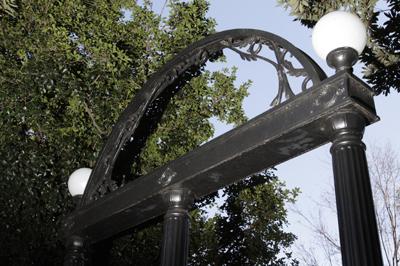
The Arch on the campus of the University of Georgia
ATLANTA – The University System of Georgia is trying to fend off a rebellion from a group of University of Georgia faculty determined to impose a mask mandate in violation of system policy.
A letter from Jeffrey Bennetzen, a geneticist at UGA, dated Sept. 20 served notice of plans for the mask mandate to discourage the spread of COVID-19.
“In order to protect our students, staff and faculty colleagues, we will wear masks and will require all of our students and staff to wear masks in our classes and laboratories until local community transmission rates improve, despite the ban on mask mandates and the USG policy to punish, and potentially fire, any faculty taking this action,” the letter stated.
Georgia Democrats are siding with the faculty on the issue. Democratic members of the state House Higher Education Committee called on Gov. Brian Kemp last week to drop his opposition to mask mandates on university system campus and leave the decision to local administrators at the system’s 26 colleges and universities.
Kemp has consistently opposed both mask and vaccine mandates as divisive, instead urging Georgians to wear masks and get vaccinated voluntarily.
Teresa MacCartney, the system’s acting chancellor, defended that policy at a Board of Regents meeting two weeks ago and again in a written response to Bennetzen’s letter dated Wednesday.
In the letter, MacCartney reported that cases of COVID-19 are declining at campuses across the university system. The 77 cases reported at UGA this week marked a sharp decrease from previous weeks, she wrote.
At the same time, only eight of 1,167 tests for the virus came back positive, the lowest rate since UGA began surveillance testing last year, she wrote.
“Due to this decline in transmission, your interest to disregard USG policy and require masks ‘until local transmission rates improve’ is not necessary,” MacCartney wrote to Bennetzen.
MacCartney also cited an executive order Kemp issued in May prohibiting any entities affiliated with state government – including the university system – from imposing vaccine mandates.
“We know the single most effective way to keep from getting the virus that causes COVID-19 is to get vaccinated, and the system has committed to making the vaccines as accessible as possible to everyone,” she wrote. “This effort is critical, and I am asking for everyone’s help as we focus on vaccination to protect our communities.”
This story is available through a news partnership with Capitol Beat News Service, a project of the Georgia Press Educational Foundation.
ATLANTA – The longest serving member of the General Assembly is about to leave the legislature for a post in the Biden administration.
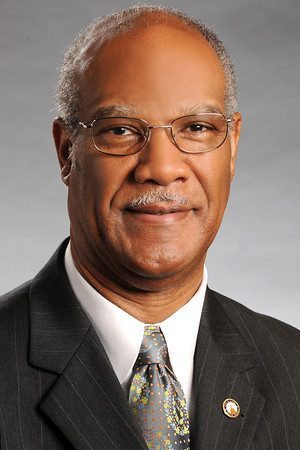
President Joe Biden nominated Georgia Rep. Calvin Smyre, D-Columbus, Wednesday as U.S. ambassador to the Dominican Republic.
Smyre, elected to the House in 1974 at the age of 26, has held a number of leadership positions over the years. He is currently chairman of the House Democratic Caucus and served as the first Black chairman of the Georgia Democratic Party.
Smyre chaired the powerful House Rules Committee before Republicans took control of the chamber in 2004. He remains a member of that committee as well as the House Appropriations Committee, which is responsible for producing state budgets every year.
His legislative record is highlighted by the critical role he played in replacing Georgia’s segregation-era state flag featuring the Confederate battle standard and by his sponsorship of legislation making Dr. Martin Luther King Jr.’s birthday a state holiday.
Smyre also has been active in national Democratic politics, co-chairing Bill Clinton’s Georgia presidential campaigns in 1992 and 1996. He also served the 2000 Al Gore campaign as a deputy.
A banker by profession, Smyre rose through the ranks at Columbus-based Synovus to his current role as executive vice president of corporate external affairs. He also serves as president of the nonprofit Synovus Foundation.
“If confirmed, I look forward to advancing the interests of the United States in the Dominican Republic and our relationship with the Dominican government,” Smyre said in a prepared stastement. “As a longtime businessman and public servant, I will bring my background and experience to continue the significant work with an important economic partner in the Caribbean.”
Smyre would become the second Georgia legislator in recent years to serve as a U.S. ambassador. Former Democratic state Sen. David Adelman was U.S. ambassador to Singapore from 2010 until 2013.
On the Republican side, Atlanta lawyer and longtime Georgia GOP insider Randy Evans served as ambassador to Luxembourg from 2018 until early this year.
This story is available through a news partnership with Capitol Beat News Service, a project of the Georgia Press Educational Foundation.
ATLANTA – A cybersecurity executive from Cobb County is seeking the Democratic nomination for Georgia secretary of state.
Michael Owens announced his candidacy Wednesday, vowing to make protecting voting rights a top priority. The Biden administration is suing Georgia over a controversial election law the Republican-led General Assembly passed last March, arguing it creates obstacles that target low-income minority voters.
“Our democracy is under attack,” Owens states on his campaign website. “We must act now to stop the chaos, corruption, and voter suppression that are undermining fair and free elections.”
The North Carolina native served eight years in the U.S. Marine Corps before earning a bachelor’s degree in technology and a master’s degree in business at Georgia Tech.
Owens has held leadership roles in some of the largest technology companies, including Atlanta-based Equifax and Cisco Systems.
Owens also has been active in politics, serving as chairman of the Cobb County Democratic Party from 2016 until 2019. He ran twice for Georgia’s 13th Congressional District seat, losing to incumbent U.S. Rep. David Scott, D-Atlanta, in the 2014 and 2020 Democratic primaries.
Two other Democrats also are running for secretary of state: Georgia Rep. Bee Nguyen of DeKalb County and Manswell Peterson, a former police officer and former college professor from Albany.
On the Republican side, incumbent Secretary of State Brad Raffensperger is being challenged by two candidates who have criticized him for refusing to back former President Donald Trump’s allegations of voter fraud in Georgia in last year’s presidential election.
Trump has endorsed U.S. Rep. Jody Hice, R-Greensboro, in next May’s GOP primary. Also seeking the Republican nomination for secretary of state is former Alpharetta Mayor David Belle Isle.
This story is available through a news partnership with Capitol Beat News Service, a project of the Georgia Press Educational Foundation.