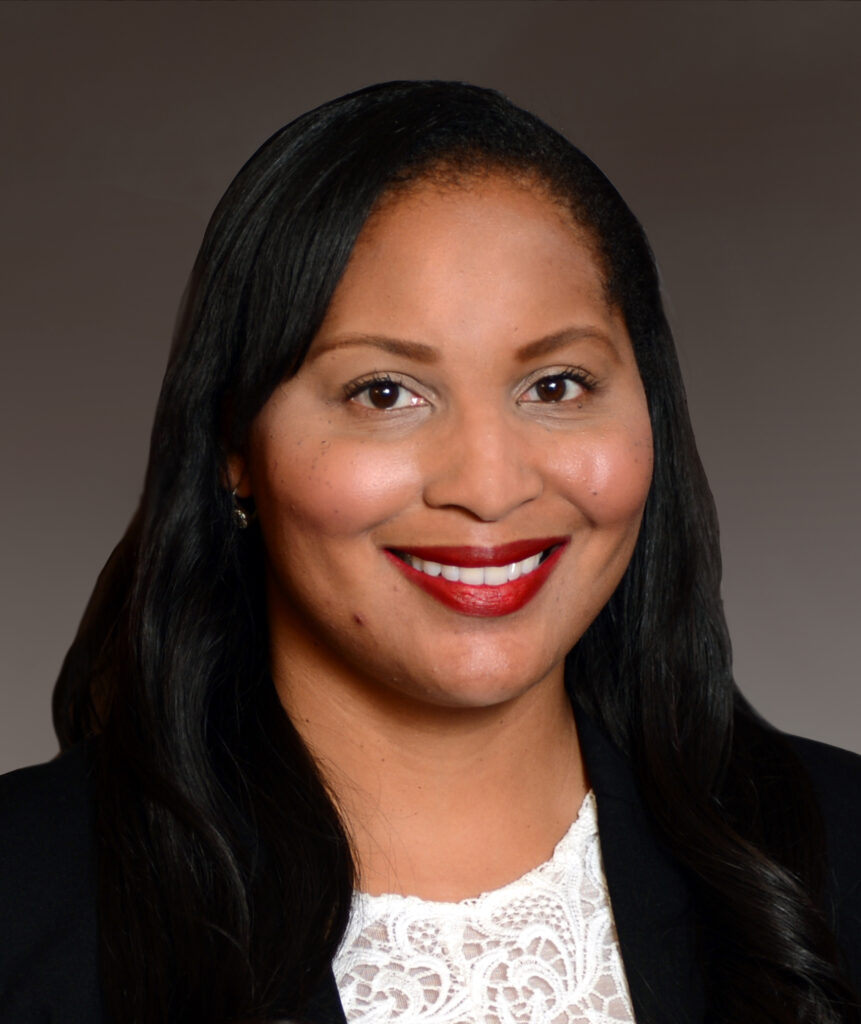
ATLANTA – Georgia Rep. Renitta Shannon has entered the increasingly crowded race for lieutenant governor.
Shannon, a Democrat from Decatur, announced her candidacy on Monday.
Elected to the General Assembly in 2016, Shannon has gained attention by staging direct confrontations with Republicans. In 2018, she led a group of fellow progressive Democrats in boycotting Gov.-elect Brian Kemp’s first public address.
In 2019, she was physically removed from the floor of the Georgia House of Representatives when she refused to give up the podium during her dissent to a restrictive abortion bill being pushed by the GOP.
“I was not going to just let them pass this like some tax bill that nobody cares about,” she said at the time.
If she is elected lieutenant governor, Shannon would become Georgia’s first openly LGTBQ statewide elected official.
Shannon is a member of the House Governmental Affairs Committee, which gave her a platform to push back against passage of Republican-backed election legislation she argued amounts to voter suppression.
In 2018, she introduced a bill that would have restored a legal requirement that the U.S. Justice Department “preclear” any changes in voting laws passed by legislatures in states with a history of racial discrimination.
Shannon also serves on the House Insurance, Small Business Development and State Planning & Community Affairs committees.
With incumbent Lt. Gov. Geoff Duncan not running for a second term, a large candidate field is vying for the vacant post. The Republican side features state Senate President Pro Tempore Butch Miller of Gainesville, Georgia Sen. Burt Jones of Jackson and GOP activist Jeanne Seaver of Savannah.
Joining Shannon in seeking the Democratic nomination are Bryan Miller of Watkinsville, grandson of the late Gov. and U.S. Sen. Zell Miller, and state Reps. Erick Allen of Smyrna and Derrick Jackson of Tyrone.
This story is available through a news partnership with Capitol Beat News Service, a project of the Georgia Press Educational Foundation.
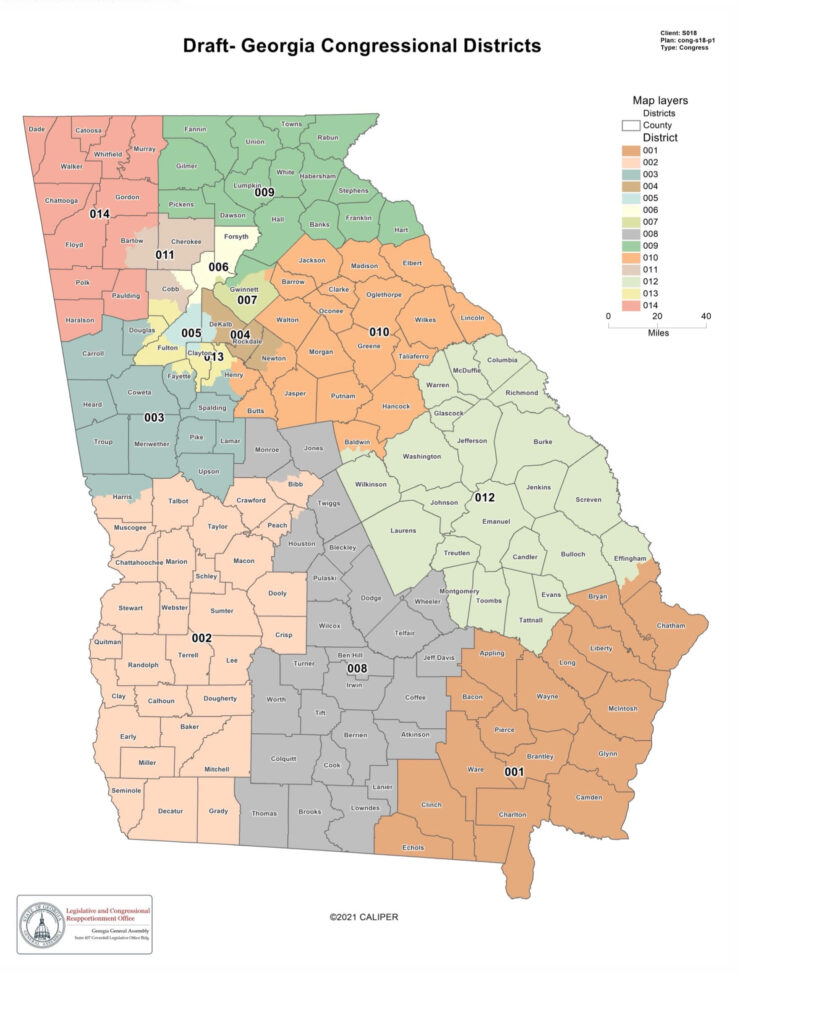
The Georgia Senate has released a proposed congressional redistricting map.
ATLANTA – The General Assembly’s special redistricting session doesn’t start until November, but the first map of redistricting season was released late Monday.
Lt. Gov. Geoff Duncan, who presides over the Georgia Senate, and Sen. John Kennedy, chairman of the chamber’s Redistricting and Reapportionment Committee, put out a proposed congressional district map that would increase the size of districts in rural South Georgia to reflect losses in population during the last decade.
The plan crafted by the Senate’s Republican majority also appears to target U.S. Rep. Lucy McBath, D-Marietta, by shifting portions of the 6th Congressional District she represents into heavily Republican areas.
Duncan defended the proposed map as in keeping with guidelines the Senate committee set last month.
“This map not only meets principles of redistricting, but we are proud to present a map that regardless of political party, Georgians can be proud of,” the lieutenant governor said. “Ensuring that any maps we produce are fair, compact, and keep communities of interest together will continue to be of upmost importance.”
Georgia lawmakers redraw the state’s legislative and congressional districts once each decade to account for changes in population reflected in the U.S. Census. Special redistricting sessions usually take place during the late summer, but the process was delayed this year because of the impact the coronavirus pandemic has had on completing and releasing the census.
A preliminary look at the Senate’s proposed congressional map shows Georgia counties south of Interstate 20 would gain huge swaths of territory to compensate for population losses since the 2010 census. Federal law requires congressional districts to be virtually equal in population.
The 2nd Congressional District in Southwest Georgia, which now includes only part of Muscogee County, would expand to take in the entire county, as well as portions of Harris and Houston counties now part of other districts.
But perhaps the most dramatic changes would take place further east, where some districts would in essence swap counties. The 8th Congressional District in the south-central portion of the state would add Coffee, Jeff Davis and Wheeler counties while losing Wilkinson and Wheeler counties and parts of Houston and Lowndes counties.
The 10th District would lose northern Columbia County, southern Baldwin County and all of McDuffie and Warren counties, while moving further north to gain Elbert, Jackson and Madison counties, and absorb all of Athens-Clarke County. Currently, the 10th District does not include the northern portion of Athens-Clarke.
The 12th Congressional District, which borders the 10th to the south, would shift northward to take in the part of Columbia County it does not contain now as well as all of McDuffie, Jefferson, Washington and Wilkinson counties. On its southern end, the 12th would lose Coffee, Jeff Davis, Appling and Wheeler counties.
Democrat McBath captured the 6th Congressional District in Atlanta’s northern suburbs in 2018 after it had been in Republican hands for decades, then won reelection last year.
But holding the seat would become harder in 2022 under the Senate map, which would put all of heavily Republican Forsyth County inside the 6th District for the first time. The district would retain East Cobb and North Fulton but lose northern DeKalb County.
Similarly, Democratic Rep. Carolyn Bourdeaux could face a new obstacle under the proposed 7th Congressional District Senate map. While the district would lose Forsyth County to McBath’s district, the Republican-dominated 9th Congressional District in North Georgia would dip down into northern Gwinnett County, uncomfortably close to and possibly even including Bourdeaux’s residence.
Even if Bourdeaux’s home ends up outside of her district, however, she would be allowed to run for reelection next year. Federal law does not require members of the House to reside in their districts.
The special session will begin on Nov. 3 and is expected to run into the week of Thanksgiving.
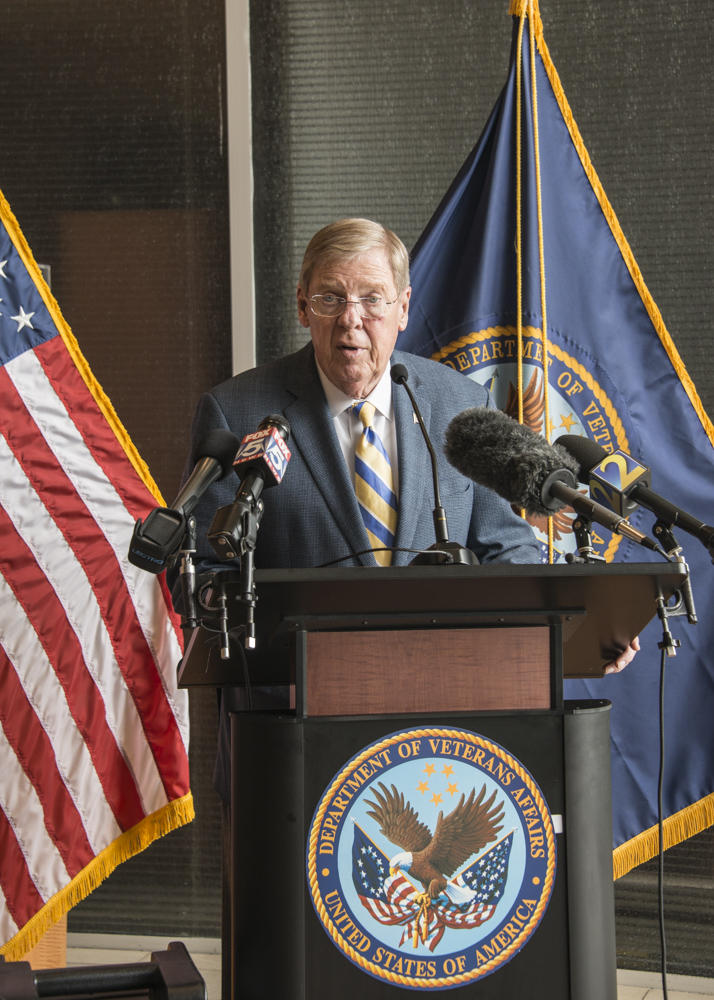
ATLANTA – Nearly 500 of Georgia’s business and political elite said thanks to former U.S. Sen. Johnny Isakson Monday for more than 40 years spent in public service.
Isakson, a Republican who retired at the end of 2019, suffers from Parkinson’s disease. Monday’s tribute at the historic Piedmont Driving Club raised about $1 million to benefit The Isakson Initiative, a nonprofit he founded in May to raise awareness and funding for research related to Parkinson’s, Alzheimer’s and related dementia.
The first Georgia politician to ever serve in the state House and Senate, the U.S. House and the U.S. Senate was feted as a leader who took a bipartisan approach toward public policy during an era of increasing polarization between Republicans and Democrats.
“Johnny has always worked to get everyone at the table,” said Georgia House Speaker David Ralston, R-Blue Ridge.
“He represents the best our state and nation have to offer,” Gov. Brian Kemp added.
Isakson served in the General Assembly during the 1970s and 1980s as one of its few Republican members. After unsuccessful runs for governor and the U.S. during the 1990s, then-Gov. Roy Barnes appointed him to chair the Georgia Board of Education.
He was elected to the U.S. House in 1999, succeeding former House Speaker Newt Gingrich of Georgia, then won a seat in the Senate in 2004. Isakson became the first Republican elected statewide to three terms.
Monday’s luncheon program included recorded both live and recorded tributes from some of Isakson’s former Senate colleagues from both sides of the aisle. Sen. Lindsey Graham, R-S.C., praised Isakson for using his illness for good and pledged to support Isakson’s fund-raising efforts.
“You’re taking a bad hand that was dealt to you and using it to help other people,” Graham said. “We’re going to fight this illness together.”
“Johnny was my mentor when I came to the Senate more than a decade ago,” added Sen. Chris Coons, D-Del., who now chairs the Senate Ethics Committee formerly headed by Isakson. “He focused on what we could do together.”
Ralston said Isakson was a key backer of federal funding to deepen Savannah Harbor so the Port of Savannah could accommodate a new generation of containerized cargo ships.
In light of his contributions, Ralston sponsored a resolution this year naming the new bridge on Georgia 307 that crosses over the Mason Mega Rail Yard after Isakson.
Sen. Roy Blunt, R-Mo., another former Senate colleague, informed the audience the Johnny Isakson Public Health Research Building on the Atlanta campus of the federal Centers for Disease Control and Prevention is due for completion in 2024.
And Kemp announced that the Johnny Isakson Professorship for Parkinson’s Research at the University of Georgia has raised $4.5 million and hired its first research professor.
“We’re proud of the progress that professorship has made in less than two years,” the governor said. “I have no doubt this initiative will bring hope for Parkinson’s patients and their families for years to come.”
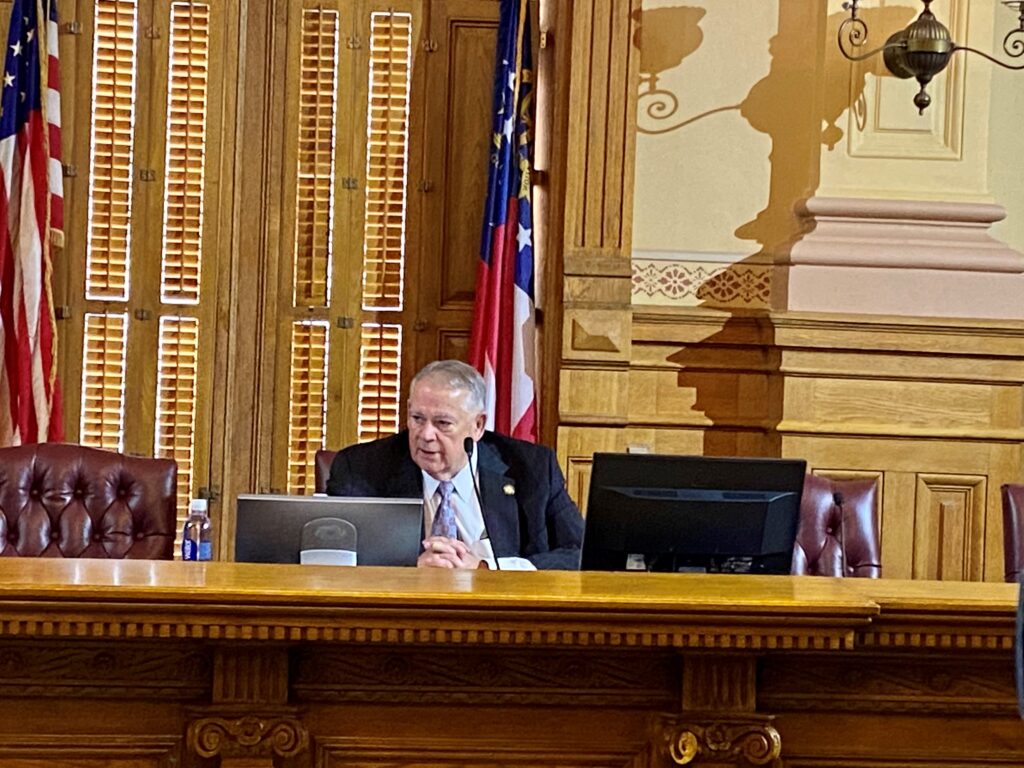
Georgia House Speaker David Ralston (Photo by Beau Evans)
ATLANTA – Gov. Brian Kemp and Georgia House Speaker David Ralston Monday announced the next step in state Republican leadership’s commitment to prioritize public safety.
The state will offer one-time $1,000 bonuses to nearly 81,000 police officers, firefighters and other emergency responders throughout Georgia, Kemp said during a news conference inside the state Capitol. The $100 million initiative comes in addition to $25 million in bonuses Ralston proposed in July for a smaller group of sworn law enforcement officers.
The governor and speaker said Georgia’s first responders have weathered tremendous hardships in the last 18 months dealing with the coronavirus pandemic and a loss of respect for law enforcement that accompanied the national “defund the police” movement sparked by some street protesters last summer.
“We know it’s never been harder to wear a badge,” said Ralston, R-Blue Ridge. “We want to ensure our officers know we appreciate their service and sacrifice.”
Kemp said police and fire departments and other emergency response agencies will be able to apply to the Governor’s Office of Planning and Budget for grants that will pay for the bonuses between Oct. 1 and the end of the year. The funds will come from Georgia’s $4.8 billion share of federal COVID-19 relief.
The money will go to all eligible public safety officers and first responders, including police and sheriff’s department employees, parole and probation officers, prison and jail guards, emergency-medical technicians and paramedics, criminal investigators, court bailiffs, fish and game wardens, 911 dispatchers and evidence processors with the Georgia Bureau of Investigation.
The $25 million in law enforcement raises Ralston proposed during the summer is part of a $75 million allocation the speaker is requesting to bolster public safety and mental health services in Georgia.
Ralston acted to make public safety a priority in the aftermath of a crime wave that has driven up murder rates and other violent crime in Atlanta, other Georgia cities and across the nation. State House and Senate committees have been holding hearings to examine the reasons for the uptick in crime and what can be done to address it.
Kemp announced in July that he planned to add crime legislation to this year’s special legislative session being held primarily to redraw Georgia’s congressional and legislative district lines.
But crime did not appear on the agenda last week when Kemp called for the special session to start Nov. 3. Lawmakers instead are expected to consider the governor’s proposals during the 2022 regular session beginning in January.
The General Assembly approved one-time $1,000 bonuses earlier this year for teachers and state employees who earn less than $80,000 per year.
Middle Georgia State University’s Eastman campus is one of only nine in the country offering flight management and aircraft maintenance programs.
ATLANTA – Few Georgians realize that aerospace is the Peach State’s second largest manufacturing industry or that Delta Air Lines is Atlanta’s second largest employer.
But now, that lofty status is being threatened by shortages of both pilots and aviation technicians. Both are critical if aviation is to remain one of Georgia’s leading industries, said state Rep. David Knight, R-Griffin.
“If an aircraft is not worthy, nothing else matters,” said Knight, chairman of the House Appropriations subcommittee that oversees state spending on higher education. “If you don’t have pilots, they can be airworthy, but they sit on the ground.”
Members of Knight’s subcommittee have been touring airports large and small across Georgia in recent weeks to explore what can be done to refill an aviation workforce pipeline that’s being drained by older workers retiring.
“We’ve got to get the next generation in here,” he said. “We need to be hiring yesterday.”
The consensus during two days of hearings before Knight’s subcommittee this month was that the state needs to do a better job marketing job opportunities in aviation.
“There are great high-paying jobs across the field in aviation,” Knight said. “[But] students have no idea what’s out there. The dots aren’t being connected.”
Some initiatives to market aviation as a career are underway throughout Georgia. The Museum of Aviation at Robins Air Force Base in Houston County hosts field trips and summer camps for students.
Delta sponsors student tours of Hartsfield-Jackson International Airport. The Center of Innovation for Aerospace, run by the state Department of Economic Development, markets the industry to teachers and guidance counselors.
But the colleges around the state that offer aviation programs are limited in what they can do to market career opportunities, said Tal Loos, dean of aviation at Savannah Technical College, one of five Georgia technical colleges that train aviation technicians.
“I don’t have much money for marketing,” Loos said. “I’m just trying to keep the program afloat.”
Attracting students is not a problem for Macon-based Middle Georgia State University’s campus in Eastman, one of only nine in the country offering both flight management and aircraft maintenance programs. In fact, its flight school has a waiting list of 441, said Adon Clark, dean of the university’s School of Aviation.
“We’re turning away students,” he said.
Instead, the issue in Eastman is recruiting and retaining faculty to teach aviation at a state institution when they can make a lot more money either teaching at a private college or working in the industry, Clark said.
Martin Kehayes, chairman of the Department of Aviation Maintenance and Structural Technology at Middle Georgia State, said the university wants to expand its program from 80 students to 135 to 140. To do so, however, would require hiring three or four additional instructors, he said.
Clark said adding more students to the Eastman campus also would require buying more aircraft and hangars, big-ticket purchases but infrastructure an aviation school can’t do without.
“It’s a budget issue,” he said. “It’s all about facilities, equipment and faculty.”
Knight suggested the aviation industry should be willing to help the state with the financial support the colleges need, at least in their marketing efforts. It’s only fair considering the schools are turning out pilots and aviation technicians to fill jobs at companies like Delta and Savannah-based Gulfstream Aerospace, he said.
“They need to step up,” Knight said. “We need to make sure to keep aviation as one of the top industries in Georgia and see that it grows.”
This story is available through a news partnership with Capitol Beat News Service, a project of the Georgia Press Educational Foundation.