ATLANTA – New mothers in Georgia could receive health coverage through Medicaid for up to a year after giving birth, up from the current six months, under legislation that cleared the state Senate unanimously.
Gov. Brian Kemp backs the measure and included $28.2 million in his fiscal 2023 budget proposal to pay for it.
Expanding Medicaid coverage for new mothers was the top recommendation of a task force formed to examine the issue, Sen. Dean Burke, R-Bainbridge, the bill’s chief sponsor, told senators before Monday’s vote.
State Sen. Nan Orrock noted that Georgia consistently has been among the states with the highest rate of maternal mortality. Low-income mothers used to receive Medicaid coverage for only two months postpartum in Georgia, which was increased to six months two years ago.
“This is a great leap forward,” Orrock said.
Senate Minority Leader Gloria Butler urged her colleagues to move beyond expanding coverage for new mothers to a full-blown expansion of Medicaid.
“We need to stop nibbling around the corners of this problem,” said Butler, D-Stone Mountain. “Senate Bill 338 will save lives. We can do more and save thousands more lives.”
Kemp and legislative Republican leaders oppose a full expansion of Medicaid as too expensive.
The bill now heads to the Georgia House of Representatives.
This story is available through a news partnership with Capitol Beat News Service, a project of the Georgia Press Educational Foundation.
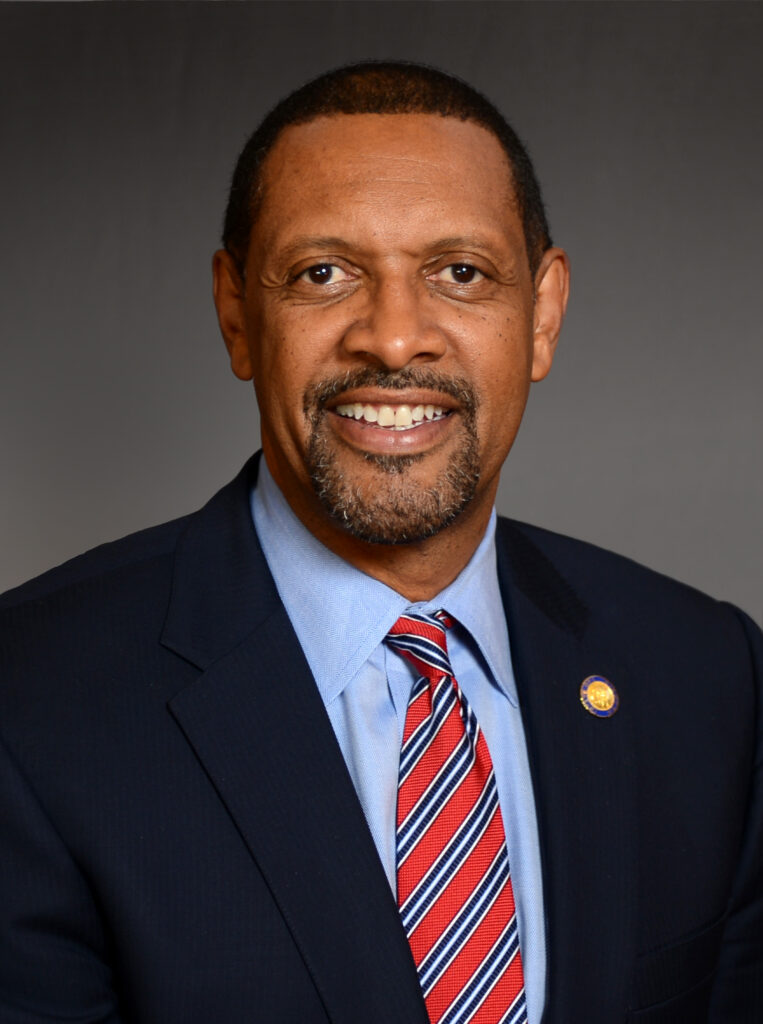
ATLANTA – Former state Rep. Vernon Jones dropped out of the Republican gubernatorial race Monday and announced instead he will run for a seat in Congress.
In a post on Twitter, Jones threw his support in the May 24 GOP gubernatorial primary behind former U.S. Sen. David Perdue, who is challenging incumbent Gov. Brian Kemp for the Republican nomination.
“He is a good man who loves our state and loves our country,” Jones wrote of Perdue.
Jones, a former Democrat and former DeKalb County CEO, was an early challenger to Kemp’s reelection bid. Most political observers didn’t give Jones much of a chance of winning the primary, and Perdue’s entry into the race in December further lengthened Jones’ odds of success.
Jones will be running for an open seat in the 10th Congressional District. U.S. Rep. Jody Hice, R-Greensboro, is leaving Congress to run for Georgia secretary of state with the backing of former President Donald Trump.
Jones joins a crowded field of about a dozen Republicans in the heavily Republican district. The 10th stretches from Henry and Newton counties northeast to the Georgia border, including Athens.
This story is available through a news partnership with Capitol Beat News Service, a project of the Georgia Press Educational Foundation.
ATLANTA – Republicans in the state Senate Monday defended legislation prohibiting the teaching of critical race theory in Georgia schools from criticism by Democrats that the bill would stifle honest discussion of America’s history of systemic racism.
“We’re not perfect. Our history is stained with racism,” Sen. Bo Hatchett, R-Cornelia, the bill’s chief sponsor, told members of the Senate Education and Youth Committee. “In no way shape or form is it my intention to prevent history being taught to students.”
Hatchett said the legislation targets nine “divisive concepts” to be prohibited from being taught not only in Georgia’s K-12 classrooms, but also in the state’s public colleges, universities and technical colleges.
The banned concepts include that any race is inherently superior or inferior to any other, that the United States is a systemically racist country or that any individual is inherently racist.
The bill would provide a process for students, teachers or parents to file a complaint if they believe the law is being violated. Failure to comply could subject an offending school or school system to lose 10% of its state funding.
The legislation is being backed by Republican Gov. Brian Kemp, who faces a primary challenge from former U.S. Sen. David Perdue this year, prompting some opponents to argue the issue is being used to appeal to GOP base voters.
On Monday, Sen. Lester Jackson, D-Savannah, questioned whether the bill is necessary.
“Most racist theories are taught at home, not in the classroom,” he said.
Sen. Elena Parent, D-Atlanta, wondered how the legislation could be enforced without creating a “chilling effect” on teachers who already are leaving the profession in large numbers.
Sen. Matt Brass, R-Newnan, said the bill’s aim is not to prevent the teaching of history but to avoid stereotyping Georgians as part of a group rather than as individuals.
“When you put people in groups and assume they’re a certain way or treat people a certain way, that’s what we’re trying to get away from,” he said. “We want to learn from our history. … Nothing in this bill prohibits that.”
Hatchett conceded the legislation deals with difficult issues and expressed a willingness to work with Democrats on crafting language to build more support.
“This is our first stab at it,” he said.
The committee took no public comment on the legislation during Monday’s hearing. Committee Chairman Chuck Payne, R-Dalton, said there will be an opportunity for the public to weigh in as the panel continues considering the bill.
This story is available through a news partnership with Capitol Beat News Service, a project of the Georgia Press Educational Foundation.
ATLANTA – Two Republican state senators are waging an expensive battle for lieutenant governor for a statewide race that’s not at the top of the ballot.
Senate President Pro Tempore Butch Miller of Gainesville and Sen. Burt Jones of Jackson each had raised more than $3 million through the end of last year, according to reports filed with the Georgia Government Transparency & Campaign Finance Commission late last week.
While Jones raised more money than Miller through Dec. 31 – $3.78 million to $3.39 million – $2 million of Jones’ war chest came in the form of a $2 million loan he made to his campaign.
“Excluding the millions that Burt Jones poured into the campaign from his silver spoon, Butch is outraising him nearly 2-to-1,” Neil Bitting, Miller’s campaign manager, said Monday.
The GOP race for lieutenant governor is one of several Republican primary contests in which former President Donald Trump has gotten involved. Trump has endorsed Jones, who has sided publicly with the former president’s unproven allegations of widespread fraud in the 2020 presidential election in Georgia.
Miller has cast a large profile during the early weeks of this year’s General Assembly session, sponsoring legislation to eliminate Georgia’s income tax and abolish absentee ballot drop boxes.
The other Republican candidate in the race for lieutenant governor, Savannah activist Jeanne Seaver, had not filed a campaign finance report with the state as of Monday.
None of the four Democrats seeking their party’s nomination for lieutenant governor had filed campaign fundraising paperwork as of Monday. They include state Reps. Erick Allen of Smyrna, Derrick Jackson of Tyrone, Renitta Shannon of Decatur and attorney Charlie Bailey.
Bailey only recently entered the contest after dropping his bid for attorney general and, thus, wasn’t due to file a campaign fundraising report at the end of last month.
This story is available through a news partnership with Capitol Beat News Service, a project of the Georgia Press Educational Foundation.
ATLANTA – Republicans in the Georgia Senate voted Monday to erect a statue at the state Capitol honoring U.S. Supreme Court Justice and Georgia native Clarence Thomas over objections from Democrats that his voting record has harmed Black Americans.
The bill passed 32-21 along party lines and now heads to the state House of Representatives.
Thomas rose from poverty in the tiny coastal Georgia community of Pin Point to the nation’s highest court. Nominated by then-President George H.W. Bush in 1991, Thomas is currently the longest serving Supreme Court justice.
“The story of Justice Thomas is a Georgia story, a story of somebody who grew up without a father from a young age, was homeless from a young age [and] was the first in his family to go to college,” Sen. Brian Strickland, R-McDonough, told his Senate colleagues Monday. “That story should be told.”
But Senate Democrats cited a litany of court decisions in which Thomas, who is Black, has sided against the interests of Blacks, including rulings opposing affirmative action and repealing a key provision of the 1965 Voting Rights Act.
“Justice Thomas is controversial,” said Sen. Nikki Merritt, D-Grayson. “He’s not well received in the Black community.”
Other Democrats spoke out against putting up a statue on the Capitol grounds in honor of someone who is still in active service. Of the statues of Georgians on display at the Capitol, only those of former President Jimmy Carter and former Gov. and U.S. Sen. Herman Talmadge were erected while they were alive, and both had retired well before the statues were erected.
“Justice Thomas’ political story is still not finished,” said Sen. Lester Jackson, D-Savannah.
Sen. Ben Watson, R-Savannah, accused Democrats of “bad faith” and “gamesmanship” in opposing a Thomas statue.
“Justice Thomas has not forsaken his home, his state, his family or the city and town where he grew up,” Watson said. “But he’s not in your face about it. He’s not disrespectful about it.”
The bill provides that the Thomas statue would be financed privately, with no use of tax dollars.
This story is available through a news partnership with Capitol Beat News Service, a project of the Georgia Press Educational Foundation.