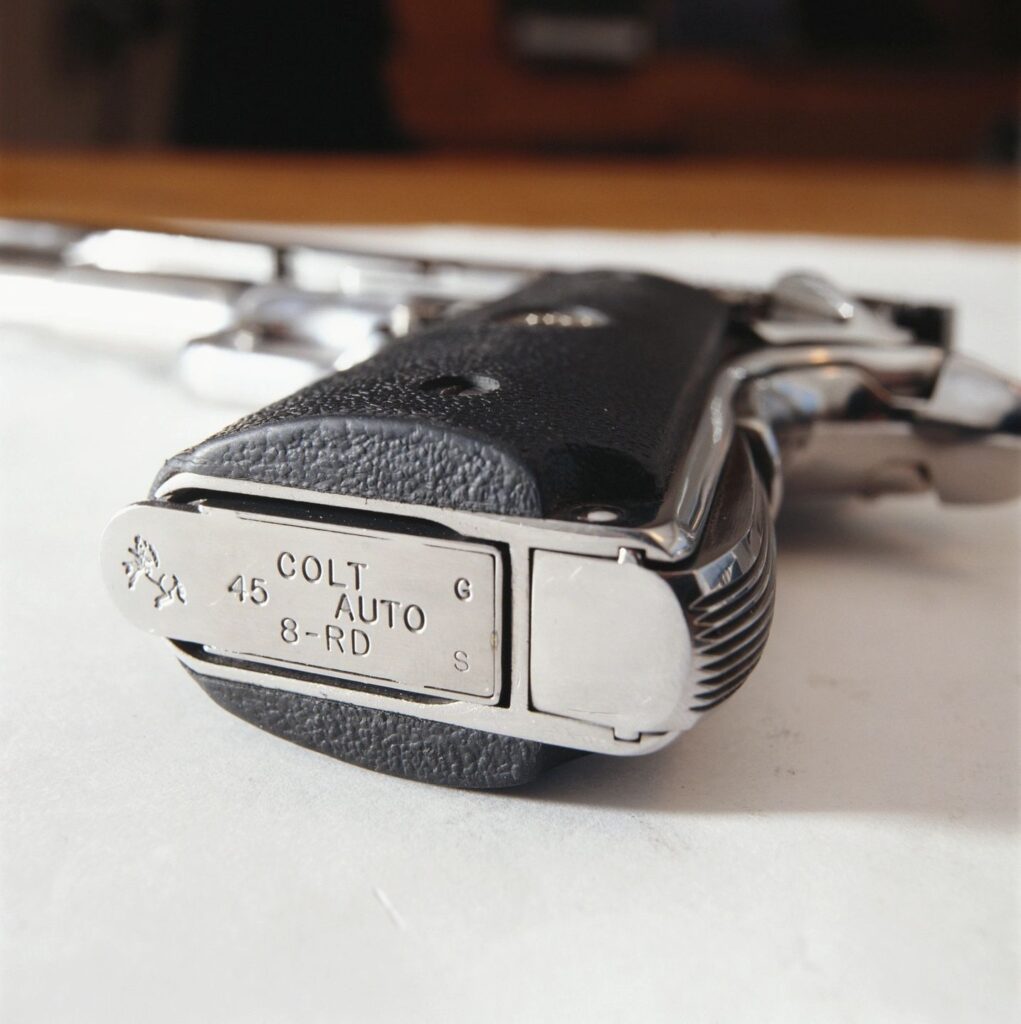
ATLANTA – After years of unsuccessful efforts, gun rights advocates have never been closer to convincing the General Assembly to pass legislation letting Georgians carry concealed firearms without a permit.
“To build a safer, stronger Georgia, we must ensure every Georgian feels safe and secure in their communities,” Gov. Brian Kemp said during his State of the State address last month.
“I believe that starts with fully recognizing the constitutional rights granted to law-abiding Georgians in our founding documents, and I look forward to supporting constitutional carry legislation this session.”
The constitutional carry bill, sponsored by Sen. Jason Anavitarte, cleared the Senate Judiciary Committee Feb. 2 along party lines, with six Republican senators supporting it and three Democrats opposed. Its next stop will be the Senate Rules Committee, which is expected to send it to the floor of the chamber for a vote of the full Senate.
“Our organization is grateful for Senator Anavitarte and his unapologetic support of the Second Amendment,” Jerry Henry, executive director of the Georgia gun rights group GA2A, said in a statement issued after the committee vote. “We are one step closer to restoring the constitutional rights afforded to every law-abiding citizen in Georgia.”
Legislative Democrats oppose Senate Bill 319 not only as an individual proposal but as part of a broader election-year push by Republicans to pass a laundry list of bills aimed at appealing to GOP base voters.
In the case of the gun bill, Democrats say allowing Georgians to carry guns without a permit would increase violent crime. In 2020, at least 5,000 Georgians were denied a firearms permit because of a criminal history, a track record that would have gone undiscovered had no permit application been required.
“Why would we want to make it easier for those criminals to carry firearms?” Sen. Elena Parent, D-Atlanta, asked during the Judiciary Committee meeting.
Republicans counter that requiring permits to carry guns only affects law-abiding Georgians because criminals don’t bother to apply for permits.
“The folks who are burdened by this process are those who are obeying the law,” said Sen. Blake Tillery, R-Vidalia.
Anavitarte, R-Dallas, said Senate Bill 319 would not change the laws governing who can carry firearms in Georgia or where they can bring them. It only pertains to the permitting process, he said.
Anavitarte said 21 states have adopted constitutional carry laws, including Maine, New Hampshire and Vermont, statistically among the states safest from violent crime.
“In most [states with constitutional carry], crime has decreased or remained flat,” he said. “The bill puts law-abiding gun owners on an even playing field with criminals.”
But opponents argue that kind of Wild West mentality where everyone is packing a weapon is not popular with law enforcement agencies.
Atlanta Police Chief Rodney Bryant expressed concern about the proliferation of guns on the streets of Georgia’s capital city last month after a 6-month-old baby was shot.
“Guns intensify violent encounters … upping the stakes and worsening the outcome,” Parent said.
But gun rights advocates say the right to privacy from government intrusion is at stake.
“This is about freedom,” Aaron Dorr of Georgia Gun Owners told members of the Judiciary Committee. “It’s about [gun owners] not having to put their name in a database and be tracked by the government.”
This story is available through a news partnership with Capitol Beat News Service, a project of the Georgia Press Educational Foundation.
ATLANTA – The Georgia House of Representatives overwhelmingly passed a $29.9 billion mid-year budget Friday that would raise the salaries of teachers and state employees and accelerate work on building projects across Georgia.
The mid-year budget, which covers spending through June 30, sailed through the House 152-4 and now moves to the state Senate.
With state coffers flush with higher-than-anticipated tax revenues, Gov. Brian Kemp and the General Assembly are poised to provide election-year dividends in the form of a $2,000 pay increase for Georgia teachers and a $5,000 raise for most state workers.
The teacher pay raise – combined with a $3,000 increase lawmakers approved three years ago – would let Kemp fulfill a promise he made on the campaign trail in 2018.
“This is a tremendous investment into the human capital of Georgia,” House Majority Leader Jon Burns, R-Newington, said shortly before Friday’s vote.
The mid-year budget also would allocate cash dollars to pay for a series of building projects normally funded through bonds appropriated in the so-called “big” budget that takes effect July 1.
The list includes $4.8 million to complete the state Department of Public Safety’s new headquarters building in Atlanta, $4.6 million for repairs to buildings at the Georgia National Fairgrounds in Perry, and $2 million to design the second phase of an expansion at the University of North Georgia.
House lawmakers also put up nearly $383 million to fully fund Georgia’s K-12 student funding formula. The Quality Basic Education (QBE) formula, which originated during the 1980s, was never fully funded until recent years.
However, uncertainty over how the coronavirus pandemic was going to affect state tax collections prompted the General Assembly to cut formula funding two years ago.
On Friday, some House Democrats questioned whether the mid-year budget would truly fund QBE completely and argued the decades-old formula needs to be modernized.
But House Appropriations Committee Chairman Terry England said previous efforts to reexamine QBE funding failed to yield results.
“We can’t find a better way … to fund education,” said England, R-Auburn.
The mid-year budget would also give a boost to mental health services, including $310,000 to help the Georgia Crisis Access Line interface with a new national mental health crisis hotline due to launch July 1.
“We’ve made provision for some of the mental-health programs I’ve talked about all session,” said House Speaker David Ralston, R-Blue Ridge. “I’m very pleased with the budget.”
This story is available through a news partnership with Capitol Beat News Service, a project of the Georgia Press Educational Foundation.
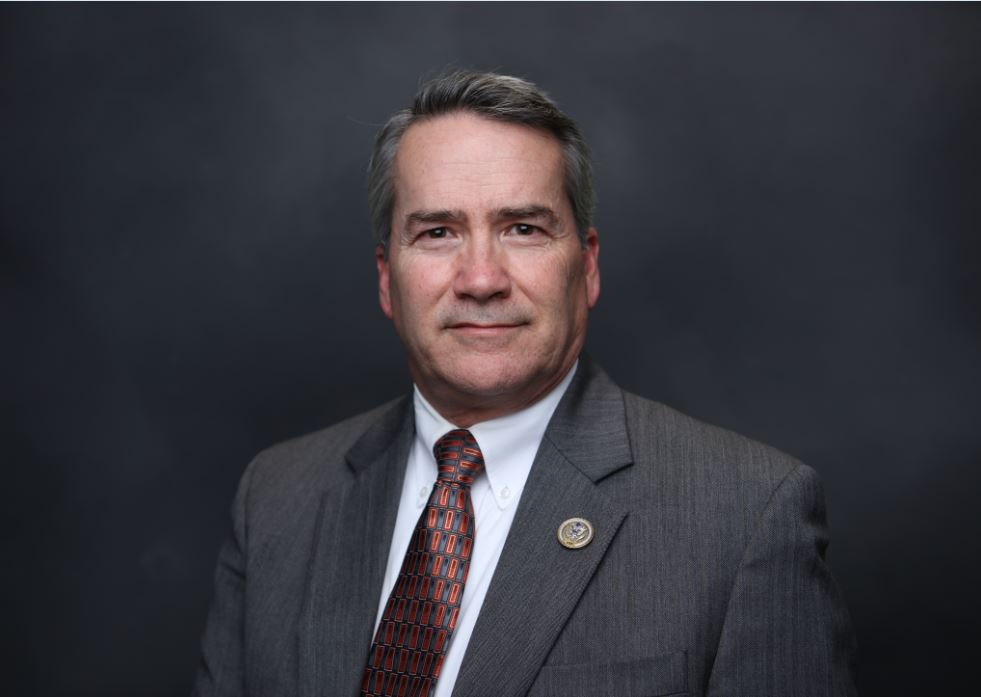
ATLANTA – U.S. Rep. Jody Hice is holding a solid lead in fundraising for Georgia secretary of state, according to the latest campaign finance disclosures filed by the candidates.
Hice, R-Greensboro, had raised $1.6 million through the end of last month, according to a report submitted to the Georgia Government Transparency & Campaign Finance Committee. His campaign reported $648,303 cash on hand as of Jan. 31.
Incumbent Republican Secretary of State Brad Raffensperger had raised $596,921 through the end of January, reporting $513,434 in his campaign treasury as of Jan. 31.
The other Republican seeking the nomination for secretary of state, former Alpharetta Mayor David Belle Isle, had raised $376,485 and listed $112,220 cash on hand as of the end of last month.
Georgia Rep. Bee Nguyen, D-Atlanta, was the only Democratic candidate with a campaign fundraising report on file with the state agency as of Friday. She had raised $1.1 million as of Jan. 31 and reported $944,974 remaining in her campaign treasury.
“More than 3,600 grassroots donors have invested in our campaign because they believe in Bee and in her plan to ensure that all Georgians have access to the ballot box regardless of their zip codes,” Nguyen campaign manager Maria Banjo said.
“The campaign’s cash on hand advantage demonstrates Georgians’ appetite for change in the secretary of state’s office and puts Bee in a strong position moving into the last three months before the primary.”
The other two Democrats running in the May 24 primary are cyber executive Michael Owens and Manswell Peterson, a college professor from Albany.
Heading into the May 24 Republican primary, Hice not only is the leading GOP fundraiser. He also boasts the endorsement of former President Donald Trump.
Trump has been on the outs with Raffensperger since the infamous phone call Trump placed to the secretary of state in January of last year urging him to “find” enough votes to put the then-president over the top in Georgia against Democrat Joe Biden. Raffensperger refused to go along with the request.
Biden because the first Democratic presidential nominee to carry Georgia since Bill Clinton in 1992.
This story available through a news partnership with Capitol Beat News Service, a project of the Georgia Press Educational Foundation.
ATLANTA – Lawmakers from Southwest Georgia are hoping a better highway system would give one of the state’s most economically depressed regions a boost.
The Georgia House Transportation Committee approved a resolution Thursday asking the state Department of Transportation to study the potential costs and benefits of extending Interstate 185 south from Columbus to the Florida line and widening Georgia 300 through Albany into four or more lanes.
The four-laning of U.S. 27 south of Columbus was completed several years ago, a project that was done piecemeal over the course of several decades. Extending I-185 along the U.S. 27 corridor through Blakely and Bainbridge would upgrade the highway to interstate standards.
“This could help us,” Rep. Gerald Greene, R-Cuthbert, the resolution’s chief sponsor, told Transportation Committee members Thursday. “Maybe we can have some economic development in this region.”
South Georgia lawmakers cosponsoring Greene’s legislation include Reps. Winfred Dukes, D-Albany; John LaHood, R-Valdosta; Penny Houston, R-Nashville, and Randy Nix, R-LaGrange.
The resolution heads next to the House Rules Committee to schedule a vote of the full House.
This story is available through a news partnership with Capitol Beat News Service, a project of the Georgia Press Educational Foundation.
ATLANTA – The Georgia Senate passed legislation Thursday to establish a $100 million tax credit program for donations to support local law enforcement.
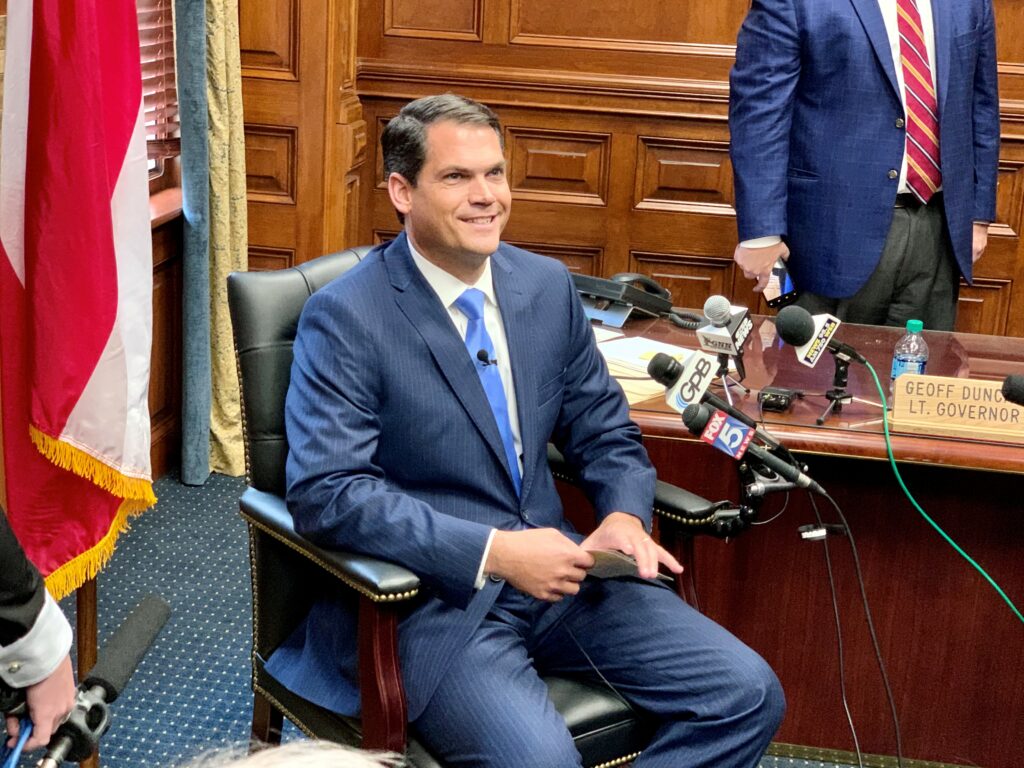
The bill, which passed unanimously and now heads to the state House of Representatives, is at the top of Lt. Gov. Geoff Duncan’s agenda for this year’s General Assembly session.
It’s modeled after the highly successful rural hospital tax credit lawmakers created in 2016.
“The Senate is sending a message strong and clear to 11 million Georgians that we do care about their public safety,” Duncan, the Senate’s presiding officer, said after Thursday’s vote.
The new tax credit would let Georgians redirect state tax dollars they owe to a nonprofit foundation formed to support law enforcement in the taxpayer’s community.
Single taxpayers could receive a dollar-for-dollar tax credit of up to $5,000. Married taxpayers filing jointly could receive up to $10,000 in credits.
Each local foundation would be limited to $5 million in donations annually to make sure the money is spread around the state. The total program would be capped at $100 million per year.
“We’ve seen a big spike in violent crime. It impacts all of Georgia – rural, urban and suburban,” said Sen. Larry Walker III, R-Perry, the bill’s chief sponsor. “This is a way for us to enhance Georgia’s public safety efforts.”
The legislation would require law enforcement agencies receiving foundation funding to spend it to hire more officers, provide officer pay raises, buy equipment, work with mental health “co-responders” to answer calls that could require intervention with a mentally ill person or enhance training of officers in avoiding violence.
“We’re talking about de-escalating a situation by being trained properly … to do other things before you pull a weapon,” said Sen. Jeff Mullis, R-Chickamauga. “Training is a key to make sure our communities are safe.”
This story is available through a news partnership with Capitol Beat News Service, a project of the Georgia Press Educational Foundation.