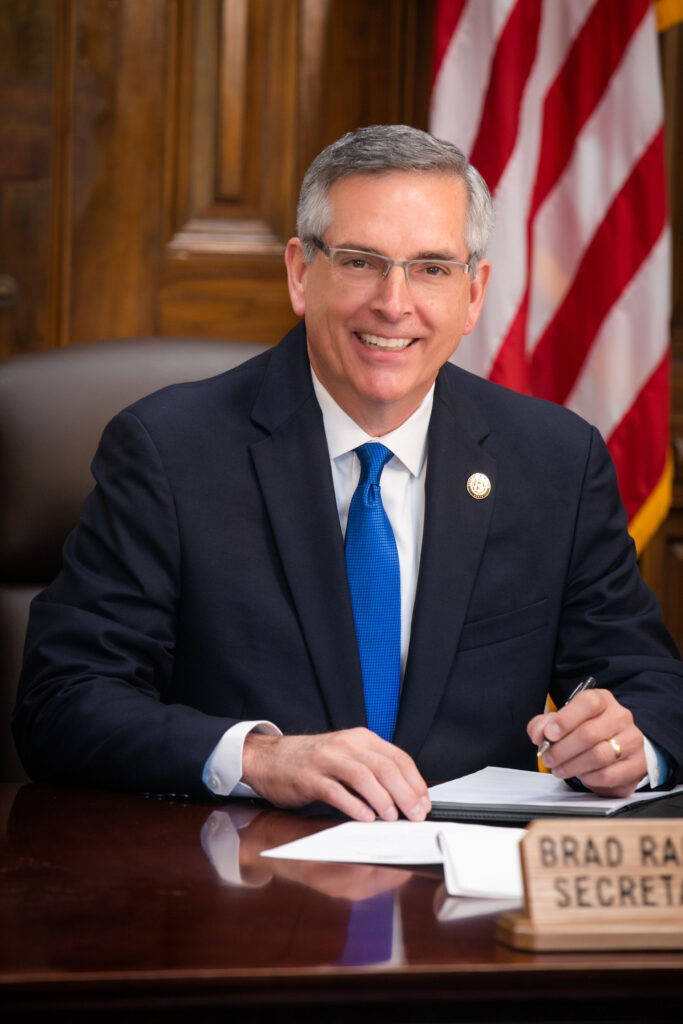
ATLANTA – Georgia Secretary of State Brad Raffensperger is asking Georgia companies and investors to stop doing business with Russia in solidarity with Ukraine.
“I am calling on all Georgians to do their part to support the people of Ukraine in their fight to defend against Russia’s aggression in Europe,” Raffensperger said.
“[Russian President Vladimir] Putin has made clear his designs to roll back the progress of democracy and freedom in the world, and the people of Ukraine are bearing the brunt of his violent revisionism. I am calling on the people of Georgia to cease any business with Russia or investment in Russian assets, or companies that support Russia, to demonstrate our resolve on the side of liberty and freedom from tyranny.”
The secretary’s call follows the Russian invasion of Ukraine last week.
Raffensperger is Georgia’s commissioner of securities. In that capacity, he enforces the state’s securities laws, registering securities offered or sold in Georgia and overseeing firms and individuals selling securities or providing investment advice in Georgia.
This story is available through a news partnership with Capitol Beat News Service, a project of the Georgia Press Educational Foundation.
ATLANTA – In 2019, the General Assembly created a commission to launch a medical marijuana program in Georgia by awarding licenses to companies to grow the leaf crop and convert it into low-THC cannabis oil.
Three years later, not a single patient has received a single dose. Despite the tentative granting of six licenses last summer, the initiative is mired in legal protests filed by companies denied licenses claiming the selection process was flawed.
“It’s the most maddening process I’ve ever seen,” said state Rep. Alan Powell, R-Hartwell, chairman of the House Regulated Industries Committee.
Now, Powell is pushing legislation he says would resolve the legal issues and get the program on track.
House Bill 1400 would increase the number of licenses the state awards from six to as many as 28. That would allow the 16 companies that have filed protests to reapply for a license rather than pursue their protest in court and cause further delays, Powell testified during two days of hearings on the bill.
“It’s time we do what’s necessary to fix a broken system,” he said.
The more than 20,000 Georgia patients who have registered with the state Department of Public Health to receive low-THC cannabis oil are frustrated they haven’t been able to get the drug three years after the legislature created the program.
Under the 2019 bill, patients suffering from a variety of diseases qualify for low-THC cannabis oil. The list includes cancer, seizure disorders, multiple sclerosis, amyotrophic lateral sclerosis (ALS), Crohn’s disease, Parkinson’s disease and sickle-cell anemia.
Dale Jackson, the father of a teenage son with autism, took lawmakers to task during one of the hearings for failing to keep their promise to provide a legal pathway for Georgians to get the oil.
“We were told, ‘Just do it right. Just follow the process,’ ” Jackson told members of a House subcommittee assigned to consider Powell’s bill. “You lied to us. … This problem has to be fixed. This has to end.”
Several lawyers representing companies denied licenses to produce low-THC oil spoke out in support of the bill during the two hearings.
Kellen Carr, representing Georgia Bioscience Research, one of the companies protesting denial of its license application, said limiting the number of licenses will drive up the costs of the oil, which is not covered by insurance.
“The only thing that keeps costs down in this industry is marketplace competition,” she said.
Kristen Goodman, representing Symphony Medical, another protester, said the six licenses that were granted went to large out-of-state companies with plans for cannabis oil-producing operations concentrated in Middle Georgia.
“The north half of the state is not represented at all, nor is the southwest corner,” added Wesley Dunn, representing Revolution Georgia, another company denied a license.
Andrew Turnage, executive director of the Georgia Access to Medical Cannabis Commission, did not respond to an e-mail requesting comment on Powell’s bill. But during a commission board meeting last month, he said the commission supports expanding the number of licenses.
Powell’s bill got some pushback during the hearings over whether granting more licenses would mean caving in to the threat of lawsuits from companies denied licenses.
“I am deeply concerned we are rewarding people simply for having the ability to file a lawsuit,” said Rep. Michael Smith, D-Marietta.
But others on the subcommittee said increasing licenses to get low-THC oil to patients sooner rather than later should be the overriding consideration.
“We’ve got children who are sick and hurting all over this state and need this to make a difference in their life,” said Rep. Rick Williams, R-Milledgeville. “We need to make this happen.”
This story is available through a news partnership with Capitol Beat News Service, a project of the Georgia Press Educational Foundation.
ATLANTA – Troops from Georgia’s Fort Stewart will make up the major portion of 7,000 U.S. service members being deployed to Europe following the Russian invasion of Ukraine.
Secretary of Defense Lloyd Austin has ordered troops from the 1st Armored Brigade Combat Team of the Army’s 3rd Infantry Division to Germany “to reassure NATO allies, deter Russian aggression and to be prepared to support a range of other requirements in the region,” said a senior defense official speaking on background.
The 7,000 troops will bring to 12,000 the total U.S. service personnel who have deployed or been ordered to deploy to Europe from the United States. Another 2,000 troops already in Europe have moved closer to NATO’s eastern flank.
Those troops join 80,000 U.S. service members based in Europe. Counting service personnel from NATO countries, the number of troops on the continent is more than 2 million.
Russian troops began pouring into Ukraine from three directions Wednesday on orders from Russian President Vladimir Putin.
Russia has launched at least 160 short-range and medium-range cruise missiles into Ukraine from land, sea and air, the defense official said. The missiles are being aimed mostly at miliary bases and airfields around Kharkiv and Kyiv, the Ukrainian capital.
More than 50,000 Ukrainians have fled the country in the last 48 hours, most taking refuge in neighboring Poland or Moldova.
While the U.S. troops will deploy to Germany initially, they could be repositioned to other NATO countries as needed. President Joe Biden has vowed not to send U.S. soldiers into Ukraine, which is not a member of NATO.
“We expect them to depart [the United States] in coming days,” the official said.
Fort Stewart, located in Hinesville, has a long history of rapid troop deployments overseas. Troops from the Army base served combat tours both in Iraq and Afghanistan.
This story is available through a news partnership with Capitol Beat News Service, a project of the Georgia Press Educational Foundation.
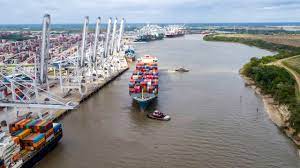
ATLANTA – The Port of Savannah is about to launch a major expansion to keep pace with its growing business.
The port’s capacity will increase by 60% to 9.5 million twenty-foot equivalent units (TEUs) of containerized cargo by 2025, Georgia Ports Authority (GPA) Executive Director Griff Lynch announced Thursday.
“Our expansion is being matched by incredible growth in both warehouse space and workforce,” Lynch said. “The public and private investment that we’re seeing, as well as the number of people being drawn to the business, make Savannah the hottest market in the country for transportation and logistics.”
The port already has added 400,000 TEUs of container handling space to the Garden City Terminal and will make room for another 820,000 TEUs by June.
Also that month, a new container yard just up the Savannah River will add another 500,000 TEUs of capacity.
Separately, the Garden City Terminal West project will add up to 1 million TEUs in phases by 2024.
“GPA’s role facilitating commerce – even in difficult times – is key to Georgia’s long-term economic success,” Gov. Brian Kemp said. “The Ports of Savannah and Brunswick together play a major role in positioning Georgia as the go-to state for economic development.”
The Savannah port has overcome the supply-chain challenges posed by COVID-19 and effectively eliminated its backlog, while accommodating 18 consecutive months of growth.
Last year, the GPA moved a record 5.6 million TEUs, up nearly 1 million TEUs, or 20%, from 2020.
“Higher demand for our services is the reason we have expedited major expansions at the Port of Savannah,” GPA board Chairman Joel Wooten said. “Georgia’s growing manufacturing, distribution and retail sectors will mean additional cargo through the Port of Savannah, driving the need for increased container handling capacity.”
This story is available through a news partnership with Capitol Beat News Service, a project of the Georgia Press Educational Foundation.
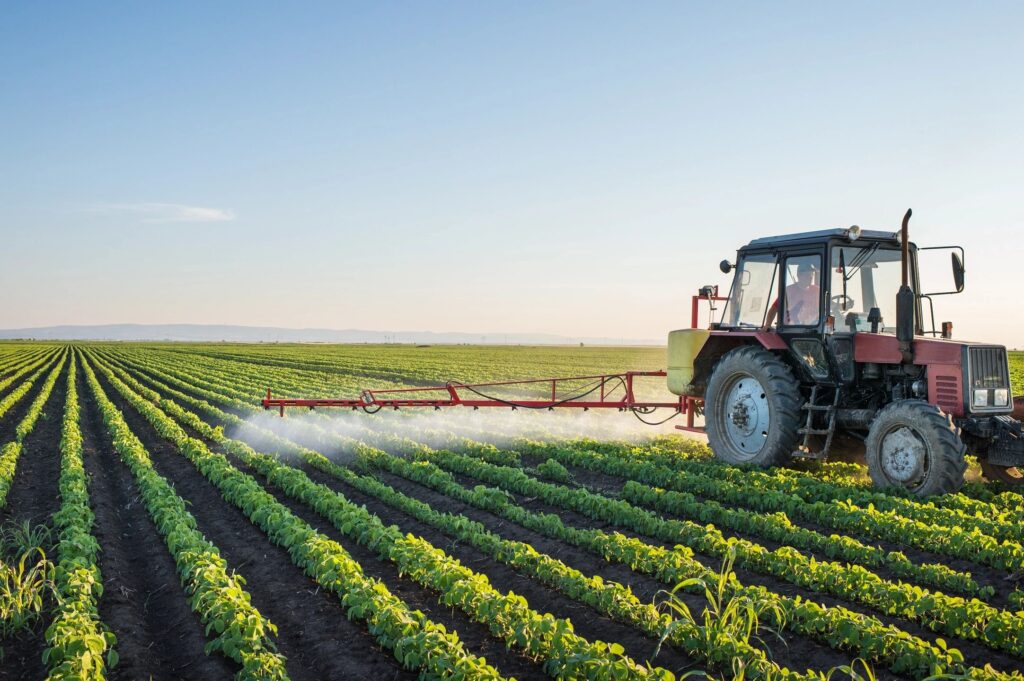
ATLANTA – Legislation aimed at discouraging nuisance lawsuits against farmers in Georgia filed by neighbors cleared a committee in the state House of Representatives Thursday on a voice vote.
The Freedom to Farm Act would amend a law the General Assembly enacted in the late 1980s governing nuisance suits against farm operations in areas zoned for agricultural use.
Additional protections are needed because nonfarmers and farmers are living closer to each other than ever before, Rep. Robert Dickey, R-Musella , chairman of the House Agriculture & Consumer Affairs Committee and the bill’s chief sponsor, told committee members.
“When the current law was passed, [farmers] did not have neighbors who did not farm,” he said. “Now, urban encroachment is happening all over Georgia.”
Under the bill, neighbors who object to noise, smells, dust or polluted water emanating from a farm operation would have up on one year to file a lawsuit.
The one-year statute of limitations would not apply to any “confined animal-feeding operation” such as a chicken house, or to a hog farm.
Supporters said the state’s policy makers need to do everything they can to protect farmland from lawsuits at a time when fewer and fewer Georgians are pursuing farming as a career while a growing population means ever-increasing demand for food.
“We can’t go back and reclaim some of this land if we lose it,” said Rep. Dominic LaRiccia, R-Douglas.
While no one spoke against the bill at Thursday’s hearing, opponents have argued the current law provides adequate protection for farmers from lawsuits while the Freedom to Farm Act would make it too difficult to bring a nuisance case.
“It opens the door for new, industrial-scale animal operations and other polluting agricultural facilities to move into pre-existing communities, create nuisances, and face zero consequences,” according to talking points released by the measure’s opponents.
But Dickey said his bill is to protect family farmers, not corporate agriculture.
“Ninety-eight percent of Georgia farms are family farms,” he said. “This bill is not about big farming but to keep our small family farms operating without fear of nuisance lawsuits.”
The bill now moves to the House Rules Committee to schedule a floor vote.
This story is available through a news partnership with Capitol Beat News Service, a project of the Georgia Press Educational Foundation.